

















Five essential filters for travel photography
Share:

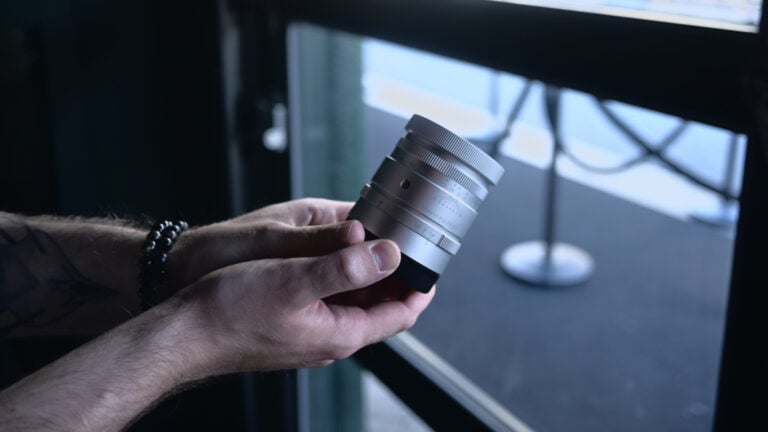
In my post on essential gadgets for travel photography, I mentioned that I always pack five specific lens filters with me.
So in this post I thought I would elaborate on what I consider to be my five essential photography filters – in no particular order…

#1 Polarizing Filter
I pretty much shoot with a polarizing filter on my lens most of the time – as long as I’m using a lens that is 20mm or tighter. Using a polarizer on a lens wider than 20mm is possible, but if you’ve got a lot of blue skies you’re risking banding across the sky and depending on your lens you risk vignetting anyway.
I don’t always use the maximum polarization either – sometimes the effect can be a little more subtle at half polarization.
Hoya 77mm NXT Circular Polarizing Filter – $93.90 B&H

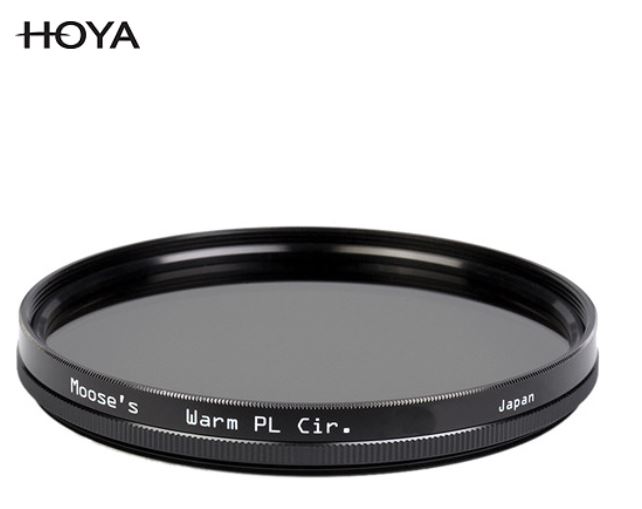
#2 Warming Polarizing Filter
This is a variation on a standard polarizing filter – it combines a circular Polarizer with the warming effect of an 81A filter.
I find it gives a really nice effect for landscapes where you want to enhance warm tones (such as autumn leaves) or just add more contrast between the warm tones of land and the blue sky.
Hoya 77mm Warm Circular Polarizer – $65.17 B&H
#3 Variable Neutral Density Filter
I used to carry a stack of standard neutral density filters, but good quality variable neutral density filters have evolved to the point where they can deliver similar image quality – and are way more convenient to use.
Plus, if you are shooting video, a variable ND is pretty much a necessity.
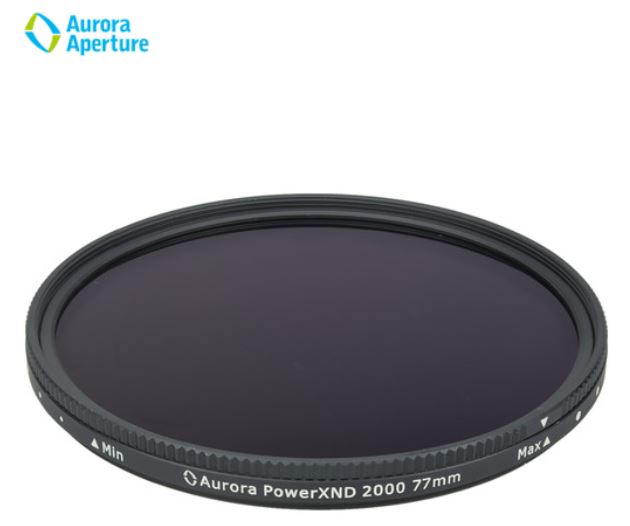
I like this variable neutral density filter from Aurora-Aperture because it can filter out a lot more light than most other variable neutral density filter options. I rarely find that I ever need to take out just one or two stops of light (and if I do a polarizer will usually work) – and its better to work at the minimum amount of darkening rather than the max – so with an exposure reduction of 4 – 11 stops this filter fits most situations.
Aurora-Aperture 77mm PowerXND 2000 Variable Neutral Density 1.2 to 3.3 Filter (4 to 11 Stops) – $170 B&H
#4 Soft-Edge Graduated Neutral Density Filter
At some point, you’ll wish that you had a graduated neutral density filter with you – even if it’s not a day to day use. I use Cokin P series filters – I find them to be a good compromise between cost, quality, and size.
I find a soft-edge graduated neutral density filter to be easier to work with and applicable to more circumstances than a hard-edge. I also find that if I need to dim the sky – it’s almost always more than just one or two stops.
This 0.9 soft-edge graduated neutral density filter gives you three stops of light reduction and fits in the Cokin P-series filter holder ($12.31 B&H).
Cokin NUANCES P Series Soft-Edge Graduated Neutral Density 0.9 Filter (3-Stop) – $199.95 B&H

#5 Reverse Graduated Neutral Density Filter
This is a specialty filter that’s just for sunrise and sunset.
A reverse graduated neutral density filter has the darkest part of the filter in the middle – which you line up with your sunrise or sunset to balance the exposure throughout the frame.
You’re not going to use this filter on a regular basis – but when you need one there are no other options.
85 x 110mm Reverse Graduated Neutral Density 0.9 Filter – $80.89 B&H

Filter Storage
I find that keeping filters organized, clean and safe while traveling can be a major hassle so if you’re looking for a nice case to hold your filters – this little wallet style pouch does a nice job.

Field Filters Case Removable Inner Lining and Water-resistant and Dustproof Design – $11.99 Amazon
About Lens Filter Sizes
One quick tip on choosing filter sizes for your lenses – you don’t need to buy a different set of filters for each diameter lens you own.
Choose a filter size that works on your largest lenses (usually 77mm) and then purchase step down adapters to fit your 77mm filters to your other lenses.

You can find filter step-up rings that will work with virtually any lens/filter combination – price varies from around $4 to $12 at B&H.
To simplify the process of adding and removing filters on multiple size lenses, I just buy an extra set of 77mm lens caps ($3.95 B&H) and leave the step up rings permanently installed.

I wonder what ae your favorite filters when going outside, am I missing anything critical?
Do you have a lens filter that you never leave home without?
What would you change on this list?
Leave a comment below and let us know!
See more from DIYPhotography.net on Google
Add DIYPhotography.net as a trusted source. This makes
our stories more likely to appear in your Google Search results.
 Add as a preferred source on Google

JP Danko
JP Danko is a commercial photographer based in Toronto, Canada. JP can change a lens mid-rappel, swap a memory card while treading water, or use a camel as a light stand.


Join the Discussion
DIYP Comment Policy
Be nice, be on-topic, no personal information or flames.
6 responses to “Five essential filters for travel photography”
Great article, thanks.
These are some really crappy quality filters in this article. It sucks dishing out money on good quality filters but the difference in image quality is dramatic, especially when it comes to color casts. If you can invest look beyond Hoya or Cokin.
My least used filter is a GND, although I have two taking up space in my bag. Things in your foreground that stick up above the horizon are unevenly lit. Bracket and blend.
I do like your comment about not always using a polarizer at full strength. I continue to make that error when I’m out and about. Also, kudos for including the warming polarizer here.
Thx for the info on the variable Nd filter. I will have a look at those.
Nice tip about using step adapters to minimize purchasing multiple filters of the same type. This must be balanced with the extra time required to swap filters when swapping lenses, but seems well worth the cost savings for the more expensive filters. I might also suggest that when considering the filter size to buy, don’t just look at the diameter of the largest lens you own, but also consider the diameter of a lens you are likely to purchase. It would sure be disappointing to have to repurchase all of your filters when you buy that 82mm lens after buying 77mm filters.
You forgot the most important one – the UV filter ;-p