























DJI is releasing a 360 camera imminently; FCC filing confirms
Oct 23, 2024
John Aldred
John Aldred is a photographer with over 25 years of experience in the portrait and commercial worlds. He is based in Scotland and has been an early adopter – and occasional beta tester – of almost every digital imaging technology in that time. As well as his creative visual work, John uses 3D printing, electronics and programming to create his own photography and filmmaking tools and consults for a number of brands across the industry.
Share:
I suppose it was inevitable, really, wasn’t it? First, they went after regular action cameras, going head-to-head with GoPro. And now that Insta360 arguably has the better action camera, DJI seems to be going after 360-degree cameras instead.
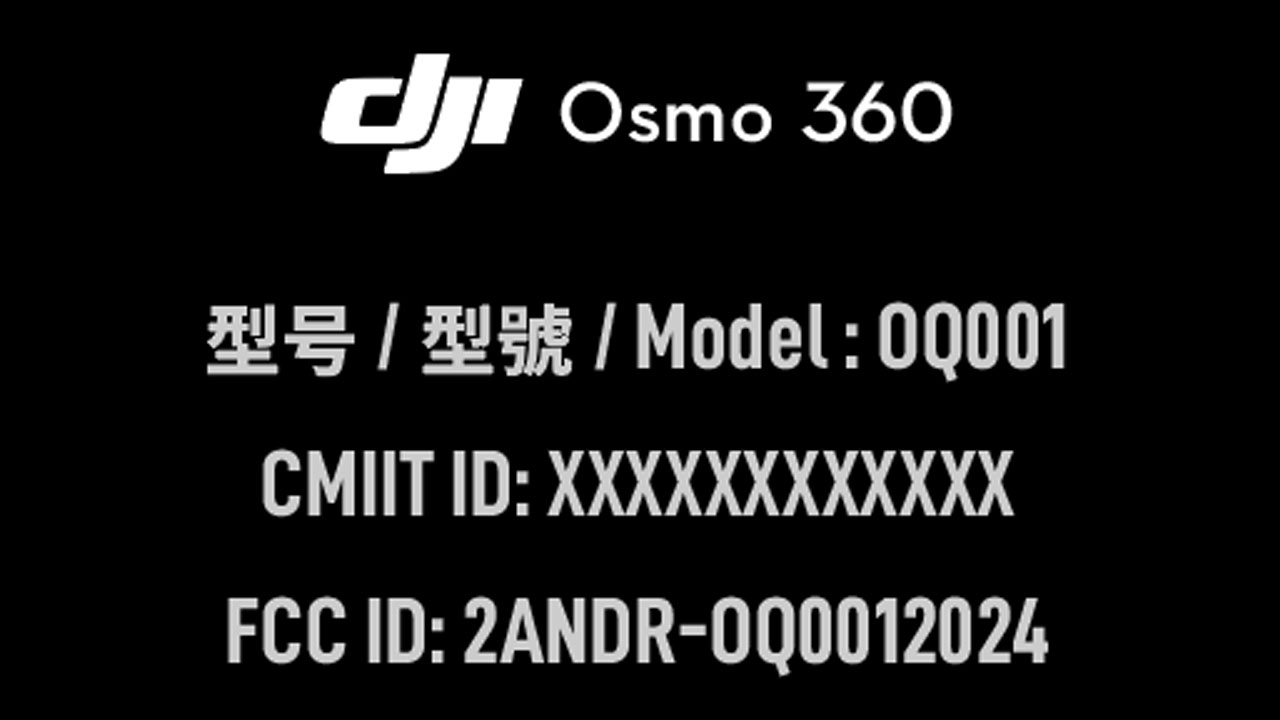
According to an FCC filing, DJI is preparing to announce its entry into the 360-degree camera market with a new DJI Osmo 360. The timing of this is quite interesting, but I’m honestly surprised that it’s taken them this long to make the decision.

DJI is releasing a 360-degree camera
There aren’t many details in the FCC filing about the new camera. This isn’t surprising as manufacturers can request that the details be kept confidential for a period of time up until release. What it does show, though, is the name of the product, the DJI Osmo 360.
It also shows that it’s passed Part 15 of the FCC regulations. This rule regulates the operation of radio frequency devices. These days, that means WiFi and Bluetooth. It means it’s been tested to ensure it’s not exceeding permitted RF emissions and that it’s been designed to prevent interference with other devices.
There are some things we can potentially speculate on, however. It will be at least 5.7K and more than likely 8K to keep up with the Insta360 X4 ($499.99). On that theme, it will probably have a nice big display, built-in waterproofing and at least some form of external microphone compatibility.
Given that DJI makes their own microphones, it will be interesting to see how DJI implements this. Obviously, they can do whatever they want with their own camera and microphone, but will they intentionally cripple the competition from companies like Rode, Hollyland, and others?
I’m very curious to see if they’ll implement timecode into the Osmo 360. It doesn’t appear in any of Insta360’s 360-degree cameras just yet, but the Insta360 Ace Pro 2 ($399) features SMPTE timecode support, with jam sync from devices like the Rode Wireless Pro or Deity TC-1. So I think it’s likely we’ll see it coming to the company’s future 360-degree cameras.
It will be interesting to see what new features DJI might implement in order to make themselves stand out and be different from the competition. I think it’s unlikely DJI will get things right on the first go, though. They usually need an iteration or two of a new product to really get the kind of public interest they want.
Can DJI compete in the 360-degree Camera Market?
The history of 360-degree cameras over the last decade or so has been interesting to watch. Mostly because of the number of companies that have tried to enter the market and failed to make any impact whatsoever. Sure, GoPro’s had its 360-degree cameras since 2017, but they’re not the go-to for the vast majority of 360-degree camera users.
Even Nikon couldn’t hack it in the 360-degree camera market. I remember when the ill-fated Nikon KeyMission 360 first launched at the beginning of 2016. And as a Nikon shooter, I got pretty excited. But that excitement died off pretty quickly.
Insta360 was still in its very early days back then. They didn’t even really have a proper 360-degree camera. They had a device that bolted onto your iPhone. Of course, I’m talking about the Insta360 Nano. However, even that offered better quality results than Nikon’s Keymission 360.
YI Technology launched a 360-degree camera in 2017, and it was very promising. The YI 360 VR bumped the standard 4K resolution up to 5.7K, and the quality was very impressive for its time. Sadly, YI Technology is no longer with us. Another one bites the dust, as they say.
And, of course, there’s Ricoh. The Ricoh Theta was one of (if not the first) pocketable all-in-one 360-degree cameras. I got to check one out first-hand at The Photography Show in March 2016, and while it was extremely handy, I didn’t feel the quality was there.
Ricoh is still around and making Theta cameras. The Theta X ($769.95) and Theta Z1 ($996.95) perform very well, too, although the company seems to have lost favour in the consumer market, tending to go towards real estate and industrial customers.
There’s also Kandao, who has released several 360-degree cameras over the last few years. The most recent is the Kandao QooCam 3 Ultra ($599). Kandao has made some very interesting cameras, like the Kandao QooCam Ego ($339), but they’ve not really picked up much traction yet.
It’s really been difficult for anyone in the 360-degree space to compete with Insta360, allowing them to become the dominant force that they are today. Nobody asks “Is that a 360 camera?” anymore. They ask “Is that an Insta360?”
Whether or not DJI can make a dent in Insta360’s overwhelming market share remains to be seen. Personally, I can’t see it. But if anyone could potentially do it, it’s DJI. Sure, Insta360 collaborates with Leica on many of their lenses, but DJI owns Hasselblad – branding that is common on DJI’s drones now.
Even if DJI can’t beat Insta360 at their own game, I think they’ll give them a good run for their money. DJI also has the advantage of making their own microphones, too. This means potentially even better wireless microphone compatibility and audio quality.
Whatever happens, it’ll be interesting to see. Even if DJI can’t take as big a piece of the pie as they’d like, they’re going to force Insta360 to step up their game even further to stay ahead. Competition is always a good thing for consumers.
When is the DJI Osmo 360 coming?
There’s no indication on the FCC filing as to when the camera’s going to come. Typically, though, it’s within three months of the filing. If it’s longer than three months, it usually means the project’s been scrapped and the product isn’t being released, after all.
Being only 2 months away from Christmas, though, I think we can probably expect an announcement sometime in the next 6-8 weeks or so. It’ll either arrive soon enough that cameras can be shipped out in time to stick under the tree, or close enough to Christmas that the pre-order will be a welcome gift, even if the camera itself takes a little longer to arrive.
The big issues is whether or not it’s actually going to make it into the stores at all – at least in the USA. DJI is already seeing issues with DJI Air 3S ($1,099+) drones not being allowed into the country. Of course, 360-degree cameras aren’t drones, so they’ll probably get in just fine.
See more from DIYPhotography.net on Google
Add DIYPhotography.net as a trusted source. This makes
our stories more likely to appear in your Google Search results.
 Add as a preferred source on Google

John Aldred
John Aldred is a photographer with over 25 years of experience in the portrait and commercial worlds. He is based in Scotland and has been an early adopter – and occasional beta tester – of almost every digital imaging technology in that time. As well as his creative visual work, John uses 3D printing, electronics and programming to create his own photography and filmmaking tools and consults for a number of brands across the industry.
Related Posts
 FCC filing lets us take a peek inside the 40.9-megapixel Leica M10 Monochrom
 Rode Wireless ME FCC filing shows up online – Is Rode working on a new low budget wireless mic?
 DJI Osmo 360: A New Contender in the 360 Action Camera World
 DJI Avata 360 Rumors: FPV Drone With 360° Video Could Launch in December 2025
Join the Discussion
DIYP Comment Policy
Be nice, be on-topic, no personal information or flames.