

























Daystar Calcium, Sodium, and Magnesium Quarks
Jul 9, 2025
Soumyadeep Mukherjee
Soumyadeep Mukherjee is an award-winning astrophotographer from India. He has a doctorate degree in Linguistics. His work extends to the sub-genres of nightscape, deep sky, solar, lunar and optical phenomenon photography. He is also a photography educator and has conducted numerous workshops. His works have appeared in over 40 books & magazines including Astronomy, BBC Sky at Night, Sky & Telescope among others, and in various websites including National Geographic, NASA, Forbes. He was the first Indian to win “Astronomy Photographer of the Year” award in a major category.
Share:
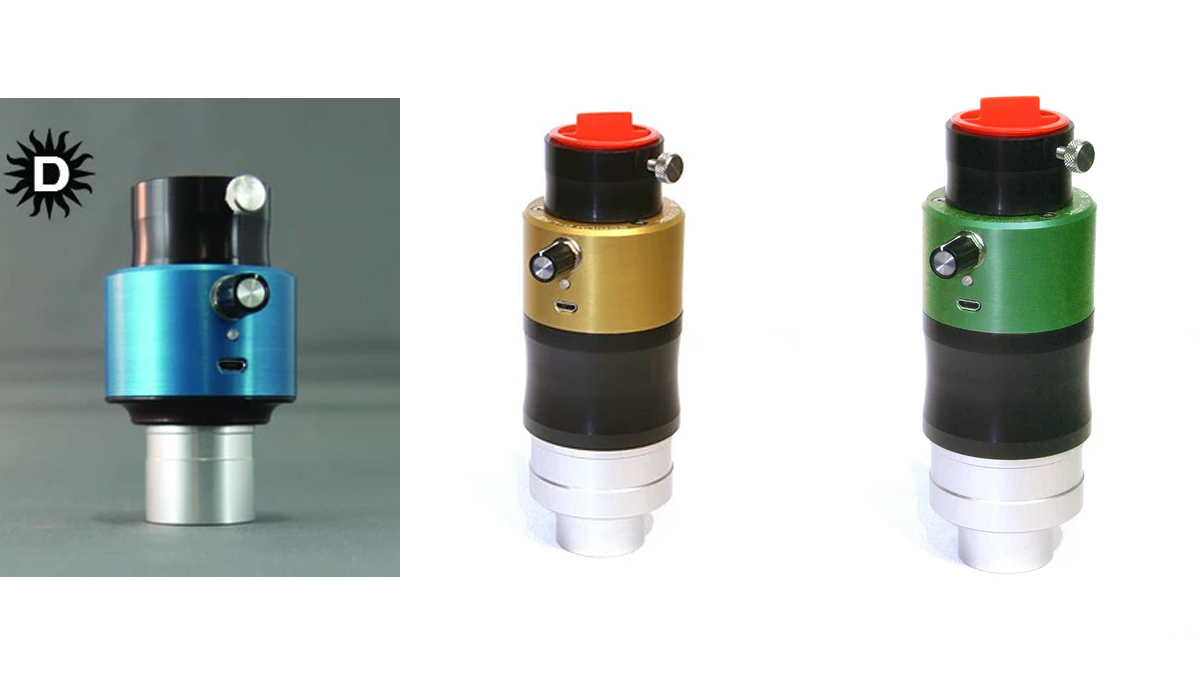
The Sun shines with layers of secrets. Most amateur astronomers observe it in white light or H-alpha. However, the solar spectrum contains many more wavelengths. Each shows a different layer and activity level of the Sun. Three of the most powerful, but less explored are Calcium K-line, Sodium D-line, and Magnesium I-line. Daystar Filters has made these layers accessible to everyone. Their Calcium Quark, Sodium Quark, and now the Magnesium Quark let you see the Sun in new ways. They offer portable, all-in-one solutions for refractors. You can now explore magnetic regions and solar dynamics with stunning detail.
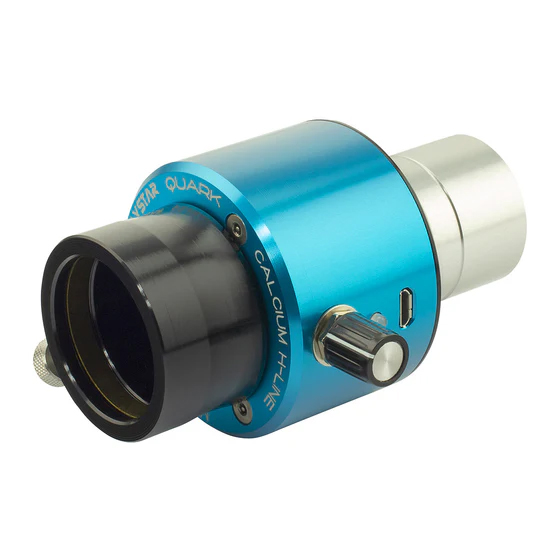
Daystar Calcium Quark
The Daystar Calcium Quark is a narrowband filter for the Ca II K line at 393.4 nm. This part of the spectrum lies in the near ultraviolet. It reveals the lower chromosphere, just above the visible solar surface. You can view bright plages, active regions, and network boundaries. These features align with magnetic fields. The Calcium K line is especially useful for solar research and time-lapse imaging of magnetic evolution. It offers a bandpass of approximately 5 Å (angstroms), ideal for contrast and brightness. The Calcium Quark is optimized for imaging but can also be used for visual observing with caution.
Calcium K-line observations reveal:
- Plages around sunspots
- Magnetic network structures
- Bright chromospheric regions
- Wave patterns and oscillations
Unlike H-alpha, which highlights filaments and prominences, the Calcium Quark shows activity closer to the photosphere. You see how magnetic fields shape the bright patches in the chromosphere. The contrast in Ca K is not as visually dramatic. But the science behind it is rich. Imaging in this wavelength provides incredible data for solar activity tracking.
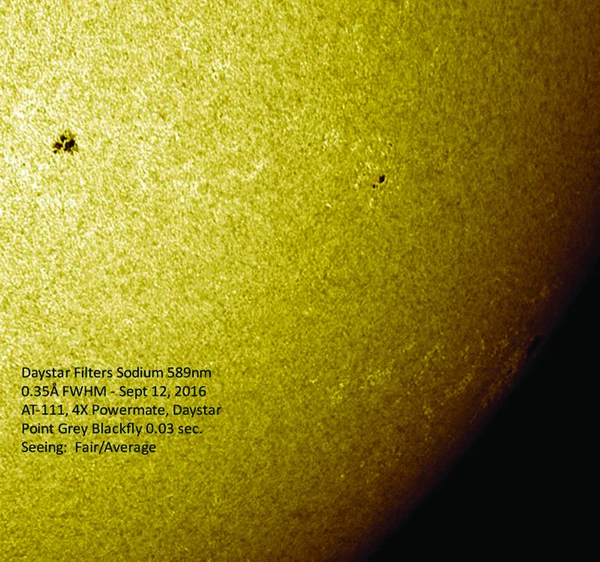
Daystar Sodium Quark
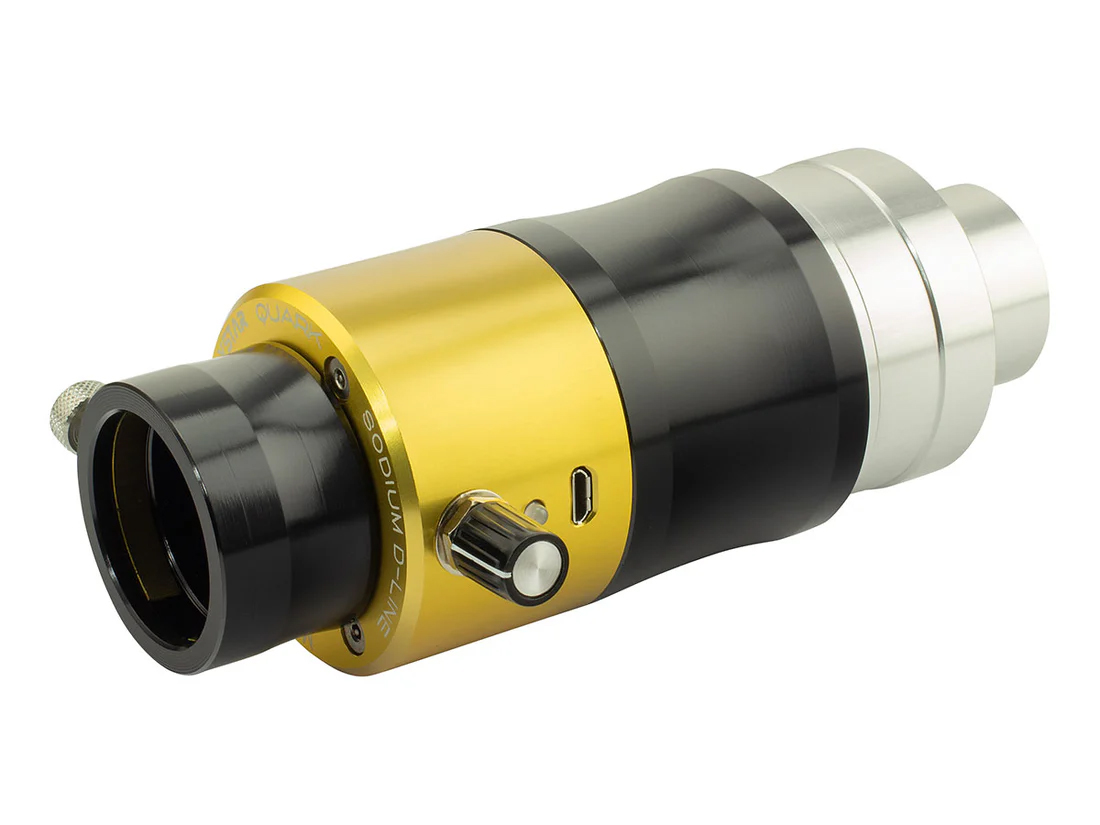
The Daystar Sodium Quark is designed for the Na D-line at 589.0–589.6 nm. This yellow-orange wavelength lies between white light and H-alpha. It reveals the upper photosphere and lower chromosphere. Sodium light shows the solar disk with high contrast. You can track granulation, supergranules, and even shockwaves from flares. The image appears similar to white light but reveals deeper motion.
The Na D-line is one of the lesser-known solar wavelengths. But it holds great value. It allows you to:
- Observe the fine structure of sunspots
- Track dynamic changes in the solar atmosphere
- Combine data with white light or H-alpha for full analysis
- Explore a layer of the Sun few amateurs study
The Sodium Quark provides contrast similar to white light. But it adds depth and dynamics to your solar observations.
Daystar Magnesium Quark
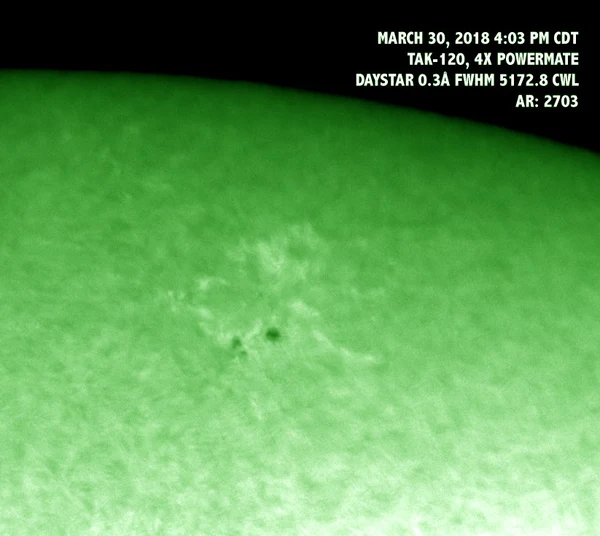
The Daystar Magnesium Quark is another addition to the Quark family. It is designed for the Mg I b2 line at 517.2 nm. This wavelength lies in the green part of the visible spectrum. It reveals the low to mid-photosphere, a region just above the solar surface. This is the layer where solar granulation and sunspot structure become most visible. In this light, you can see:
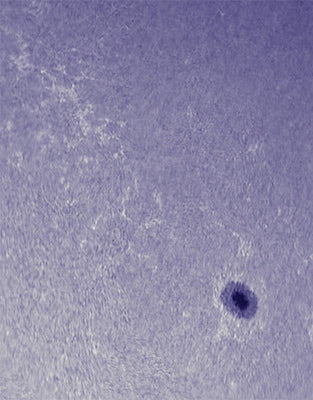
- Granules and supergranulation patterns
- Penumbra and umbra structure of sunspots
- Subtle flows and thermal currents across the surface
The Magnesium Quark acts as a bridge between white light and other wavelengths. It shows more than standard continuum filters but without the complexity of H-alpha. The image is bright and high in contrast. Unlike Calcium, this wavelength is friendlier to the human eye. Visual observation is pleasant. Imaging is highly detailed and easy to process.

Key features of all three quarks
Whether you choose Calcium, Sodium, or Magnesium, all Quarks share important features:
- Compact and simple: These filters are eyepiece-sized units. You insert them between your diagonal and eyepiece or camera. No need for a dedicated solar telescope.
- Built-in telecentric lens: The built-in Barlow lens (except for the calcium quark) converts your telescope’s focal ratio to the required level. This ensures good contrast and proper optical spacing.
- USB-powered: Each Quark has a built-in heater and tuning circuit. It connects to any 5V USB battery pack or plug. It reaches optimal temperature in 5–10 minutes.
- Safe design for small refractors: If you use a refractor under 80 mm aperture, no additional filtration is needed. For larger scopes, you must add a UV/IR cut filter or front-mounted ERF to block excess heat.
Price and availability
All three quarks are available for purchase via the official Daystar website. They are priced as follows:
- Calcium Quark: $1,295
- Sodium Quark: $1,295
- Magnesium Quark: $1,495
Final thoughts
The Sun is not just a glowing ball. It is a layered, living sphere of energy and magnetism. Observing it through different wavelengths opens new doors to new understandings. The Calcium Quark shows the magnetic structures near the solar surface. The Sodium Quark reveals dynamic flows and granulation. The Magnesium Quark captures stable sunspot structure and thermal activity. All three add vital context to H-alpha and white light observations. Daystar’s plug-and-play design makes it simple. Just add a suitable refractor, a camera or eyepiece, and a power source. You’ll enter a world few amateur astronomers explore. If you already observe the Sun in H-alpha, consider expanding your toolkit. With the Calcium, Sodium, and Magnesium Quarks, you’ll truly see the Sun in a new light.
Clear skies!
See more from DIYPhotography.net on Google
Add DIYPhotography.net as a trusted source. This makes
our stories more likely to appear in your Google Search results.
 Add as a preferred source on Google

Soumyadeep Mukherjee
Soumyadeep Mukherjee is an award-winning astrophotographer from India. He has a doctorate degree in Linguistics. His work extends to the sub-genres of nightscape, deep sky, solar, lunar and optical phenomenon photography. He is also a photography educator and has conducted numerous workshops. His works have appeared in over 40 books & magazines including Astronomy, BBC Sky at Night, Sky & Telescope among others, and in various websites including National Geographic, NASA, Forbes. He was the first Indian to win “Astronomy Photographer of the Year” award in a major category.




Join the Discussion
DIYP Comment Policy
Be nice, be on-topic, no personal information or flames.