


















Could these be the specs to the Canon 7D Mark II’s EOS M mirrorless successor?
Aug 19, 2020
John Aldred
John Aldred is a photographer with over 25 years of experience in the portrait and commercial worlds. He is based in Scotland and has been an early adopter – and occasional beta tester – of almost every digital imaging technology in that time. As well as his creative visual work, John uses 3D printing, electronics and programming to create his own photography and filmmaking tools and consults for a number of brands across the industry.
Share:

Not much has really happened with Canon’s EOS M system since they went full frame with the EOS R, despite Canon saying that they’re committed to both formats. There have been rumours about new ones coming this year, although there’s still been no solid news as of yet and we’re 2/3rds of the way through 2020 already. Then there’s the reported death of the EOS 7D DSLR line.
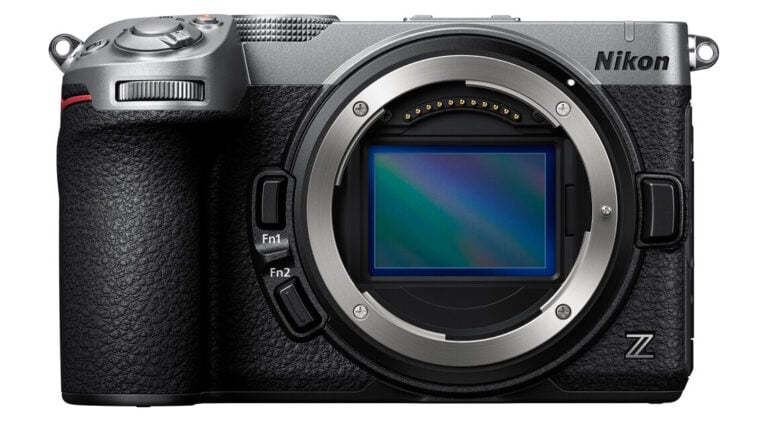
Well, a new set of specs has just appeared on Canon Rumors, which they say may be for an upcoming EOS M50 Mark II or “an M camera above the EOS M6 Mark II”. Could these possibly be the specs for the mythical EOS M7? The rumoured mirrorless replacement for the EOS 7D Mark II DSLR?
- 32-megapixel sensor
- IBIS
- Dual Pixel Autofocus (DPAF II)
- New DIGIC Processor
- EVF
- Dual SD Card slots
- 12fps continuous shooting
- Full sensor width 4K up to 60p
- 1080p at 120p
- CLog
What makes me think it’s possibly a more “professional” body – which the 7D Mark II arguably is – is the fact that it is reported to have dual card slots. Also, as a camera aimed at sports and wildlife with a tighter crop on long lenses, the EOS 7D Mark II was also a bit of a speed demon, capable of shooting at up to 10 frames per second. This one bests that spec at 12fps.
The spec list also shows a significant improvement in resolution, bumping the 7D Mark II’s 20-megapixels up to 32. And not to mention IBIS, which can be a very valuable tool when shooting wildlife and sports handheld. The cropless 4K at up to 60 frames per second also suggests to me that this is almost certainly a higher-end model.
I mean, it all sounds like it should be a 7D Mark II replacement.
The EOS M50 is very good, but given the age of the 7D Mark II (released in 2014) and the fact that there probably won’t be a 7D Mark III, it seems logical that this is where we can expect Canon’s sights to be targeted with this one.
[via Canon Rumors]
See more from DIYPhotography.net on Google
Add DIYPhotography.net as a trusted source. This makes
our stories more likely to appear in your Google Search results.
 Add as a preferred source on Google

John Aldred
John Aldred is a photographer with over 25 years of experience in the portrait and commercial worlds. He is based in Scotland and has been an early adopter – and occasional beta tester – of almost every digital imaging technology in that time. As well as his creative visual work, John uses 3D printing, electronics and programming to create his own photography and filmmaking tools and consults for a number of brands across the industry.
Related Posts
 The beginning of the end? Canon reported to have discontinued the EOS M6 Mark II with no successor announced
 The EOS RP finally has a successor as Canon officially announces the Canon EOS R8
 EOS 5D Mark V and EOS R Mark II added to Canon’s internal roadmap, rumours suggest
 Canon EOS R5 Mark II vs EOS R6 Mark III: Which Camera Should You Buy?
Join the Discussion
DIYP Comment Policy
Be nice, be on-topic, no personal information or flames.
3 responses to “Could these be the specs to the Canon 7D Mark II’s EOS M mirrorless successor?”
Nope
With a camera this good in the works I am starting to wonder why Canon released the R and then the RP so quickly after when the EOS M line should be the consumer version of the EOS R line but with 4K video and C-Log it seems Canon is trying to improve every line of cameras they make. Except their DSLR’s :(
If the successor to 7DII is a mirrorless camera; that’s fine. However, the manufacturers have killed the APS-C cameras by packing rubbish specs like abnormal resolution, ISO range and so forth. The last quality APS-C body was the 10mp EOS 40D which, by dint of its bigger pixels, could produce cleaner noise-free images even at high ISOs. Pixel size does matter. Therefore, photographers who want cleaner images with little or no noise would rather opt for MILCs like EOS R6 (not the R5).
Let the APS-C line die a deserving death.