














Pegasus Astro FlatMaster Neo 160: Flat-Field Calibration and Telescope Protection
Oct 16, 2026
Soumyadeep Mukherjee
Soumyadeep Mukherjee is an award-winning astrophotographer from India. He has a doctorate degree in Linguistics. His work extends to the sub-genres of nightscape, deep sky, solar, lunar and optical phenomenon photography. He is also a photography educator and has conducted numerous workshops. His works have appeared in over 40 books & magazines including Astronomy, BBC Sky at Night, Sky & Telescope among others, and in various websites including National Geographic, NASA, Forbes. He was the first Indian to win “Astronomy Photographer of the Year” award in a major category.
Share:
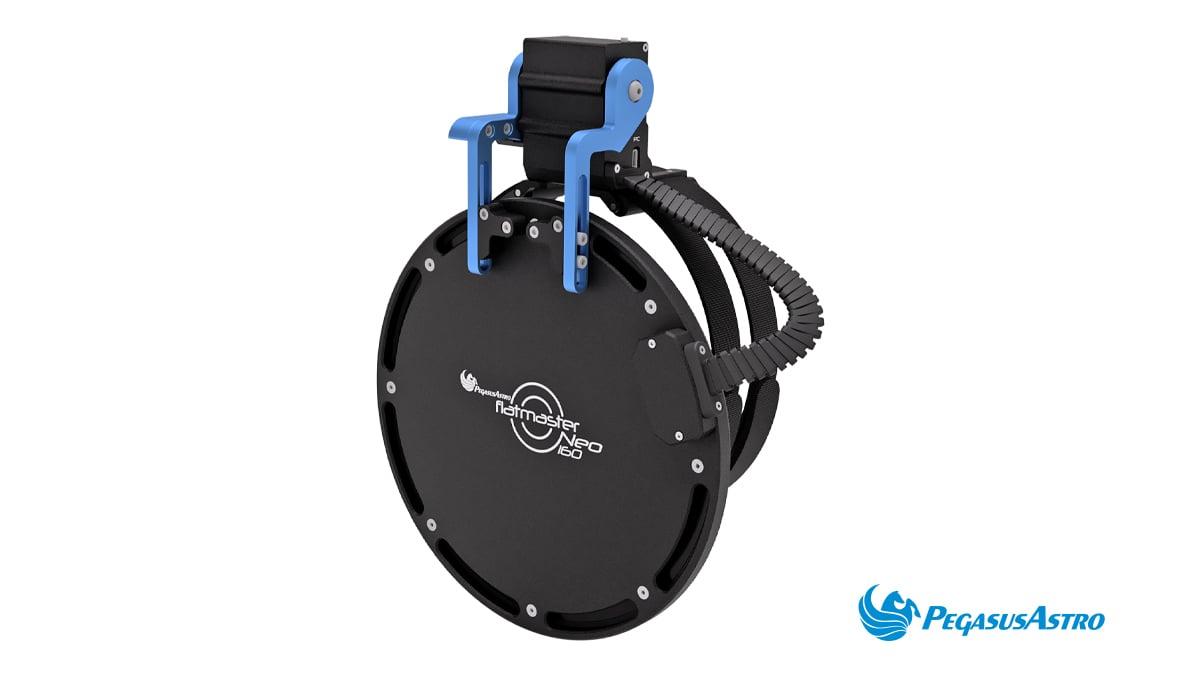
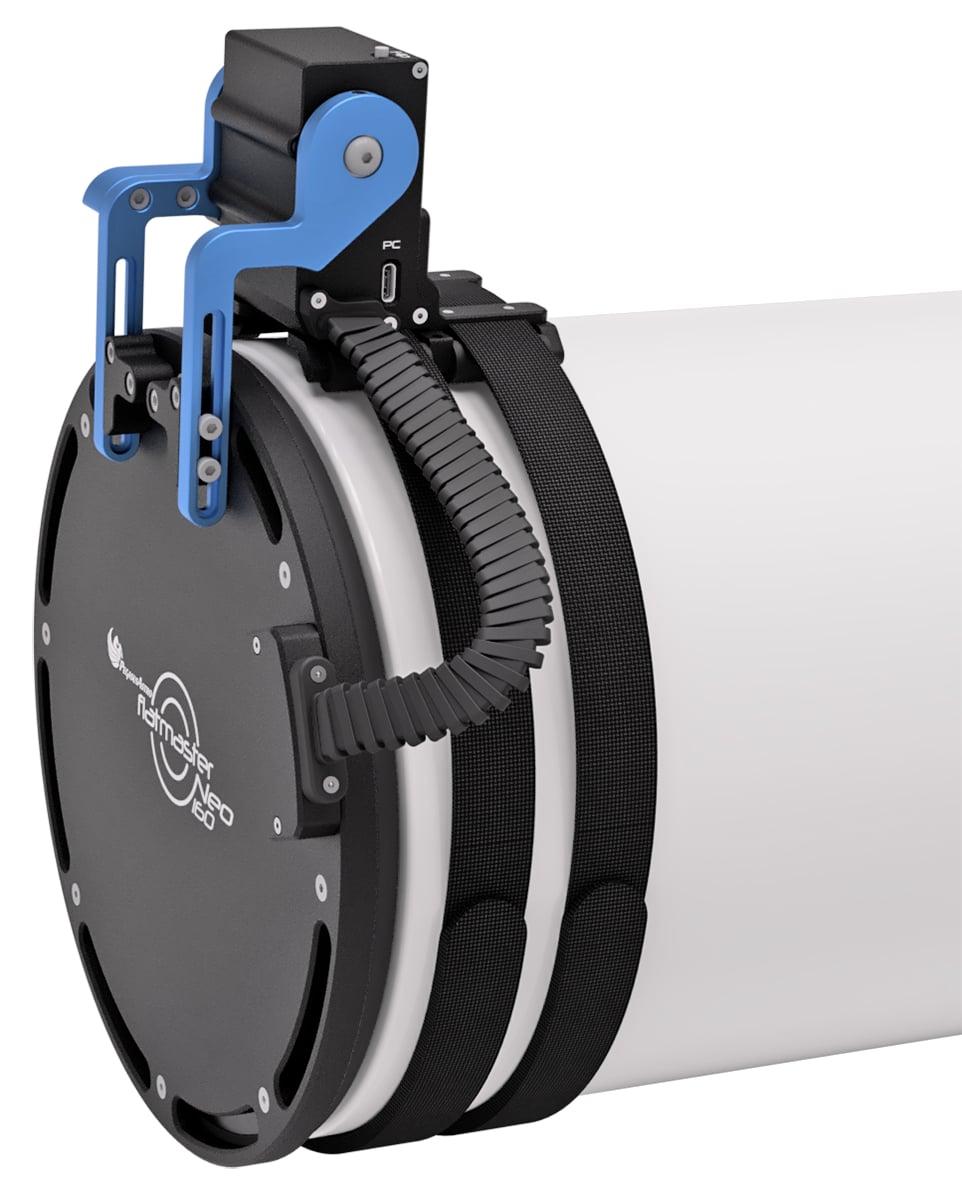
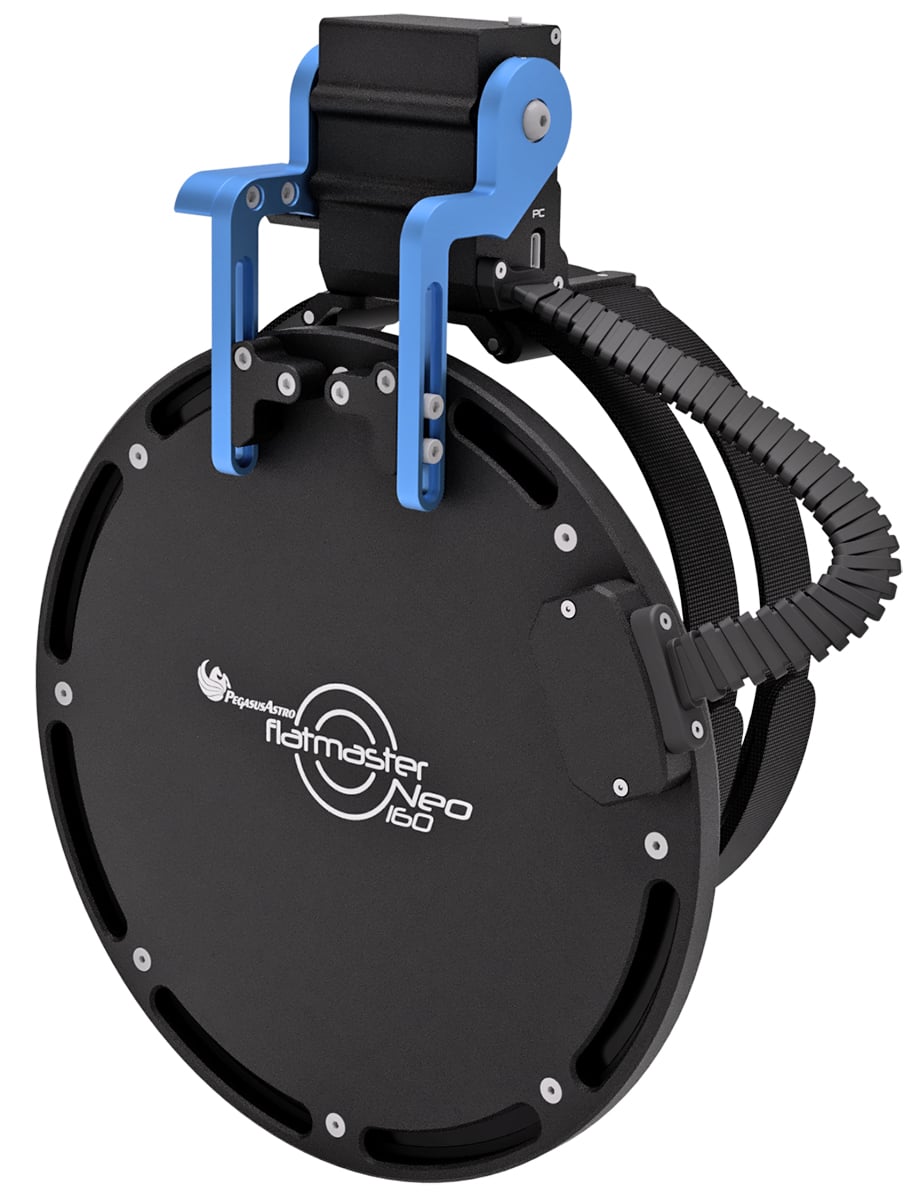
Pegasus Astro has introduced the FlatMaster Neo 160, an astrophotography accessory that combines a motorized telescope cover with an LED flat-field panel. The device also includes a dew heater, temperature and humidity sensors, and wireless controls. This is the larger version of their FlatMaster Neo 120.
The FlatMaster Neo 160 addresses two routine tasks that often require separate equipment. Astrophotographers need a uniform light source to capture flat frames, which help correct vignetting and dust shadows during image processing. They also need to cover their telescopes when observations end. Pegasus Astro has combined these functions in one unit and added controls for unattended operation.
A motorised cover with an integrated flat panel
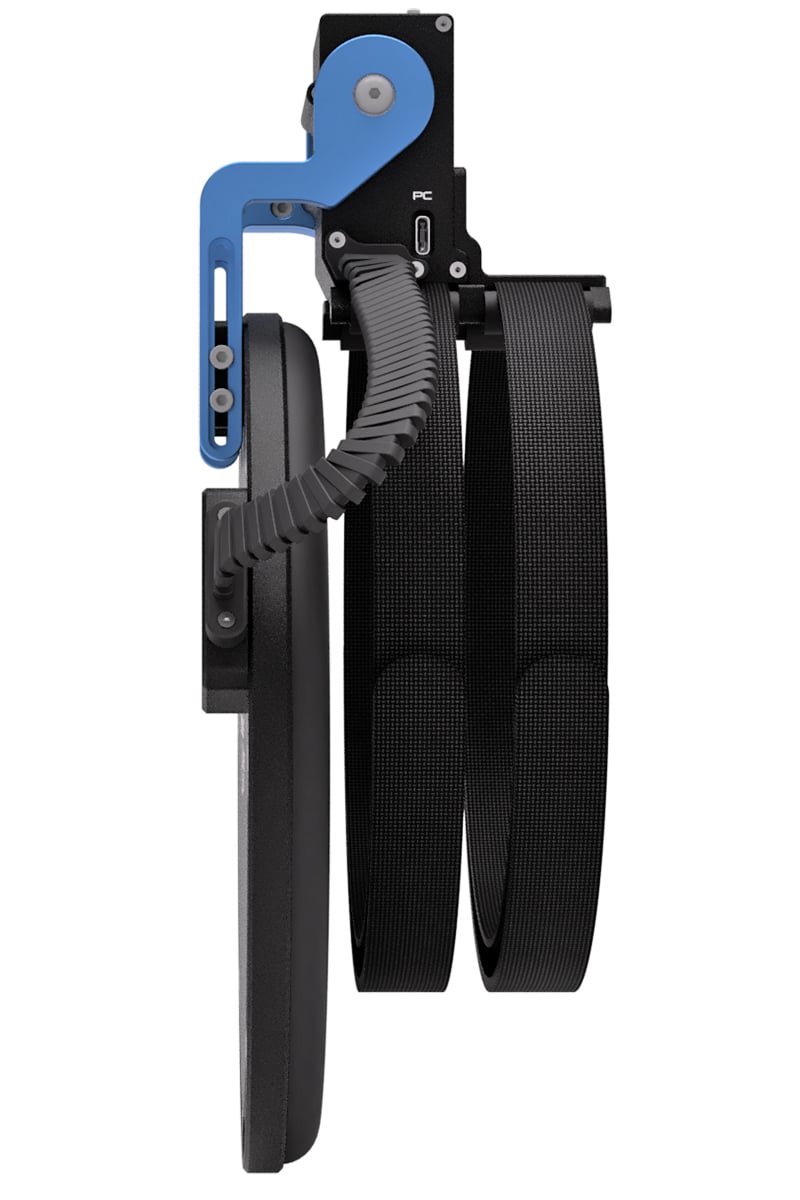
Pegasus Astro’s FlatMaster Neo 160 combines a flat panel light source with a motorized cover. The lid opens to expose the illuminated panel and closes over the telescope when calibration ends. It can rotate through an angle of up to 270 degrees, and users can set a maximum opening angle. This adjustment should help prevent collisions with nearby equipment in a crowded imaging setup.
The cover also incorporates a silicone flange that helps seal the assembly against dust and stray light. When the lid closes, the flange helps protect the telescope’s front end between sessions. This could be useful for astrophotographers who leave their equipment assembled rather than dismantling the optical train after every night of imaging.
Pegasus Astro has built the housing from CNC-machined, aircraft-grade aluminum, and it contains no plastic parts. The unit measures 250mm in diameter and 8mm thick, with a listed weight of 400 gm.
Adjustable illumination and dew control
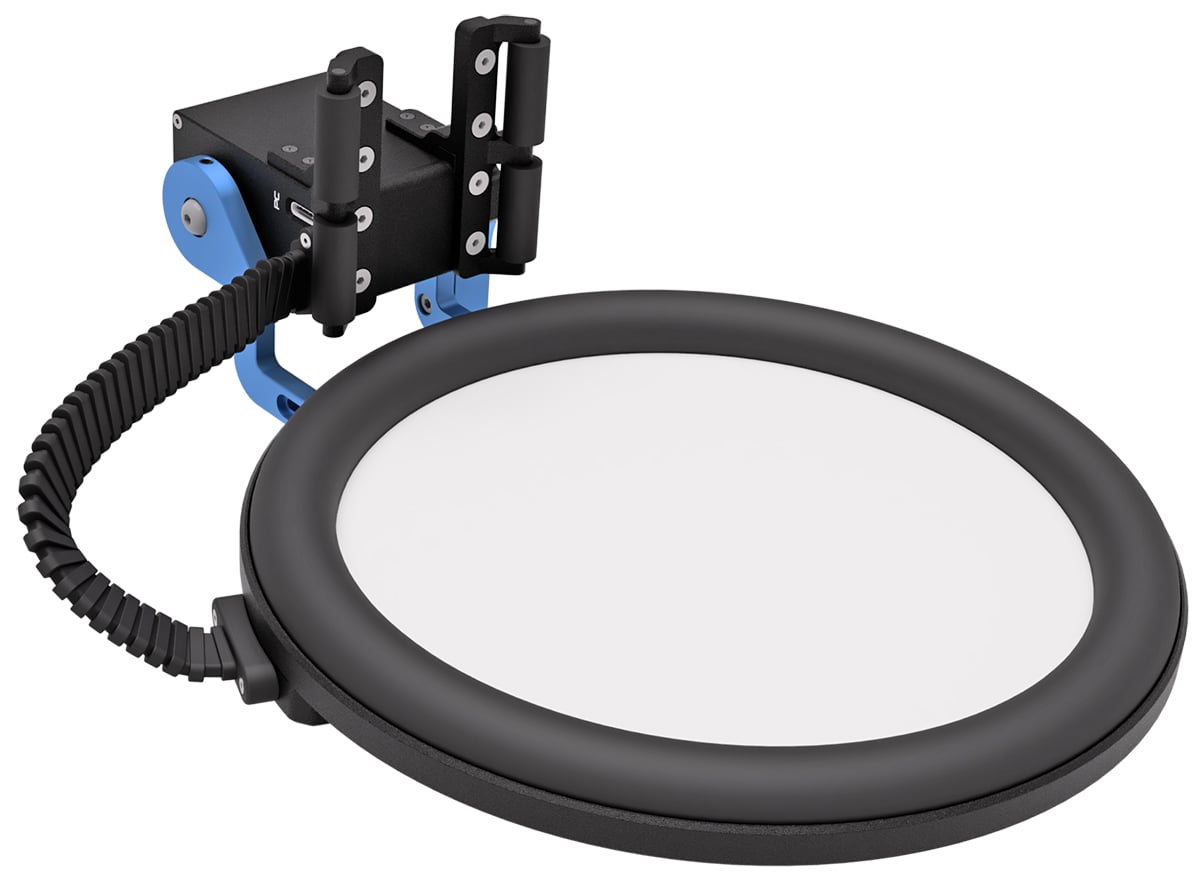
The FlatMaster Neo 160 uses a white LED panel with brightness adjustable from zero to 100 per cent. This will allow users to change the illumination to suit their imaging equipment. It can also save brightness settings for individual filters. Users can recall those settings when they return to the same filter.
The panel can support exposures of around two to three seconds at f/7 with 3nm narrowband filters. This is a manufacturer-stated figure, and actual exposure times will depend on the camera, filter, and optical configuration. The illuminated circle measures 120mm in diameter and can be used for telescopes with apertures up to 160mm.
The FlatMaster Neo 160 includes a heater for its panel surface. Users can adjust its output from zero to 100 per cent. The heater can help remove moisture from the panel before the motorized lid closes over the telescope.
The device also measures temperature and humidity. Users can enable automatic control or select a preferred heater setting themselves. A light sensor provides another automated function. The sensor can detect daylight and trigger the lid to close at sunrise.
Wi-Fi, web dashboard and ASCOM support
The FlatMaster Neo 160 offers wireless control through an onboard web dashboard. Users can connect to the device’s own Wi-Fi access point or connect it to an existing network. Once connected, they can operate the lid and adjust the panel without approaching the telescope.
Pegasus Astro lists support for ASCOM 7 and ASCOM Alpaca, standards that allow compatible astronomy software to communicate with supported devices. This could let users incorporate the FlatMaster Neo 160 into an existing imaging workflow, depending on their chosen software and its support for the unit.
The company specifies a single USB-C connection for power and control. The device requires a 5V DC supply and draws up to 1.5A, according to its published specifications. Users planning to connect it to an automated setup should check their available power and control connections before purchasing it.
Price and availability
Pegasus Astro lists October 2026 as the FlatMaster Neo 160‘s expected availability date. The official product page does not currently state a retail price. One of the dealers, however, lists it at £885, which translates to roughly $1,170. However, there is no official confirmation.
We will update this space once the price and availability are made official.
Clear skies!
See more from DIYPhotography.net on Google
Add DIYPhotography.net as a trusted source. This makes
our stories more likely to appear in your Google Search results.
 Add as a preferred source on Google

Soumyadeep Mukherjee
Soumyadeep Mukherjee is an award-winning astrophotographer from India. He has a doctorate degree in Linguistics. His work extends to the sub-genres of nightscape, deep sky, solar, lunar and optical phenomenon photography. He is also a photography educator and has conducted numerous workshops. His works have appeared in over 40 books & magazines including Astronomy, BBC Sky at Night, Sky & Telescope among others, and in various websites including National Geographic, NASA, Forbes. He was the first Indian to win “Astronomy Photographer of the Year” award in a major category.

Join the Discussion
DIYP Comment Policy
Be nice, be on-topic, no personal information or flames.