

















Unboxing S50 Pro: The Latest Smart Telescope from Seestar
Sep 25, 2026
Soumyadeep Mukherjee
Soumyadeep Mukherjee is an award-winning astrophotographer from India. He has a doctorate degree in Linguistics. His work extends to the sub-genres of nightscape, deep sky, solar, lunar and optical phenomenon photography. He is also a photography educator and has conducted numerous workshops. His works have appeared in over 40 books & magazines including Astronomy, BBC Sky at Night, Sky & Telescope among others, and in various websites including National Geographic, NASA, Forbes. He was the first Indian to win “Astronomy Photographer of the Year” award in a major category.
Share:
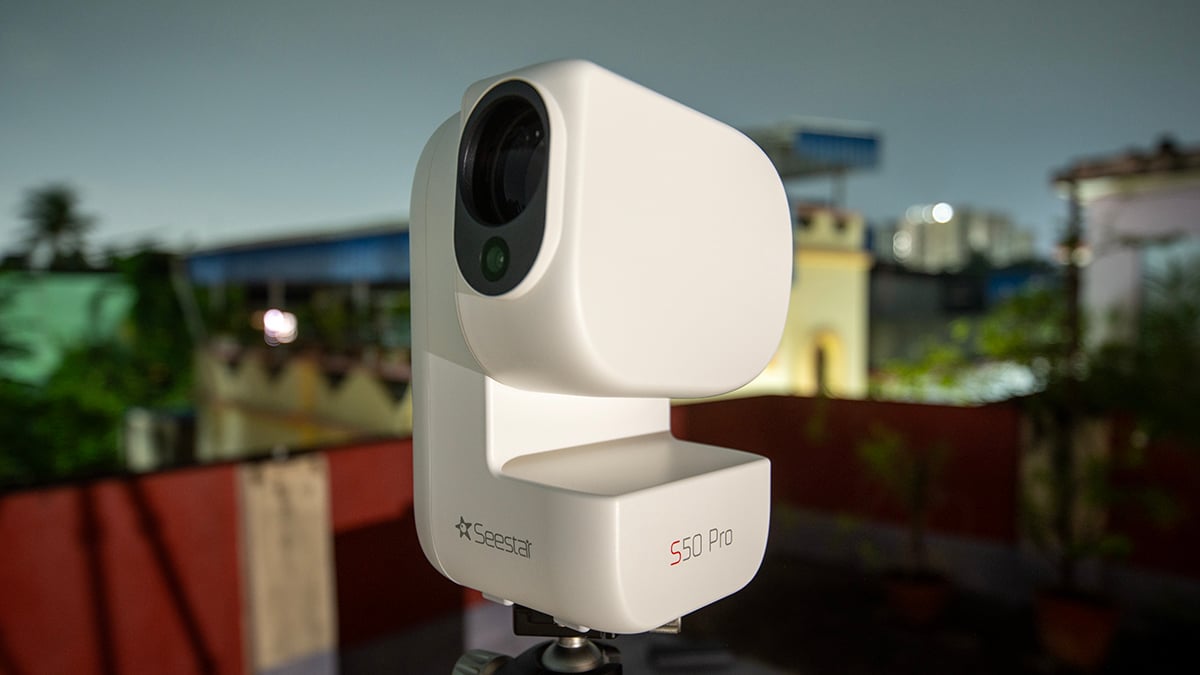
I guess I was not wrong to call 2026 the “Year of Smart Telescopes”. Towards the end of last month, Seestar launched its latest smart telescope: S50 Pro. It is their fourth smart telescope after S50, S30, and S30 Pro, respectively. But is it their best smart telescope yet? On paper, it is a big yes. It gets the same aperture as the S50, i.e., 50mm, and the advanced functionalities of a “pro” version. Earlier this month, we received a review unit from Seestar. During the last week, we unboxed it, and the smart telescope got its first light.
Table of contents
The Seestar S50 Pro: A quick recap
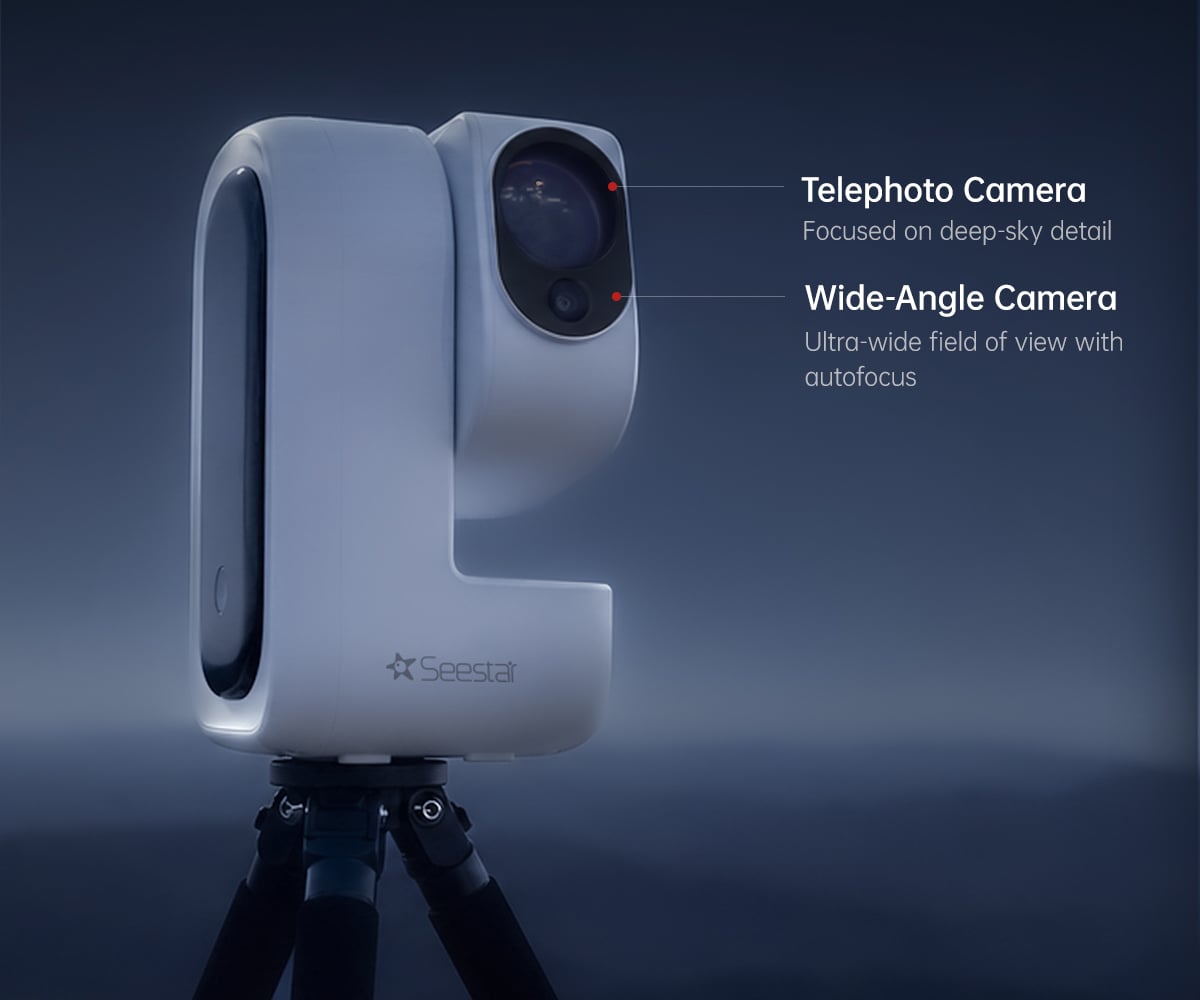
The S50 Pro uses a four-element APO optical design with a 50mm aperture and 260mm focal length. It has dual 4K cameras sitting inside. Its main telephoto camera has a 1/1.2-inch sensor and an 8.29-megapixel resolution of 3840 × 2160 pixels.
A second 1/2-inch camera provides the same 8.29-megapixel resolution but covers a much wider 63-degree field of view. The wide-angle camera supports autofocus, and the S50 Pro can perform live stacking through this camera.
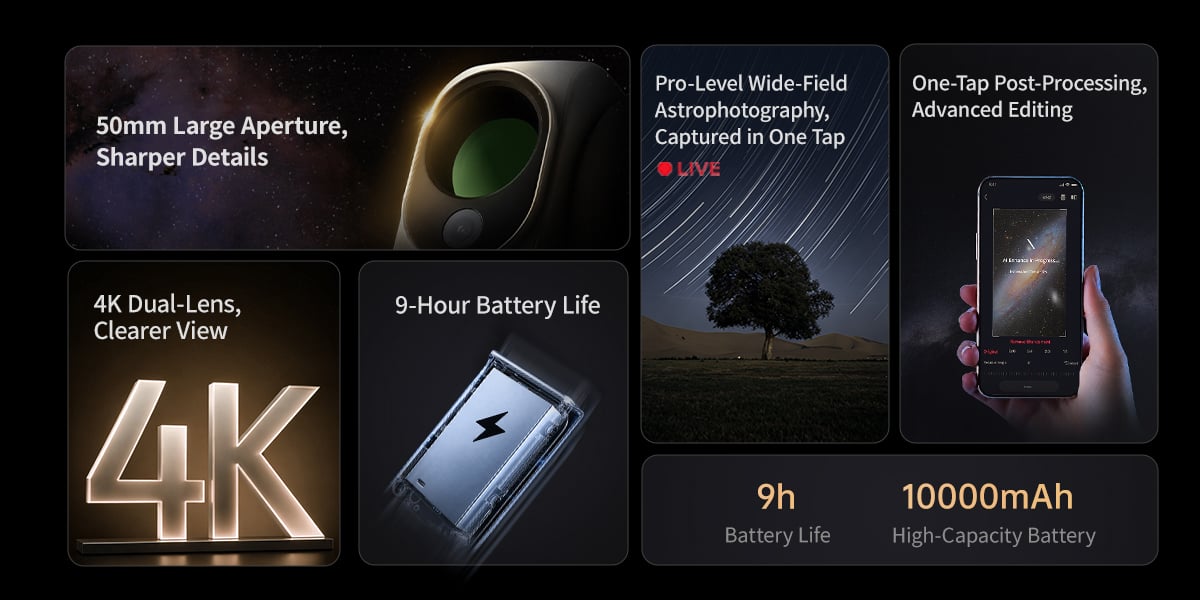
The S50 Pro also got a much larger battery than the original model. Its 10,000mAh battery has a capacity of 4,000mAh more than the 6,000mAh unit in the S50 and S30 Pro. Seestar quotes up to nine hours of astrophotography operation.
Seestar has added a zero-backlash precision drive system to the S50 Pro. According to them, the design improves tracking stability and resistance to wind. It also supports equatorial mode, where the improved mechanical stability can increase imaging efficiency.
Comparison: S50 Pro vs S50 vs S30 Pro
Here is a comparison chart highlighting the differences between the new Seestar S50 Pro and the previous two Seestar models:
| Seestar S50 Pro | Seestar S50 | Seestar S30 Pro | |
| Resolution | Tele: 3840×2160 | Tele: 1920*1080 | Tele: 3840×2160 |
| Wide: 3840×2160 | Wide: – | Wide: 3840×2160 | |
| Field of view | Tele: 2.8° | Tele: 1.46° | Tele: 4.6° |
| Wide: 63° | Wide: – | Wide: 63° | |
| Optical design | 4-elements APO | 3-elements APO | 4-elements APO |
| Optical specs | 50mm / 260mm | 50mm / 250mm | 30mm / 160mm |
| Storage capacity | 128GB | 64GB | 128GB |
| Battery Life | 10000mAh/9h | 6000mAh/6h | 6000mAh/6h |
| Nightscape photography | Supported | Not Supported | Supported |
| Live stack with wide-angle lens | Supported | Not Supported | Supported |
| Autofocus with wide-angle lens | Supported | Not supported | Supported |
| NFC connection | Supported | Not supported | Supported |
Unboxing the S50 Pro
Earlier in August 2026, I unboxed the S30 Pro. And just a month later, the S50 Pro. Right from receiving the package, I went into comparison mode between the two.
The package is definitely larger and heavier than the S30 Pro. That is something expected since the S50 Pro has a much larger aperture. But when I say it is heavier, I really don’t mean it is “heavy”. It is still light enough to be carried around, especially when you are travelling. The main telescope unit weighs around 2.8kg.
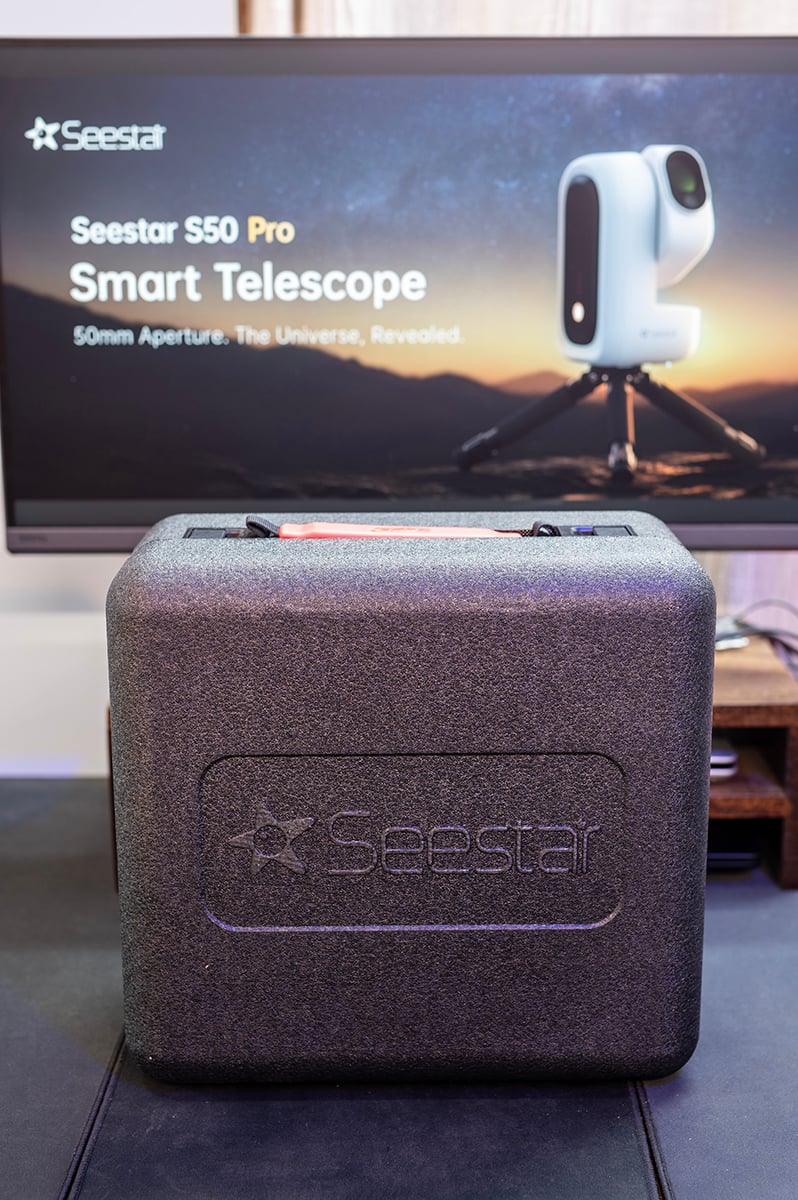
Opening the main package reveals a hard case. That is something I really appreciate. It is a lightweight case with foam inside. It holds the smart telescope and all the accessories that come with it. This is a genuine upgrade from the S30 Pro’s carry pouch. It makes the S50 Pro not only easier to carry around and keep safe from accidental bumps, but also makes storage easier and more secure.
What’s inside?
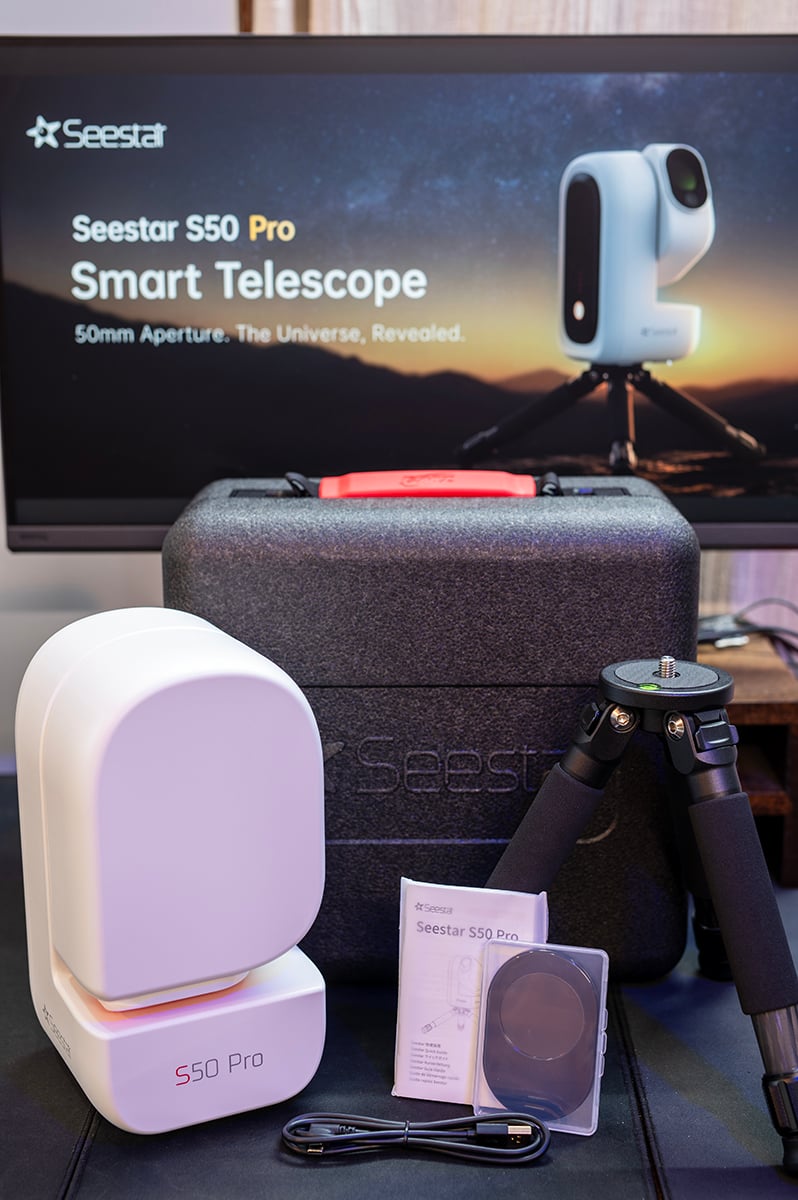
Inside the hard carrying case, you get the following:
- S50 smart telescope
- TC 20 carbon fiber tripod
- Magnetic solar filter
- Charging cable
- Stickers and manual
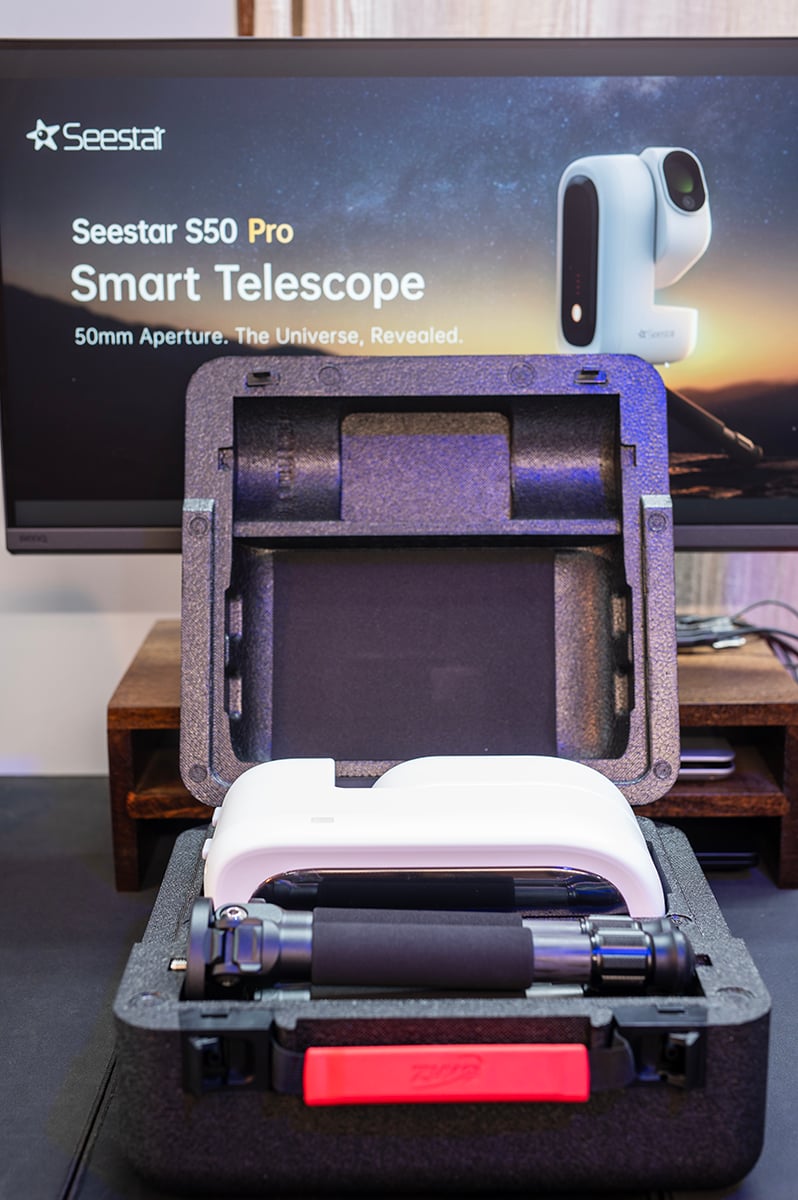
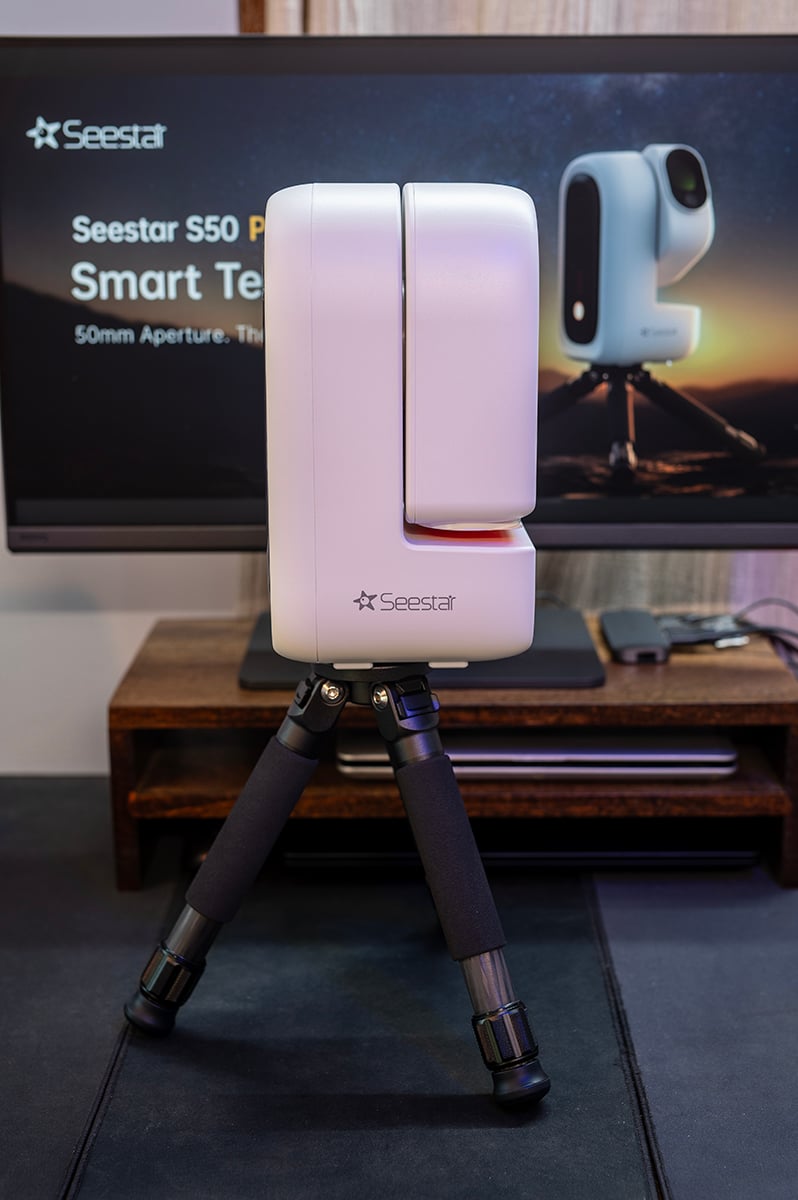
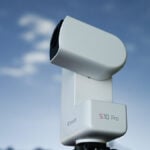
The S50 Pro body is sturdy and feels premium. You only get it in white, something that you see with the Seestar since their S30 model. While it is heavier than the S30 Pro, it is light and small enough for everyday use.
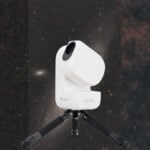
The biggest departure you see here is the included tripod. The tripod is way superior to the ones you get with all the previous Seestar smart telescopes. It is lightweight, extremely sturdy, and something that will give you great confidence even in rough terrain.
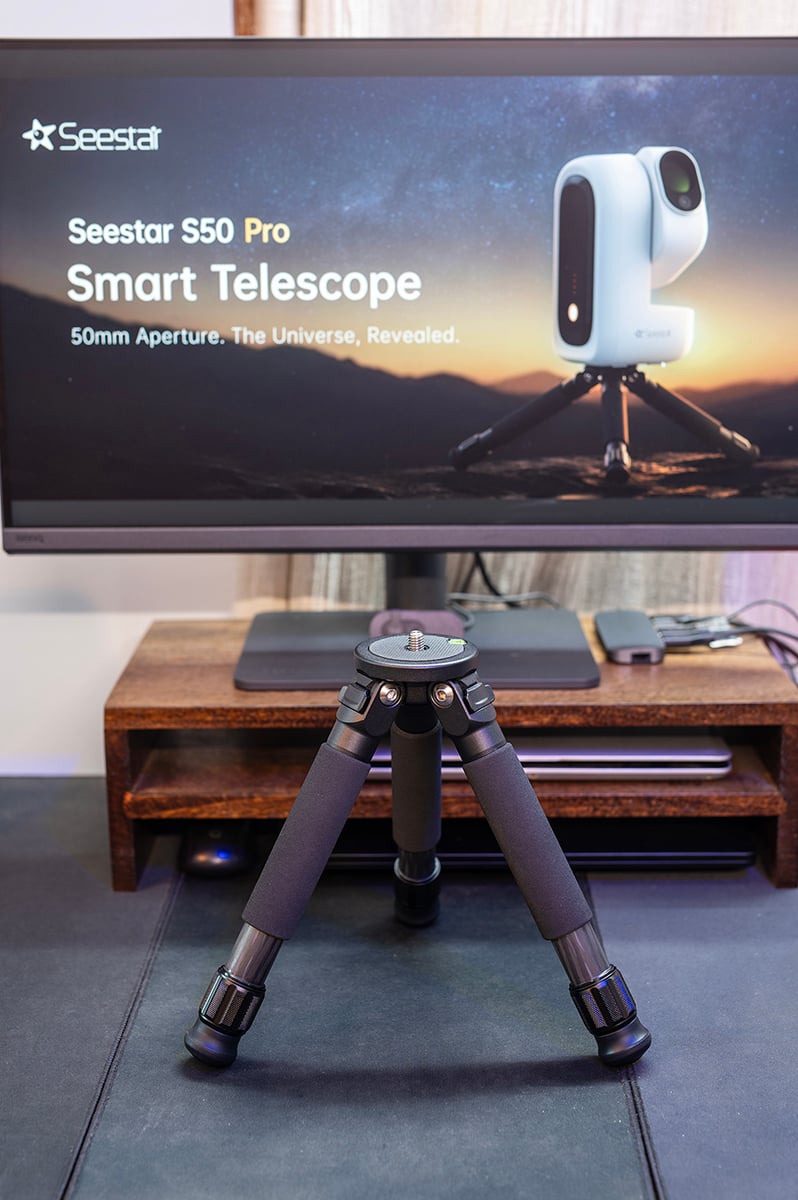
The tripod, however, will only allow you to use the smart telescope in alt-az mode. If you are planning to do long-exposure deep-sky imaging, which again is probably the primary reason somebody will buy the S50 Pro, you will need a separate ball head or a fluid head. I wish that was included in the package, or as a discounted kit. While you can always get one from any camera store and from Seestar itself, having a bundle just feels more convenient. What do you think?
The magnetic solar filter also feels premium and attaches very securely to the smart telescope body. It covers both the telephoto lens and the wide-angle lens, so you don’t have to worry about burning the sensor. And when you point the S50 Pro towards the Sun, the app makes sure to give you a reminder about attaching the filter. Remember to never miss it!
The first light: Unusual and surprising
When you get the S50 Pro, the primary aim, at least for the majority, would be to do deep-sky astrophotography. This telescope is mainly suited for this work. But then, new telescopes also bring in clouds, they say. And two new smart telescopes within a month bring a little more than just clouds. Well, this time it brought a cyclone.
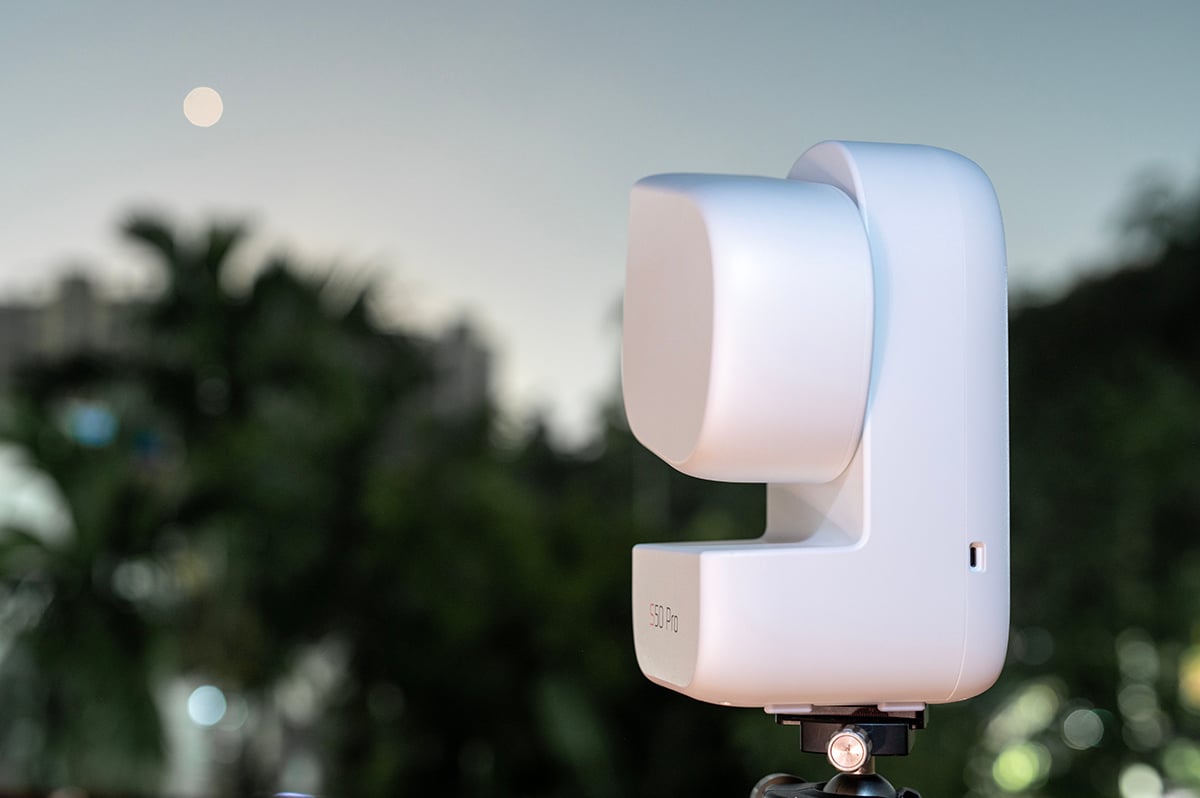
In this monsoon season, getting a new telescope and finding clear skies is something really difficult. Even after trying for many evenings, the clouds did disappoint. So finally, I took the telescope out on an afternoon that gave me a clearer sky. And the target was a little unusual for S50 Pro; it was Venus.
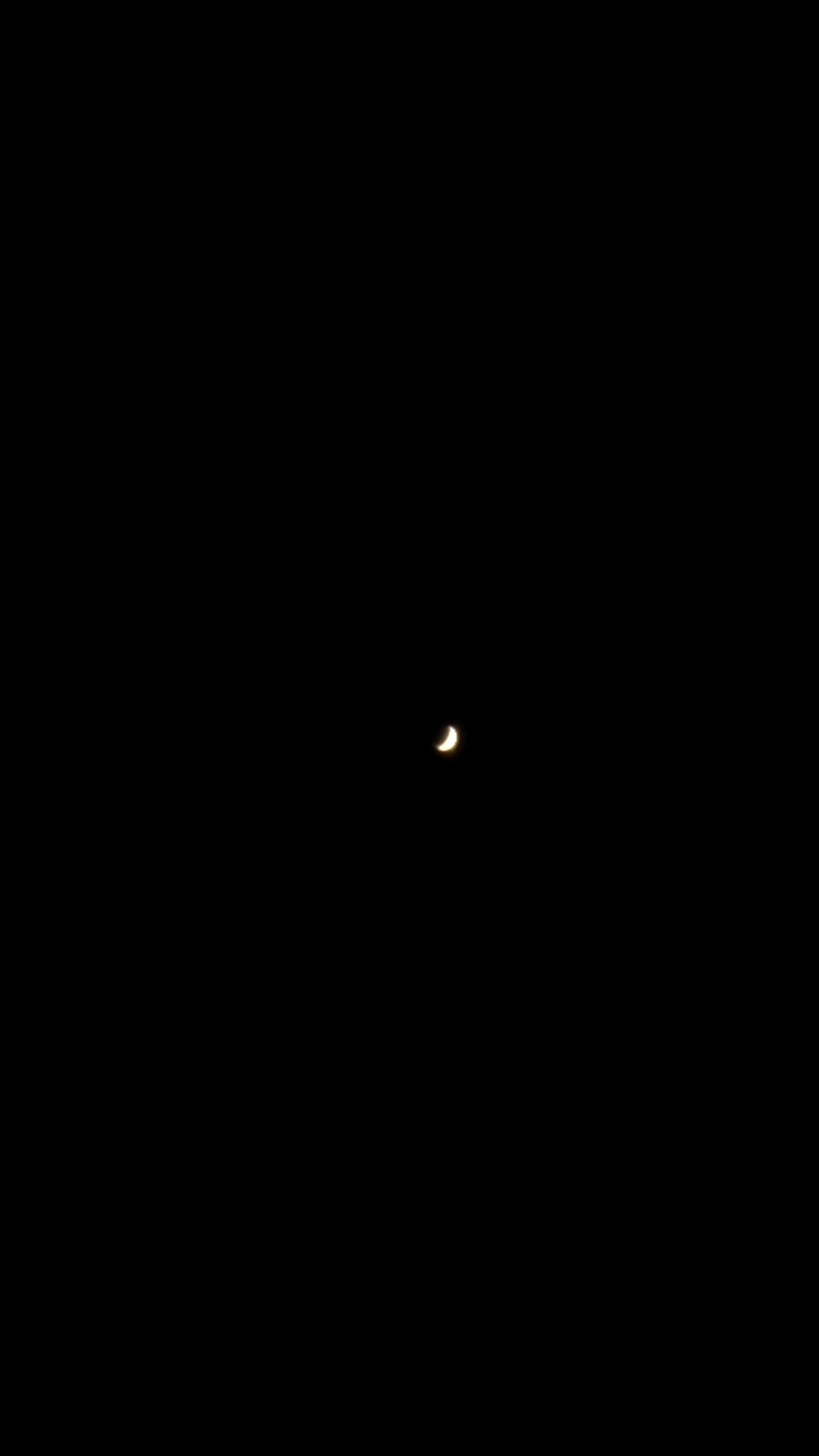
Venus, now the evening star, is extremely bright in the western sky and can be spotted easily during sunset with the naked eye. Living in an urban setting, Venus has always been a favorite of mine. And so, I pointed the S50 Pro towards it for its first light.
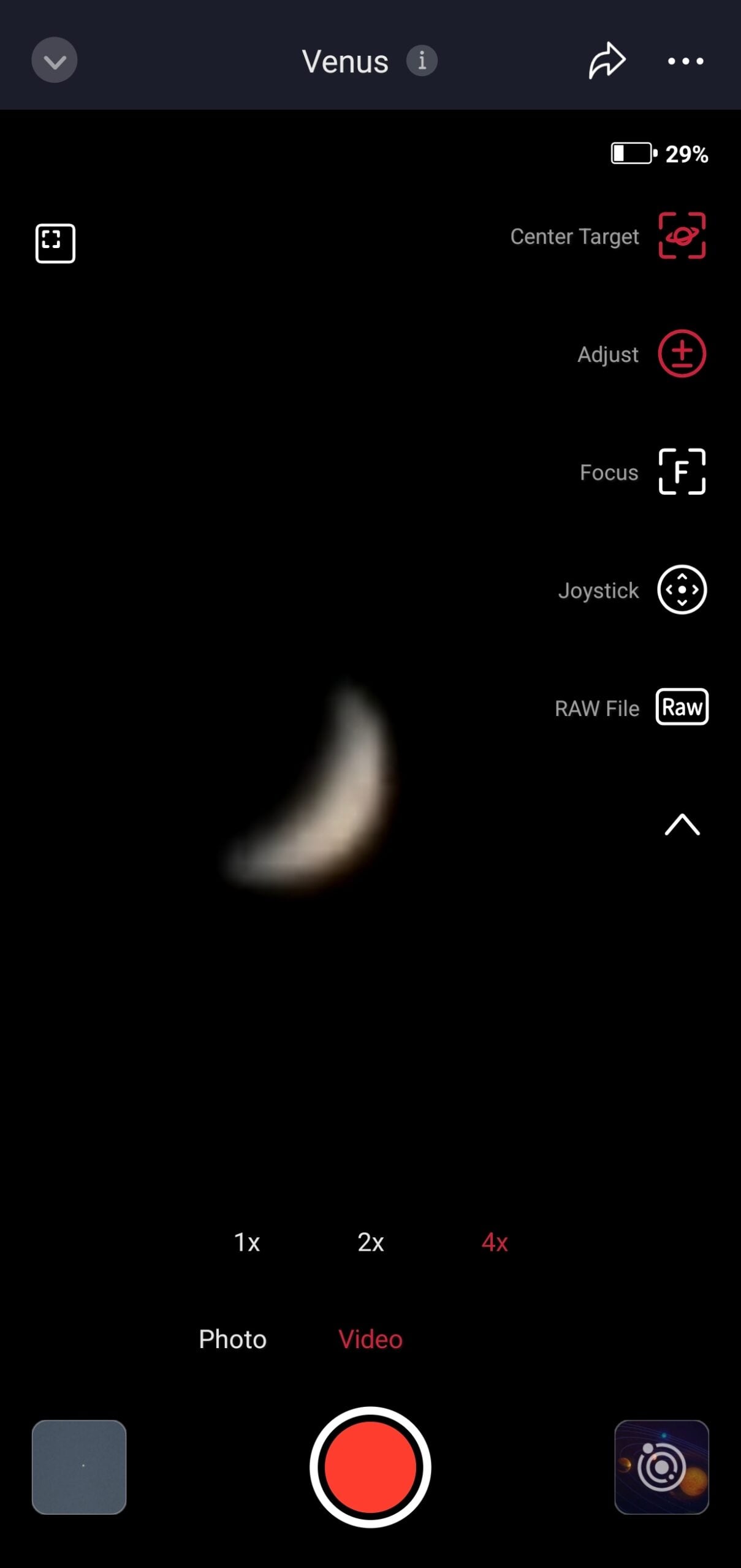
Setting up was, once again, a breeze. You turn it on, connect to your smartphone, do a couple of calibration routines (it takes less than a minute), and you are good to go. Altogether, from taking the telescope to the rooftop to start seeing Venus on the Seestar app took less than 5 minutes. This is something that everybody would appreciate.
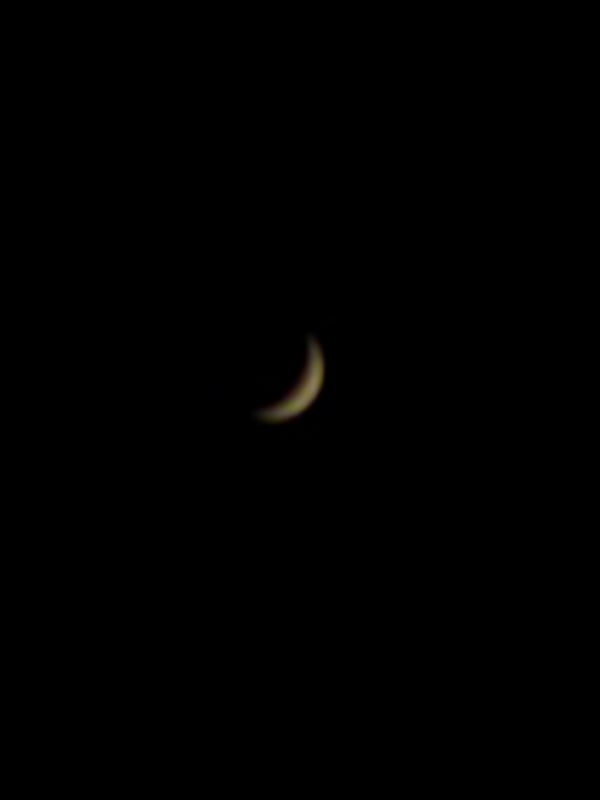
I was quite surprised by the results, to be honest. I did not expect a small telescope to pick up the crescent phase of Venus. I captured a video, stacked and post-processed it within the Seestar app. The whole process was, once again, quick and easy.
First impression and thoughts
To describe the entire process of doing astrophotography with the Seestar S50 Pro, I would use two words: “simple” and “easy”. It is quick to set up and start shooting. The app remains user-friendly and quite intuitive. You get the option of stacking and basic post-processing within the app, but you also retain the option of post-processing your images with advanced astronomy software.
In my experience, one of the biggest reasons for people getting hesitant about starting astrophotography is the long process and the steep learning curve that comes with it. The S50 Pro somewhat makes it easier. You will still need to learn a lot of things, especially about the night sky and post-processing, but the smart telescope will give you that time while still producing very good results during the learning period.
A smart telescope like this will allow people to enjoy the hobby without spending a lot of time, something a lot of people would want and appreciate. You start easy and slowly, and make your way towards the advanced stage if needed. This is pretty much perfect for beginners. On the other hand, if you are an experienced astrophotographer, the S50 Pro can give you a lot of flexibility with some amazing results.
Clear skies!
See more from DIYPhotography.net on Google
Add DIYPhotography.net as a trusted source. This makes
our stories more likely to appear in your Google Search results.
 Add as a preferred source on Google

Soumyadeep Mukherjee
Soumyadeep Mukherjee is an award-winning astrophotographer from India. He has a doctorate degree in Linguistics. His work extends to the sub-genres of nightscape, deep sky, solar, lunar and optical phenomenon photography. He is also a photography educator and has conducted numerous workshops. His works have appeared in over 40 books & magazines including Astronomy, BBC Sky at Night, Sky & Telescope among others, and in various websites including National Geographic, NASA, Forbes. He was the first Indian to win “Astronomy Photographer of the Year” award in a major category.


Join the Discussion
DIYP Comment Policy
Be nice, be on-topic, no personal information or flames.