



















Sky-Watcher SynLink: All-in-One Controller for Astrophotography
Oct 2, 2026
Soumyadeep Mukherjee
Soumyadeep Mukherjee is an award-winning astrophotographer from India. He has a doctorate degree in Linguistics. His work extends to the sub-genres of nightscape, deep sky, solar, lunar and optical phenomenon photography. He is also a photography educator and has conducted numerous workshops. His works have appeared in over 40 books & magazines including Astronomy, BBC Sky at Night, Sky & Telescope among others, and in various websites including National Geographic, NASA, Forbes. He was the first Indian to win “Astronomy Photographer of the Year” award in a major category.
Share:
An astrophotography setup might need a surprising amount of hardware. The telescope sits on a tracking mount with cameras, focusers, filter wheels, and guide cameras attached to it. Then come the USB cables, power cables, and dew heaters.
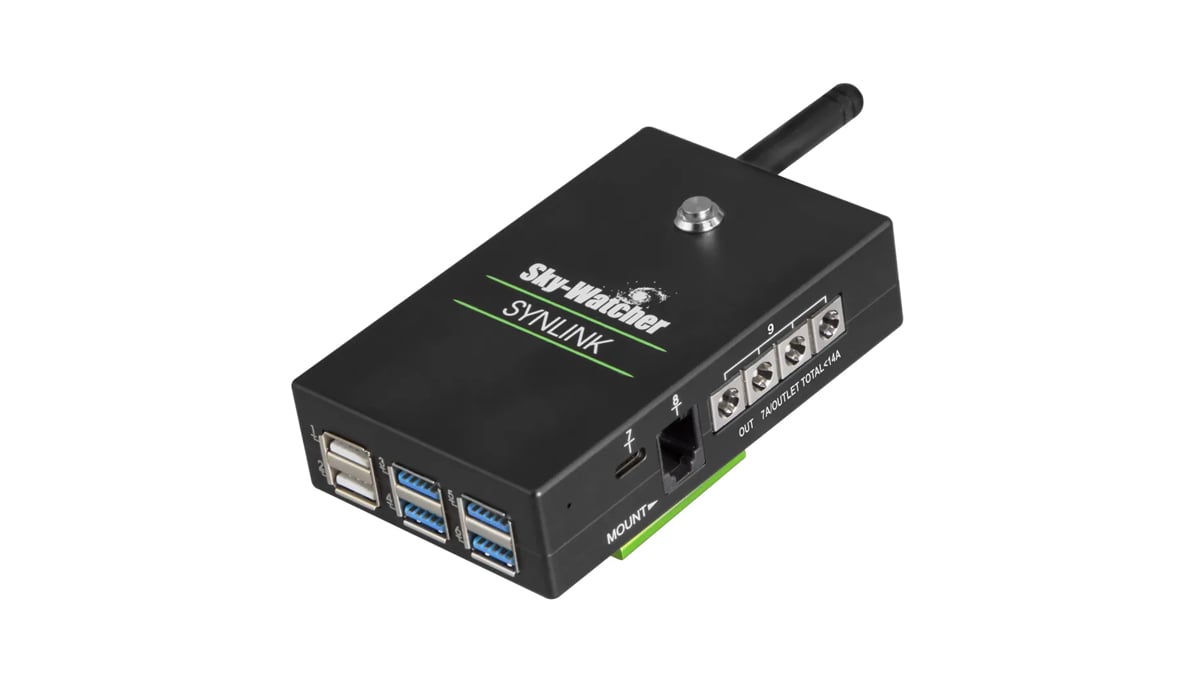
Many astrophotographers use a small computer to bring all of this under one control system. Sky-Watcher now joins the market with SynLink, a new astrophotography controller. SynLink works as a central control box for cameras, mounts, and other imaging accessories. It also handles power, USB connections, and wireless communication.
A small controller with a lot of connections
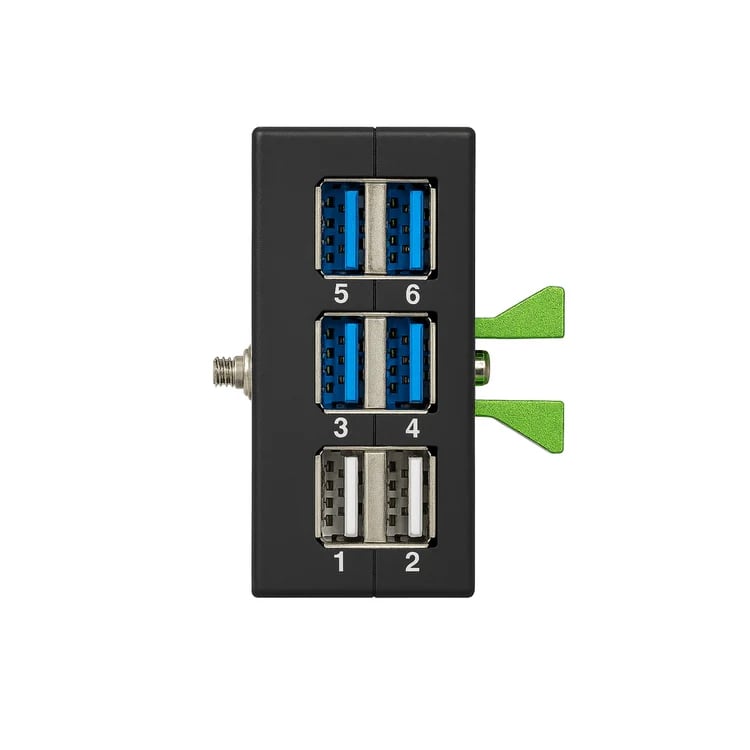
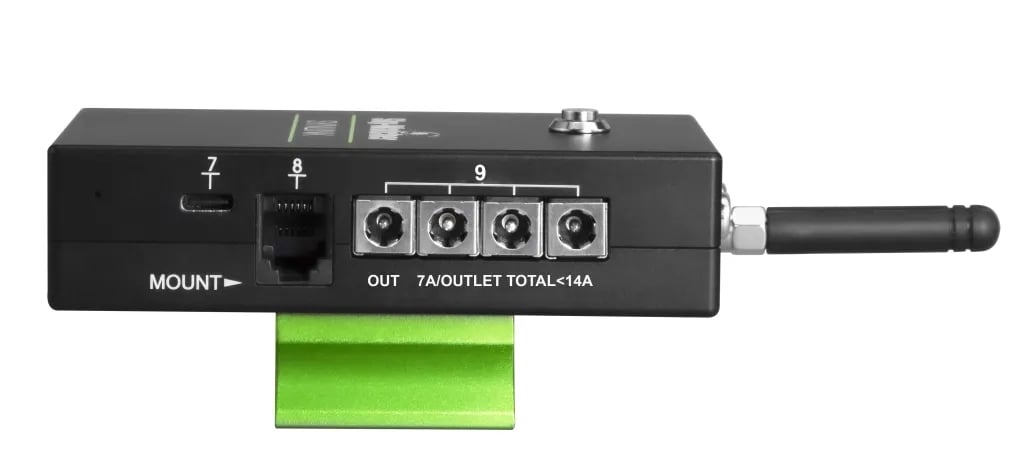
The first thing that makes SynLink stand out is the number of connections. It has four USB 3.0 ports, two USB 2.0 ports, and one USB Type-C port. There is also a UART connection for Sky-Watcher mounts.
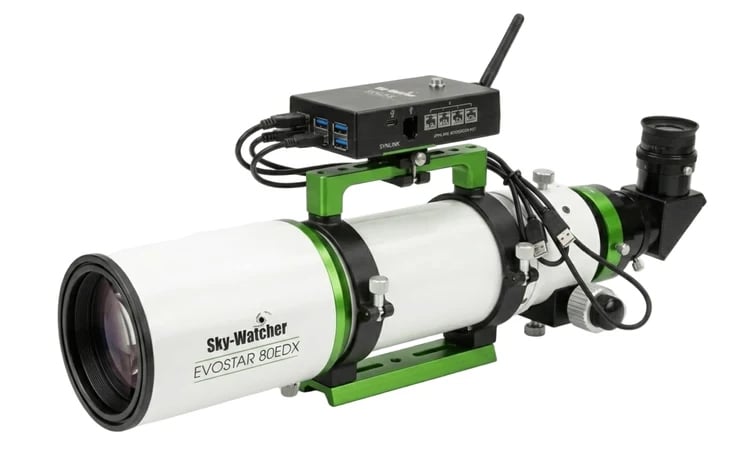
Seven USB connections give an astrophotographer plenty of room to build a fairly sophisticated rig. A cooled imaging camera can occupy one of the USB 3.0 ports. Another can handle the guide camera, while a focuser or filter wheel takes another connection. The remaining ports leave some space for additional accessories.
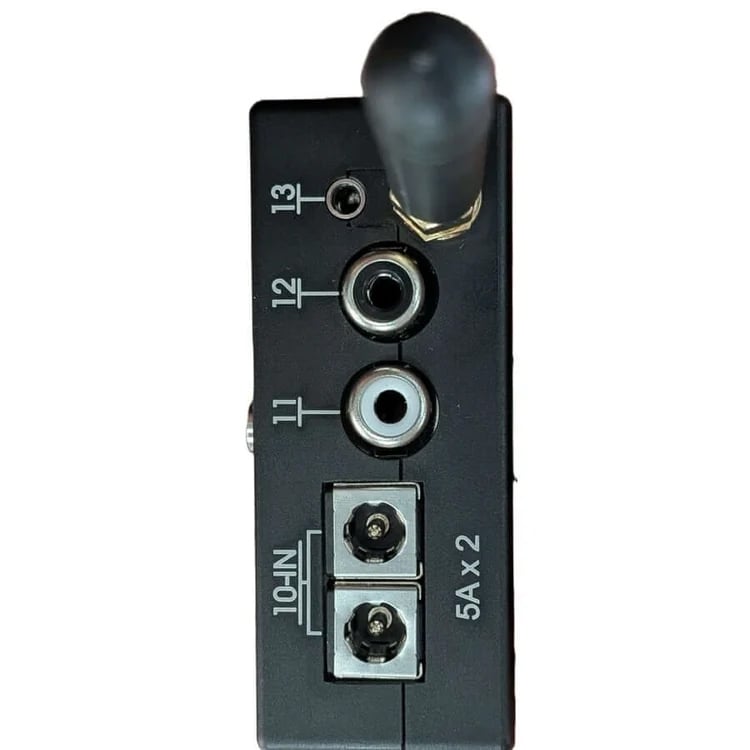
Sky-Watcher has also built power distribution into SynLink. The controller accepts up to 14A of DC input and provides four DC power outputs. Each output can supply up to 7A, although the total output remains limited to 14A. Two separate outputs handle dew-heater bands.
The controller also includes reverse-polarity protection. Sky-Watcher has fitted 64GB of internal storage, while its specifications mention support for high-speed external storage. A USB-Ethernet adapter can also add a wired network connection.
The unit connects over dual-band 2.4GHz and 5GHz Wi-Fi. Sky-Watcher supports Android, iOS, Windows, and macOS, so users can operate the system from a phone, tablet, or computer.
SynLink handles multiple jobs
The system includes a guided polar-alignment procedure. It also uses plate solving to work out where the telescope points. Once the software identifies the star field in an image, it can use that information for GOTO and automatic target centering.
Focusing gets the same treatment. SynLink includes a focus wizard and automatic focusing functions. That should help users who run electronic focusers and want the system to handle focus without repeated manual adjustments.
The software then moves into the capture stage. Sky-Watcher lists single exposures, simple and advanced sequences, mosaics, and video among the available modes. An astrophotographer can plan a sequence and let the controller work through it while the telescope continues collecting data.
The SynLink is not solely for people who own a Sky-Watcher setup. The company says the controller works with most major astronomical camera brands. It also supports DSLR and mirrorless cameras, mounts, electronic focusers, autoguiders, and filter wheels.
EAA and planetary imaging
SynLink is not limited to conventional deep-sky imaging. Sky-Watcher lists Electronically Assisted Astronomy, or EAA, among the system’s intended uses, along with live stacking, which combines successive exposures and displays the result during an observing session.
With live stacking, an observer can point the telescope at a deep-sky object and watch the image develop as the camera collects more frames. The result can appear on a connected phone, tablet, or computer during the session.
Sky-Watcher also includes video capture for planetary photography. Planetary imagers often work with short exposures and large numbers of frames, so a dedicated video mode is helpful alongside the long-exposure workflows aimed at deep-sky targets.
Key specifications, price and availability
| Power Input | Up to 14 A DC with reverse polarity protection |
| DC Power Outputs | 4 outputs (7 A each), 14 A maximum total |
| Dew Heater Outputs | 2 dedicated outputs |
| USB Ports | 4 × USB 3.0, 2 × USB 2.0, 1 × USB Type-C |
| Connectivity | Dual-band Wi-Fi (2.4 GHz / 5 GHz) |
| Internal Storage | 64 GB |
| Capture Modes | Single Exposure, Mosaic, Simple Sequences, Advanced Sequences, Video |
| Advanced Features | Simulation mode for learning and testing |
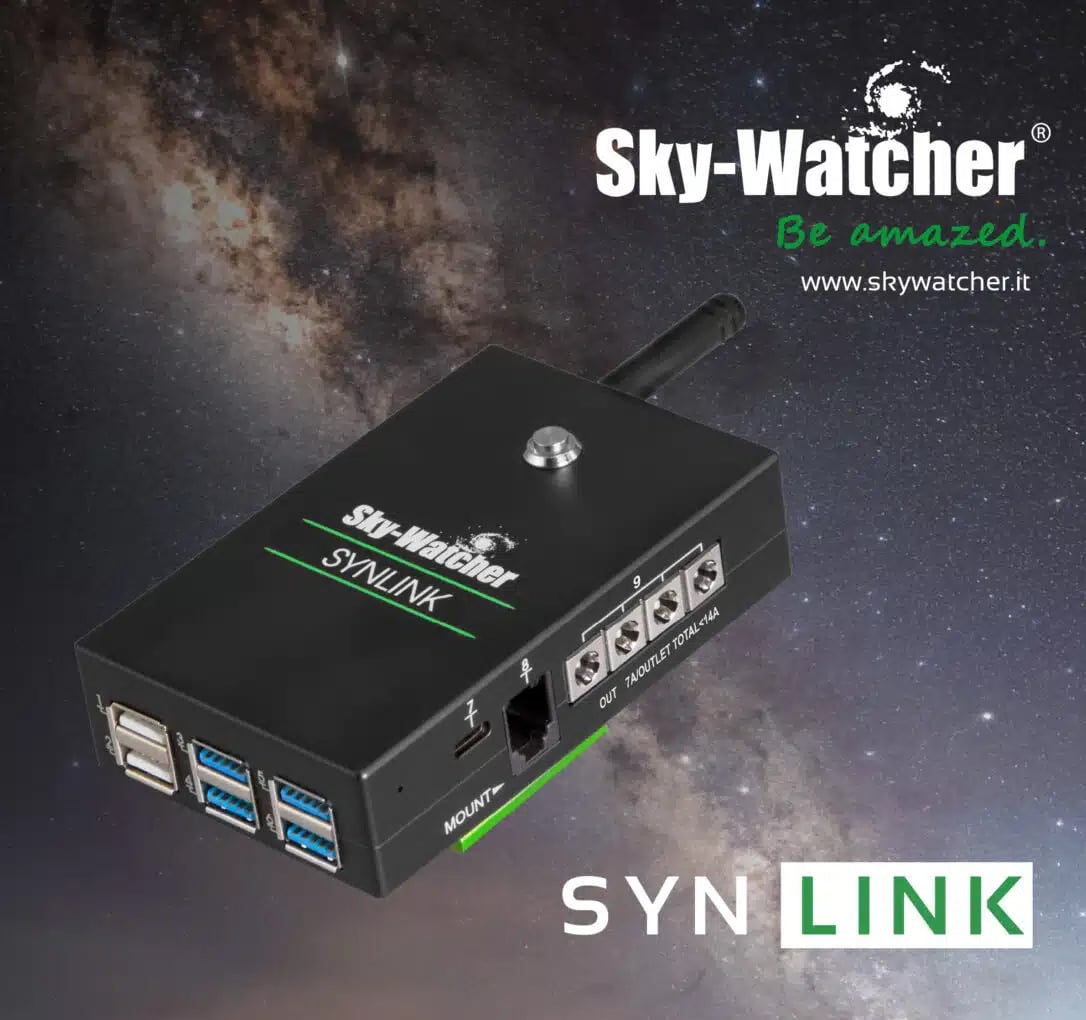
The Sky-Watcher Synlink has been released in some selected markets, including Europe and Australia, where you can order it. However, it has not been released in the US market. While there is no official confirmation of the US market release date, we can expect it by late 2026.
The product is currently listed at €499 and AUD 799. In the US market, we can expect it to sell for $599.
Clear skies!
See more from DIYPhotography.net on Google
Add DIYPhotography.net as a trusted source. This makes
our stories more likely to appear in your Google Search results.
 Add as a preferred source on Google

Soumyadeep Mukherjee
Soumyadeep Mukherjee is an award-winning astrophotographer from India. He has a doctorate degree in Linguistics. His work extends to the sub-genres of nightscape, deep sky, solar, lunar and optical phenomenon photography. He is also a photography educator and has conducted numerous workshops. His works have appeared in over 40 books & magazines including Astronomy, BBC Sky at Night, Sky & Telescope among others, and in various websites including National Geographic, NASA, Forbes. He was the first Indian to win “Astronomy Photographer of the Year” award in a major category.

Join the Discussion
DIYP Comment Policy
Be nice, be on-topic, no personal information or flames.