
























Subaru Telescope Captures a Galaxy 260 Million Light-Years Away
Sep 8, 2026
Soumyadeep Mukherjee
Soumyadeep Mukherjee is an award-winning astrophotographer from India. He has a doctorate degree in Linguistics. His work extends to the sub-genres of nightscape, deep sky, solar, lunar and optical phenomenon photography. He is also a photography educator and has conducted numerous workshops. His works have appeared in over 40 books & magazines including Astronomy, BBC Sky at Night, Sky & Telescope among others, and in various websites including National Geographic, NASA, Forbes. He was the first Indian to win “Astronomy Photographer of the Year” award in a major category.
Share:
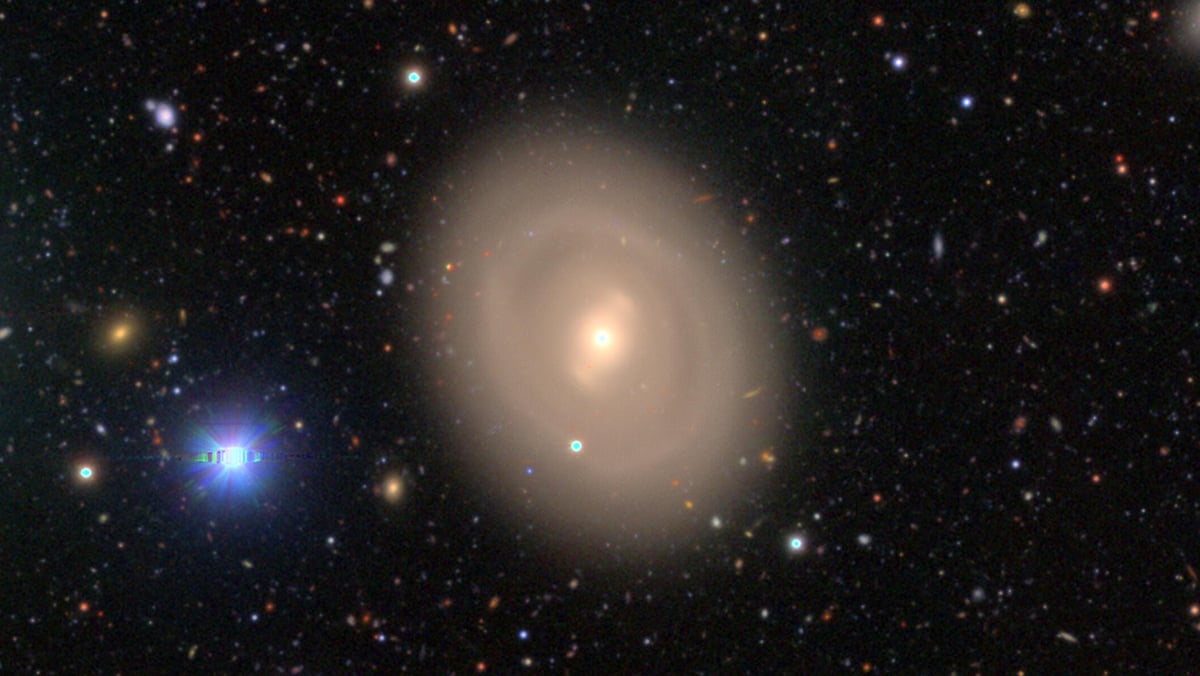
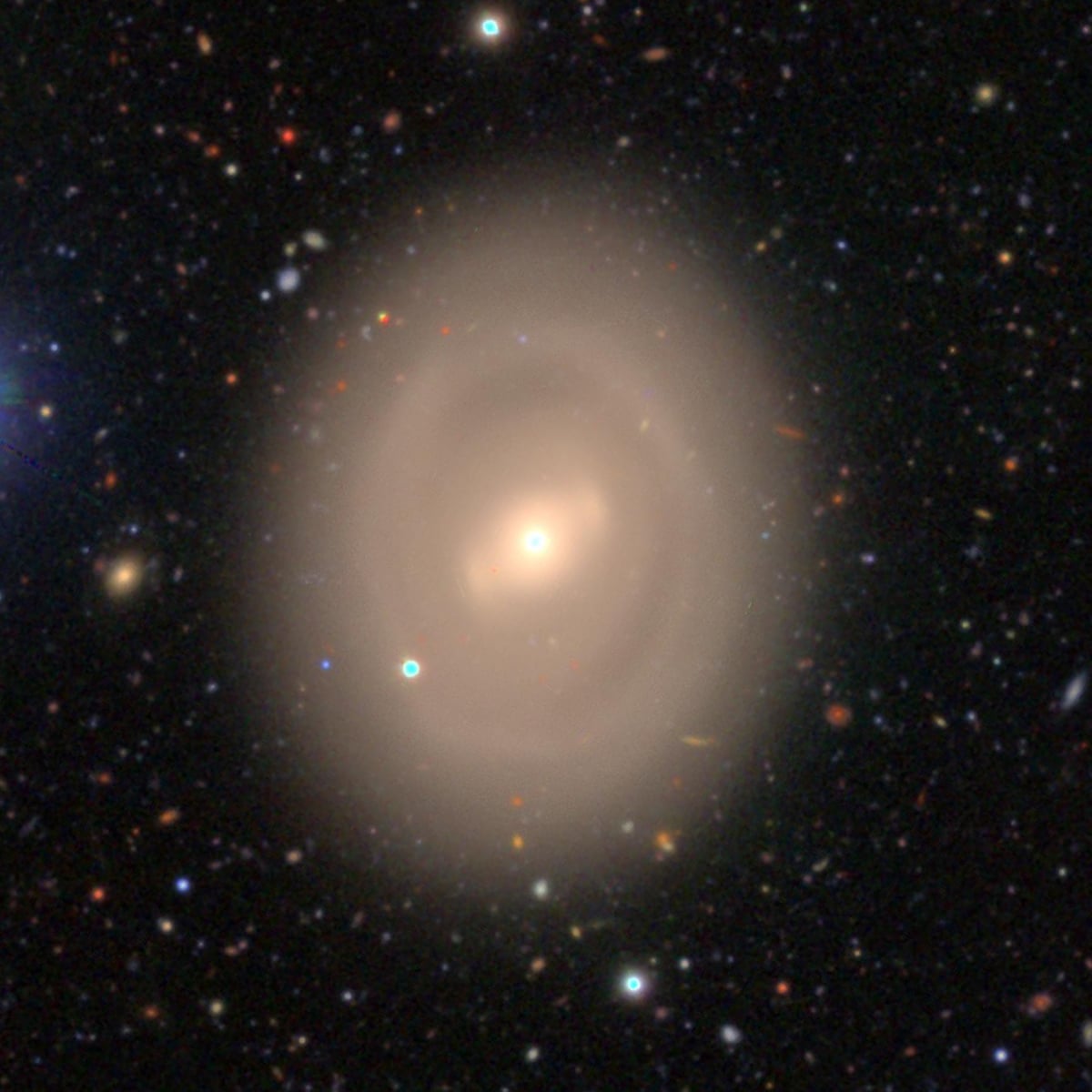
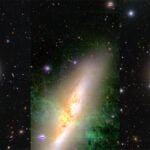
A new Subaru Telescope image has revealed an unusual lenticular galaxy 260 million light-years from Earth. NGC 4996 looks very different from the familiar spiral galaxies seen in many deep-sky photographs. Its broad disk has no obvious spiral arms. In the galaxy, a bright bar cuts through its centre, while a much fainter ring surrounds the main body. The image was taken with Hyper Suprime-Cam (HSC), mounted on Subaru’s 8.2-metre telescope on Maunakea, Hawaii.
NGC 4996: A different kind of galaxy
The familiar spiral galaxy has a disk, a central bulge, and arms that wind outwards from the center. Those arms contain stars, gas and dust, and many spiral galaxies continue to form new stars within them. NGC 4996 has a disk, but its structure no longer has those obvious arms.
Astronomers classify NGC 4996 as a lenticular galaxy. The name comes from its lens-like appearance when viewed from certain angles. Lenticular galaxies occupy a middle position in the traditional Hubble classification between spiral and elliptical systems. They can have a substantial disk and central bulge, yet their spiral structure has largely disappeared.
The galaxy’s lack of prominent spiral arms is linked to its current state. Lenticular galaxies generally contain less cold gas than active spiral galaxies. Cold gas provides the raw material for new stars. When that supply falls, star formation declines, and the features associated with an active spiral system can become less pronounced.
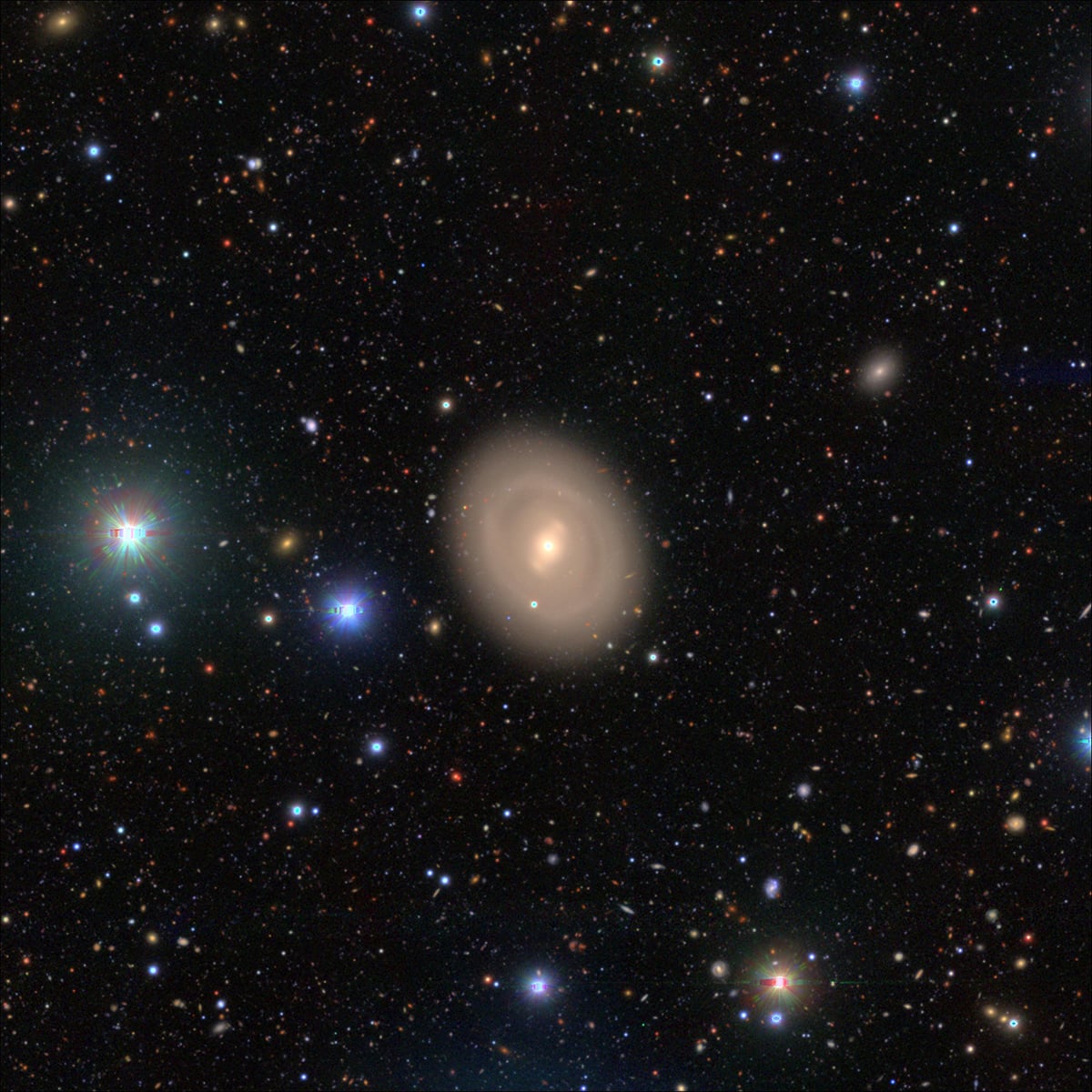
A faint ring around the galaxy’s bright centre
The outer ring is one of the more subtle features in Subaru’s image. It sits well beyond the bright central region and produces far less light. That makes it considerably harder to record than the galaxy’s central bar.
In NGC 4996, the faint ring extends beyond the brighter main body. Subaru’s observations show it alongside the central bar rather than as an isolated feature. Researchers can examine the relationship between these structures when considering the galaxy’s past.
The Subaru Telescope‘s description connects the ring and bar with the galaxy’s former disk. If that interpretation is correct, some of NGC 4996’s earlier structure has survived even though its spiral arms are no longer prominent. The resulting photograph gives astronomers a chance to study the galaxy beyond its brightest region.
Hyper Suprime-Cam: A wide view of the sky
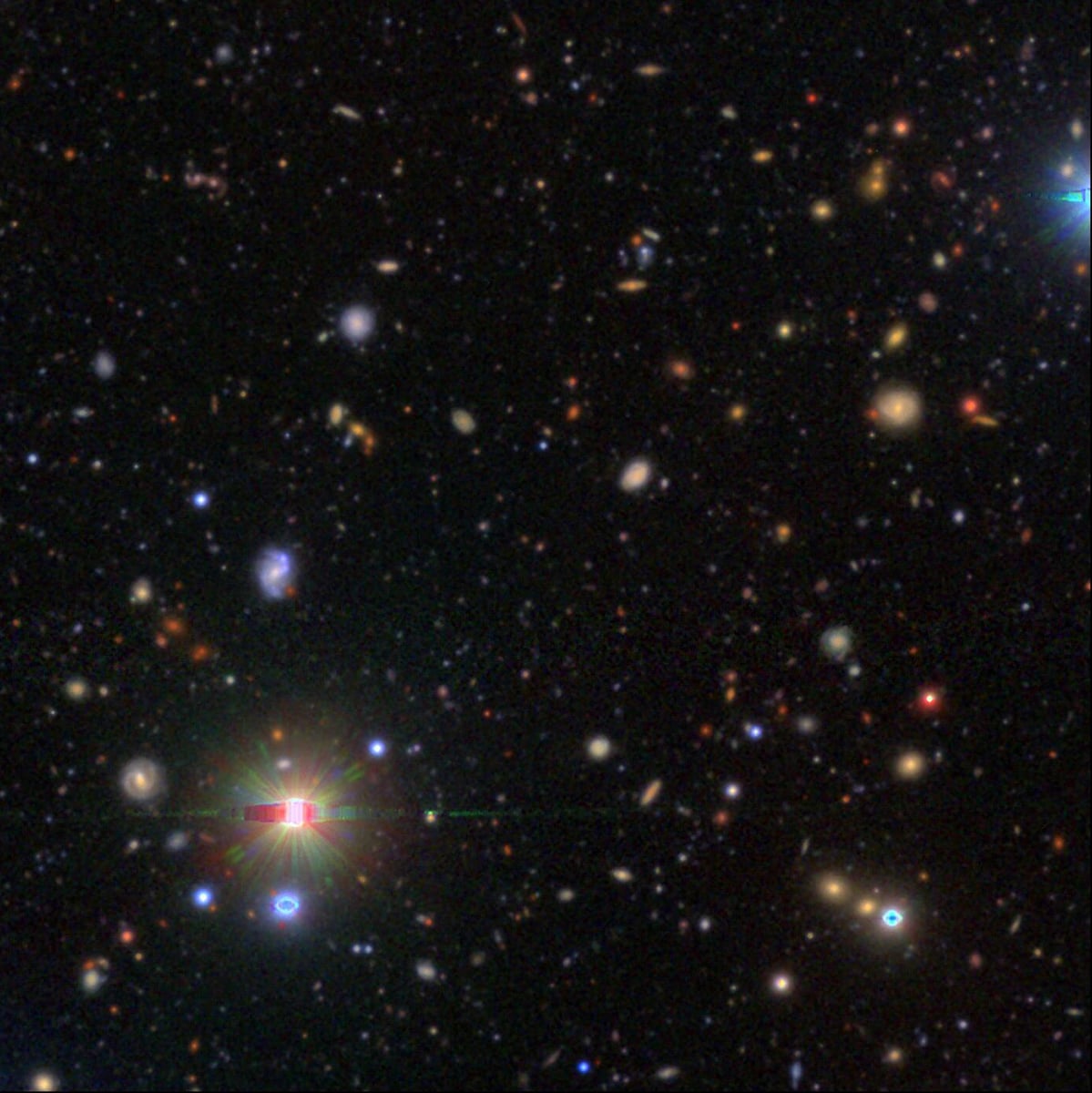
Subaru photographed NGC 4996 with Hyper Suprime-Cam, one of the observatory’s major optical imaging instruments. HSC has a large detector array with a wide field of view, allowing the telescope to record substantial areas of sky in individual exposures.
The camera uses 104 scientific CCDs and has a field of view of approximately 1.5 degrees across. Its pixel scale is about 0.17 arcseconds per pixel. HSC has 870 megapixels, making it one of the major wide-field imaging systems used for astronomical surveys.
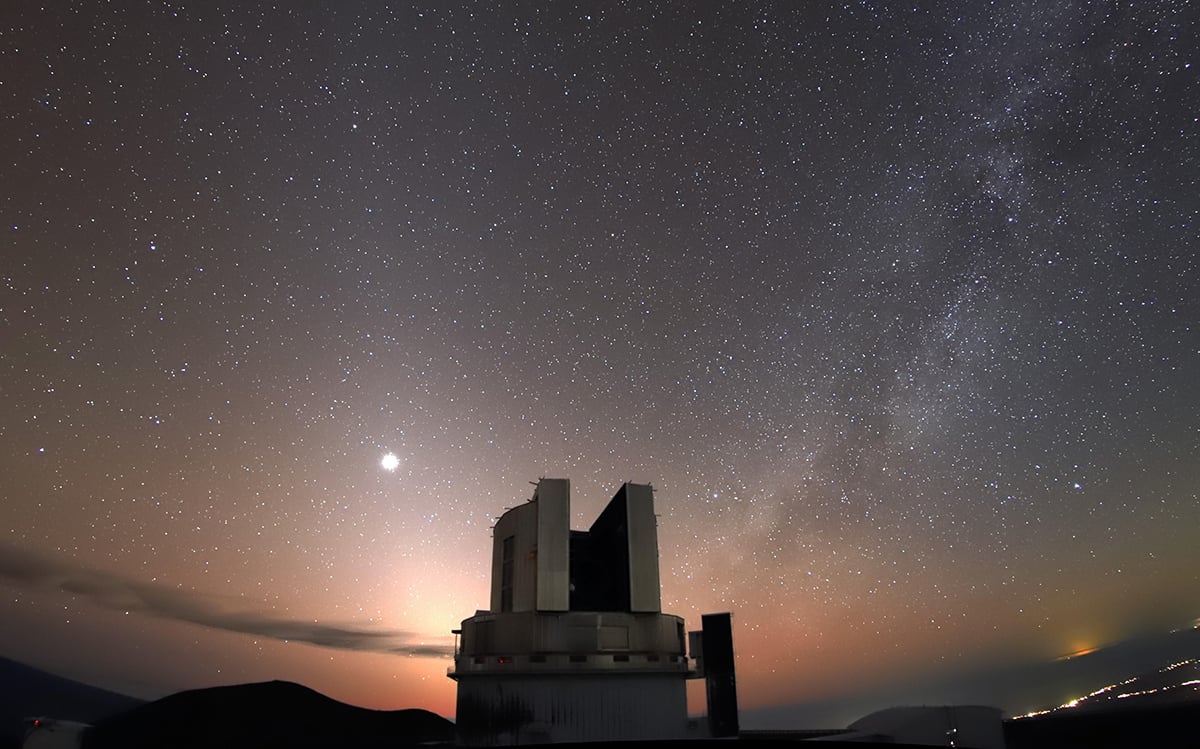
This field of view is larger than the apparent size of many distant galaxies. The Moon spans about half a degree across the sky, while HSC covers roughly three times that width. A single exposure can consequently contain the target galaxy together with a large area of its surroundings.
The telescope itself provides the light-gathering power. Subaru’s primary mirror measures 8.2 metres across, giving astronomers access to faint objects and low-surface-brightness structures. The telescope operates at Maunakea in Hawaii and forms part of the National Astronomical Observatory of Japan’s observing facilities.
Clear skies!
See more from DIYPhotography.net on Google
Add DIYPhotography.net as a trusted source. This makes
our stories more likely to appear in your Google Search results.
 Add as a preferred source on Google

Soumyadeep Mukherjee
Soumyadeep Mukherjee is an award-winning astrophotographer from India. He has a doctorate degree in Linguistics. His work extends to the sub-genres of nightscape, deep sky, solar, lunar and optical phenomenon photography. He is also a photography educator and has conducted numerous workshops. His works have appeared in over 40 books & magazines including Astronomy, BBC Sky at Night, Sky & Telescope among others, and in various websites including National Geographic, NASA, Forbes. He was the first Indian to win “Astronomy Photographer of the Year” award in a major category.
Related Posts
 Subaru Telescope Captures a Galaxy Fading 20-Fold in 20 Years
 Hubble just sent back this incredible image of the NGC 2775 galaxy, 67 million light years away
 Astrophotographer captures James Webb telescope from 1 million kilometers away
 Subaru Telescope Captures Three Galaxies: Three Different Stories
Join the Discussion
DIYP Comment Policy
Be nice, be on-topic, no personal information or flames.