





















These Photos Show the Colors of the Night Sky that You Can’t See
Aug 21, 2026
Soumyadeep Mukherjee
Soumyadeep Mukherjee is an award-winning astrophotographer from India. He has a doctorate degree in Linguistics. His work extends to the sub-genres of nightscape, deep sky, solar, lunar and optical phenomenon photography. He is also a photography educator and has conducted numerous workshops. His works have appeared in over 40 books & magazines including Astronomy, BBC Sky at Night, Sky & Telescope among others, and in various websites including National Geographic, NASA, Forbes. He was the first Indian to win “Astronomy Photographer of the Year” award in a major category.
Share:
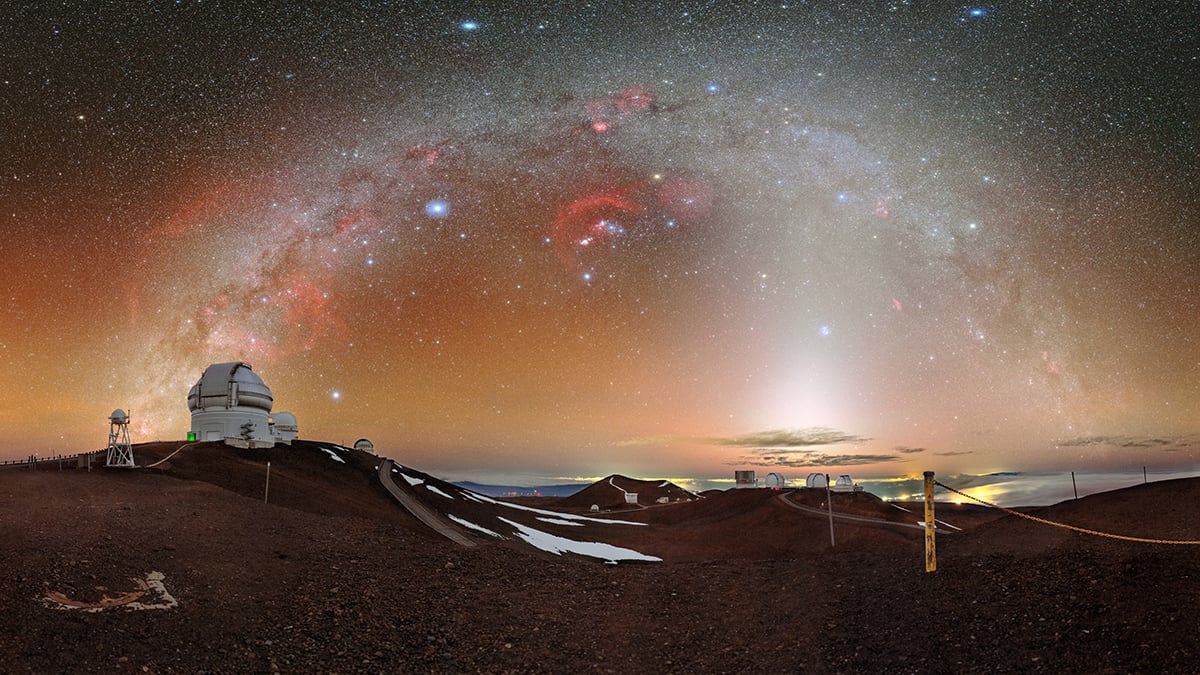
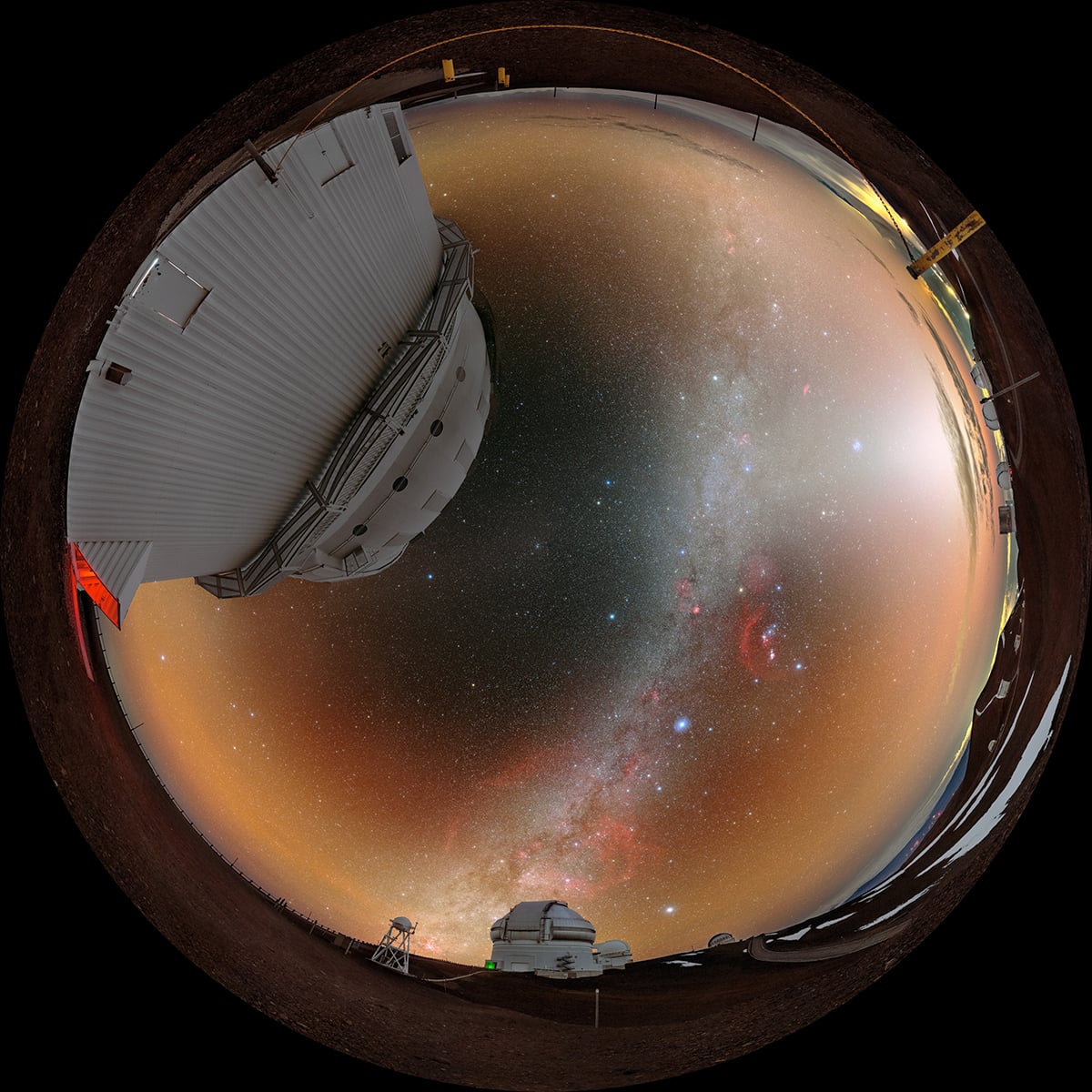
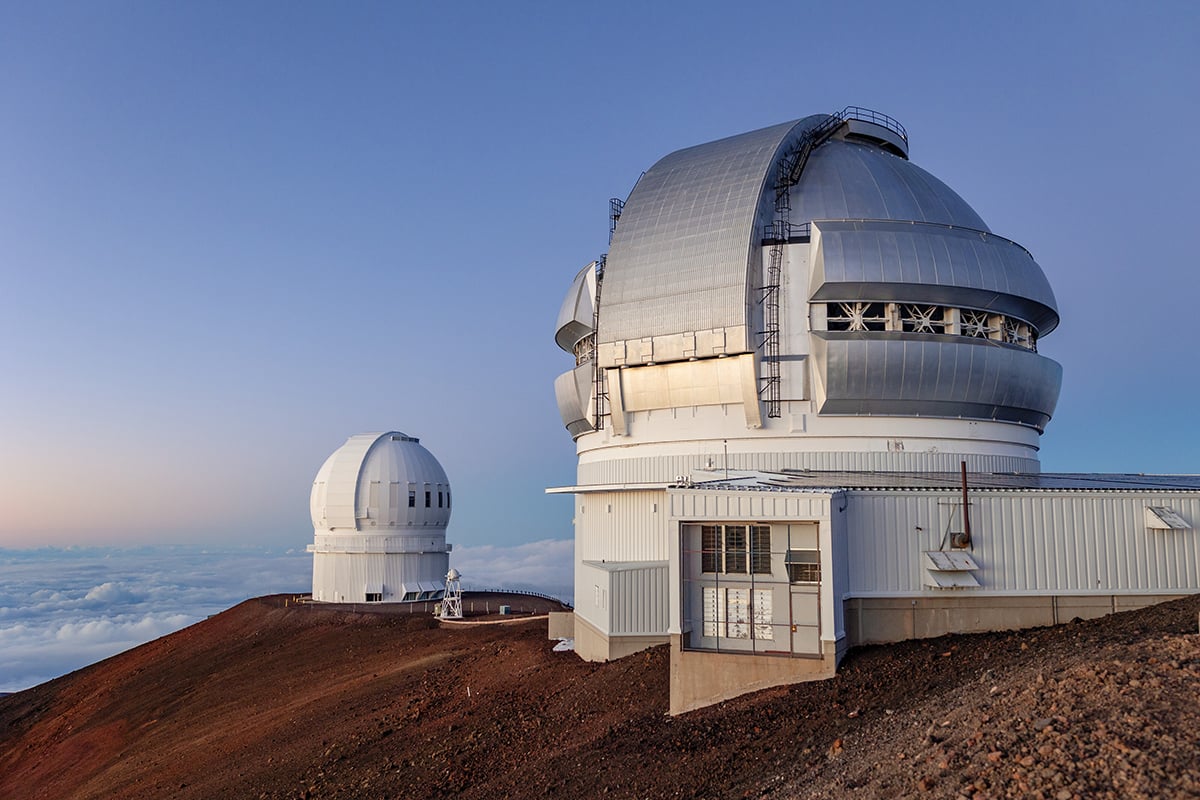
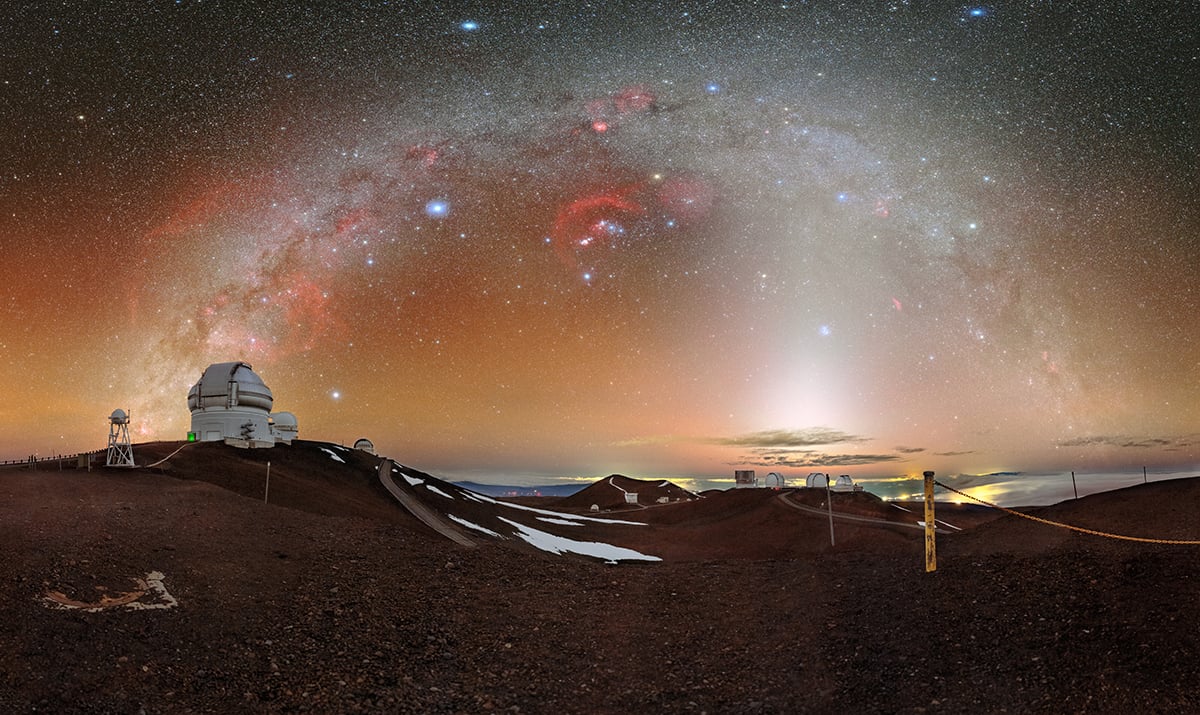
When you look at the night sky, how many colors do you see? Most likely, it will be all black to the naked eye. A camera, with the help of a long exposure, however, can capture more. A newly released series of NOIRLab photographs shows Gemini North beneath a colorful night sky on Maunakea in Hawai‘i. Slovak astrophotographer Tomáš Slovinský took these images during the NOIRLab 2022 Photo Expedition.
Gemini North sits above most of Hawai‘i’s atmosphere
The location of Gemini North is as important as the telescope’s 8.1-metre mirror. Maunakea rises to more than 4,000 meters above the Pacific, placing the observatory above much of Earth‘s atmosphere. The summit has long attracted astronomical facilities because of its combination of altitude, dry air, dark skies and favorable observing conditions.
Infrared astronomy benefits strongly from dry conditions. Water vapor absorbs many infrared wavelengths before they reach the ground. Placing a telescope high above much of that moisture opens more of the infrared spectrum for observation.
The summit environment also helps with visible-light observations. Atmospheric turbulence causes the familiar twinkling of stars, but it also limits the resolution of telescopes. Even a very large primary mirror cannot recover information that atmospheric turbulence has blurred before the light reaches it.
What Gemini North observes
Gemini North does not concentrate on one particular class of astronomical objects. Its instruments support observations across a broad range of research areas.
Astronomers can image distant galaxies, measure the spectra of stars and galaxies, study planets, and investigate objects in the outer Solar System. Infrared observations add another layer because they can reveal objects and structures that are difficult to study at visible wavelengths.
Spectroscopy is especially important. A spectrograph separates incoming light into its component wavelengths. Astronomers can then examine absorption and emission features within the spectrum. Those features can reveal chemical composition, temperature, velocity, and other physical properties.
The telescope’s infrared capabilities also make it useful for studying cool objects and dusty regions. Newly forming stars, for example, often sit inside clouds of gas and dust that block visible light. Infrared observations can penetrate some of that obscuring material.
The “Marmalade” sky in the photographs
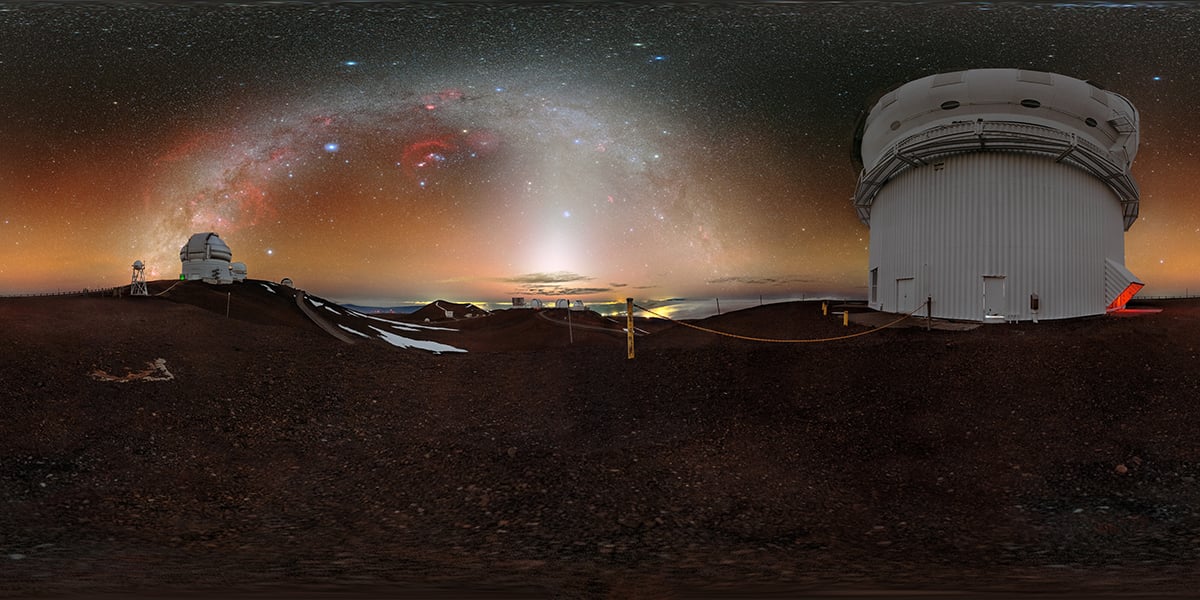
The sky above Gemini North is probably the most eye-catching part of the photograph. Long exposures can reveal faint structures that are barely visible to the human eye. The Milky Way contributes much of the dense stellar background. Thousands of stars become visible in a single exposure, along with dark regions created by interstellar dust. You can enjoy the interactive 360-degree image here.
Another interesting phenomenon seen in the image is the zodiacal light. This faint glow comes from sunlight scattered by dust particles distributed throughout the Solar System. Under a dark sky, it can become visible as a broad, diffuse feature.
It is airglow that contributes to the orange hue of the images. Atoms and molecules high in Earth’s atmosphere emit light after receiving energy. Different chemical processes produce emission at different wavelengths, creating subtle colours that cameras can record during longer exposures.
While most of these cannot be seen or photographed from urban settings, they are easier to photograph from a site such as Maunakea. The summit has a dark environment and sits above much of the cloud and moisture found at lower elevations.
Clear skies!
See more from DIYPhotography.net on Google
Add DIYPhotography.net as a trusted source. This makes
our stories more likely to appear in your Google Search results.
 Add as a preferred source on Google

Soumyadeep Mukherjee
Soumyadeep Mukherjee is an award-winning astrophotographer from India. He has a doctorate degree in Linguistics. His work extends to the sub-genres of nightscape, deep sky, solar, lunar and optical phenomenon photography. He is also a photography educator and has conducted numerous workshops. His works have appeared in over 40 books & magazines including Astronomy, BBC Sky at Night, Sky & Telescope among others, and in various websites including National Geographic, NASA, Forbes. He was the first Indian to win “Astronomy Photographer of the Year” award in a major category.




Join the Discussion
DIYP Comment Policy
Be nice, be on-topic, no personal information or flames.