






















Metallic Waves on Mars: Mars Express Captures a Frozen Desert
Jul 31, 2026
Soumyadeep Mukherjee
Soumyadeep Mukherjee is an award-winning astrophotographer from India. He has a doctorate degree in Linguistics. His work extends to the sub-genres of nightscape, deep sky, solar, lunar and optical phenomenon photography. He is also a photography educator and has conducted numerous workshops. His works have appeared in over 40 books & magazines including Astronomy, BBC Sky at Night, Sky & Telescope among others, and in various websites including National Geographic, NASA, Forbes. He was the first Indian to win “Astronomy Photographer of the Year” award in a major category.
Share:
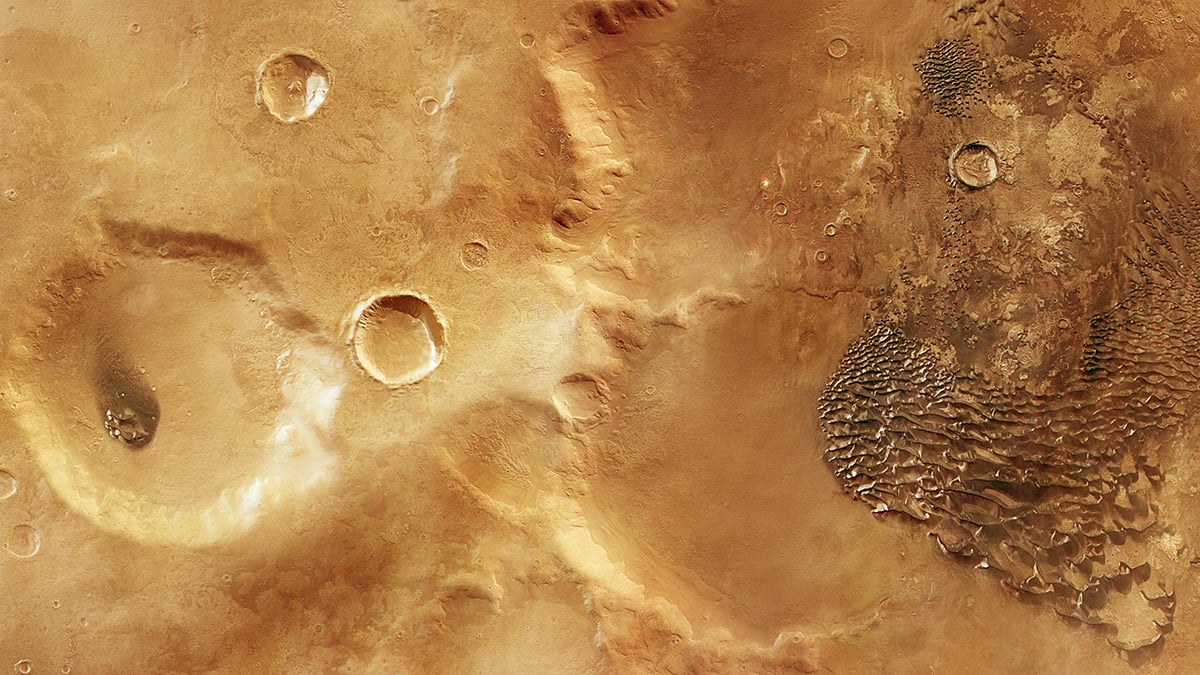
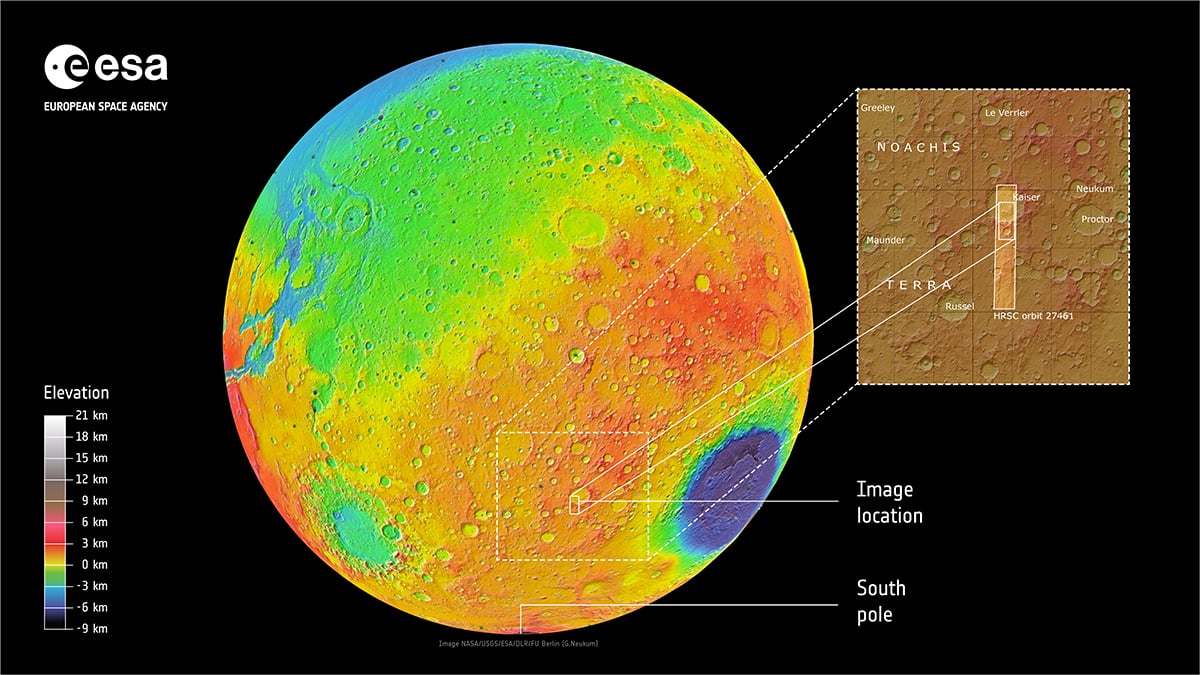
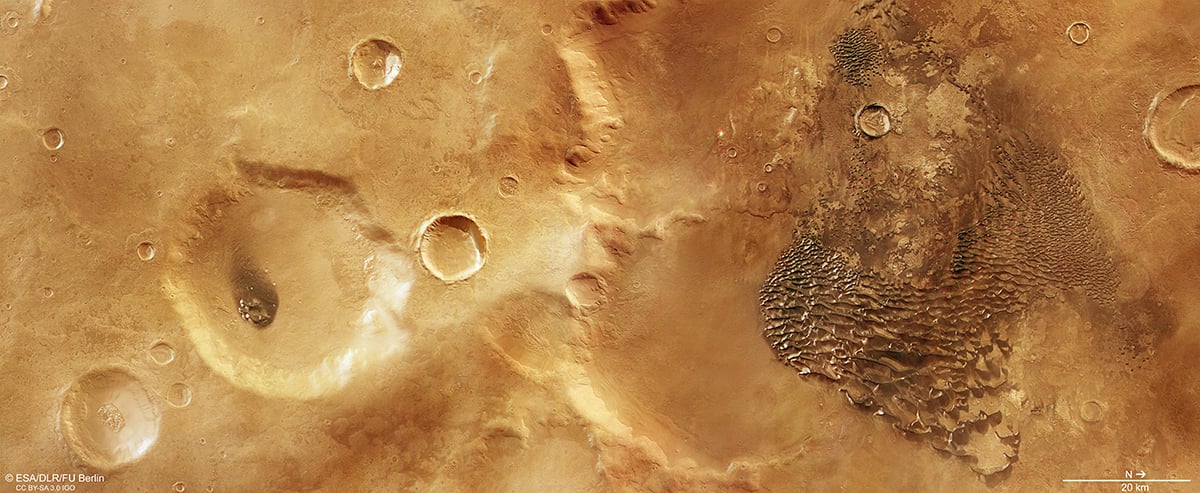
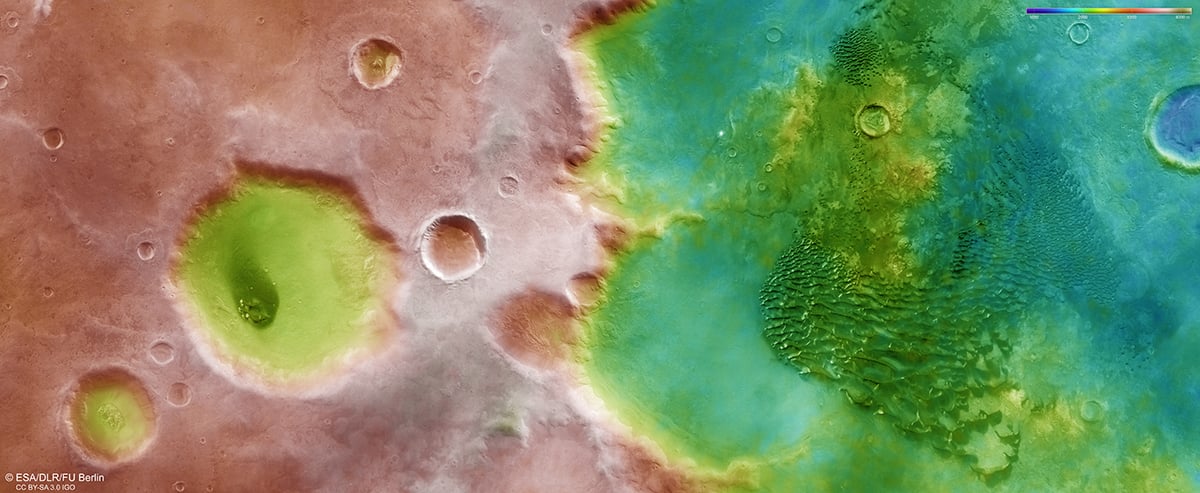
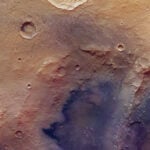
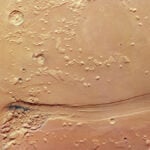
A new image from ESA’s Mars Express orbiter has revealed an extensive dune field inside Kaiser Crater, a 180-kilometre-wide impact basin located in Mars’ ancient southern highlands. Captured by the spacecraft’s High Resolution Stereo Camera (HRSC), the image shows a complex landscape shaped by wind-driven sediment transport and seasonal frost deposition. The unusual metallic appearance of the dunes is caused by the contrast between dark basaltic sand and bright surface frost.
Kaiser Crater lies within Noachis Terra, a region that preserves some of the oldest terrain on Mars. The area contains evidence of ancient geological activity, including signs that water once altered the planet’s surface billions of years ago. The crater provides scientists with an opportunity to study both the early evolution of Mars and the comparatively newer processes that change its landscape.
A crater preserving billions of years of Martian history
Kaiser Crater lies in Noachis Terra, one of the oldest and most heavily cratered regions on Mars. This area preserves rocks and landscapes dating back to the Noachian period, a time when Mars was a very different planet.
Around four billion years ago, Mars likely had a thicker atmosphere and a warmer climate. Evidence from orbiting spacecraft and surface missions shows that liquid water once flowed across parts of the planet. Ancient valleys carved into the landscape, hydrated minerals trapped inside rocks, and deposits left behind by water all point towards a wetter past.
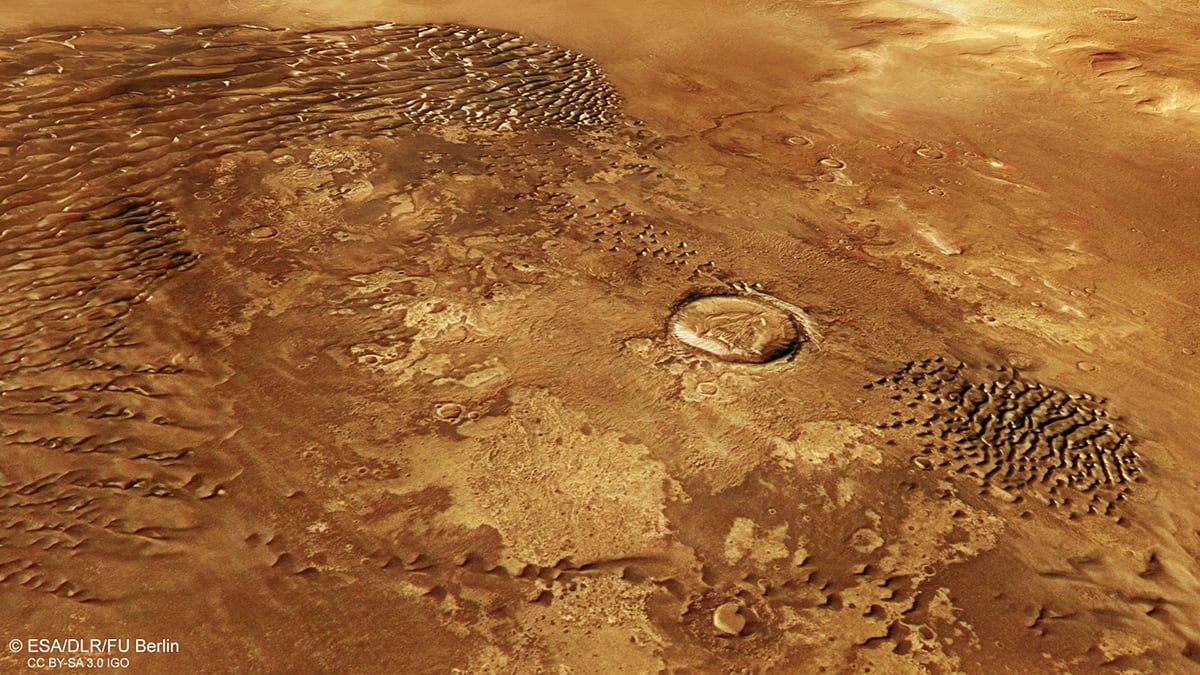
The dunes inside Kaiser Crater are much younger than the crater itself. They formed after loose sediments collected within the impact basin. The crater walls helped trap these materials, creating an environment where wind could gradually organize the sand into large dune fields. The combination of ancient geology and active surface processes makes Kaiser Crater especially valuable for planetary scientists.
Winds sculpting Mars’ giant dunes
The existence of large dunes on Mars raises an interesting question. How can a planet with such a thin atmosphere move enough sand to create these structures? The Martian atmosphere is roughly 100 times thinner than Earth’s. Surface pressure is extremely low, and the air contains mostly carbon dioxide.
Mars experiences great seasonal changes. Dust storms can spread across thousands of kilometers, lifting fine particles high into the atmosphere. Sand movement works differently on Mars compared with Earth. The thin atmosphere means winds must generally reach higher speeds to move grains. However, once particles begin moving, they can gradually reshape the surface.
Over long periods, this process creates dunes, ripples, and sand sheets. Their shapes reveal information about wind direction and atmospheric behaviour. The dunes inside Kaiser Crater are called barchan and transverse dunes, depending on their exact shape and orientation. Their curved ridges record the movement of sand under prevailing winds.
Why the Martian Dunes Look Like Liquid Metal
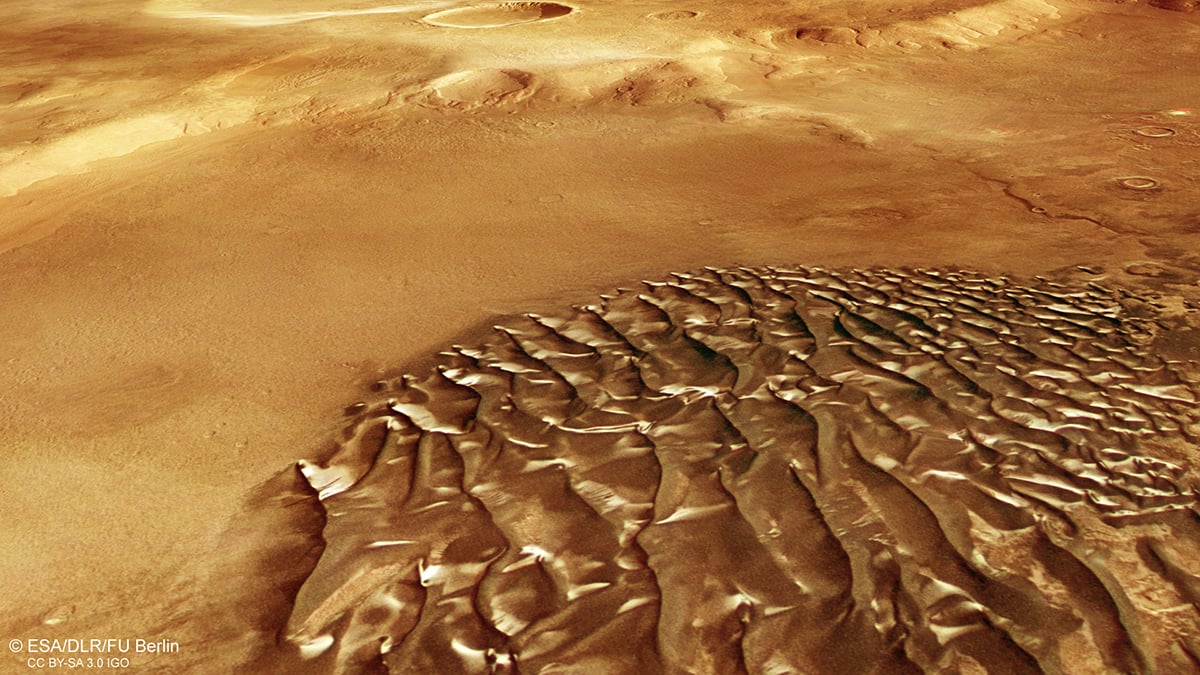
The most unusual feature of the Mars Express image is the bright, silvery appearance of the dune field. The effect is created by the interaction between frost and dark sand. The dunes are mainly composed of volcanic basaltic material. Mars has experienced extensive volcanic activity throughout its history, and dark volcanic rocks cover large regions of the planet.
During colder seasons, frost forms across parts of the surface. This frost can contain frozen carbon dioxide as well as water ice. When sunlight reflects from these bright deposits, the icy regions stand out strongly against the darker dunes.
Lighting conditions also influence the appearance. The HRSC image was captured when sunlight highlighted the curves and slopes of the dunes. Long shadows emphasised the height differences between ridges and valleys, giving the landscape a wave-like appearance.
Clear skies!
See more from DIYPhotography.net on Google
Add DIYPhotography.net as a trusted source. This makes
our stories more likely to appear in your Google Search results.
 Add as a preferred source on Google

Soumyadeep Mukherjee
Soumyadeep Mukherjee is an award-winning astrophotographer from India. He has a doctorate degree in Linguistics. His work extends to the sub-genres of nightscape, deep sky, solar, lunar and optical phenomenon photography. He is also a photography educator and has conducted numerous workshops. His works have appeared in over 40 books & magazines including Astronomy, BBC Sky at Night, Sky & Telescope among others, and in various websites including National Geographic, NASA, Forbes. He was the first Indian to win “Astronomy Photographer of the Year” award in a major category.

Join the Discussion
DIYP Comment Policy
Be nice, be on-topic, no personal information or flames.