























The Road to Insta360 Luna Ultra: The Evolution of Pocket Gimbal Cameras
Jun 8, 2026
Alysa Gavilan
Alysa Gavilan has spent years exploring photography through photojournalism and street scenes. She enjoys working with both film and mirrorless cameras, and her fascination with the craft has grown over the decades. Inspired by Vivian Maier, she is drawn to capturing everyday moments that often go unnoticed.
Share:
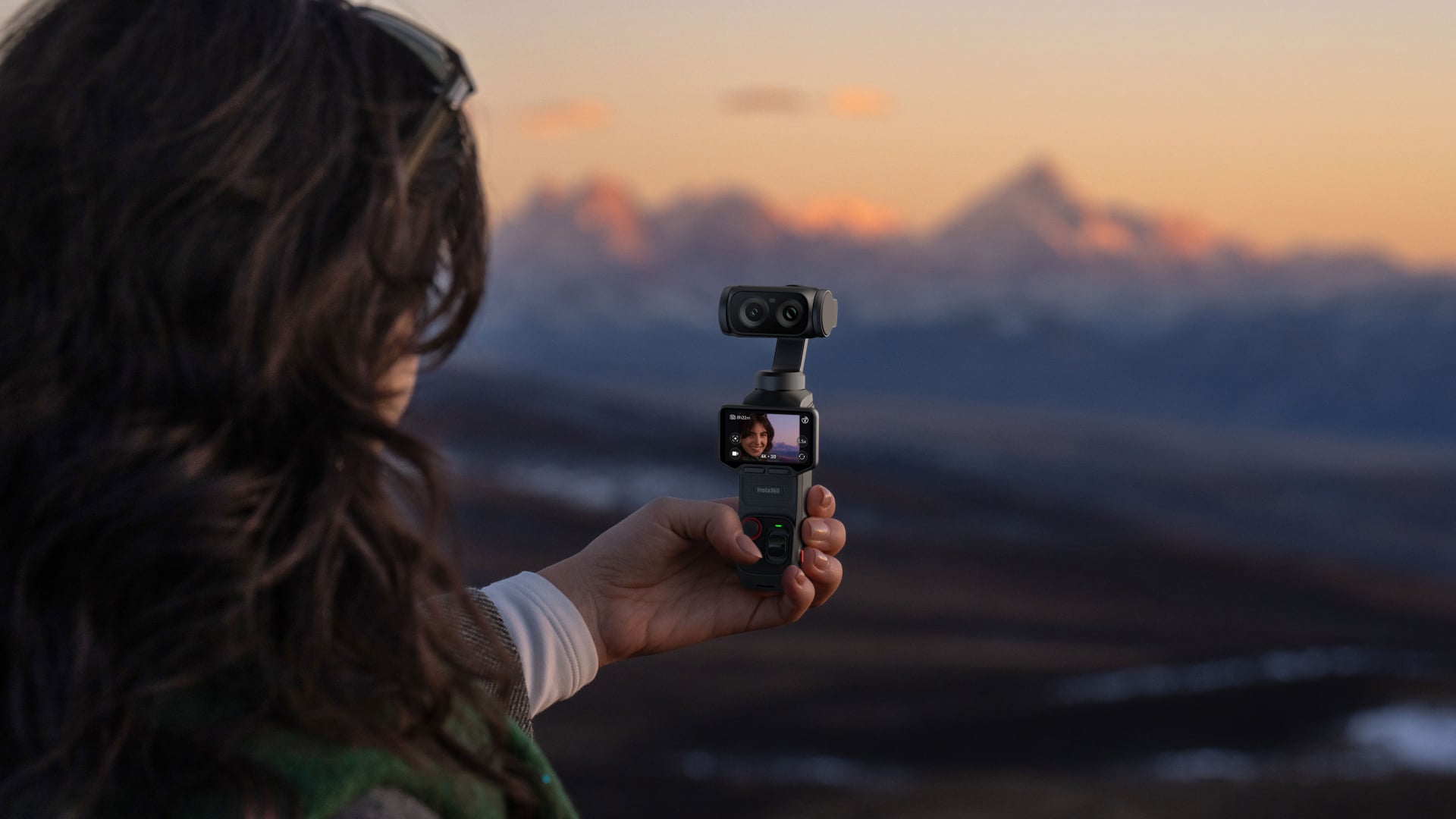
Pocket gimbal cameras in 2026 feel like a settled category, but the path to this point has been anything but straightforward.
What looks today like a clean, familiar form factor is the result of years of trial and error across stabilization rigs, compact cameras, action cams, and even early smartphone experiments. The design did not arrive fully formed, and it was never shaped by one company alone.
As more brands start entering the space again – like Insta360’s Luna Ultra – the story behind these devices matters more than ever. The similarities between products are often read as imitation, but the history shows something more layered.
This is a category built through repeated problem solving around the same set of constraints: how to stabilize motion, keep things compact, and make the camera simple enough to use on the move.
From External Stabilizers To Integrated Systems
Before pocket gimbal cameras existed, stabilization usually meant adding something external to a camera. Early handheld gimbals showed what was possible when motors started doing the work of smoothing movement in real time. Devices like the Feiyu G3 in 2013 were part of that early wave, bringing motorized stabilization to action cameras in a form that was still separate from the camera itself.
The next shift came when stabilization and camera systems began to merge into single devices. Rather than relying on separate accessories, manufacturers started integrating cameras and three axis gimbals into compact handheld units, making stabilized shooting simpler and more accessible.
Around the same period, modular approaches like the GoPro Karma Grip in 2016 kept the camera and stabilizer separate but tightly connected. That split approach mattered because it showed two possible directions for the category: full integration or flexible modularity.
The Move Toward Pocket Sized Design
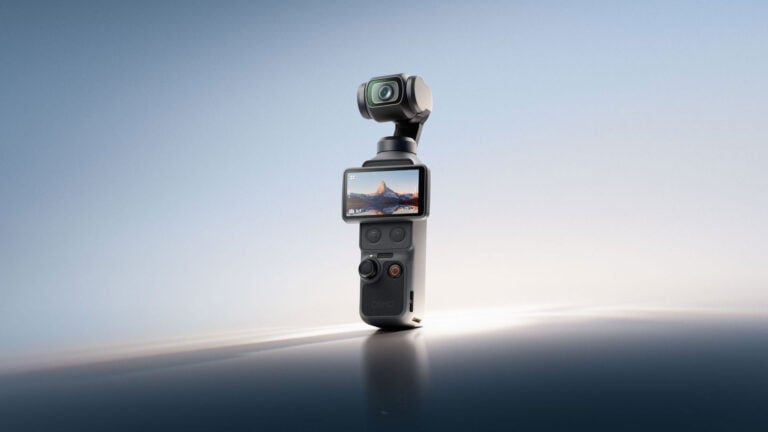
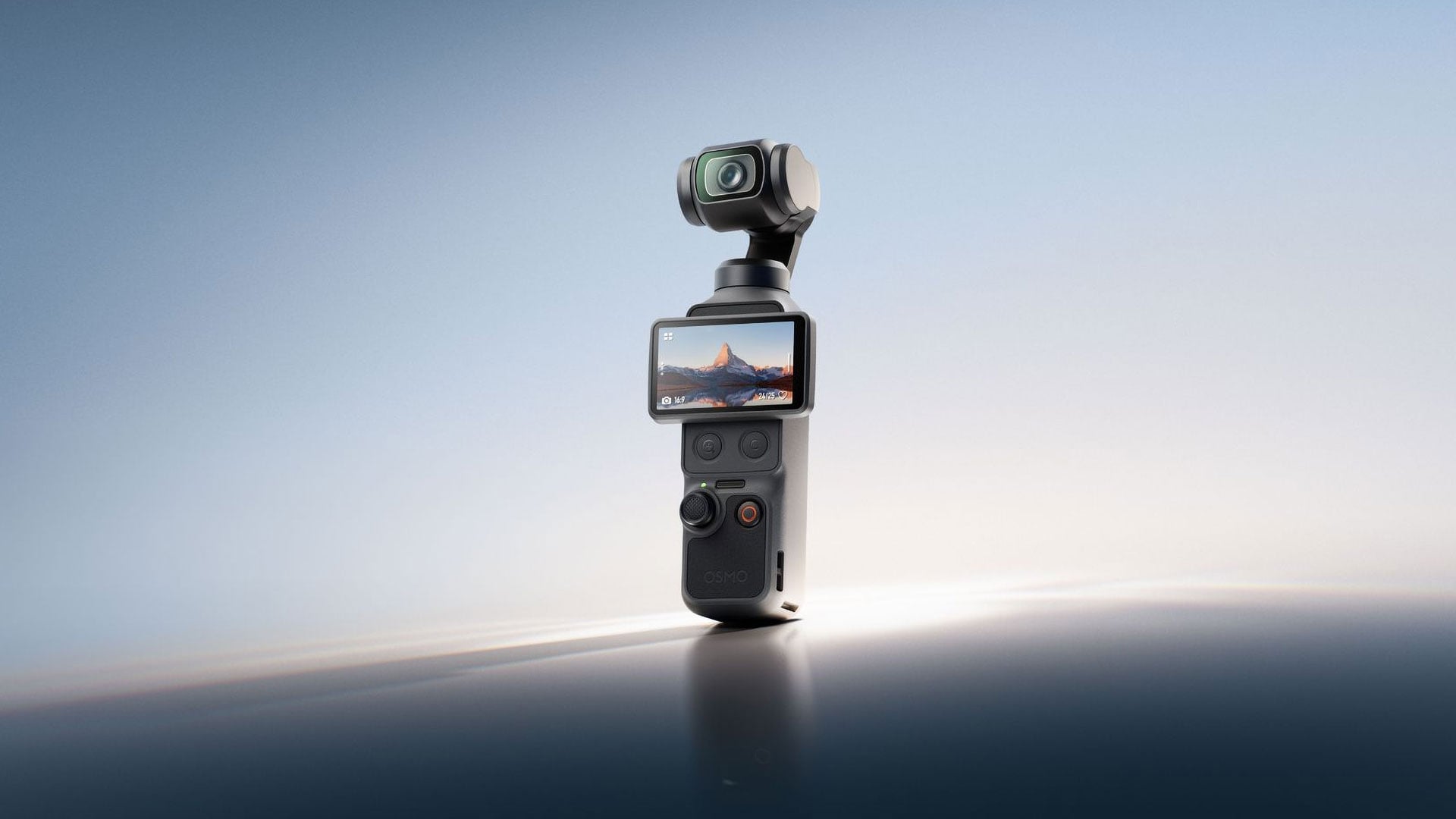
By 2017 and 2018, the idea of a truly pocketable stabilized camera started to take shape. Devices like the Removu K1 and later the DJI Pocket brought the camera, gimbal, and screen into one compact body. This is where the three part layout became easy to recognize: a gimbal head, a central body with processing, and a handle for control and grip.
Over time, these products became smaller, more portable, and easier to operate with one hand. As the category matured, a recognizable design language emerged, shaped by the shared goal of delivering stabilization, usability, and image quality in the most compact form possible.
What is important here is not just the product timeline, but the pattern. Once the industry found a layout that worked, it started to repeat across different brands with small variations.
Screens, Rotation, And User Behavior
Another part of the evolution came from screen design. Early compact cameras experimented with rotation long before gimbals were part of the picture. The Sony DSC M1 in 2004 used a rotating screen that also acted as part of its power system, showing early thinking around motion based interaction.
Later devices such as the Ordro HDV VS1 in 2010 explored flip style screens in small handheld cameras, especially for self recording. These ideas carried forward into later designs where screen movement became tied to shooting modes or quick activation.
By the time devices like the LG Wing appeared in 2020, rotating screens were no longer limited to cameras. Even so, in pocket gimbal cameras, the concept found a more practical role, helping define how users frame, power on, and start recording quickly.
Why The Designs Ended Up Looking Similar
Many pocket gimbal cameras end up looking similar, but that shared design language is driven largely by engineering requirements, and more with constraints than coincidence.
A stabilized camera needs space for motors, sensors, and wiring. It needs balance so it can move smoothly without fighting itself in the hand. It needs a screen that remains visible while shooting and controls that can be reached without breaking grip. It also needs a battery layout that does not interfere with movement.
Put all of that together and the result naturally starts to converge. The familiar combination of a gimbal, screen, and handle is not simply a stylistic choice. It is a practical response to the same set of engineering challenges that manufacturers across the industry are working to solve.
How The Design Language Became Familiar
The pocket gimbal camera did not emerge from a single company or product. Instead, the form factor developed through years of experimentation by different manufacturers, each trying to solve the same challenge: how to deliver stable video in the smallest possible package.
As users became more familiar with compact stabilized cameras, a common design language began to take shape. Certain layouts proved practical and intuitive, making them easier to use in everyday shooting. Over time, those solutions became widely adopted across the category.
That familiarity also shaped expectations. Once users grew accustomed to the combination of a gimbal, screen, and handheld grip, new products were often evaluated against that established experience, even when they introduced different features or approaches.
After a period where the category felt relatively stable, new players are starting to revisit it. Smartphone manufacturers like OPPO, Vivo, and Honor are experimenting with stabilized capture systems that sit between phones and dedicated cameras. At the same time, imaging companies continue refining compact gimbal designs with incremental improvements.
The continued investment in these ideas suggests that interest in stabilized capture remains strong. While the technology continues to evolve, the core design language has endured because it solves a practical problem in a way that users already understand.
Insta360 And The Luna Ultra
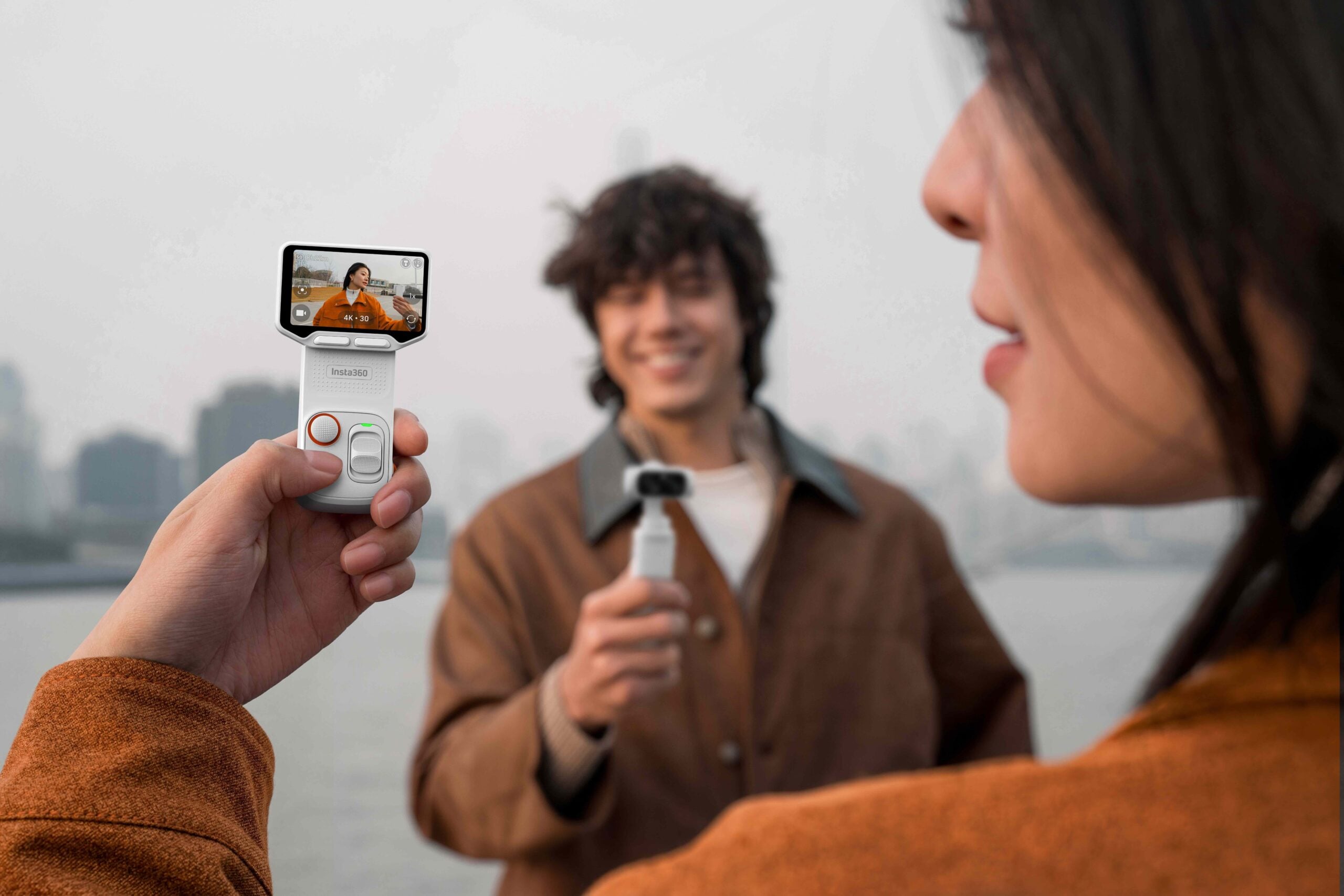
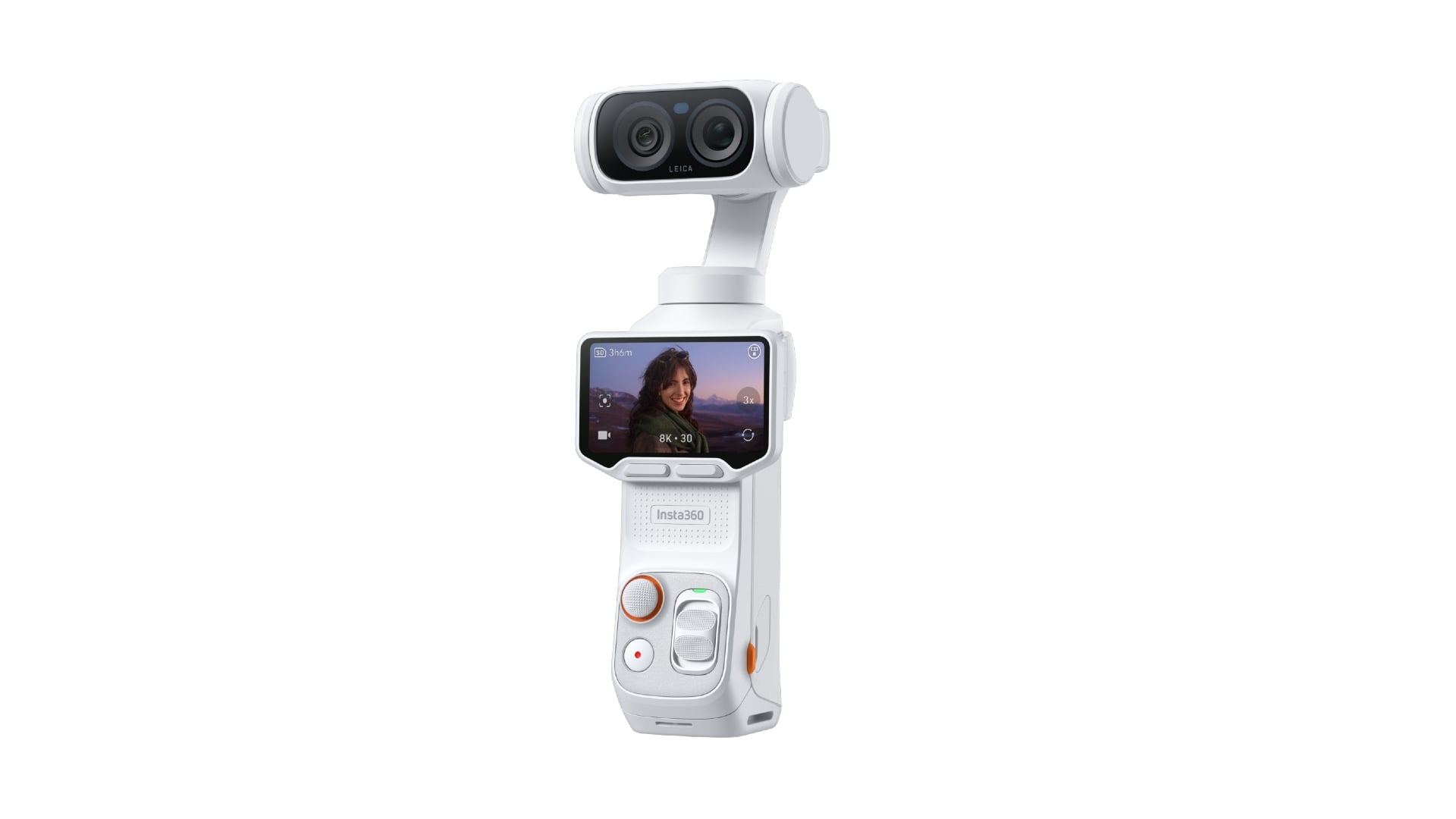
Insta360’s Luna Ultra is shaping up to be one of the more interesting new entries in the pocket gimbal space, particularly because it expands on the familiar formula rather than simply refining it.
At its core is a one-inch main sensor paired with a lens system co-engineered with Leica. The imaging pipeline includes 10-bit I-Log recording, 8K Dolby Vision support, Leica color profiles, and additional cinematic color modes, suggesting a workflow that extends beyond quick social media clips and into more deliberate editing and post-production.
A key design change is the detachable screen module. Rather than functioning solely as a monitor or remote control, it serves as an all-in-one shooting solution. The module provides camera control, monitoring, built-in audio pickup through its integrated microphone, and greater freedom in framing by allowing creators to position themselves independently of the camera body. This approach could make certain shooting scenarios easier, particularly for solo creators and vloggers.
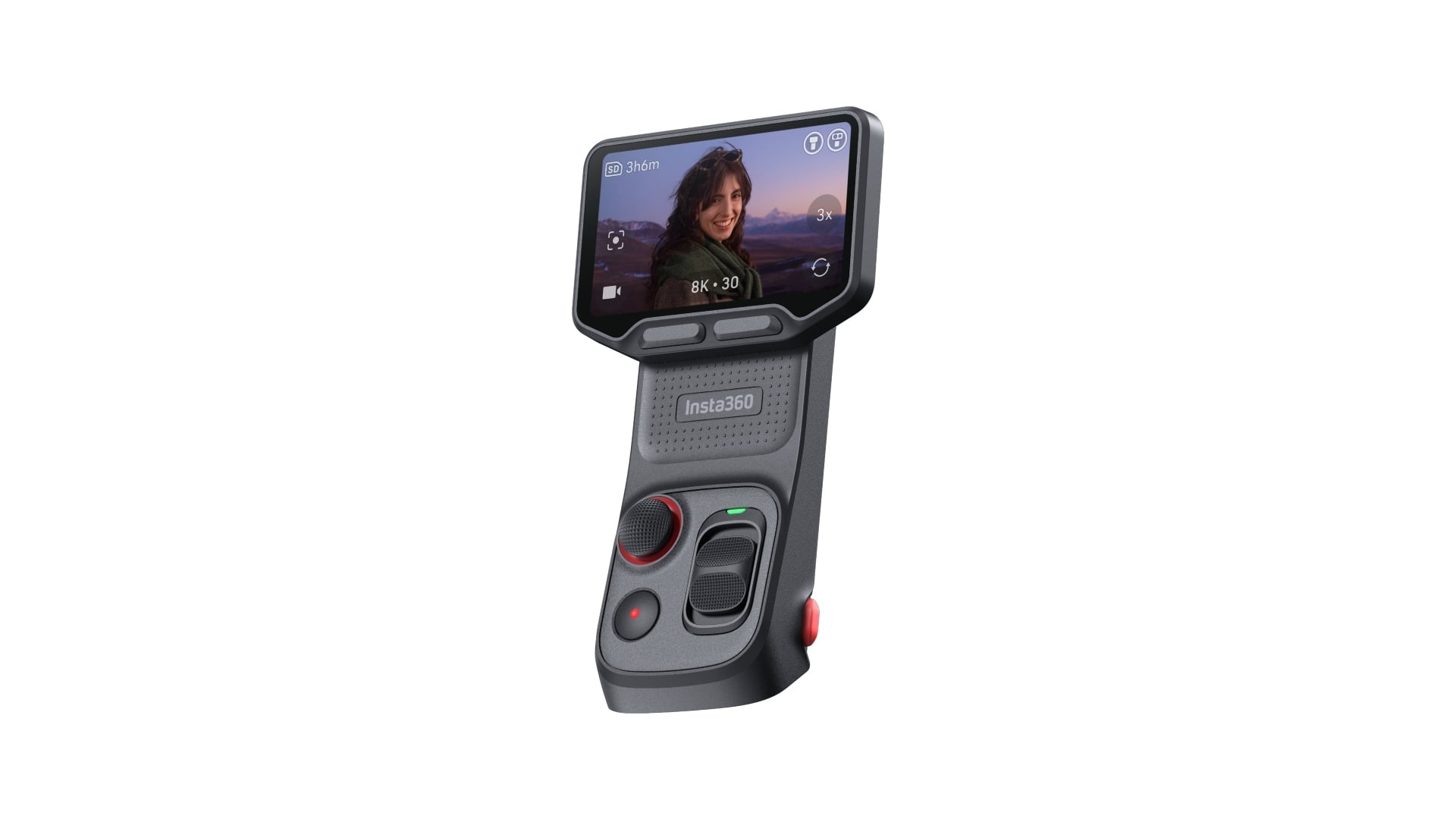
The camera also pushes beyond the zoom capabilities typically found in pocket-sized stabilized cameras. It offers 3x optical zoom with multiple zoom steps, extending to 12x zoom with up to 6x lossless digital zoom. Telephoto macro support further broadens its creative range, allowing it to handle subjects and perspectives that are less common in this category.
Taken together, the Luna Ultra leans toward a more modular imaging system. It combines stabilized capture, flexible framing, and higher end color tools in a way that moves it closer to a hybrid camera platform than a simple pocket gimbal device.
A Category Built By Many Hands
Looking back, pocket gimbal cameras are not the product of a single breakthrough. They are the result of overlapping ideas that came from different directions over more than a decade. Stabilization systems, compact camera design, screen interaction, and modular thinking all fed into the same endpoint.
That is why the category feels so defined today, even as new versions continue to appear. The foundation is already shared, and most innovation now happens on top of it.
As new companies enter the space and established brands refine their approaches, the question is no longer how to build a pocket gimbal camera from scratch but how far the existing formula can still be pushed before it becomes something else entirely
See more from DIYPhotography.net on Google
Add DIYPhotography.net as a trusted source. This makes
our stories more likely to appear in your Google Search results.
 Add as a preferred source on Google

Alysa Gavilan
Alysa Gavilan has spent years exploring photography through photojournalism and street scenes. She enjoys working with both film and mirrorless cameras, and her fascination with the craft has grown over the decades. Inspired by Vivian Maier, she is drawn to capturing everyday moments that often go unnoticed.



Join the Discussion
DIYP Comment Policy
Be nice, be on-topic, no personal information or flames.