

















Svbony SV555 Astrograph: Your Portable Window to the Deep-Sky
Aug 6, 2025
Soumyadeep Mukherjee
Soumyadeep Mukherjee is an award-winning astrophotographer from India. He has a doctorate degree in Linguistics. His work extends to the sub-genres of nightscape, deep sky, solar, lunar and optical phenomenon photography. He is also a photography educator and has conducted numerous workshops. His works have appeared in over 40 books & magazines including Astronomy, BBC Sky at Night, Sky & Telescope among others, and in various websites including National Geographic, NASA, Forbes. He was the first Indian to win “Astronomy Photographer of the Year” award in a major category.
Share:
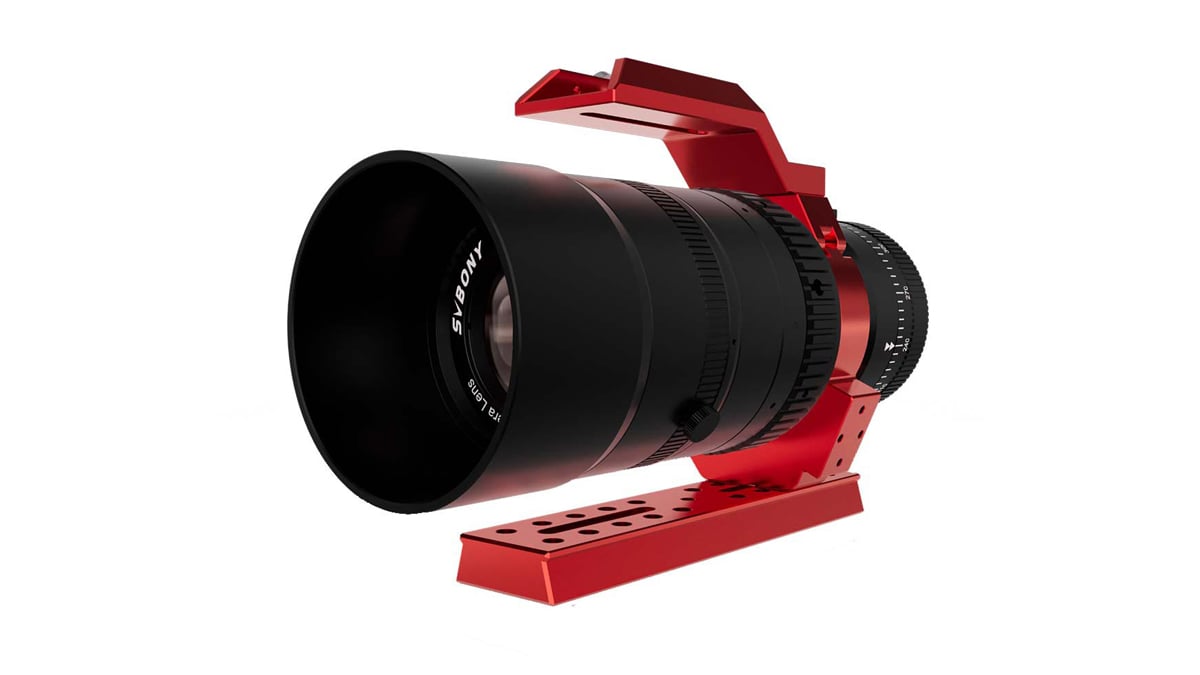
The night sky holds secrets. The Svbony SV555 unlocks some of them. It brings stars, nebulae, and galaxies into crisp focus and blends optical power with smart design. The scope arrives ready for astrophotography. The Svbony SV555 is a small marvel in astrophotography gear; it’s an astrograph that also functions as a camera lens.
Designed for clarity
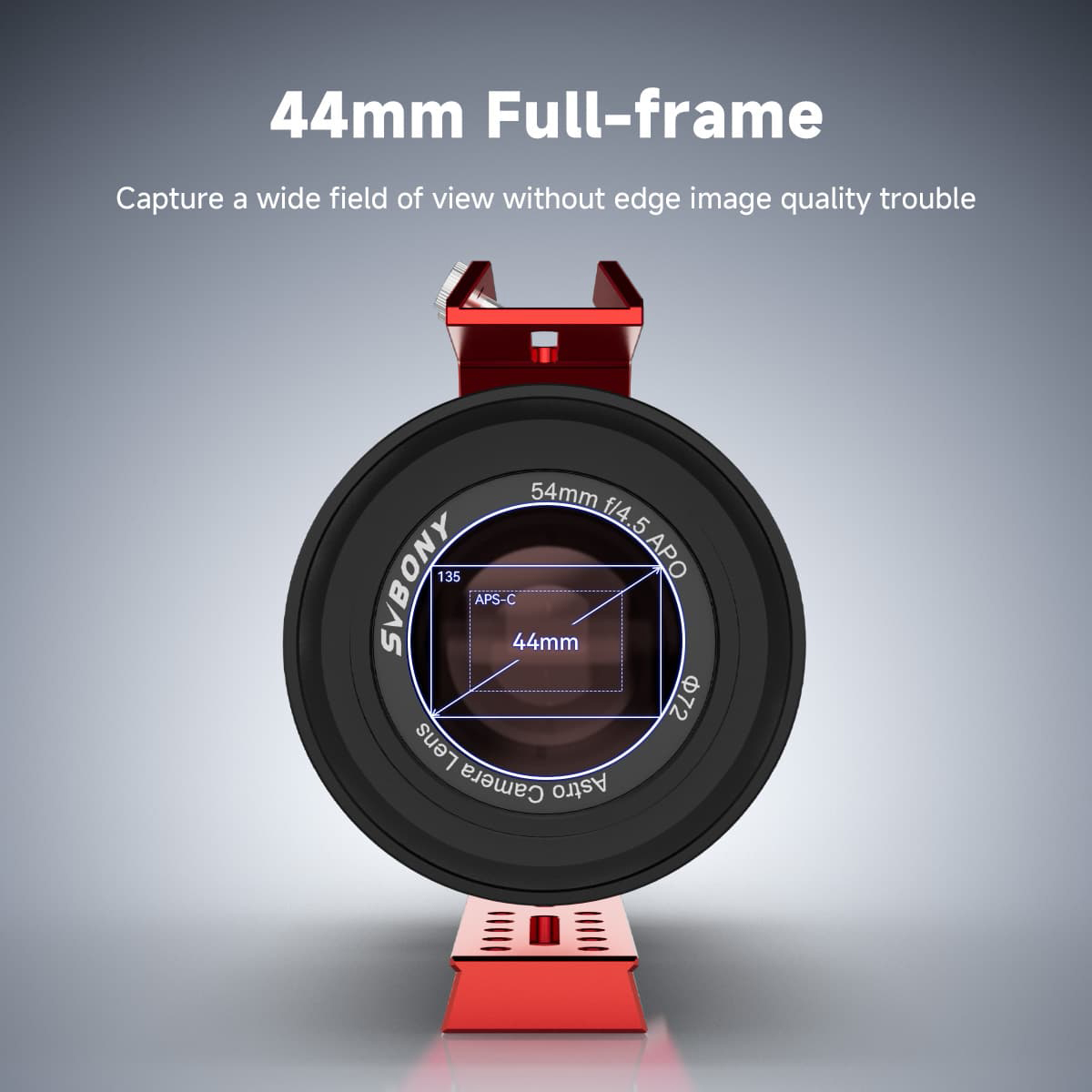
The SV555 uses a Petzval optical layout with five lens elements in three groups. It merges a triplet lens with two ED (Extra-low Dispersion) glasses. This combo delivers sharp stars and minimal color fringing. It sports a 54 mm aperture and a 243 mm focal length, making it fast, compact, and wide-field. You get an adjustable aperture, too. It ranges from f/4.5 to f/22. It lets you control light intake. You can smooth out bright stars. You can sharpen deep‑sky detail. The lens handles full-frame sensors with a 44 mm image circle, perfect for modern full-frame cameras.
Built for ease and precision
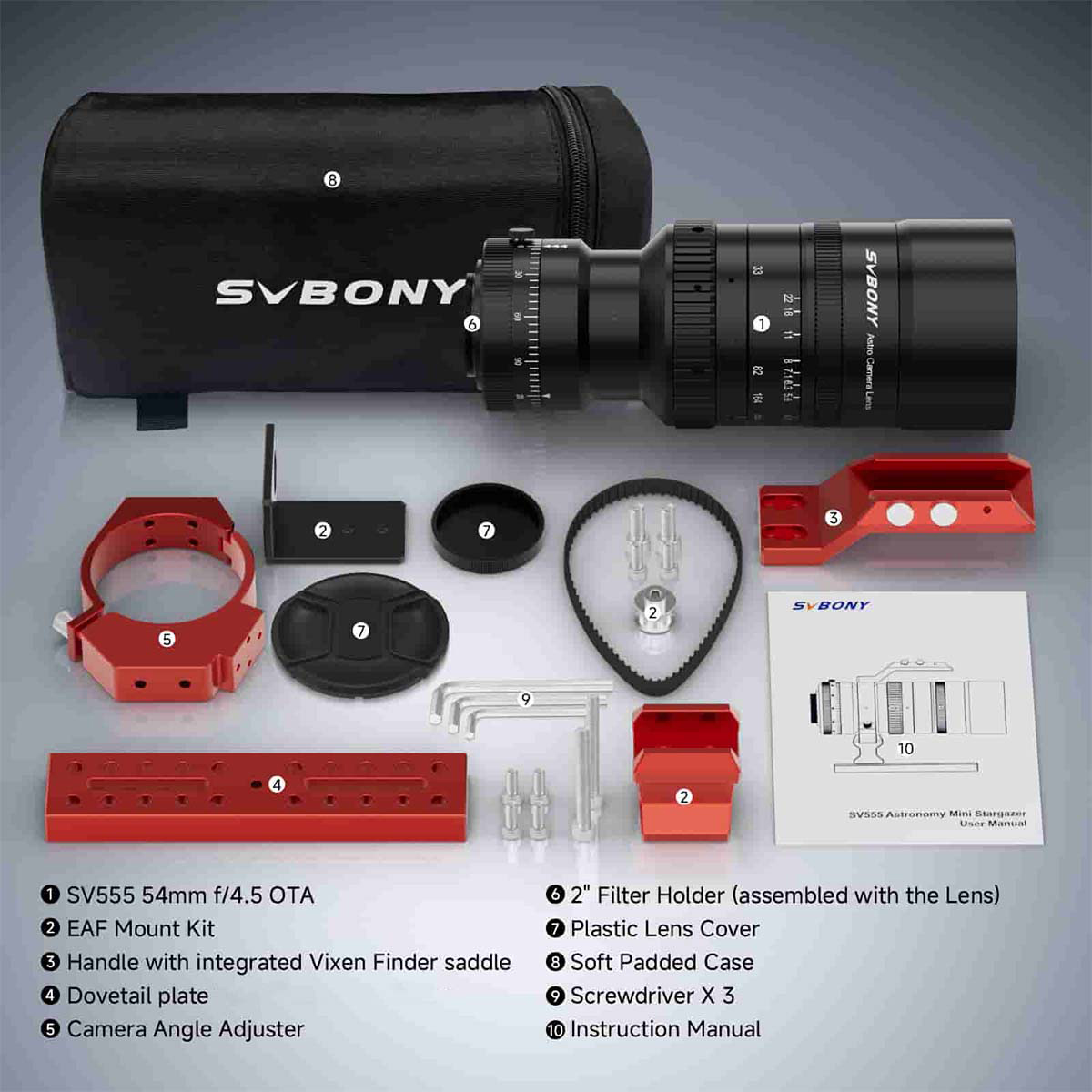
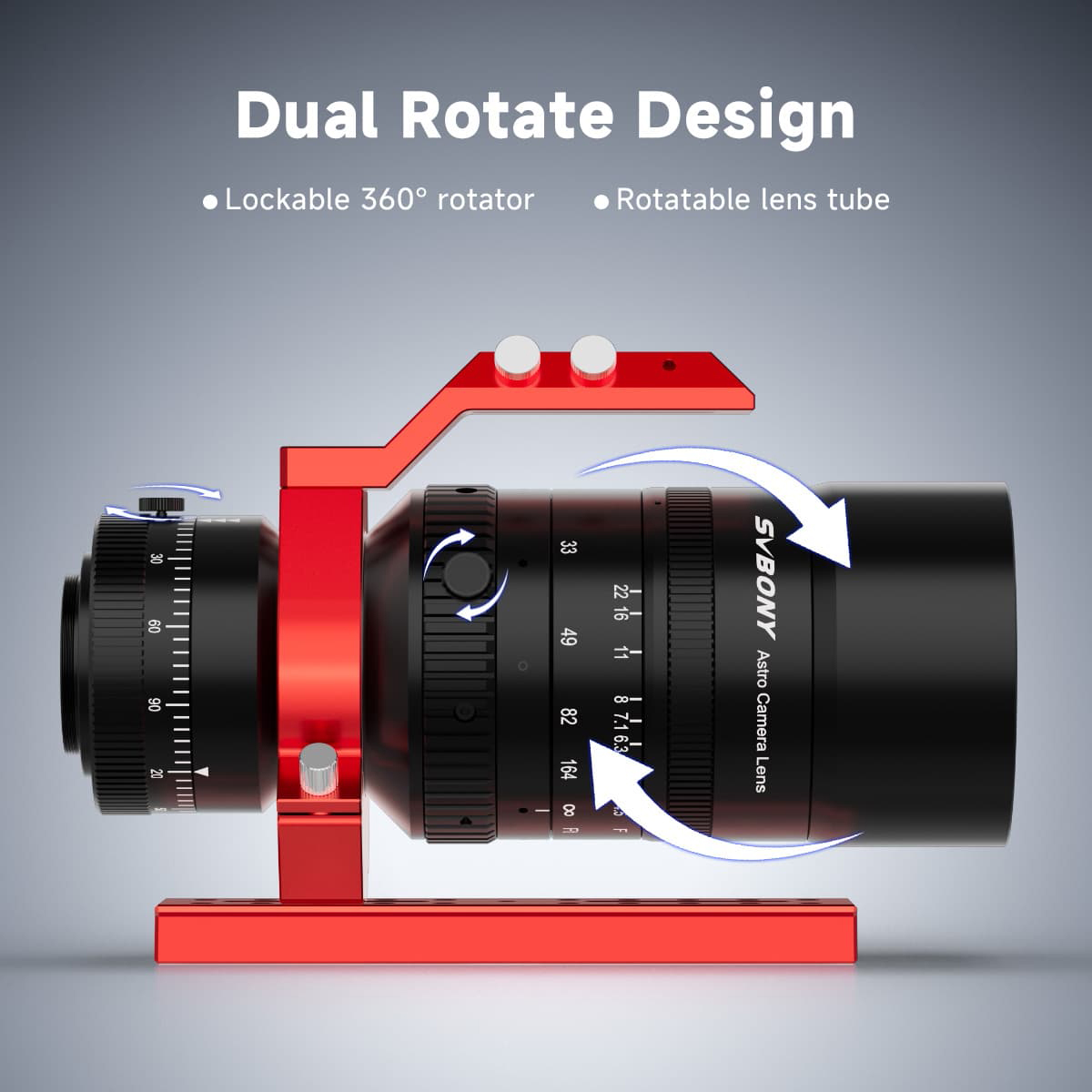
The SV555 arrives as a complete kit. It includes a lockable 360° rotator and a dovetail plate for flexible mounting. The helical focuser offers precise control. It supports fine manual adjustments. It’s also EAF-ready, meaning you can add an Electronic Automatic Focuser later. The front accepts filters via M72 threading. The back has a M48 × 0.75 male thread, ideal for 2″ filter holders. You also get a handle with a Vixen saddle, an angle adjuster, a soft case, and a manual.
The box contains:
- SV555 optical tube (OTA)
- EAF mount kit (for future autofocus)
- Handle with a Vixen saddle
- Dovetail plate with ARCA and Vixen compatibility
- Angle adjuster for camera positioning
- Built-in 2″ filter holder
- Plastic front cap
- Padded carry case
- Instruction manual
Portability and field use
One of the SV555’s strongest points is its portability. At just over 2.4 kg, it fits neatly into a small case. You can carry it easily for travel shoots. Whether you’re hiking to a dark site or setting up in your backyard, the SV555 makes the experience stress-free. Its build quality feels solid. The aluminum housing resists minor dings and dust. The lens elements stay protected with a well-fitting front cap. The dovetail mounting plate also has ¼-inch threads, so it works with many tripods. This makes the SV555 suitable for both equatorial and alt-az setups. If you’re doing astrophotography in remote areas, this lens shines. You won’t need a lot of space, heavy mounts, or extra gear. You can even power your system with a simple battery pack, a camera, and a star tracker. The whole setup remains under airline carry-on limits.
Key specifications
Here are some of the key specifications of the scope:
| Optical design | 5 elements in 3 groups Petzval |
| Aperture | 54 mm |
| Focal length | 243 mm |
| F‑ratio | f/4.5–f/22 |
| Image circle | 44 mm (full-frame) |
| Focuser | Helical, EAF-compatible |
| Rotator | 360°, lockable |
| Filter threads | Front M72; rear M48×0.75 |
| Mount | Dovetail plate, Arca‑Swiss/Vixen style |
| Weight | 2.45 kg |
A tool that suits all
For beginners, the SV555 offers an approachable introduction to wide-field imaging. Its forgiving focal length makes tracking easier. Star trails are less likely, and guiding is optional for shorter exposures. That’s a big win if you’re starting. For experienced astrophotographers, the SV555 offers room to grow. You can add motorized focusing, shoot mosaics, or pair it with mono cameras and filters. It’s even suitable for wide hydrogen-alpha (Ha) and narrowband imaging with the right gear.
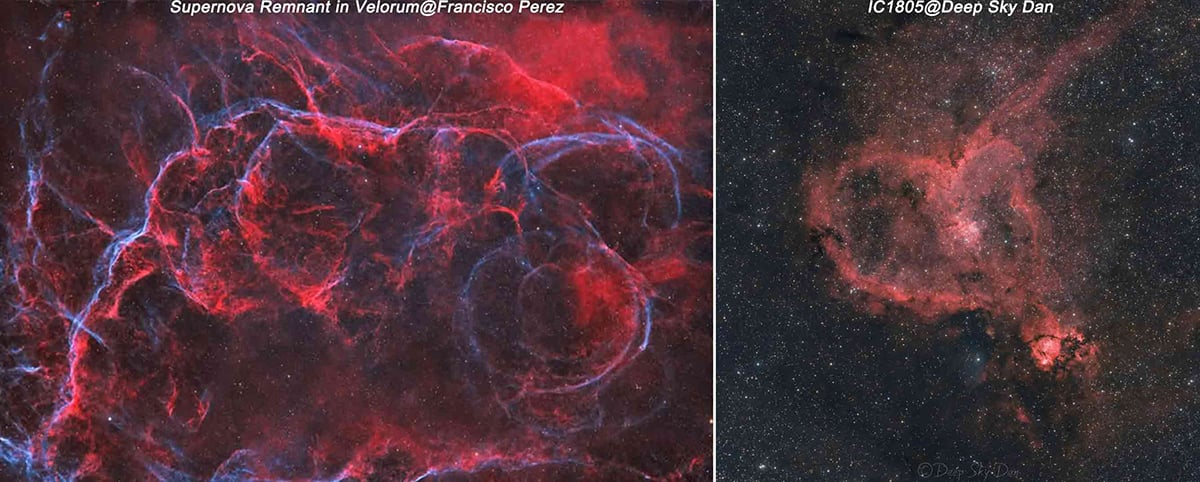
If you’re interested in deep-sky photography but want to stay within a budget, the SV555 is an ideal fit. It’s perfect for shooting:
- The Milky Way core
- Large nebulae like the North America nebula or the Rosette nebula
- Star clusters like the Pleiades or double clusters
- Wide-field galaxy groups
However, if you’re extremely picky about pinpoint stars, it’s worth testing your unit thoroughly. Early production units showed star distortions in some corners. Svbony may refine this with future batches.
Price and availability
The Svbony SV555 is priced at $599.99 and is available to purchase via Svbony’s official website.
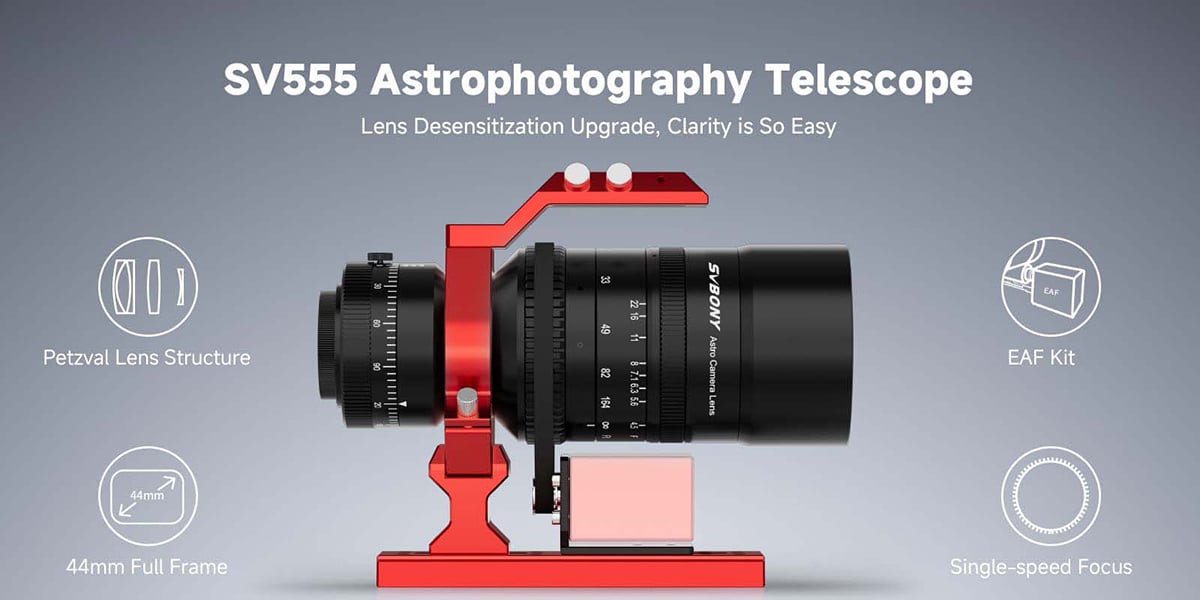
The Svbony SV555 packs a surprising amount of capability into a compact, budget-friendly design. It’s built smartly, performs well, and includes accessories that most brands charge extra for. Its wide field of view is excellent for capturing rich, dramatic nightscapes. In short, it’s a lens that opens the cosmos to more people.
Clear skies!
See more from DIYPhotography.net on Google
Add DIYPhotography.net as a trusted source. This makes
our stories more likely to appear in your Google Search results.
 Add as a preferred source on Google

Soumyadeep Mukherjee
Soumyadeep Mukherjee is an award-winning astrophotographer from India. He has a doctorate degree in Linguistics. His work extends to the sub-genres of nightscape, deep sky, solar, lunar and optical phenomenon photography. He is also a photography educator and has conducted numerous workshops. His works have appeared in over 40 books & magazines including Astronomy, BBC Sky at Night, Sky & Telescope among others, and in various websites including National Geographic, NASA, Forbes. He was the first Indian to win “Astronomy Photographer of the Year” award in a major category.

Join the Discussion
DIYP Comment Policy
Be nice, be on-topic, no personal information or flames.