



















Do Ultra-Sharp Photos Really Make You a Better Photographer?
Jul 10, 2025
Anzalna Siddiqui
A psychology major in her third year of Bachelor’s, Anzalna Siddiqui has endless curiosity for the human mind and a deep love for storytelling – both through words and visuals. Though she hasn’t taken up photography as a profession, her Instagram is where her passion finds its home. In addition to this, she’s a travel enthusiast who never travels without her camera because every place has a story waiting to be captured.
Share:

It’s interesting how our minds work. After a shoot, when you develop your photos, what’s the first thing you check? I probably look for sharp photos right away. It seems to be a natural reaction for us. But have you ever thought about why that is?
In his latest video, Alex Kilbee of The Photographic Eye discusses how we all have experienced that moment of closely examining our images, zooming in to check every tiny detail. That’s because we’re searching for that ideal sharpness. I can completely relate to him. But what if I told you that focusing too much on sharpness often means missing the entire point of photography?
The Seductive Call of Sharpness
Alex shares his experience of developing negatives from his Canon A1 camera. His first reaction was to check if the images were sharp. He mentions that he wasn’t influenced by videos focused on sharpness or the hype from camera brands about increasing megapixels. Instead, he feels this drive for sharpness comes internally and probably resonates with many others.
Sharpness has a strong appeal, especially for beginners. In this video, Alex recalls his time in photo school when he shot film and scanned the negatives with a Polaroid SprintScan. They would adjust the “unsharp mask” slider and be amazed by how clear their pictures looked. Why did they do this? Because sharpness can be measured. Photography is a subjective art form. Here, having something concrete to measure gives a sense of reassurance.
Beyond the Pixels: The Reign of Atmosphere
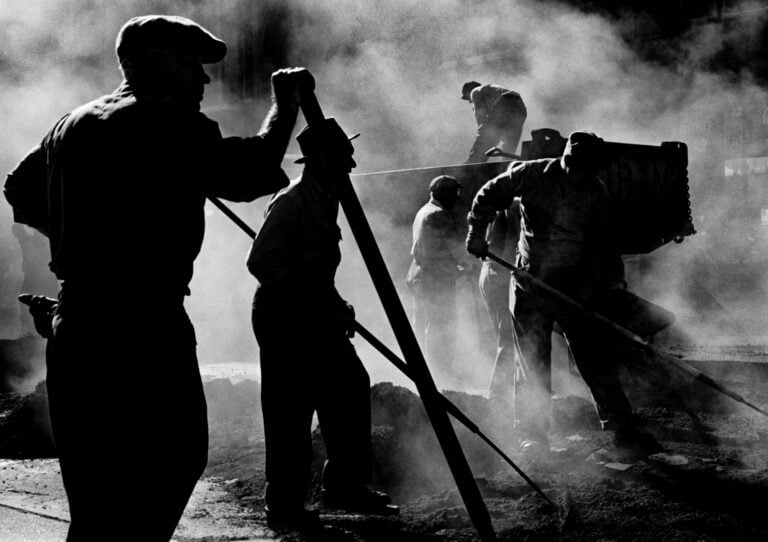
What matters isn’t how your lens sees the world, but how you see it. Alex argues that while sharpness shows how lenses, film, and cameras portray reality, the atmosphere brings a photograph to life. This goes beyond having moody lighting. He’s talking about your unique perspective, your way of thinking, your careful composition choices, and how skillfully you use light.
Moreover, Alex talks about incredibly sharp and technically perfect test images. He argues that they often miss the mark. They may look sharp, but do they evoke any feelings? Do they inspire you to share them? Most likely not. They lack an important element: atmosphere. He points to William Eggleston’s photography as a great example where sharpness isn’t the main focus. Instead, the emotions, the vibe, and the story stand out.
I completely agree with this. How often have you seen a perfectly exposed and sharp photo that doesn’t resonate? Then you find a slightly blurry or grainy image that hits you hard with its emotion? That’s the power of atmosphere.
The Holga Revelation: Letting Go of Control
Alex believes that a need for control drove his previous obsession with sharpness. He discusses that sharpness and detail become secondary when you feel confident about your ability to convey your thoughts through art. They’re a foundation, sure, but not the be-all and end-all. In fact, he realized that attending photography school, surprisingly, caused him to lose some of the atmospheric qualities that made his earlier work special.
Then came the “revelation.” About 20 years ago, Alex met a photographer named MJ on DeviantArt. MJ’s work had a magical, dreamlike feel to it. Her secret? The Holga camera. Alex recalls getting one from Hong Kong, and it instantly released his stress over sharpness and exposure. These cameras are pretty simple. They’re just basic plastic devices with effortless focusing and exposure controls.
According to Alex, the charm of the Holga lies in the idea that “what makes the photograph is what you point the camera at.” Take a moment to consider that. We often depend on our cameras to do the work for us. We rely so much on features like autofocus and sharp lenses. But the Holga pushes you to be the artist, to use the camera purely to capture your perspective. He reminisces about his first camera, a Spider-Man model, where he valued freedom, creativity, and expression over perfect sharpness. To me, this emphasizes the importance of reconnecting with that joyful, youthful excitement for simply creating images.
When Sharpness Fails: The Power of Mystery
Alex isn’t saying that all sharp images are bad. Not at all. Plenty of sharp, well-executed photos have a lot of depth and atmosphere. Still, he believes some images wouldn’t work if they were sharp. He admires Eric Men’s photography, calling it full of atmosphere and reflecting the photographer’s unique style.
He shares an example of a photo taken by Men showing women in canoes by a lake. Alex suggests that if you could see every expression and detail, it would spoil the image. Why? Because it would take away the sense of mystery. In the same way, Men’s photos of religious events are impactful because they don’t show every little thing. They leave room for your interpretation and imagination to fill in the blanks. This, I believe, is what makes art truly interesting.
Of course, there’s a flip side. For wildlife photographers who focus on the details of an animal’s fur, or those capturing textures and colors, having sharpness is essential. Alex points out that the “blurry lines” between when to create an atmosphere and when to emphasize sharpness is where the true creativity in photography happens. It’s about making intentional choices.
The Pendulum Swing: From Perfection to Authenticity
Alex reflects on how, when he was younger, he worried too much about what people thought of his images. Without the right words to explain his artistic choices, he often opted for sharp images. He connects this desire for sharpness to the 1990s, when digital photography began and CDs offered “perfection” by removing the flaws of vinyl records. He believes photography followed a similar path, reaching a high point around ten years ago when everyone sought “perfect images.”
Then came AI and upscaling, promising even more “perfection.” However, Alex notes a backlash. Many digital photographers are now looking for authenticity and are choosing to embrace imperfections. Some even attach old lenses to modern cameras to achieve that more natural, imperfect look. He also criticizes the practice of “pixel peeping” in galleries. Images should be experienced from a distance, not zoomed in at 400% on a screen. You wouldn’t stand with your nose against a painting in a museum, would you?
He acknowledges that it’s tough for beginners to balance skill with emotion. However, he has a strong saying that resonates well: “Sharpness answers questions, atmosphere asks them.” He thinks this simple concept simplifies the choice of whether a picture should be sharp or more textured.
Final Thoughts
What can you learn from this? Keep taking photos, keep exploring, and most importantly, ask yourself whether an image really needs to be sharp. Don’t do it out of habit or fear of judgment, but out of genuine intention. Sometimes, sharpness is the story. But sometimes, a little blur or mystery can lead to a whole new narrative.
So, when you next grab your camera, instead of focusing solely on sharpness, tell your own story. Think about what emotion you’re aiming to capture? Believe me, your unique view of the world is far more captivating.
[Why ‘Sharp’ Photos Miss the Point; Image credits: Pexels]
See more from DIYPhotography.net on Google
Add DIYPhotography.net as a trusted source. This makes
our stories more likely to appear in your Google Search results.
 Add as a preferred source on Google

Anzalna Siddiqui
A psychology major in her third year of Bachelor’s, Anzalna Siddiqui has endless curiosity for the human mind and a deep love for storytelling – both through words and visuals. Though she hasn’t taken up photography as a profession, her Instagram is where her passion finds its home. In addition to this, she’s a travel enthusiast who never travels without her camera because every place has a story waiting to be captured.



Join the Discussion
DIYP Comment Policy
Be nice, be on-topic, no personal information or flames.