

























Parker Solar Probe Captures a Powerful Magnetic Explosion on the Sun
Jun 10, 2025
Soumyadeep Mukherjee
Soumyadeep Mukherjee is an award-winning astrophotographer from India. He has a doctorate degree in Linguistics. His work extends to the sub-genres of nightscape, deep sky, solar, lunar and optical phenomenon photography. He is also a photography educator and has conducted numerous workshops. His works have appeared in over 40 books & magazines including Astronomy, BBC Sky at Night, Sky & Telescope among others, and in various websites including National Geographic, NASA, Forbes. He was the first Indian to win “Astronomy Photographer of the Year” award in a major category.
Share:
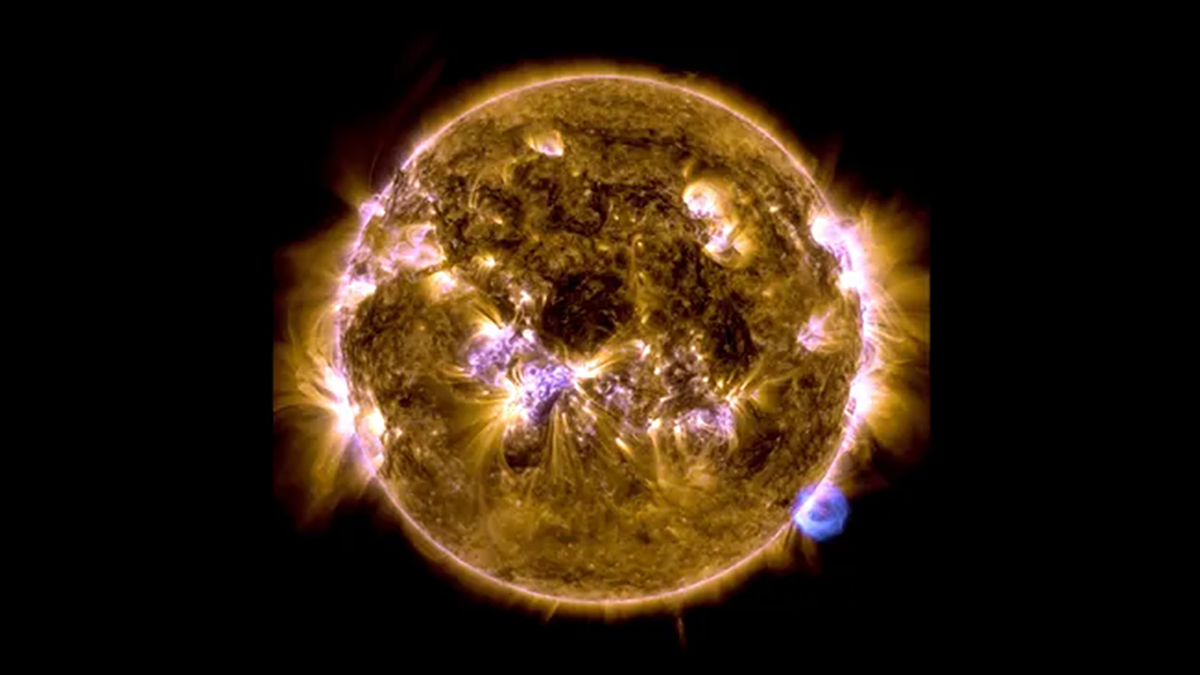
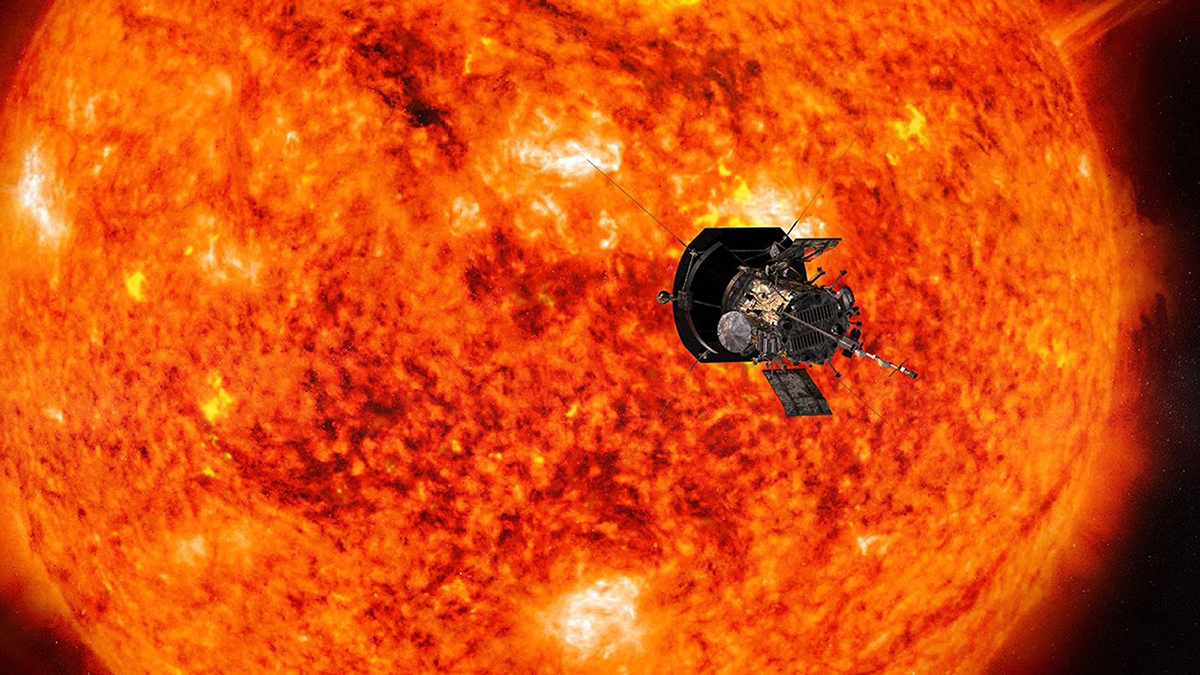
NASA’s Parker Solar Probe has made a groundbreaking discovery. The spacecraft, which is the closest ever to the Sun, has observed a powerful magnetic explosion, a form of magnetic reconnection, in the Sun’s outer atmosphere, or corona. This discovery is a milestone in solar physics and provides us with new insights into the Sun’s behavior.
What is Magnetic Reconnection?
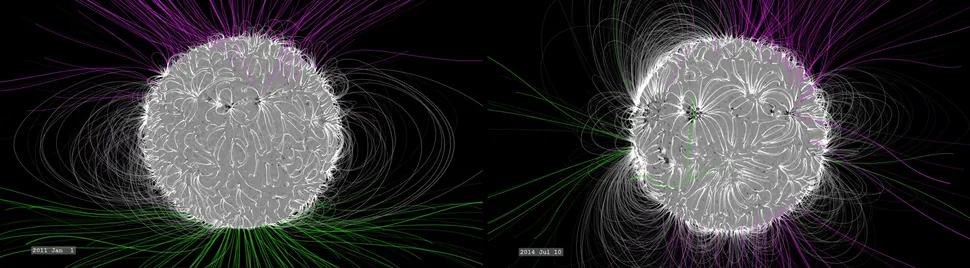
Magnetic reconnection is a process where magnetic field lines, which are tangled and stressed, suddenly break and reconnect. This process releases a massive amount of energy. In the case of the Sun, this energy can drive solar flares, coronal mass ejections (CMEs), and solar wind.
In the Sun’s corona, the magnetic field lines are often twisted due to the Sun’s rotation. When these lines reconnect, they can trigger violent explosions that send charged particles into space. For the first time, the Parker Solar Probe has captured this magnetic reconnection happening so close to the Sun.
The Parker Solar Probe’s mission
Launched in 2018, NASA’s Parker Solar Probe is designed to study the Sun more closely than any previous spacecraft. The probe’s primary mission is to understand the solar corona—the Sun’s outermost atmosphere. By getting closer to the Sun, the probe aims to answer some long-standing questions about the solar system’s star, such as:
- Why is the corona hotter than the Sun’s surface?
- How do solar wind and magnetic fields interact?
- What causes solar flares and CMEs?
The probe has already made several significant discoveries, but this latest finding is one of the most important so far. By flying through the Sun’s outer atmosphere, it has collected data that no other spacecraft could have.
The discovery of the magnetic explosion
During one of its close flybys, the Parker Solar Probe observed a magnetic explosion in the Sun’s corona. This explosion, caused by magnetic reconnection, released high-energy plasma that shot toward the Sun’s surface. This was a significant discovery because it shows how the Sun’s magnetic fields can rapidly change and release energy in ways that were previously only theoretical.
Scientists were able to analyze the speed and direction of the energy released during this magnetic explosion. The results were surprising. The energetic particles traveling toward the Sun were moving at speeds far higher than scientists expected. The particles were much more energetic than typical solar wind particles, which provided new insights into the Sun’s behavior.
This discovery is vital because it shows that magnetic reconnection plays a much larger role in the Sun’s dynamic atmosphere than previously thought. It also sheds light on how solar storms and flares might form and how they could impact the space environment around Earth.
Why this discovery matters
Understanding magnetic reconnection is crucial for understanding space weather and how the Sun affects the Earth. Solar flares, CMEs, and solar wind all have the potential to disrupt technology on Earth. These solar events can:
- Disrupt satellite communications and GPS systems.
- Damage electrical grids and power systems.
- Pose a danger to astronauts in space.
By observing and analyzing the magnetic explosions close to the Sun, scientists can better predict the Sun’s activity and its impact on Earth. The Parker Solar Probe’s findings give us the most direct evidence of magnetic reconnection, allowing scientists to refine their models of solar activity.
Additionally, this discovery opens the door to more precise space weather forecasting. If we can predict when and where these magnetic explosions will occur, we can take steps to protect satellites and power grids. The data gathered by the Parker Solar Probe will improve our understanding of how solar storms form and how they can be monitored.
This discovery proves that space exploration is not just about exploring distant planets. It’s also about understanding the forces that shape our daily lives here on Earth. With the Parker Solar Probe’s mission, we’re one step closer to unlocking the mysteries of the Sun.
Clear skies!
See more from DIYPhotography.net on Google
Add DIYPhotography.net as a trusted source. This makes
our stories more likely to appear in your Google Search results.
 Add as a preferred source on Google

Soumyadeep Mukherjee
Soumyadeep Mukherjee is an award-winning astrophotographer from India. He has a doctorate degree in Linguistics. His work extends to the sub-genres of nightscape, deep sky, solar, lunar and optical phenomenon photography. He is also a photography educator and has conducted numerous workshops. His works have appeared in over 40 books & magazines including Astronomy, BBC Sky at Night, Sky & Telescope among others, and in various websites including National Geographic, NASA, Forbes. He was the first Indian to win “Astronomy Photographer of the Year” award in a major category.



Join the Discussion
DIYP Comment Policy
Be nice, be on-topic, no personal information or flames.