





















Samsung is creating the world’s first Petabyte SSD
May 15, 2024
John Aldred
John Aldred is a photographer with over 25 years of experience in the portrait and commercial worlds. He is based in Scotland and has been an early adopter – and occasional beta tester – of almost every digital imaging technology in that time. As well as his creative visual work, John uses 3D printing, electronics and programming to create his own photography and filmmaking tools and consults for a number of brands across the industry.
Share:
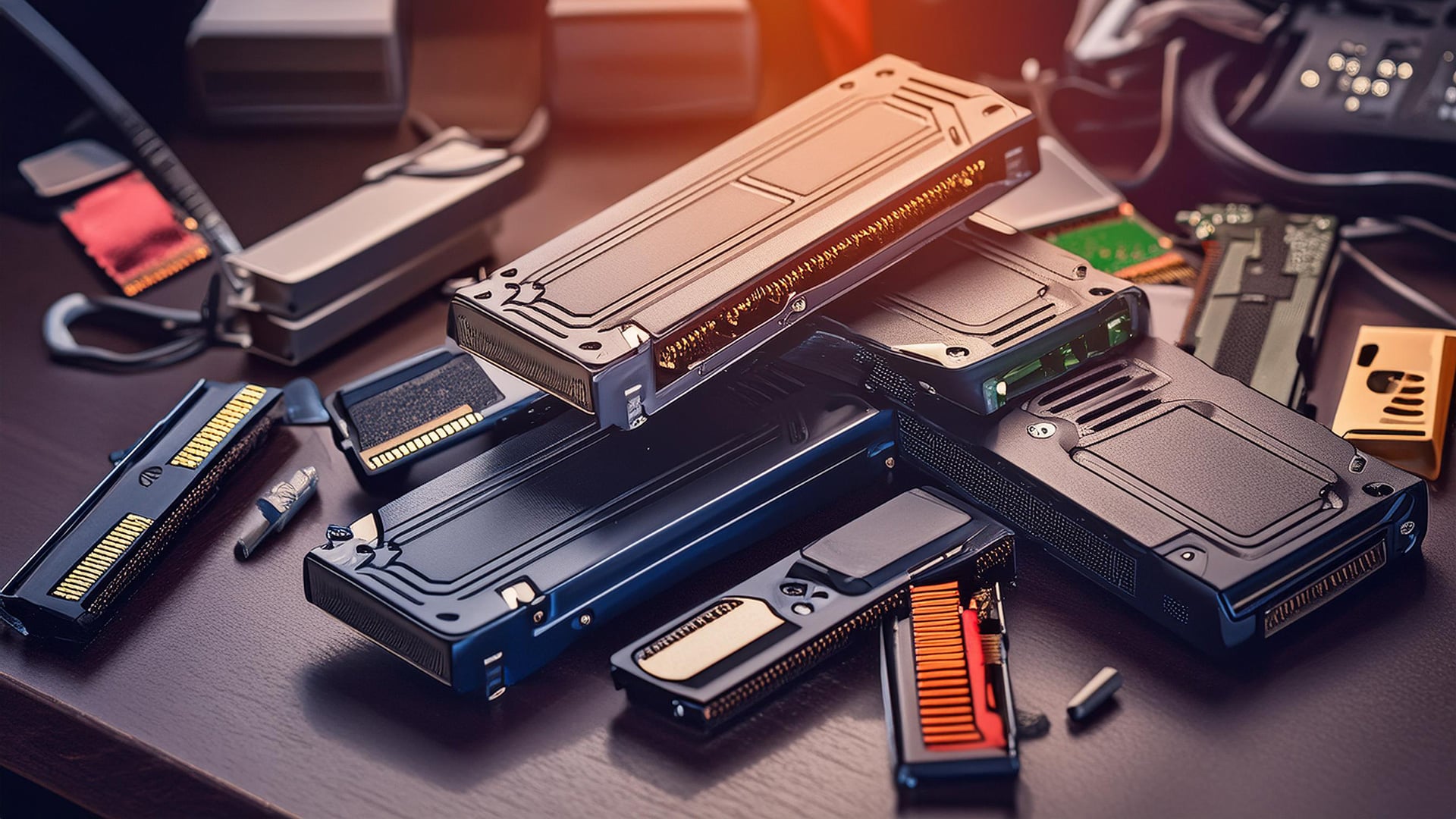
While most of us are still struggling to find SSDs with greater capacities than 4TB, Samsung is working on creating the world’s first petabyte SSD. At least, that’s their plan. Last year, reports suggested that the company was about a decade away. Now, they seem much closer.
As the world’s largest manufacturer of 3D NAND storage, they’re certainly one of the most likely to do it. Samsung has revealed more information about its planes, and how it’s working to get to that 1,000-layer NAND required for such high capacities.
A Brief History of SSD Capacity
Samsung has long been a leader in large capacity solid state drives. And while they’re not readily available to the average consumer due to their (still) prohibitively expensive prices, Samsung announced a 16TB SSD way back in 2015.
In August 2016, Seagate took the lead with a 60TB monster. Availability and cost have been kept tightly under wraps to this day, but 60TB SSDs are estimated to cost around $11,000 each. These certainly aren’t for your average home user, having a 3.5″ form factor better suited to industrial NAS systems rather than inside your PC case.
Nimbus Data then came along in 2018 with their 100TB drive, but like the Seagate, this wasn’t a 2.5″ drive. Both this and the Seagate use the more traditional 3.5″ format, typically used by mechanical hard drives. 200TB SSDs were slated for release in 2022 at a price of around $40,000 each, but good luck finding one of these on Amazon.
Drives like these aren’t typically targeted towards home users, hence their extremely high prices. Data centres is where you’ll typically find them, for companies that need massive amounts of storage.
For us mere mortals, 4TB is the general limit. That being said, SanDisk has just announced 8TB desktop SSDs, with 16TB on the way by the end of the year.
What’s Samsung revealed now?
Currently, Samsung is leading the NAND market with its 9th Generation V-NAND, featuring 290 layers. But the company has announced a 10th Generation V-NAND with 430 layers, expected to debut next year.
Thanks to newly developed Hafnia Ferroelectrics technology, Samsung seems well on its way to creating the 1,000-layer tech required for massive petabyte-capacity drives. Multiple layers are required to maximise the storage in a small device without really changing its size, making for very densely packed storage.
Samsung still has technical hurdles to overcome to get there. However, the company is collaborating with the Korea Advanced Institute of Science and Technology (KAIST). Samsung provides the funding, while KAIST does the bulk of the research.
Exactly how long it will take them to break that petabyte barrier remains to be seen, but it looks much closer than previously thought.
Whenever it comes, though, it’ll be far beyond the reach of most of us. The cost of one will be astronomical. You’d probably need to mortgage your home, at least. And that’s without the cost of buying a second one. After all, you have to have a backup, right?
[via TweakTown / Lead image: Adobe Firefly]
See more from DIYPhotography.net on Google
Add DIYPhotography.net as a trusted source. This makes
our stories more likely to appear in your Google Search results.
 Add as a preferred source on Google

John Aldred
John Aldred is a photographer with over 25 years of experience in the portrait and commercial worlds. He is based in Scotland and has been an early adopter – and occasional beta tester – of almost every digital imaging technology in that time. As well as his creative visual work, John uses 3D printing, electronics and programming to create his own photography and filmmaking tools and consults for a number of brands across the industry.
Related Posts
 PSA: Leap SSD is the world’s fastest wireless SSD but I wouldn’t buy it
 Samsung just announced the world’s largest 2.5″ SSD with 30TB of space
 Samsung Enters the 360 Degree Camera Market With the Samsung Gear 360. Mark Zuckerberg Supports
 Lexar launches Professional Go Portable SSD and Hub for smartphone filmmakers
Join the Discussion
DIYP Comment Policy
Be nice, be on-topic, no personal information or flames.
One response to “Samsung is creating the world’s first Petabyte SSD”
Feels like the fast charging graphite / carbon nanotube batteries we heard about back in 1995 or so and hear about some university getting a big grant for “discovering” graphite every 6 months and I still can’t find the graphite AA batteries at Walmart and I’m pretty sure my latest smartphone doesn’t come with graphite batteries.
I would litterally buy 32 16TB drives tomorrow if they were even close to twice the price of spindle drives per tb.