












5 accessories you should carry on your next astrophotography trip
Dec 3, 2024
Soumyadeep Mukherjee
Soumyadeep Mukherjee is an award-winning astrophotographer from India. He has a doctorate degree in Linguistics. His work extends to the sub-genres of nightscape, deep sky, solar, lunar and optical phenomenon photography. He is also a photography educator and has conducted numerous workshops. His works have appeared in over 40 books & magazines including Astronomy, BBC Sky at Night, Sky & Telescope among others, and in various websites including National Geographic, NASA, Forbes. He was the first Indian to win “Astronomy Photographer of the Year” award in a major category.
Share:

The practice of astrophotography goes beyond cameras and lenses. Nightscape images often require you to be in a deserted place, away from civilisation. Travelling to such places requires staying ready and facing unexpected situations. One of them is the weather. Often times you have to face extreme cold and wind. While your camera, lens and star tracker are integral, some accessories will make your life easier in these situations. In this article, we list five such accessories that you should invest in, some accessories and carry for your next nightscape trip.
Dew Heater
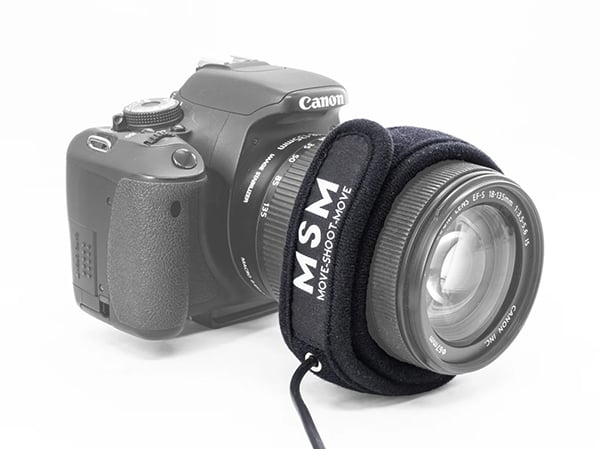
This small band can make or break your images. A dew heater or a lens warmer is a small device attached and wrapped to the front of your lens. Attaching it to a power bank (or other similar device) warms it up and keeps the front element of your lens warm. And this becomes essential in places with heavy dew or frost. If you have ever used your lens in a dewy or frosty situation, you must have noticed that the front of your lens is collecting dew. And this happens very quickly. This dew (or snow) will ruin your images.
While one way of dealing with this is to keep cleaning the lens with a cloth, remember you have to do it every couple of minutes. And you will also be violating a primary rule of astrophotography: “Never touch your set-up when it is taking photos”. Cleaning up your lens every minute is frustrating, but it also risks ruining your polar alignment or the focus. The best way to deal with this situation is to get a dew heater. You have to attach it to your lens with a power bank on the other end, and your lens will remain dew-free for the night. Remember that most dew heaters require constant power input via a power bank as they do not come with internal batteries.
Rock Bag
A rock bag is an open pouch that attaches to your tripod legs via a Velcro. One of the main usage aspects of this rock bag is to put weight in it to make your tripod more stable. In case of strong winds or unstable ground, a steady tripod will keep your images sharp. To make the tripod sturdier, we often hand weights on it. Many tripods come with a hook to hang your bag or other weight.
A rock bag does the same thing. The second usage for a rock bag, which you can’t do with the hook of your tripod, is to keep your stuff in it. Nightscape images require accessories to be attached to your camera or lens, including an intervalometer or a power bank. These end up either hanging from the camera or lying on the ground. A rock bag is a safe place to keep them. This also works as a temporary storage place for your lens and camera during a night session if you are using multiple of them. Keeping things in it automatically gives your tripod more stability.

Intervalometer
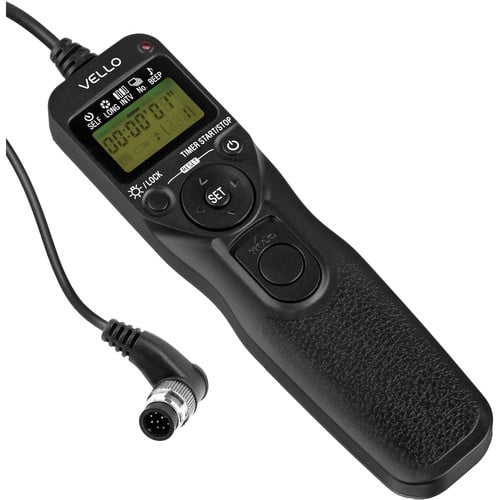
An intervalometer is an external device attached to your camera that allows you to take long exposures and automate your multi-shot session. Many modern cameras come with an internal intervalometer that will enable you to set up multiple shots. However, the only drawback of these internal ones is that they do not allow exposures beyond 30 seconds. With nightscape photography, you are almost always required to take exposures of more than 30 seconds, going up to 5 or even 10 minutes. And you are also required to take multiples of these shots for stacking, both for the sky and foreground.
Some cameras, including the Nikon Z series cameras (Nikon Z6ii, Nikon Z6iii, Nikon Z8 and a few more), allow extended shooting options of up to 15 minutes per exposure, and you can combine it with the internal intervalometer to take multiple long exposures, most cameras do not allow you to do that. And this is when the external intervalometer comes in handy. With this, you can set your exposure time, the interval between two shots and the number of images you want to take. Once this is done, you can do anything during that session, including enjoying the night sky. External intervalometers can be both wired and wireless, where the wireless options are often more expensive, but does the same job.
Power Strip
As mentioned at the beginning, nightscape imaging often requires you to be in places well away from civilisation, and you will be getting only the basic amenities. This includes limited access to electric supply. Frequently, you will have your homestays or hotels having solar-powered electric supplies, and they switch off everything after sunset. The electric supply may not be consistent throughout the day, often giving you a short time to charge your equipment. For a nightscape session, you would charge your camera batteries, power bank, phone, and star tracker. To help you keep everything charged even within a short period (and to be prepared for the night), power strips are essential. They come with 4-12 outlets and allow you to attach almost all of your power-hungry gadgets to be charged simultaneously. We recommend getting one with at least 6-8 plug outlets and 2 USB-C outlets. Of course, you will also be required to carry a few extra chargers and cables to utilise it fully.

Power bank
Power banks are one of the most essential sources of power at night. While your camera batteries will lose some of their potential during cold nights, power banks are going to be the ones that will keep your night sessions running without disruption. Other than charging your camera, it will also keep your dew heater running and charge your star tracker, if required. It can also charge your other gadgets during the day. Power banks come in many shapes and sizes ranging from a few thousand mAh, going up to 50000 mAh or more. Before you purchase a power bank, please check the airline regulations (as they do not allow high mAh power banks). A 20000-27000 mAh power bank is best suited if you fly somewhere. Most power banks come with two or more outlets. Getting a power bank that supports fast charging will save you time while charging it up.

Clear skies!

Soumyadeep Mukherjee
Soumyadeep Mukherjee is an award-winning astrophotographer from India. He has a doctorate degree in Linguistics. His work extends to the sub-genres of nightscape, deep sky, solar, lunar and optical phenomenon photography. He is also a photography educator and has conducted numerous workshops. His works have appeared in over 40 books & magazines including Astronomy, BBC Sky at Night, Sky & Telescope among others, and in various websites including National Geographic, NASA, Forbes. He was the first Indian to win “Astronomy Photographer of the Year” award in a major category.
Related Posts
 How to plan for an astrophotography trip: here is what to keep in mind
 Essential items and accessories you need to pack on your next travel shoot
 Rant: Tripod makers, please don’t force us to carry coins in our bags
 Take a trip around the world with 2023 Sony World Photography Awards’ National Award winners
Join the Discussion
DIYP Comment Policy
Be nice, be on-topic, no personal information or flames.