


















Use this simple Photoshop technique to shoot in the dark and effectively reduce noise
Feb 23, 2018
Dunja Đuđić Kalinin
Dunja Djudjic is a multi-talented artist based in Novi Sad, Serbia. With 15 years of experience as a photographer, she specializes in capturing the beauty of nature, travel, concerts, and fine art. In addition to her photography, Dunja also expresses her creativity through writing, embroidery, and jewelry making.
Share:

Modern and high-end cameras can shoot without significant noise even at very high ISO values. But many of us still don’t own such cameras, so the ISO value where the photos are still usable is pretty limited. Koldunov Brothers share a simple Photoshop technique that will let you shoot In the dark even with a smartphone and reduce noise effectively.
Start by choosing your subject, setting up your camera and shooting the same scene ten times. For best results, use a tripod so your camera always captures the same scene.
Then, open images in Photoshop and load them into stack. Go to File >Scripts > Load Files into Stack. Select the files you want to load, and make sure to check the options “Attempt to Automatically Align Source Images” and “Create Smart Objects after Loading Layers.”
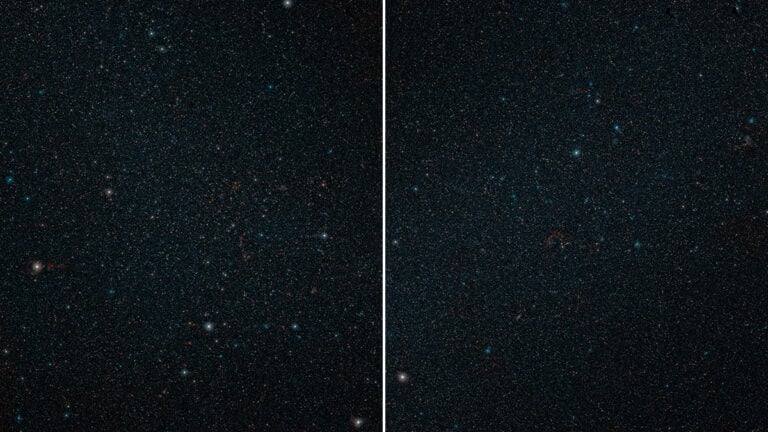
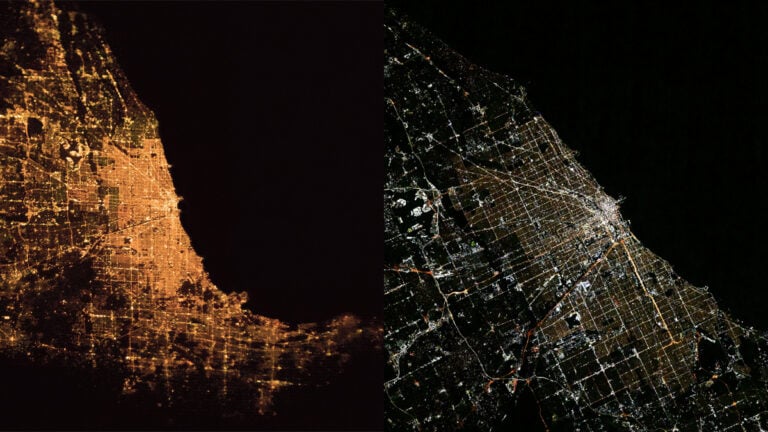
The final stage is the following: go to Layer > Smart Objects > Stack Mode > Median, and that’s it. Here are the results so you can compare:


have you used this technique to reduce noise in Photoshop?
[How to shoot in the dark. Reduce noise effectively. via ISO 1200 ]
See more from DIYPhotography.net on Google
Add DIYPhotography.net as a trusted source. This makes
our stories more likely to appear in your Google Search results.
 Add as a preferred source on Google

Dunja Đuđić Kalinin
Dunja Djudjic is a multi-talented artist based in Novi Sad, Serbia. With 15 years of experience as a photographer, she specializes in capturing the beauty of nature, travel, concerts, and fine art. In addition to her photography, Dunja also expresses her creativity through writing, embroidery, and jewelry making.


Join the Discussion
DIYP Comment Policy
Be nice, be on-topic, no personal information or flames.
16 responses to “Use this simple Photoshop technique to shoot in the dark and effectively reduce noise”
You can also upsize the layers (like 200%) before stacking the smart objects. I do that for supersampling drone photos
Um… if you are shooting on a tripod with a non moving subject, why not just shoot at a low ISO. Or does that make too much sense?
Um… because long exposures also add noise?
Assuming the camera sensor is linear, the noise properties of 1 4-second shot at ISO 100 are the same as 4 1-second shots at ISO 400 that are median-combined. In addition, you lose color depth with modern CMOS sensors in consumer/prosumer and even pro-level cameras (not the case for professional research CCDs), so you should always shoot at the lowest ISO that you can. @tyler1234 is correct: If you’re shooting on a tripod already, with a stationary subject, you should go for a longer exposure.
Based on a single exposure, the decission whether a particular pixel is signal or noise can be made only on context, i.e. the surrounding pixels. However, Once you’ve got a stack of identical photo’s, then for each pixel the majority-rules (=median) can decide what’s the proper value of a pixel. For an individual pixel success is not guaranteed: if in the majority of the exposures the pixel is affected by noise, so will it be in the result. But overall you may expect considerable improvement with three or more exposures.
With exposure time it has nothing to do.
You are correct in theory but incorrect in practice with the example in this article. Median-combining will reduce the noise of the stacked image. However, 1 4-second shot at ISO 100 will have the same noise properties of 4 1-second shots at ISO 400, assuming the sensor is linear (which it generally is for that example) AND assuming that the settings in the camera do not try to do any noise-reduction for you (which they sometimes do). So as @tyler1234 wrote, if you have a tripod and a non-moving subject, this is really pointless to go to the extra processing — takes time, effort, and there’s no need to when you have a tripod + stationary object anyway.
Additionally, tests show that the sensors on consumer/prosumer and even pro cameras are not linear, especially with their color depth, such that ISO 16,000 (for example) will have significantly worse color reconstruction than an ISO 100 shot, meaning that even median-combined to get the ISO equivalent from 1 photo, it will be worse so far’s color information is concerned.
I take off my hat to that ;-)
Did this a decade ago with reversal film and negatives. Film grain is organic so never in the exact same spot, By shooting the same still life 10-15x, scanning each and then using photoshop and some really complicates script (that I didn’t write), you’d end up with a super sharp grainless digital version.
Well known but still useful technique! Applicable for still compositions without moving objects otherwise it’s necessary to make more shots for effective median function in Ps.
Good for mirror-less cameras not to worry about shutter resource.
If you think about shutter curtain and it’s degradation mirrorless cameras have that same technology as any other slr.
Truly Gamers, I hope You know about electronic shutter in modern mirror-less cameras and smartphones?
The same with mirror resourcein DSLRs, btw.
Welcome to the world of signal averaging!
Nice writeup! I used the same technique a while back to shoot an 800-megapixel night panorama; I’d shoot each individual frame (at 300mm, f/9) 5 times and median filter that. After that I merged the filtered frames. The result: https://www.flickr.com/photos/captin_nod/25358722228
OR….buy a Pentax K1 ;)
Duncan Knifton I did this on my old k10d using the mutishot mode ?, it also increased dynamic range if you changed exposure between shots.
Many cameras have had this abilty for ages but no one really used it.
Is there an iOS app that can do that on a burst?