
























Planet Labs Is Putting 4kg Cameras In Orbit All Around Earth
Nov 19, 2014
Paul Faecks
Paul Faecks is a portrait- and fine art photographer, based in Berlin. Lately, he has started his own website, Learn Studying.com, that helps you be more productive and procrastinate less.
Share:
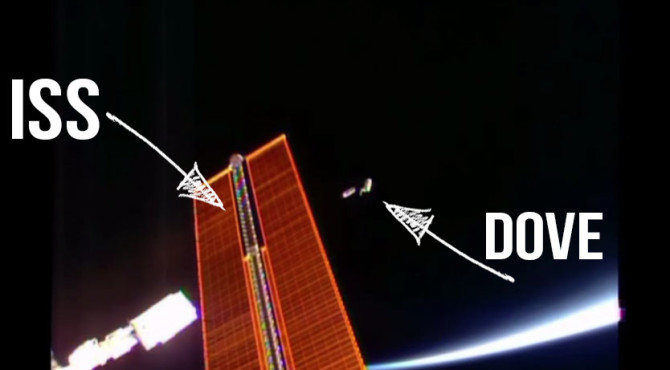
Although the access to satellite imagery has never been as broadly available as today, it is still not without its issues. The pictures are often very old because shooting a satellite up to (near) space with a rocket is just crazy expensive. In fact, according to Will Marshall, building a satellite can cost up to $85o,000,000 (yup, this is a 7 zeros figure) and weigh over 3 tons in avarage. Planet Labs however aims to revolutionize satellite images by building cheaper, smaller (think Red Epic size) and lighter (4kg) devices that are capable of updating pictures daily. Will Marshall, co-founder of Planet Labs recently gave a TED- Talk.
According to Will Marshall, Planet Labs’ satellites, dubbed Dove, are 10 by 10 by 30 centimeters long with a weight of 4kg. So compared to the 3 tons that a traditional satellite weights, you could probably say that it’s pretty light and small while delivering ten times the resolution.

Not only that, sending 28 of those doves into orbit enables the team to cover earth’s complete parameter. And with earth rotating every 24 hours, taking a photo of the entire earth. Every day.
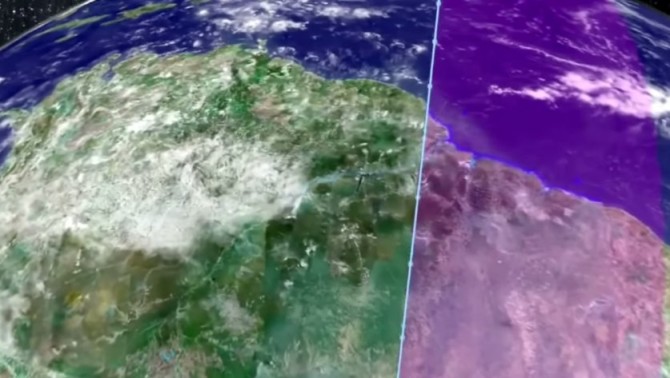
Here is how one of those images look like:

A cheaper and faster supply of satellite imagery could help humanity with many problems. As Will says, “What we can’t see cannot be fixed.” High- res images that picture urban growth, forests and other landscapes could help scientists identify and solve the big environmental problems of the earth.
[Will Marshall: Tiny satellites that photograph the entire planet, every day | TED]

Paul Faecks
Paul Faecks is a portrait- and fine art photographer, based in Berlin. Lately, he has started his own website, Learn Studying.com, that helps you be more productive and procrastinate less.
Related Posts
 Life Framer’s “Planet Earth” winners show the beauty and vulnerability of our planet
 The BBC used IR RED, thermal imaging and Sony A7S cameras to get night shots for Planet Earth 2
 Nasa Releases A New Blue Marble of Planet Earth, Just As Epic
 The Orbit is a single-axis robot arm that spins a camera around your head
Join the Discussion
DIYP Comment Policy
Be nice, be on-topic, no personal information or flames.
3 responses to “Planet Labs Is Putting 4kg Cameras In Orbit All Around Earth”
I would like to know how he gets something that appears to be floating randomly pointed in the right direction for the photos.
Gyroscopes?
It was an excellent talk. I can see it would help in many different areas.
As a school we can show updates of how things change locally.
How we access these images?