


















New Year’s Eve Fireworks Photography Tips for Any Camera
Dec 29, 2025
Alysa Gavilan
Alysa Gavilan has spent years exploring photography through photojournalism and street scenes. She enjoys working with both film and mirrorless cameras, and her fascination with the craft has grown over the decades. Inspired by Vivian Maier, she is drawn to capturing everyday moments that often go unnoticed.
Share:

New Year’s Eve is one of those nights when you feel the urge to be part of the moment and still want to remember it later. Fireworks light up the sky, crowds count down together, and suddenly you find yourself taking photos with whatever camera you have nearby.
The good news is that you do not need a high end camera or a bag full of lenses to capture memorable fireworks images. With a bit of planning and a few simple techniques, you can create strong photos using basic gear or even just your phone.
Fireworks photography is less about expensive equipment and more about timing, stability, and understanding light. Once you focus on those fundamentals, you will see that great results are possible with almost any camera.
Understanding Fireworks as a Subject
Fireworks are bright, fast, and unpredictable. They explode in complete darkness, creating high contrast scenes that challenge cameras of all types. Instead of trying to capture everything, it helps to think of fireworks as shapes and light trails against a dark background.
You do not need extreme sharpness or perfect resolution to tell that story. What matters is capturing the color, motion, and atmosphere of the moment. That mindset alone removes a lot of pressure from using “pro” gear.
Using a Basic Camera or Older DSLR
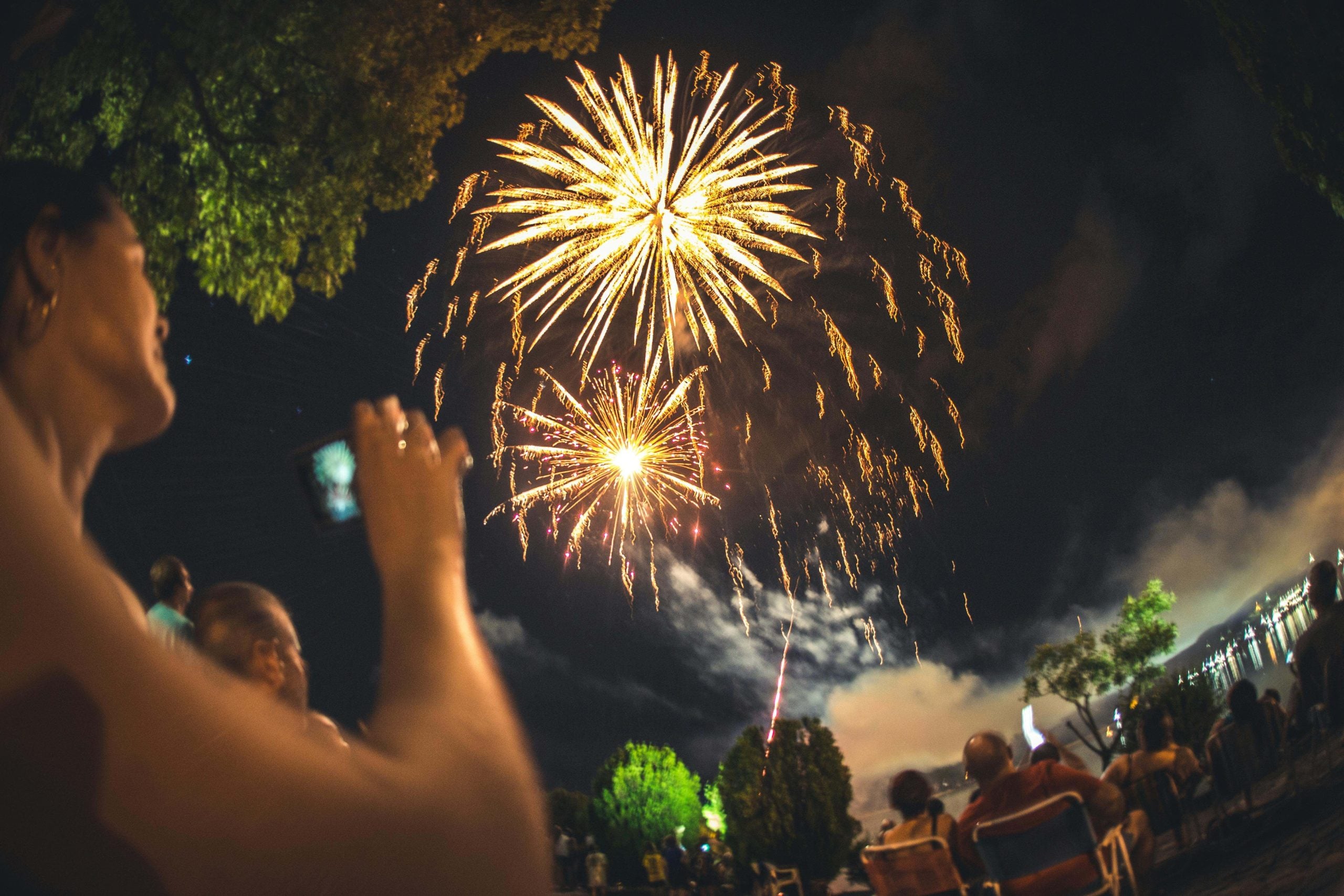
If you have an entry level DSLR, mirrorless camera, or even an older compact camera, you already have enough to work with.
Start by stabilizing your camera. A tripod is helpful, but if you do not have one, place your camera on a railing, wall, or any steady surface. Stability matters far more than sensor size when photographing fireworks.
Use manual or semi manual settings if possible. Set your ISO low, around 100 or 200, to avoid excessive noise. Choose a smaller aperture like f8 or f11 to prevent blown highlights.
For shutter speed, start around two to four seconds and adjust as needed. Longer exposures create smooth light trails, while shorter ones freeze individual bursts.
If your camera allows it, use a self timer to avoid shaking the camera when pressing the shutter. Focus manually on a distant object before the fireworks start, then leave focus alone.
Shooting Without Advanced Controls
Some cameras offer limited manual control, and that is still fine. Look for modes like night, fireworks, or long exposure. These presets are designed to handle bright lights against dark skies.
Even without full control, you can improve results by anticipating where fireworks will appear and framing your shot early. This prevents frantic repositioning and helps you stay focused on composition rather than settings.
Composition Matters More Than Gear
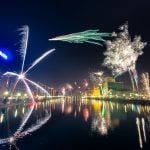
One of the easiest ways to improve your fireworks photos is to include context. Fireworks alone can look repetitive, but adding buildings, crowds, reflections, or landmarks creates a sense of place.
You can position yourself so fireworks appear above a skyline or reflected in water. Even silhouettes of people watching can add emotion and scale. These choices matter far more than having a premium lens.
If You Are Using Your Phone
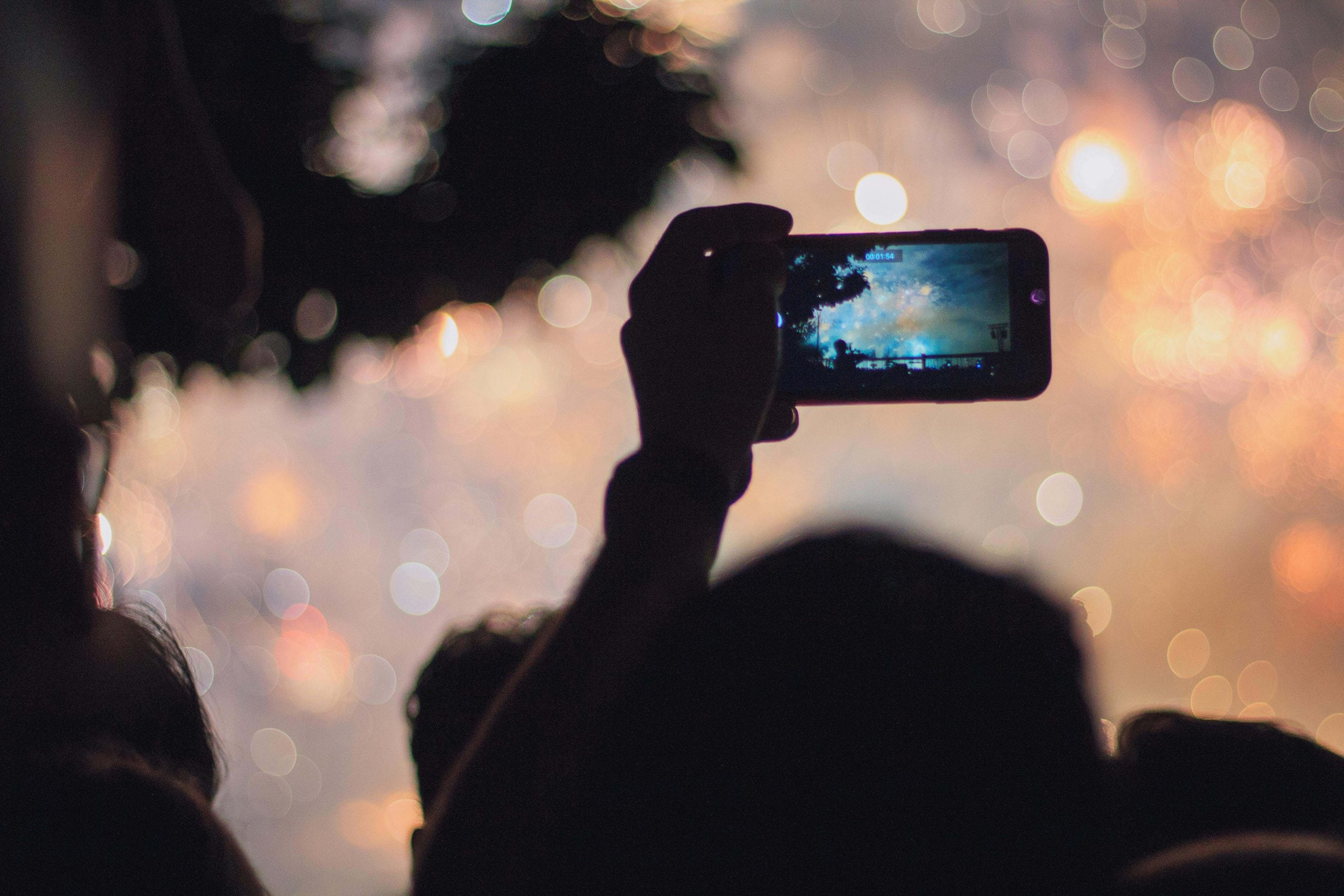
Smartphones are often underestimated for fireworks photography, but modern phones handle low light better than ever. You can absolutely capture strong New Year’s Eve fireworks photos with your phone if you approach it thoughtfully.
Turn off flash and avoid digital zoom. Tap to focus on the sky or a bright area and lower exposure if your phone allows it. Many phones include night modes or long exposure options that work surprisingly well for fireworks.
Hold your phone steady or rest it on a surface. Even slight movement can blur light trails. Burst mode can also help, allowing you to select the best frame afterward.
If your phone supports live photos or motion capture, those features can preserve multiple moments from a single burst and give you more flexibility when editing later.
Editing Makes a Difference
Fireworks photos often benefit from simple edits. Adjust contrast, reduce highlights, and slightly boost color saturation. You do not need heavy processing to make the image pop.
Editing helps recover details and balance exposure, especially if your camera struggled with the bright explosions.

Focus on the Experience
New Year’s Eve is about celebration first and photography second. Do not get so caught up in settings that you miss the moment. You can take great photos without obsessing over perfection.
When you look back at your images later, you will remember where you were and who you were with. That story matters more than technical perfection. With simple techniques and a relaxed approach, you can capture fireworks that feel just as meaningful without needing a fancy camera at all.
See more from DIYPhotography.net on Google
Add DIYPhotography.net as a trusted source. This makes
our stories more likely to appear in your Google Search results.
 Add as a preferred source on Google

Alysa Gavilan
Alysa Gavilan has spent years exploring photography through photojournalism and street scenes. She enjoys working with both film and mirrorless cameras, and her fascination with the craft has grown over the decades. Inspired by Vivian Maier, she is drawn to capturing everyday moments that often go unnoticed.


Join the Discussion
DIYP Comment Policy
Be nice, be on-topic, no personal information or flames.