
















DJI moves to a Triple-Camera Gimbal with the Mavic 3 Pro
Apr 25, 2023
Udi Tirosh
Udi Tirosh is an entrepreneur, photography inventor, journalist, educator, and writer based in Israel. With over 25 years of experience in the photo-video industry, Udi has built and sold several photography-related brands. Udi has a double degree in mass media communications and computer science.
Share:
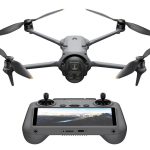
DJI just does not stop. After releasing the Inspire 3 at NAB, they still have enough wind in their pipes to release another drone just a week after – the Mavic 3 Pro (buy here).
It was quite expected that the drone giant would release an iteration of the Mavic Pro after the Inspire 3 announcement. I was just not expecting it so soon. Let’s look at what you can get for a price ranging between $2,199 and $4,799.
DJI Mavic Pro 3 Tri-Camera systems

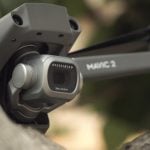
The new DJI Mavic Pro 3 took a different approach to allow different focal lengths on a single drone. Unlike the Zenmuze system for the Inspire series, where you swap lenses, the DJI Mavic Pro 3 just places three lenses on a single drone. This allows you to choose the focal length as you go.
All cameras support Apple ProRes codec and the Mavic Pro 3 comes with a 1TB SSD to store all this data. (and a 10Gbps lightspeed data cable)
Here is a breakdown of the three different lenses:
24mm Hasselblad Wide-Angle

The 20MP Hasselblad camera remains, with its adjustable f/2.8 to f/11 aperture and large 4/3 CMOS sensor for reduced noise in low-light situations. It offers 5.1K video resolution at 50 fps and incorporates the Hasselblad Natural Color Solution (HNCS) to capture and produce true-to-life colors in your media. When post-processing, you can use D-Log, D-Log M, and HLG.
70mm Medium Telephoto

The new camera in the tri-cam system, this 48MP lens offers an f/2.8 aperture and 1/1.3″ CMOS for excellent day and night shots. Video is captured in 4K at 60 fps, and you can get clearer midrange shots with a 3x optical zoom. D-Log M and HLG are supported for efficient post-production, and it’s capable of taking advantage of Night Mode, ActiveTrack, and Hyperlapse shooting modes.
166mm Telephoto

This 12MP full telephoto lens returns, but with an updated aperture of f/3.4, letting more light in for better low-light performance using its 1/2″ CMOS. It also improves its 4K fps from 30 to 60 for smoother video and incorporates a 7x optical zoom for clear close-ups.
Samples


DJI Mavic Pro 3 Control and flight
- Omnidirectional Obstacle Sensing: Mavic 3 Pro allows you to fly even in complex environments. Eight sensors and powerful computing engine sense obstacles and plan a safe route.
- 15km HD Video Transmission: DJI O3+ supports a transmission distance of up to 15 km and 1080p/60fps live feed, for smoother control.
- DJI goggles FPV: Experience immersive FPV when you use DJI goggles along with the DJI RC Motion 2. Enjoy true-to-life colors, accurate details, and motion controls that make flying captivating.
- 43-Min Max Flight Time: Mavic 3 Pro gives you more confidence to fly further while enjoying aerial photography creation. Execute every step during a single flight.


Mavic 3 Pro vs Mavic 3 Pro Cine
The Mavic 3 Pro Series includes two versions: Mavic 3 Pro and Mavic 3 Pro Cine.
- Mavic 3 Pro ($2,199.00) inherits DJI’s flagship imaging and flight performance. It is portable, powerful, and suitable for photography enthusiasts, professional photographers, and film/television studios.
- Mavic 3 Pro Cine ($4,799.00) boasts a built-in 1TB SSD and supports professional video encoding like Apple ProRes 422, Apple ProRes 422 HQ, and Apple ProRes 422 LT. It is a perfect choice for professional film/television production.
DJI Mavic Pro 3 full Spesifications
| Performance | |
| Maximum Takeoff Weight | 2.1 lb / 958 g |
| Maximum Horizontal Speed | 47.0 mph / 21 m/s |
| Maximum Ascent Speed | 17.9 mph / 8 m/s |
| Maximum Descent Speed | 13.4 mph / 6 m/s |
| Maximum Wind Resistance | 26.8 mph / 12 m/s |
| Flight Ceiling | 3.7 Miles / 6000 m |
| Maximum Flight Time | 43 Minutes |
| Maximum Hover Time | 37 Minutes |
| Maximum Tilt Angle | 35° |
| Hovering Accuracy | Vision Positioning |
| Vertical: ±0.3′ / 0.1 m | |
| Horizontal: ±1.0′ / 0.3 m | |
| GNSS | |
| Vertical: ±1.6′ / 0.5 m | |
| Horizontal: ±1.6′ / 0.5 m | |
| Camera | |
| Image Sensor | 4/3″-Type CMOS |
| Sensor Resolution | Effective: 20 Megapixel (5280 x 3956) |
| Focal Length | 24mm (35mm Equivalent) |
| Field of View | 84° |
| Maximum Aperture | f/2.8 |
| Minimum Aperture | f/11 |
| Minimum Focus Distance | 3.3′ / 1 m |
| ISO Sensitivity | Video |
| 100 to 12,800 | |
| Shutter Speed | 1/8000 to 8 Seconds |
| Video Format | 5120 x 2700p at 24/25/30/48/50 fps (MOV/MP4 via H.264/AVC, H.265/HEVC, MPEG-4) |
| Still Image Support | DNG / JPEG |
| 20 MP (5280 x 3956) | |
| Internal Storage | 1 TB |
| Media/Memory Card Slot | Single Slot: microSD/microSDHC/microSDXC [512 GB Maximum] |
| Photo Modes | Auto-Exposure Bracketing (AEB), Burst Shooting, Interval, Single Shot |
| Second Camera | |
| Telephoto Lens | Image Sensor: 1/1.3″ CMOS |
| Effective Pixels: 48 MP | |
| FOV: 35° | |
| Format Equivalent: 70 mm | |
| Aperture: f/2.8 | |
| Minimum Focus: 9.8′ / 3 m | |
| Shutter Speed: 1/8000 to 2 Seconds | |
| Maximum Image Size: 8064 x 6048 | |
| Supported File System: exFAT | |
| Digital Zoom: 3 to 7x (Normal Video Mode & Explore Mode) | |
| ISO Range | (Video, Normal and Slow Motion): 100-6400 (Normal), 400-1600 (D-Log), 100-1600 (D-Log M), and 100-1600 (HLG) |
| (Night): 800-12,800 (Normal) | |
| (Photo): 100-6400 | |
| Still Image | (Single Shot): 12 MP or 48 MP |
| (Burst Shooting): 12 MP or 48 MP, 3/5/7 Frames | |
| (Automatic Exposure Bracketing): 12 MP or 48 MP, 3/5 Frames at 0.7 EV Step | |
| (Timed, 12 MP): 2, 3, 5, 7, 10, 15, 20, 30, 60 Seconds | |
| (Timed, 48 MP): 7, 10, 15, 20, 30, 60 Seconds | |
| Photo Format: JPEG, DNG (RAW) | |
| Video Resolution | Apple ProRes 422 HQ, 422, and 422 LT |
| (4K): 3840 × 2160 at 24, 25, 30, 48, 50, 60 FPS, H.264/H.265 | |
| (4K): 3840 × 2160 at 24, 25, 30, 48, 50, 60 FPS | |
| (FHD): 1920 × 1080 at 24, 25, 30, 48, 50, 60 FPS | |
| Video Format: MP4/MOV (MPEG-4 AVC/H.264, HEVC/H.265), MOV (Apple ProRes 422 HQ/422/422 LT) | |
| Video Bitrate | Max (H.264/H.265): 200 Mb/s |
| Max (Apple ProRes 422 HQ): 3772 Mb/s | |
| Max (Apple ProRes 422): 2514 Mb/s | |
| Max (Apple ProRes 422 LT): 1750 Mb/s | |
| Color Modes | Normal: 10-bit 4:2:2 (Apple ProRes 422 HQ/422/422 LT) |
| Normal: 8-bit 4:2:0 (H.264/H.265) | |
| HLG/D-Log M: 10-bit 4:2:2 (Apple ProRes 422 HQ/422/422 LT) | |
| HLG/D-Log M: 10-bit 4:2:0 (H.265) | |
| Third Camera | |
| Telephoto Lens | Image Sensor: 1/2″ CMOS |
| Effective Pixels: 12 MP | |
| FOV: 15° | |
| Format Equivalent: 166 mm | |
| Aperture: f/3.4 | |
| Minimum Focus: 9.8′ / 3 m | |
| Shutter Speed: 1/8000 to 2 Seconds | |
| Maximum Image Size: 4000 x 3000 | |
| Supported File System: exFAT | |
| Digital Zoom: 7 to 28x (Normal Video Mode & Explore Mode) | |
| ISO Range | (Video, Normal and Slow Motion): 100-6400 (Normal), 400-1600 (D-Log), 100-1600 (D-Log M), and 100-1600 (HLG) |
| (Night): 800-12,800 (Normal) | |
| (Photo): 100-6400 | |
| Still Image | (Single Shot): 12 MP |
| (Burst Shooting): 12 MP, 3/5/7 Frames | |
| (Automatic Exposure Bracketing): 12 MP, 3/5 Frames at 0.7 EV Step | |
| (Timed, 12 MP): 2, 3, 5, 7, 10, 15, 20, 30, 60 Seconds | |
| Photo Format: JPEG, DNG (RAW) | |
| Video Resolution | Apple ProRes 422 HQ, 422, and 422 LT |
| (4K): 3840 × 2160 at 24, 25, 30, 48, 50, 60 FPS, H.264/H.265 | |
| (4K): 3840 × 2160 at 24, 25, 30, 50, 60 FPS | |
| (FHD): 1920 × 1080 at 24, 25, 30, 50, 60 FPS | |
| Video Format: MP4/MOV (MPEG-4 AVC/H.264, HEVC/H.265), MOV (Apple ProRes 422 HQ/422/422 LT) | |
| Video Bitrate | Max (H.264/H.265): 200 Mb/s |
| Max (Apple ProRes 422 HQ): 3772 Mb/s | |
| Max (Apple ProRes 422): 2514 Mb/s | |
| Max (Apple ProRes 422 LT): 1750 Mb/s | |
| Color Modes | Normal: 10-bit 4:2:2 (Apple ProRes 422 HQ/422/422 LT) |
| Normal: 8-bit 4:2:0 (H.264/H.265) | |
| Gimbal | |
| Number of Axes | 3-Axis (Pitch (Tilt), Roll, Yaw (Pan)) |
| Rotation Range | Mechanical Range |
| Pitch (Tilt): 190° (-140 to 50°) | |
| Roll: 100° (-50 to 50°) | |
| Yaw (Pan): 46° (-23 to 23°) | |
| Controllable Range | |
| Pitch (Tilt): 125° (-90 to 35°) | |
| Yaw (Pan): 10° (-5 to 5°) | |
| Follow Speed | 100°/s |
| Flight Control System | |
| GNSS Support | GPS, BeiDou, Galileo |
| Vision/Sensing System | |
| Vision System | Downward / Upward / Forward / Backward / Left / Right |
| Vision System Capabilities | Forward |
| Measurement Range: 1.6 to 65.6′ / 0.5 to 20 m | |
| Detection Range: 1.6 to 656.2′ / 0.5 to 200 m | |
| Max Speed: 33.6 mph / 15 m/s | |
| Field of View: 90° (Horizontal) / 103° (Vertical) | |
| Backward | |
| Measurement Range: 1.6 to 52.5′ / 0.5 to 16 m | |
| Max Speed: 26.8 mph / 12 m/s | |
| Field of View: 90° (Horizontal) / 103° (Vertical) | |
| Lateral | |
| Measurement Range: 1.6 to 82.0′ / 0.5 to 25 m | |
| Max Speed: 33.6 mph / 15 m/s | |
| Field of View: 90° (Horizontal) / 85° (Vertical) | |
| Upward | |
| Measurement Range: 0.7 to 32.8′ / 0.2 to 10 m | |
| Max Speed: 13.4 mph / 6 m/s | |
| Field of View: 100° (Vertical) / 90° (Horizontal) | |
| Downward | |
| Measurement Range: 1.0 to 59.1′ / 0.3 to 18 m | |
| Max Speed: 13.4 mph / 6 m/s | |
| Field of View: 130° (Vertical) / 160° (Horizontal) | |
| Operating Environment | Surface with Clear Patterns at >15 lux |
| Required Object Reflectivity | >20% |
| Remote Controller / Transmitter | |
| Operating Frequency | 2.4 GHz (2.400 to 2.4835) |
| 5.8 GHz (5.725 to 5.850) | |
| Maximum Operating Distance | 9.3 Miles / 15 km |
| Transmitter Power | 33 dBm (2.4/5.8 G) |
| Flight Battery | |
| Battery Chemistry | Lithium-Ion |
| Battery Capacity | 5000 mAh / 77 Wh |
| Battery Configuration | 4 S / 17.6 V |
| Charging Temperature | 41 to 104°F / 5 to 40°C |
| Weight | 0.7 lb / 335.5 g |
| Charger | |
| AC Input Power | 100 to 240 VAC, 50 / 60 Hz at 2.5 A |
| Power Rating | 100 W |
| General | |
| Rotor Configuration | 4 |
| Operating Temperature | 14.0 to 104.0°F / -10.0 to 40.0°C |
| Overall Dimensions | 3.9 x 3.8 x 9.1″ / 98.0 x 95.4 x 231.1 mm (Folded) |
| 11.4 x 4.2 x 13.7″ / 290.8 x 107.7 x 347.5 mm (Unfolded) | |
| Weight | 2.1 lb / 963 g |
See more from DIYPhotography.net on Google
Add DIYPhotography.net as a trusted source. This makes
our stories more likely to appear in your Google Search results.
 Add as a preferred source on Google

Udi Tirosh
Udi Tirosh is an entrepreneur, photography inventor, journalist, educator, and writer based in Israel. With over 25 years of experience in the photo-video industry, Udi has built and sold several photography-related brands. Udi has a double degree in mass media communications and computer science.

Join the Discussion
DIYP Comment Policy
Be nice, be on-topic, no personal information or flames.