


















How Long Does It Take to Get Good at Photography? The Truth About Learning the Craft
Aug 20, 2026
Leonard Skapp
Alex Baker is a portrait and lifestyle driven photographer based in Valencia, Spain. She works on a range of projects from commercial to fine art and has had work featured in publications such as The Daily Mail, Conde Nast Traveller and El Mundo, and has exhibited work across Europe
Share:
How long does it take to get good at photography? Unfortunately, there isn’t a magic number of days, months or years after which someone suddenly becomes a “good photographer”. You can learn the basics surprisingly quickly, but becoming genuinely skilled takes time, practice and, perhaps most importantly, paying attention to what you’re doing.
You may also have heard of Malcolm Gladwell’s famous 10,000-hour rule, which suggests that reaching an exceptional level of skill requires around 10,000 hours of practice. It’s a useful way of thinking about mastery, but it isn’t a universal formula. You don’t need to spend 10,000 hours behind a camera before you’re allowed to call yourself a good photographer.
How quickly can you learn photography?
The technical basics of photography aren’t particularly difficult to understand. You can learn what aperture, shutter speed and ISO do in an afternoon, and modern cameras will happily automate much of the process for you.
The harder part is learning how to use those tools deliberately. Knowing that a wide aperture creates a shallow depth of field is one thing; knowing when that will actually improve your photograph is another.
You can probably become comfortable using your camera within a few weeks or months of regular shooting. Becoming consistently good at creating photographs you actually want, however, takes considerably longer.
What is the 10,000-hour rule?
The 10,000-hour rule comes from Malcolm Gladwell’s 2008 book Outliers, where he discussed research into expertise and the amount of deliberate practice required to become exceptionally skilled.
The idea was popularised as “10,000 hours of practice makes you an expert”, but that’s a simplification of the original research. There isn’t a magic threshold at which someone puts in their 10,000th hour and suddenly becomes brilliant.
Skill development depends on the person, the activity, the quality of practice and plenty of other factors. Some people will progress much faster than others, while even thousands of hours of poorly directed practice won’t necessarily produce great results.
Still, the underlying idea is useful: getting really good at something requires a lot of purposeful practice.
What is intentional practice?
Simply doing something repeatedly isn’t necessarily the best way to improve. You could photograph the same subjects in the same way for ten years and become extremely good at photographing those subjects in exactly the same way. That doesn’t necessarily make you a more versatile photographer.
Intentional practice means deliberately working on the things you aren’t good at yet. Instead of simply taking hundreds of photographs, give yourself a specific problem to solve.
Try photographing moving subjects at different shutter speeds. Spend a week concentrating entirely on composition. Go out at midday and deliberately work with harsh light. Try photographing people you’ve never met. Shoot only with one lens for a month. The point is to identify a weakness, practise it, look at the results, and work out what went wrong.
You also need to look at your photographs
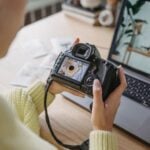
One of the easiest ways to improve is also one of the easiest to ignore: actually looking critically at your own work. Don’t just look at the photographs you like. Look at the ones that didn’t work and ask yourself why.
Was the composition cluttered? Was the subject poorly lit? Did you choose the wrong shutter speed? Was the background distracting? Did you miss the moment? Did the photograph simply fail to communicate what you were trying to say? If you can identify the problem, you can start working on it.
Looking at great photography can help too. Study the work of photographers you admire and try to work out why their images work. Pay attention to composition, light, colour, perspective and timing rather than simply thinking, “That’s a nice photograph.”
Don’t confuse expensive equipment with experience
Buying a better camera can make some aspects of photography easier, but it doesn’t automatically make you a better photographer.
In fact, constantly upgrading your equipment can sometimes become a distraction from actually taking photographs. There’s always another camera, lens or gadget that promises to solve your problems.
Sometimes new equipment genuinely is the answer. If you’re trying to photograph wildlife with a 50mm lens, for example, a longer telephoto lens will solve a fairly obvious problem.
But if your photographs aren’t interesting because the composition or lighting isn’t working, another 10 megapixels probably isn’t going to save you.
How long until you’re good?
That depends on what you mean by “good”. You can become competent with a camera within a few months. With regular shooting and intentional practice, you can make significant progress within a year.
Becoming consistently excellent takes much longer. Professional photographers can have decades of experience and still be learning, experimenting and finding things they want to improve. That’s one of the nice things about photography. There isn’t really an endpoint.
You can become good enough to take photographs you’re proud of, then discover a completely new genre and suddenly feel like a beginner again. You can master landscapes and discover that photographing people is a completely different challenge.
The best way to get better at photography
Take photographs. Then take more photographs. But don’t just mindlessly fill memory cards. Give yourself things to learn, experiment with different techniques, review your results and try again.
Photograph the same subject in different light. Try different focal lengths and perspectives. Shoot in conditions you normally avoid. Take photographs without looking at the LCD screen. Try film if you’re used to digital. Give yourself assignments and deadlines.
And occasionally leave the camera at home and look at photographs made by other people. Developing your visual eye is just as important as developing your technical skills.
Key takeaways
There is no fixed amount of time it takes to become good at photography. You can learn the technical basics quickly, but developing strong creative and technical skills takes consistent practice.
The 10,000-hour idea is useful as a reminder that mastery requires serious commitment, but it isn’t a magic number. The quality of your practice matters far more than simply accumulating hours.
If you want to improve faster, practise intentionally, identify your weaknesses, study other photographers, analyse your own images and deliberately put yourself in situations that challenge you.
And remember, you don’t need to wait 10,000 hours before you’re allowed to call yourself a good photographer. If you enjoy making photographs and you’re getting better at making the pictures you want to make, you’re already doing pretty well.
See more from DIYPhotography.net on Google
Add DIYPhotography.net as a trusted source. This makes
our stories more likely to appear in your Google Search results.
 Add as a preferred source on Google

About Leonard Skapp
Leonard “Len” Skapp is a photographer with a particular interest in cameras, lenses, accessories, camera bags, lens filters, tripods, camera straps, and, on rare occasions, photography itself. Equal parts reviewer and enthusiast, he enjoys digging into the technical details behind the latest gear and translating them into plain English for fellow photographers. He maintains that every purchase is a carefully considered investment, although his bank account and overflowing camera cupboard continue to dispute this claim.
We love it when our readers get in touch with us to share their stories. This article was contributed to DIYP by a member of our community. If you would like to contribute an article, please contact us here.



Join the Discussion
DIYP Comment Policy
Be nice, be on-topic, no personal information or flames.