



















DJI Mini 5 Pro Comparison: How It Stacks Up Against Other DJI Models
Sep 18, 2025
Darlene Lleno
Darlene Lleno brings a unique perspective to DIY Photography as someone who grew up surrounded by camera gear but chose words over lenses. With five years of writing experience, she specializes in photography content that’s both technically informed and genuinely passionate. Growing up with a photographer twin brother meant camera talk was everyday conversation in her household. While he mastered capturing moments, Darlene discovered she preferred being the subject and the storyteller behind the scenes. As a travel enthusiast and mother of two, she understands the importance of preserving life’s precious moments. When not exploring new destinations or writing for DIY Photography, you’ll find her reading or tending to her garden. Her approach to photography writing is refreshingly authentic, she may not be behind the camera, but she knows exactly what it takes to help others capture the shots that matter most.
Share:
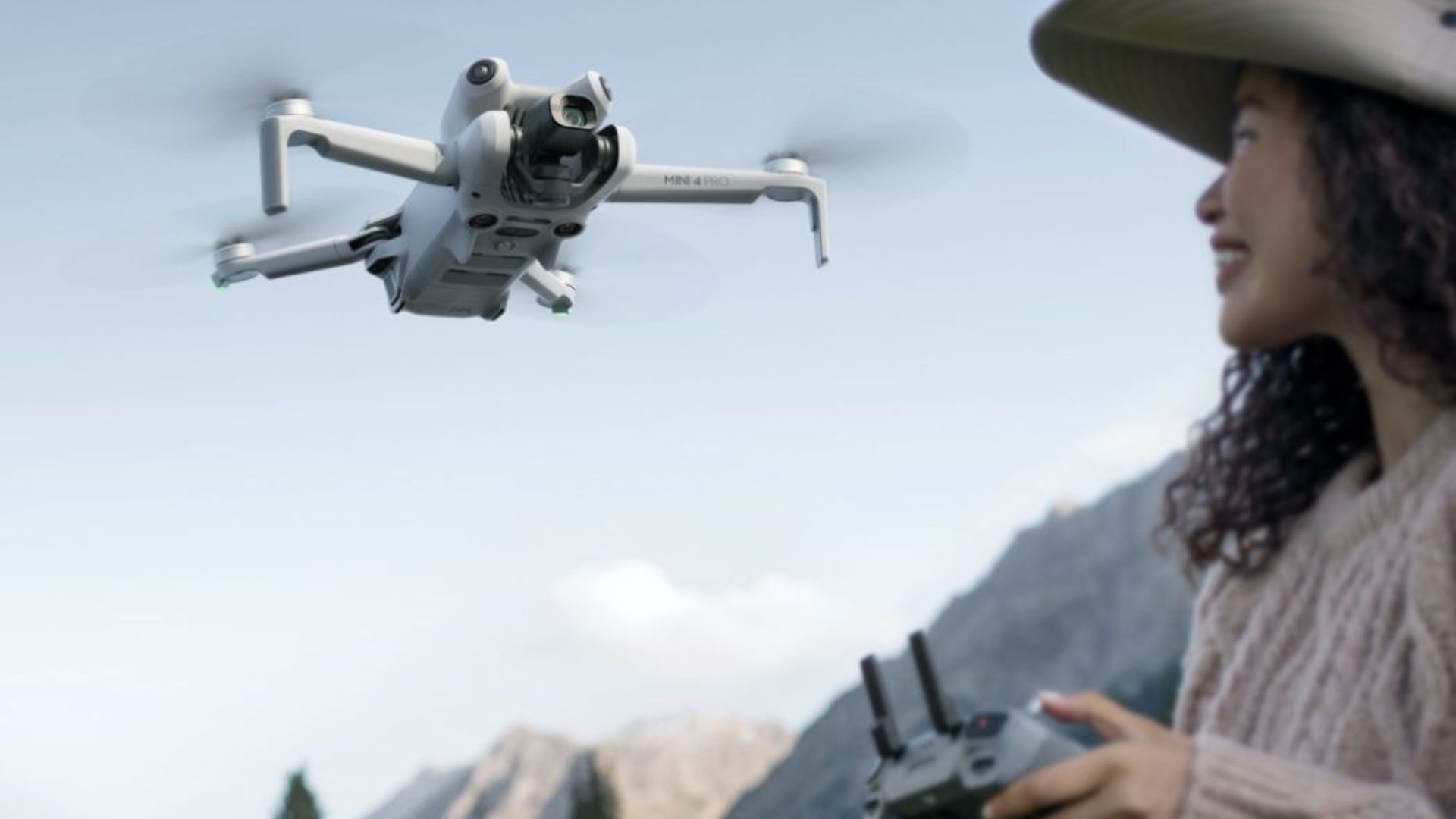
The DJI Mini 5 Pro enters a competitive market where consumers have multiple options across different price points and feature sets. Understanding how it compares against DJI’s own lineup helps buyers make informed decisions based on their specific needs and budget constraints.
Complete Drone Comparison Table
| Feature | DJI Mini 5 Pro | DJI Air 3S | DJI Mavic 4 Pro |
| Weight | 249.9g | 724g | ~1063g |
| Dimensions (Folded) | 157×95×68mm | 214×101×89mm | 258×125×107mm |
| Image Sensor | 1″ CMOS, 50MP | Wide: 1″ CMOS 50MPTele: 1/1.3″ CMOS 48MP | Hasselblad: 4/3 CMOS 100MPMed Tele: 1/1.3″ CMOS 48MPTele: 1/1.5″ CMOS 50MP |
| Max Video Resolution | 4K/60fps HDR4K/120fps | 4K/60fps HDR4K/120fps | 6K/60fpsDCI 4K/120fps4K/60fps HDR |
| Gimbal Range | Tilt: -90° to 55°Roll: -180° to 45°225° Rotation | Tilt: -90° to 60°Pan: -5° to 5° | Tilt: -90° to 70°Roll: -40° to 400° |
| Vertical Shooting | True 90° Vertical | 2.7K Cropped | 4K True Vertical |
| Max Flight Time | 36 min (standard)52 min (Plus battery) | 45 min | 51 min |
| Max Speed | 18-19 m/s | 21 m/s | 25 m/s |
| Max Transmission | 20km (FCC)10km (CE) | 20km (FCC)10km (CE) | 30km (FCC)15km (CE) |
| Obstacle Sensing | 1 Lux NightscapeOmnidirectionalForward LiDAR | 1 Lux NightscapeOmnidirectionalForward LiDAR | OmnidirectionalForward LiDAR |
| Internal Storage | 42GB | 42GB | 64GB / 512GB |
| Digital Zoom | 3x (Photo/4K)4x (FHD) | Wide: 1-2.9xTele: 3-9x | Hasselblad: 1-2.5xMed Tele: 2.5-6xTele: 6-24x |
| Color Modes | Normal, HLG, D-Log M10-bit H.265 | Normal, HLG, D-Log M10-bit H.265 | Normal, HLG, D-Log M, D-Log10-bit 4:2:2 (ALL-I) |
| Battery Capacity | 2788mAh / 4680mAh | 4276mAh | 6654mAh |
| Max Takeoff Altitude | 6000m (standard)4500m (Plus) | 6000m | 6000m |
Detailed Performance Analysis
The comparison table reveals distinct positioning for each drone model. The Mini 5 Pro prioritizes portability and regulatory simplicity while delivering professional imaging capabilities. Its 249.9-gram weight keeps it in the recreational category for most regions, eliminating registration requirements and operational restrictions.
Camera performance shows interesting trade-offs. The Mini 5 Pro’s single 1-inch sensor provides excellent image quality with strong low-light performance thanks to its f/1.8 aperture. The Air 3S dual-camera system offers native zoom capabilities that eliminate digital zoom quality loss, while the Mavic 4 Pro’s Hasselblad collaboration and larger sensor deliver ultimate image quality.
Gimbal technology represents a key differentiator. The Mini 5 Pro’s revolutionary 225° rotation and true vertical shooting capabilities provide creative possibilities unmatched in its size class. The Air 3S offers more limited gimbal movement but includes dual-camera flexibility. The Mavic 4 Pro provides extensive roll rotation up to 400° for advanced cinematography.
Flight performance scales predictably with size and weight. The Mini 5 Pro achieves respectable 36-52 minute flight times depending on battery choice, while larger models provide longer individual flight sessions. Maximum speeds increase with drone size, though all models provide adequate performance for most applications.
Weight Class Implications
The under-250-gram category creates unique advantages for the Mini 5 Pro. Many regions classify drones under this weight as recreational devices requiring minimal registration or licensing. The Air 3S and Mavic 4 Pro require registration in most countries and may face additional operational restrictions.
This weight classification enables spontaneous flying opportunities without extensive pre-planning or regulatory compliance. Travelers particularly benefit from reduced paperwork and simplified transport requirements.
However, the lightweight construction presents trade-offs. Wind resistance remains adequate at 12 m/s for all compared models, but the heavier drones typically provide more stable footage in challenging conditions. The Mini 5 Pro’s performance in moderate wind conditions matches larger drones but requires more careful flight planning in challenging weather.
Camera Performance Analysis
Image quality comparisons reveal nuanced differences. The Mini 5 Pro’s 1-inch sensor delivers excellent results for its size class, particularly in low-light conditions. The f/1.8 aperture provides strong performance during golden hour and blue hour photography.
The Air 3S dual-camera system offers practical advantages for composition flexibility. Native zoom capabilities eliminate digital zoom quality loss, providing cleaner telephoto images. However, the Mini 5 Pro’s Med-Tele mode delivers surprisingly good results for digital zoom implementation.
Portrait optimization algorithms appear across all models but show refinement in the Mini 5 Pro implementation. The combination of sensor size and processing algorithms produces naturally radiant portraits with accurate skin tones.
Dynamic range performance varies by model. The Mini 5 Pro achieves 14 stops in HDR video mode, matching the Air 3S. The Mavic 4 Pro’s larger sensor and advanced processing likely provide superior dynamic range, though specific measurements weren’t detailed.
Intelligent Flight Features
ActiveTrack 360° capabilities show progression across the lineup. The Mini 5 Pro introduces Cycling mode alongside Standard mode, automatically detecting sports scenarios for optimal tracking. This feature appears refined compared to previous implementations.
Obstacle sensing during tracking presents clear advantages for larger models. The Air 3S provides more comprehensive sensing coverage, while the Mini 5 Pro offers adequate protection for most scenarios. The Mavic 4 Pro’s advanced sensing systems enable more aggressive tracking in complex environments.
Creative shooting modes remain consistent across models, though implementation details vary. QuickShot variations, panorama modes, and intelligent flight paths provide similar functionality regardless of model choice.
Battery and Charging Ecosystem
The Mini 5 Pro’s dual battery strategy provides flexibility unmatched by competing models. Standard flight times of 36 minutes expand to 52 minutes with the optional Plus battery, though this option isn’t available in European markets.
Charging infrastructure shows thoughtful design. The Two-Way Charging Hub enables efficient multi-battery management and power transfer between batteries. This feature proves particularly valuable during extended shooting sessions.
The Air 3S and Mavic 4 Pro utilize single battery designs with longer individual flight times but require additional batteries for extended sessions. Charging times vary significantly, with the Mavic 4 Pro requiring specialized high-wattage chargers for optimal performance.
Price and Value Considerations
Pricing structures create clear market positioning. The Mini 5 Pro targets users seeking professional features without flagship pricing. The Air 3S serves buyers wanting advanced dual-camera capabilities who can accept increased weight and complexity.
The Mavic 4 Pro addresses serious content creators and commercial users requiring maximum image quality and professional features. Its pricing reflects the included professional capabilities and Hasselblad collaboration.
Value propositions differ based on intended use. Recreational photographers and social media content creators likely find the Mini 5 Pro provides optimal feature balance. Professional users requiring maximum image quality and advanced features benefit from the Mavic 4 Pro’s capabilities.
Market Position and Recommendations
The Mini 5 Pro successfully occupies a unique position balancing professional capabilities with consumer accessibility. Its combination of 1-inch sensor, advanced gimbal technology, and comprehensive safety features creates compelling value for its target market.
Buyers prioritizing portability and regulatory simplicity should strongly consider the Mini 5 Pro. Its professional image quality and feature set satisfy most content creation needs while maintaining travel-friendly dimensions.
Users requiring maximum image quality, extended flight times, or advanced professional features should evaluate the Air 3S or Mavic 4 Pro. These models provide superior capabilities for demanding applications but sacrifice the Mini 5 Pro’s accessibility advantages.
The drone market continues evolving rapidly, but the Mini 5 Pro establishes a strong position by successfully combining professional capabilities with consumer-friendly accessibility. This balance creates appeal across diverse user groups while maintaining the Mini series’ core philosophy of making advanced drone technology accessible to everyone.
See more from DIYPhotography.net on Google
Add DIYPhotography.net as a trusted source. This makes
our stories more likely to appear in your Google Search results.
 Add as a preferred source on Google

Darlene Lleno
Darlene Lleno brings a unique perspective to DIY Photography as someone who grew up surrounded by camera gear but chose words over lenses. With five years of writing experience, she specializes in photography content that’s both technically informed and genuinely passionate. Growing up with a photographer twin brother meant camera talk was everyday conversation in her household. While he mastered capturing moments, Darlene discovered she preferred being the subject and the storyteller behind the scenes. As a travel enthusiast and mother of two, she understands the importance of preserving life’s precious moments. When not exploring new destinations or writing for DIY Photography, you’ll find her reading or tending to her garden. Her approach to photography writing is refreshingly authentic, she may not be behind the camera, but she knows exactly what it takes to help others capture the shots that matter most.
Related Posts
 Blackmagic significantly drops the price of its Atem Mini, Mini Pro and Mini Pro ISO live stream switchers
 How iPhone X stacks up against Panasonic GH 5 for video shooting
 Canon EOS R image quality: how it stacks up against other Canon cameras and Sony mirrorless
 The new DJI Mini 3 drone sacrifices obstacle avoidance for a $260 price drop vs the Mini 3 Pro
Join the Discussion
DIYP Comment Policy
Be nice, be on-topic, no personal information or flames.