





















Best Camera Lens of All Time: The Legendary Glass That Changed Photography Forever
Aug 26, 2025
Darlene Lleno
Darlene Lleno brings a unique perspective to DIY Photography as someone who grew up surrounded by camera gear but chose words over lenses. With five years of writing experience, she specializes in photography content that’s both technically informed and genuinely passionate. Growing up with a photographer twin brother meant camera talk was everyday conversation in her household. While he mastered capturing moments, Darlene discovered she preferred being the subject and the storyteller behind the scenes. As a travel enthusiast and mother of two, she understands the importance of preserving life’s precious moments. When not exploring new destinations or writing for DIY Photography, you’ll find her reading or tending to her garden. Her approach to photography writing is refreshingly authentic, she may not be behind the camera, but she knows exactly what it takes to help others capture the shots that matter most.
Share:
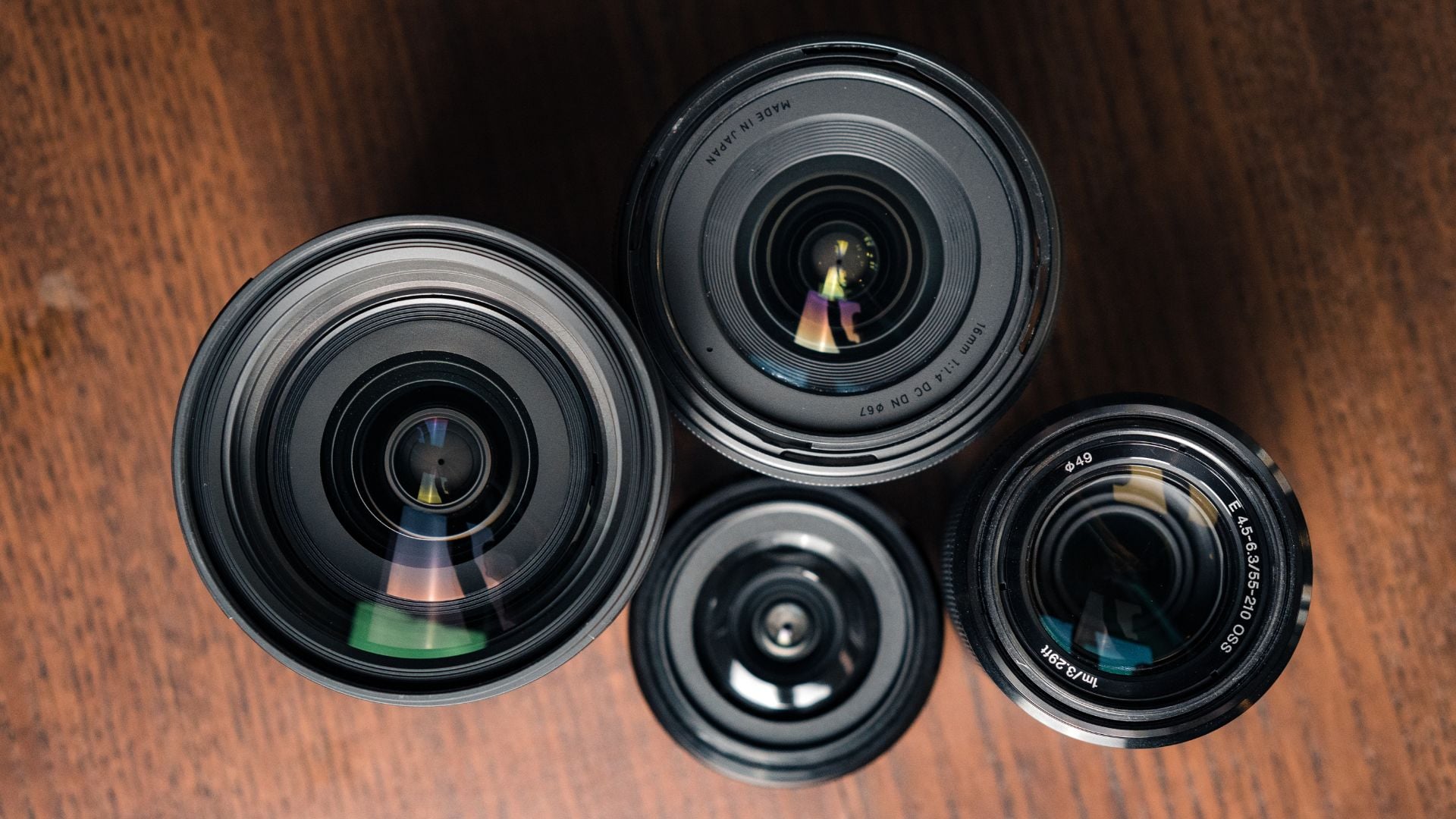
The best camera lens of all time goes beyond technical specs and unbelievable price tags. What truly matters is the glass that completely changed how we capture the world around us. From the groundbreaking Petzval lens back in 1840 to today’s modern optical masterpieces, certain lenses have earned legendary status by fundamentally transforming photography.
The Evolution of Legendary Glass
Photography started with pretty basic single-element lenses that had serious problems with image quality. Early photographers quickly figured out that combining multiple glass elements could fix these issues, setting up the foundation for the amazing optical achievements we see today.
The journey from those first rough lenses to modern marvels spans over 180 years of innovation, experimentation, and pure optical genius. Each breakthrough built on the last, creating the incredible variety of legendary glass we have access to today.
Camera Lens Hall of Fame
These are the lenses that changed everything. They didn’t just take good photos – they redefined what was possible in photography and influenced every lens that came after them.
Leica Summicron 50mm f/2: The Standard Bearer
When photographers talk about the best camera lens of all time, the Leica Summicron 50mm f/2 consistently comes up as having stunning sharpness even at f/2, with no distortion, and being considered the world’s best 50mm lens. First launched in 1953, this lens literally set the standard for what a normal focal length should do.
The Summicron earned Leica glass its place at the very top. It established the benchmark for how a 50mm lens should look and perform, a standard that still holds today. What makes this lens legendary isn’t just its optical performance though. It’s the consistency across multiple generations that’s really impressive.
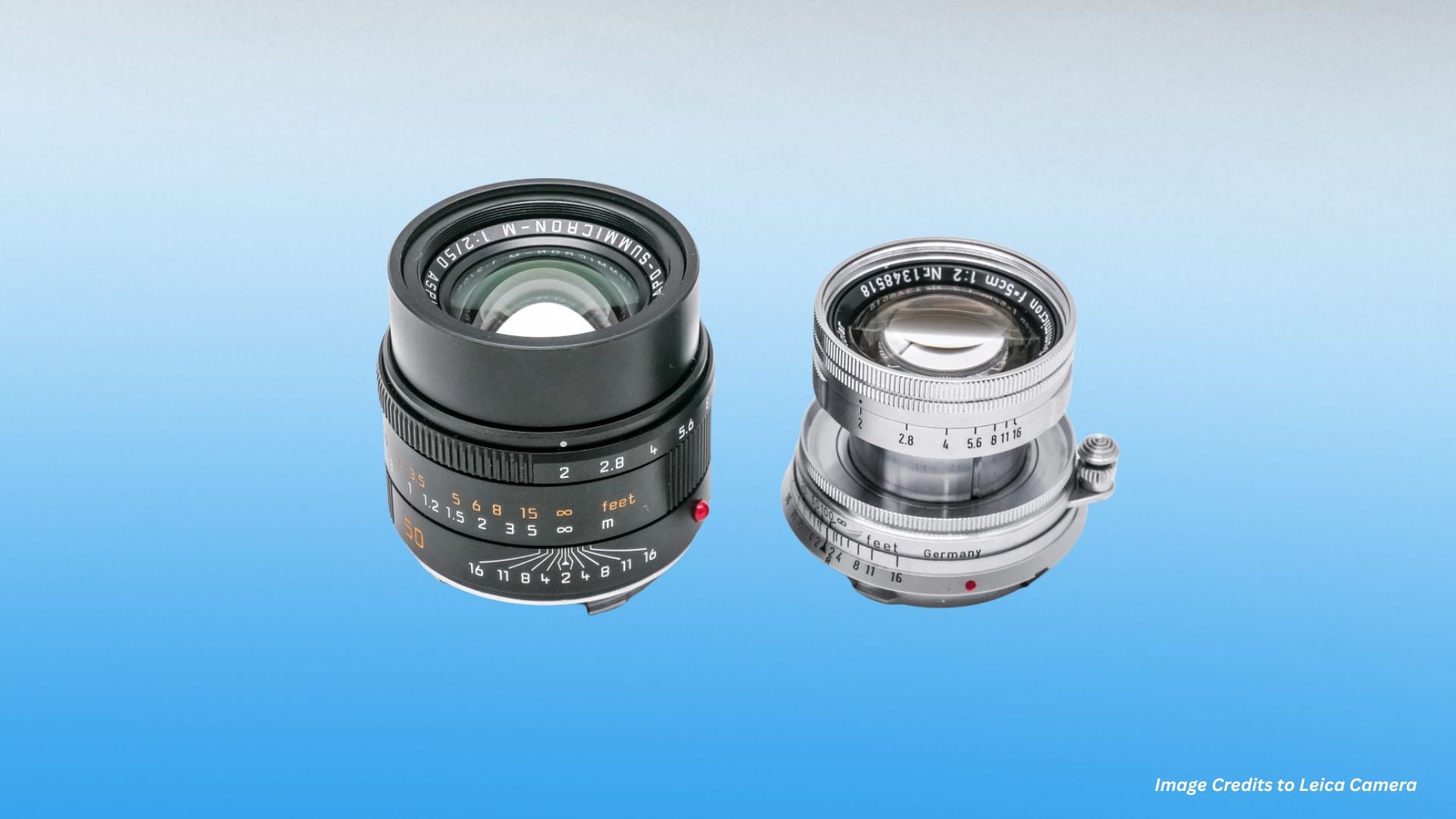
Lens specs/features:
- Maintains resolution and sharpness to frame edges at every aperture
- Produces some of the smoothest bokeh in 35mm photography
- Works perfectly for both wide-open portrait photography and stopped-down street work
- Available in multiple versions spanning decades of production
- Distinctive Leica micro-contrast that’s instantly recognizable
The magic lies in its versatility. Whether you’re shooting portraits at wide apertures or stopping down for street scenes, this lens delivers remarkable consistency every time.
Canon 200mm f/1.8L: The Eye of Sauron
People call the Canon 200mm f/1.8L “The Eye of Sauron” because of not only its massive front element and legendary sharpness but also its extreme rarity within the modern world. Made from 1988 to 2004, only 8,000 units were ever produced, making it one of photography’s holy grails.
This lens represents Canon’s golden age of extreme apertures. As the world’s fastest 200mm telephoto lens at the time, it featured three UD-glass elements that eliminate secondary spectrum for sharp images at all apertures. The engineering achievement here can’t be overstated.
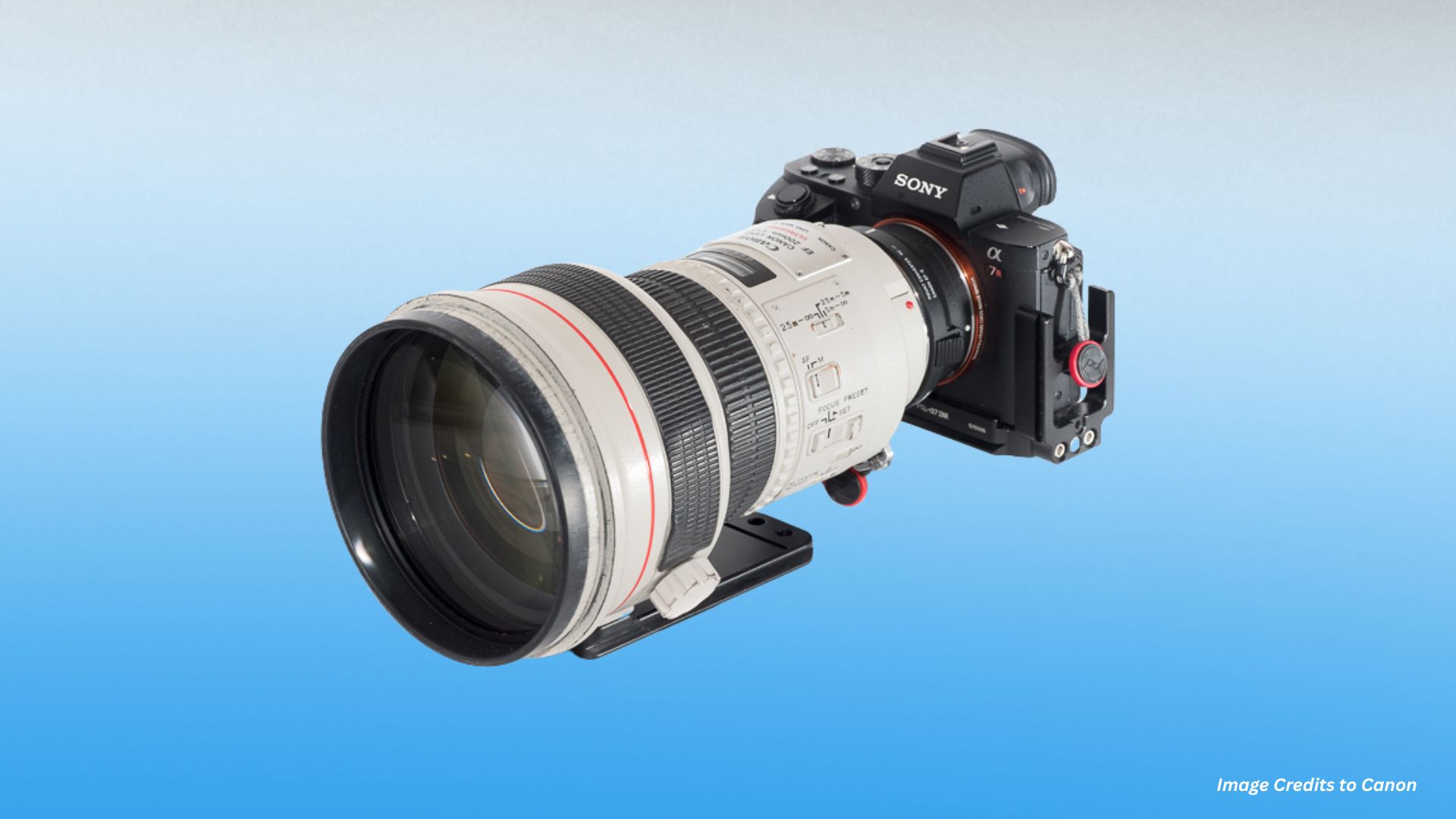
Lens specs/features:
- Maximum aperture: f/1.8 (fastest 200mm ever made)
- Weight: 6.6 pounds without hood
- Production run: Only 8,000 units total
- Three UD glass elements for chromatic aberration control
- Internal focus with ultrasonic motor
Professional sports photographers who owned this lens often describe it as completely transformative. The combination of reach and speed let them capture images that were previously impossible, especially in challenging lighting where other lenses would fail completely.
Zeiss Otus 85mm f/1.4 APO Planar: Modern Perfection
The Zeiss Otus 85mm f/1.4 represents the absolute peak of modern lens design. This lens delivers the most transparently beautiful imagery with virtually no chromatic aberrations and performs perfectly wide open, without a need to stop down the aperture to increase its performance.
Professionals who’ve tested this lens report that the lens still has more to give but we don’t have the sensors for it yet. That statement perfectly captures why the Otus 85mm earns its place among the best camera lens of all time options. It’s not just excellent for today’s cameras, but future-proofed for sensors we haven’t even invented yet.
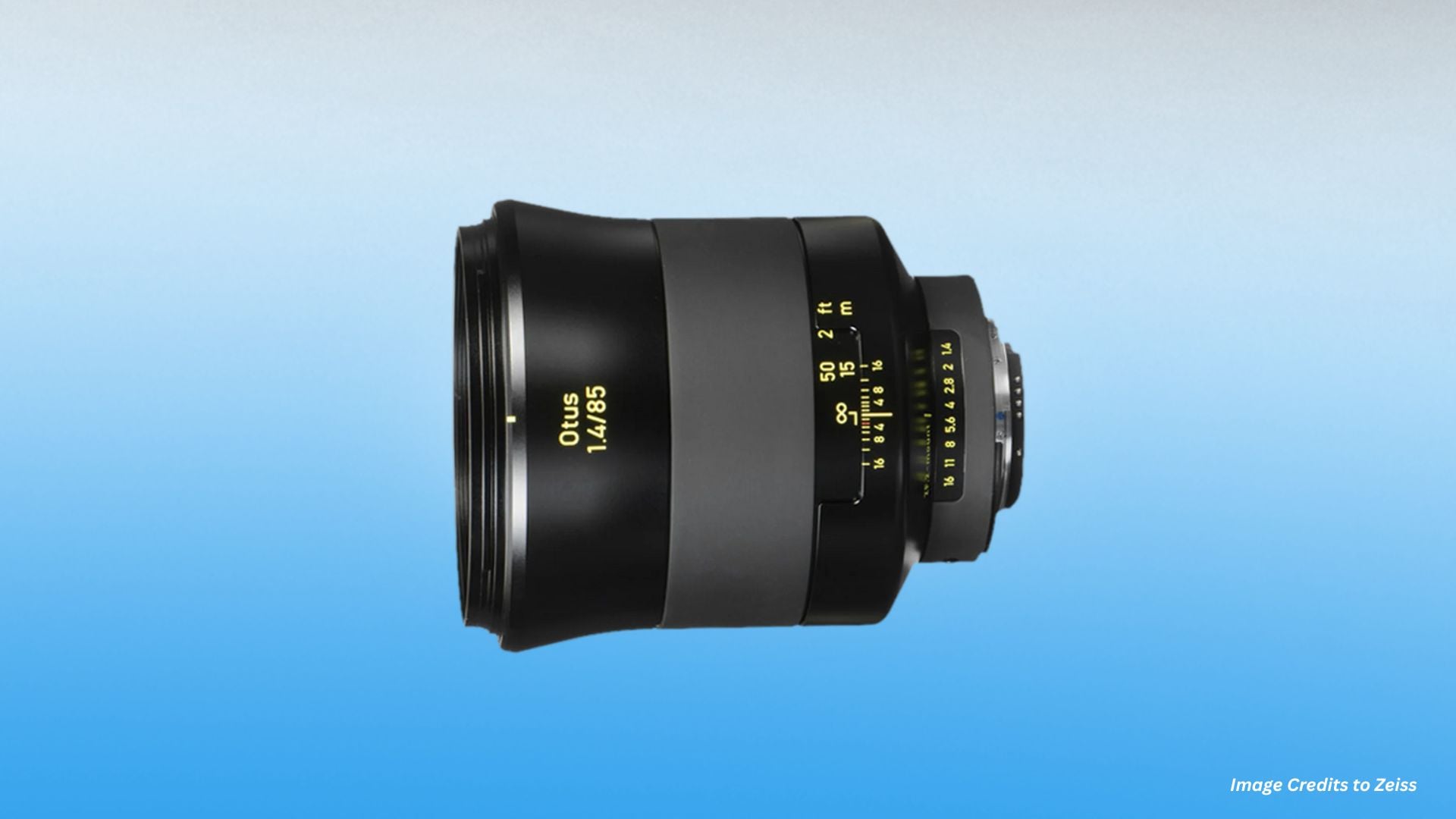
Lens specs/features:
- Apochromatic design with six anomalous partial dispersion elements
- Manual focus with 261-degree rotation angle
- Weight: 2.3 pounds
- 86mm filter thread with 1mm pitch
- Nine-blade rounded aperture
- Price: Around $4,500
The Otus series challenged the entire industry to reconsider what was possible. While other manufacturers focused on autofocus speed and weight reduction, Zeiss asked a simple question: what if we designed a lens without any compromise whatsoever?
Historical Lenses That Changed Everything
Understanding photography history means knowing the lenses that broke new ground and opened up possibilities that didn’t exist before. These pioneering designs influenced every lens that came after them.
The Petzval 50mm f/3.6 (1840): Photography’s First Portrait Lens
Named after Austrian scientist Josef Max Petzval, this was the first photographic lens where the design was computed mathematically before construction with an aperture of f/3.6 that allowed shorter-than-before shutter speeds that made daguerreotype portraiture truly feasible.
Before the Petzval lens, portrait photography was nearly impossible because of extremely long exposure times. Subjects had to stay perfectly still for minutes, which resulted in stiff, unnatural poses. The Petzval’s breakthrough design cut exposure times dramatically, launching the golden age of portrait photography.
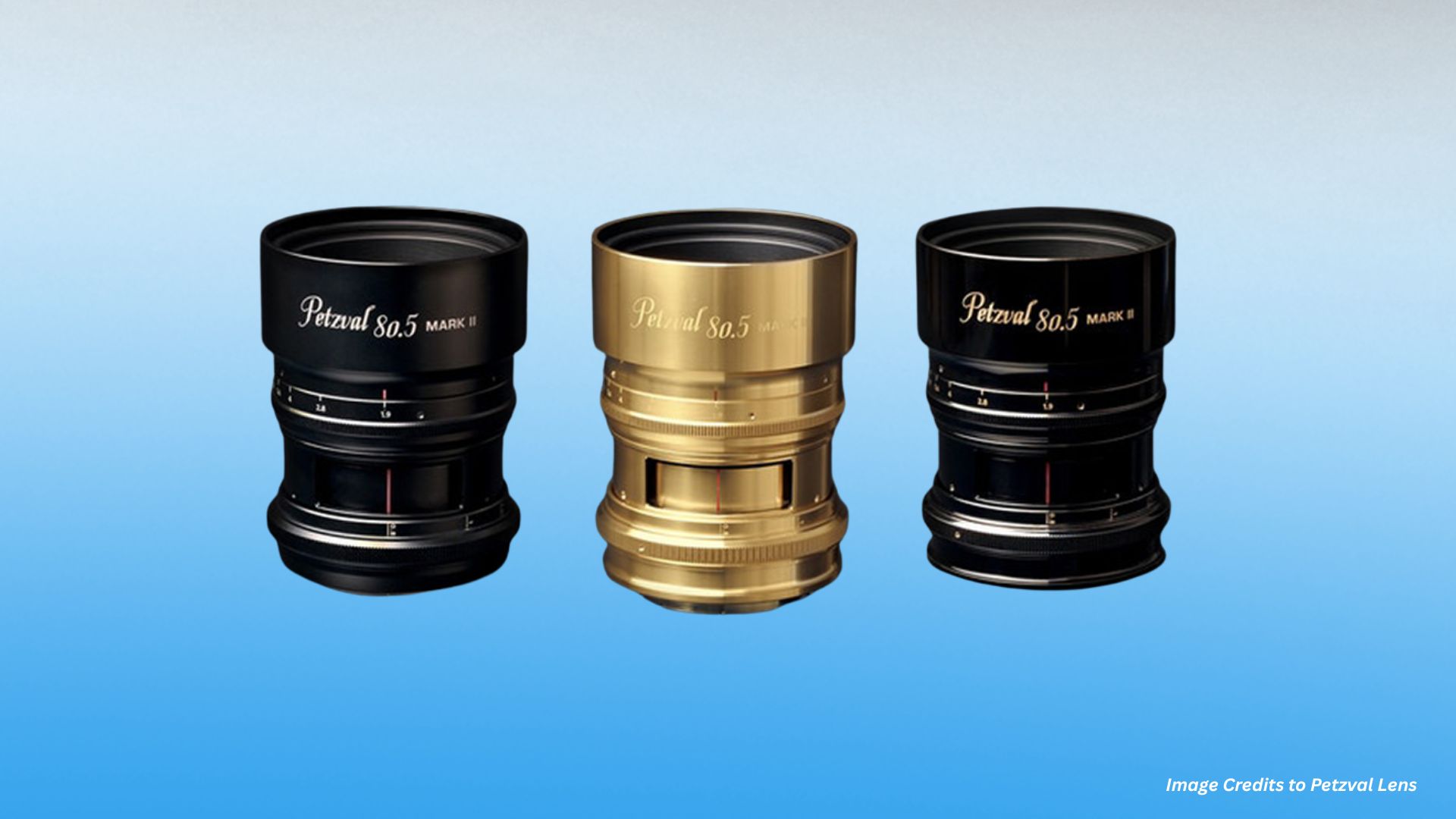
Lens specs/features:
- First mathematically computed lens design
- f/3.6 maximum aperture (revolutionary for 1840)
- Two doublet lens groups separated by space
- Reduced exposure times from minutes to seconds
- Made commercial portrait photography viable
The Zeiss Sonnar 50mm f/1.5 (1932): The Template for Speed
The Zeiss Sonnar 50mm f/1.5 was formulated by the legendary Zeiss optical designer Ludwig Bertele and had the great advantage of minimizing air-glass surfaces and chromatic aberrations. This revolutionary design became the template for virtually every high-speed lens that followed.
The Sonnar’s influence goes way beyond its original production run. The lens was even tweaked by Nikon to create the legendary 50mm f/1.4 Nikkor for Nikon rangefinder cameras. This cross-pollination of optical designs helped establish the modern lens industry’s collaborative nature.
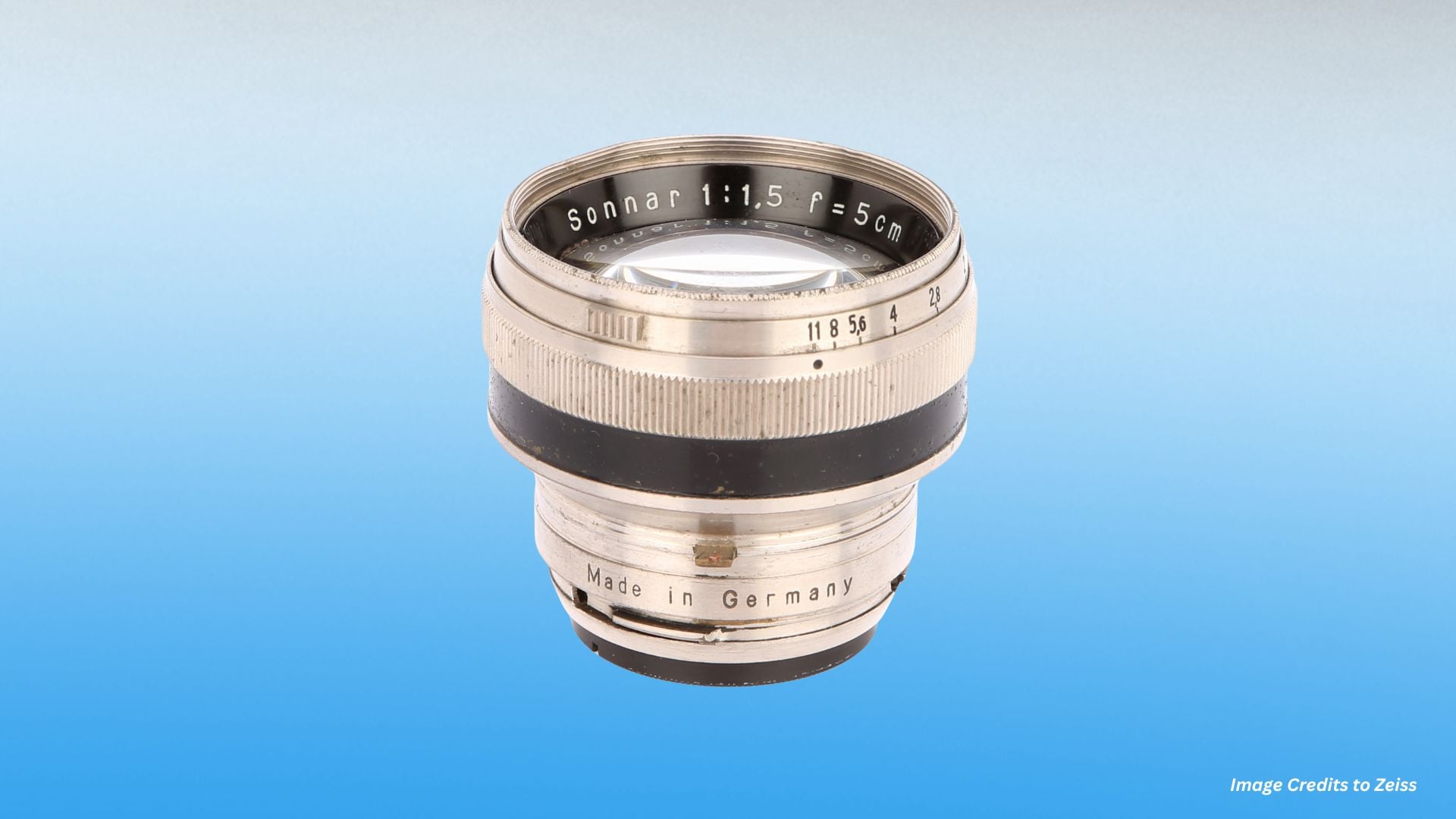
Lens specs/features:
- Seven elements in three groups
- Minimized air-glass surfaces to reduce flare
- Excellent chromatic aberration control
- Template for modern high-speed lens designs
- Influenced Nikon’s legendary 50mm f/1.4 design
Nikkor 6mm f/2.8 Fisheye (1973): Seeing Beyond Human Vision
The legendary Nikkor 6mm f/2.8 from 1973 is a fisheye lens with an extreme 220-degree field of view, allowing the glass to see behind itself. This lens pushed the boundaries of what was optically possible, creating images that showed more than human vision could perceive.
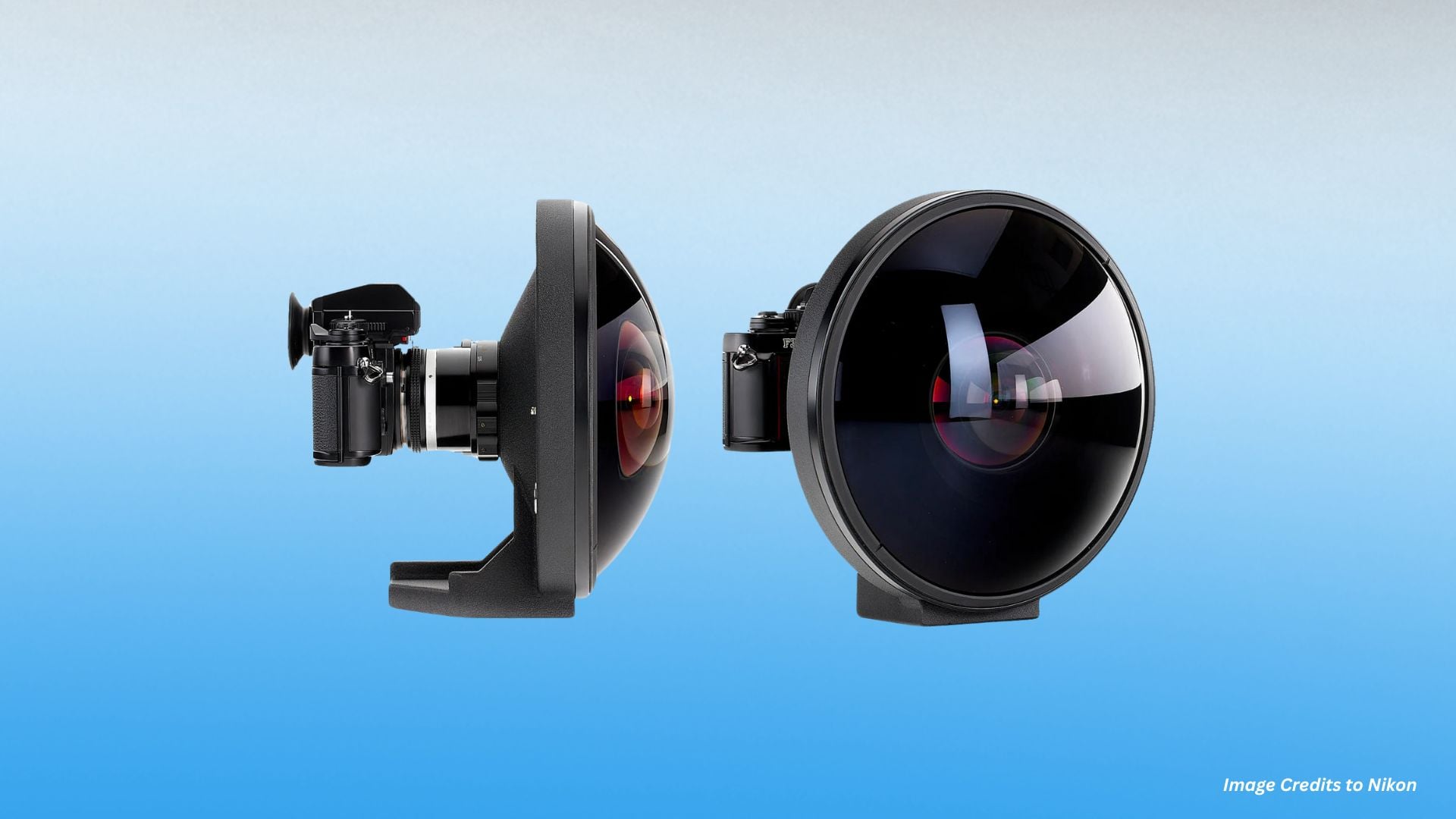
While fisheye lenses existed before, the Nikkor 6mm was the first to achieve such an extreme field of view while maintaining reasonable image quality. It opened up entirely new creative possibilities and influenced everything from wide-angle photography to architectural documentation.
The Best Camera Lens of All Time: Technical Marvels
Some lenses push engineering so far that they become legends not just for their image quality, but for what they represent in terms of human ingenuity and technical achievement.
Carl Zeiss Planar 50mm f/0.7: NASA’s Moon Lens
Originally designed in 1966 to help NASA capture photographs on the far side of the moon, the Carl Zeiss Planar 50mm f/0.7 is one of the fastest lenses (if not THE fastest) ever produced with only ten copies ever manufactured.
This lens represents the extreme end of optical engineering. Three copies were purchased by Director Stanley Kubrick who used them to shoot a scene lit only by natural candlelight in his film, Barry Lyndon, a feat that would have otherwise been impossible. The f/0.7 aperture allowed filming in conditions that no other lens could handle.
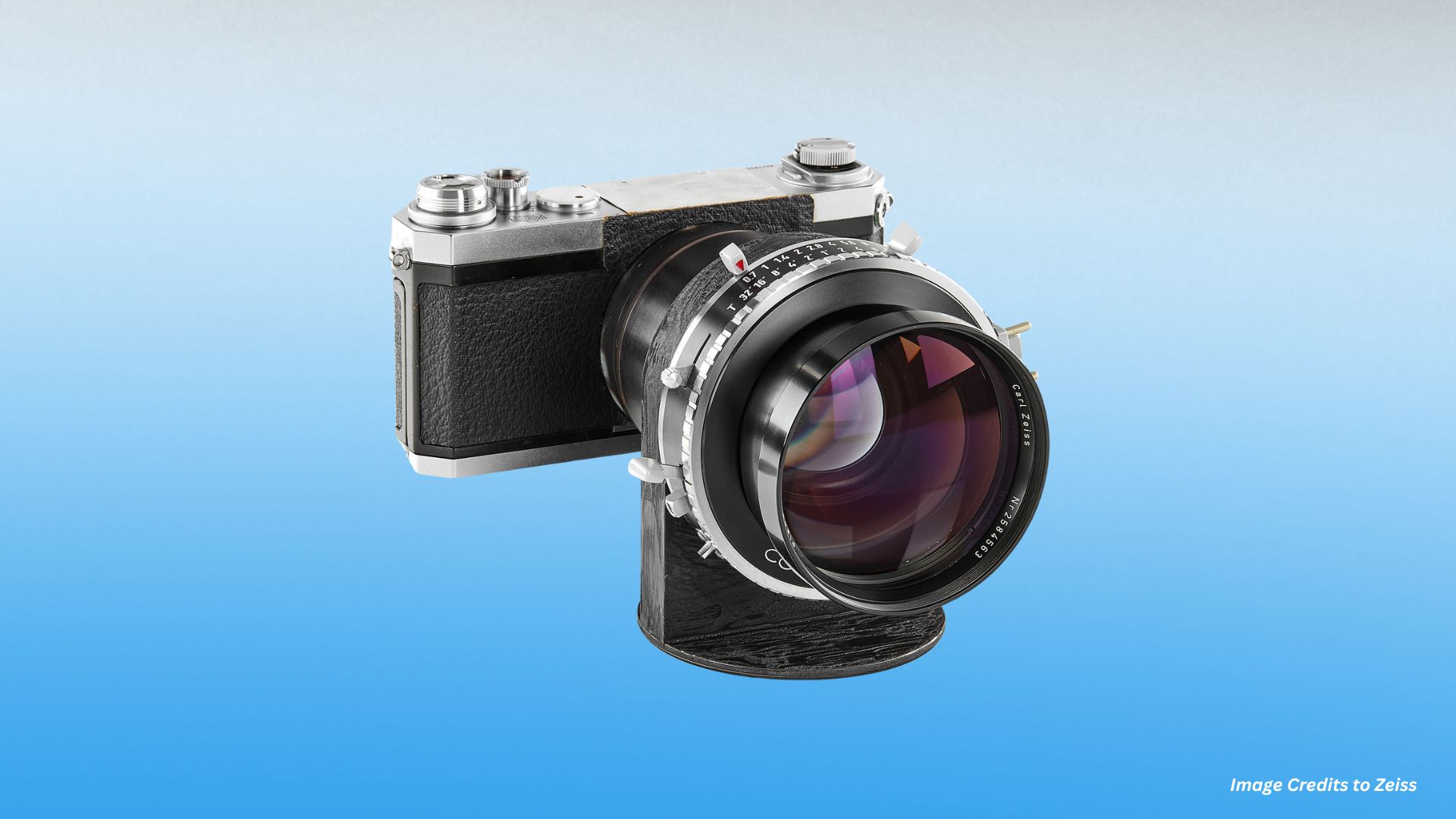
Lens specs/features:
- f/0.7 maximum aperture (fastest lens ever mass-produced)
- Only 10 copies ever made
- Originally designed for NASA moon photography
- Used by Stanley Kubrick for candlelight scenes
- Represents ultimate achievement in lens speed
Canon 5200mm f/14: The Ultimate Telephoto
Weighing over two-hundred pounds, without its stand, the Canon 5200mm is designed to focus on objects over thirty miles away with only three copies manufactured. This lens represents the absolute extreme of telephoto design, capable of surveillance and astronomical photography that borders on the impossible.
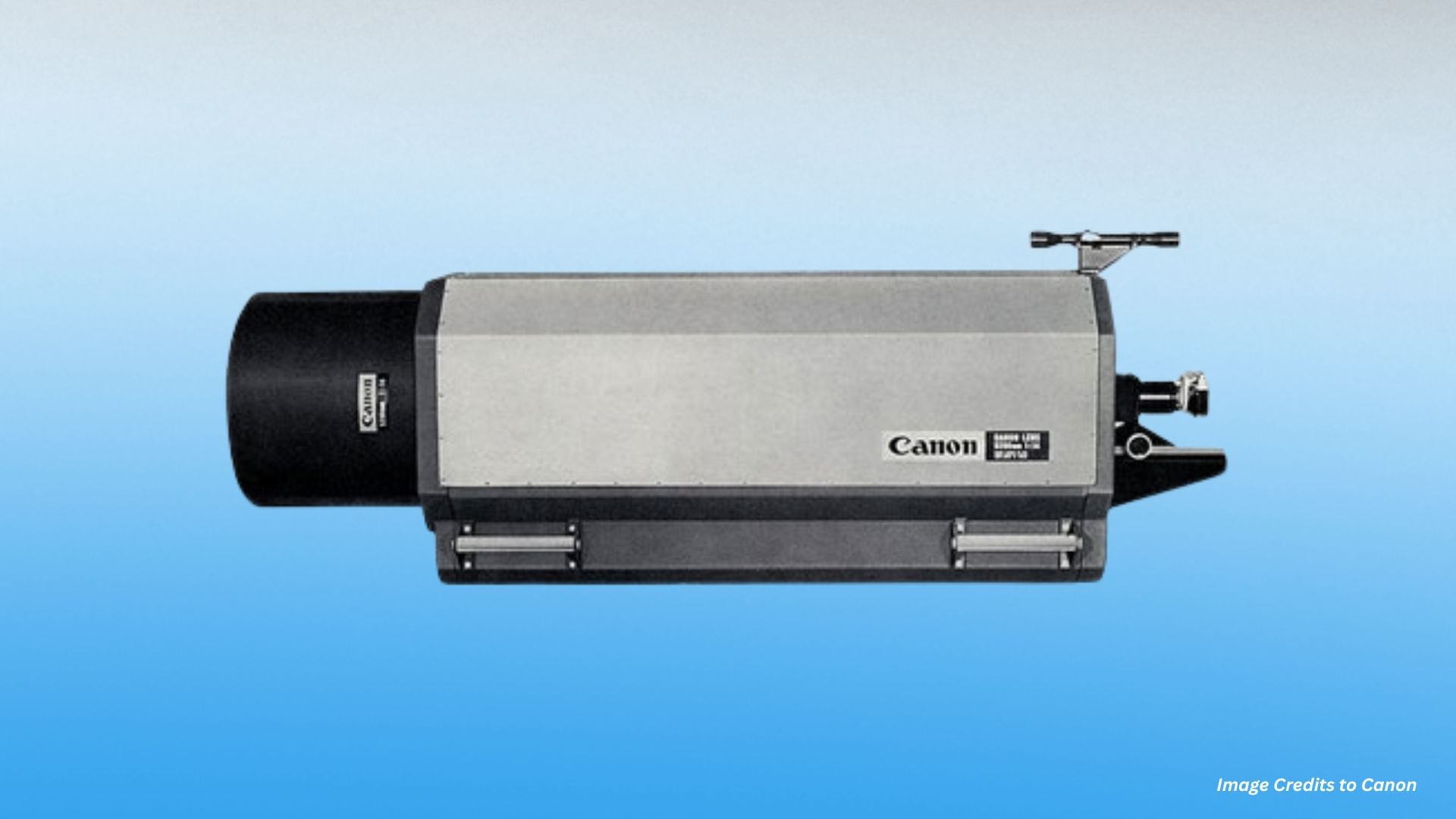
Lens specs/features:
- 5200mm focal length
- Over 200 pounds weight
- Can focus on objects 30+ miles away
- Only three copies ever made
- Requires dedicated support systems
Vintage Lens
Not every legendary lens is about technical perfection. Some become legends because they create images with distinctive character that’s impossible to replicate digitally.
Helios 44-2 58mm f/2: The Swirly Bokeh King
The Helios 44-2 has achieved serious cult status among vintage lens enthusiasts. Known mainly for its bokeh, it became a must-have for Leica shooters, and many of them still seek the original out today over the newer version of it. This Soviet-era lens creates distinctive swirling bokeh that’s instantly recognizable.
What makes the Helios special isn’t technical perfection at all. It’s pure character. The lens produces images with a distinctive look that’s impossible to replicate digitally. Modern photographers seeking to add vintage character to their work often turn to lenses like the Helios for their unique rendering.
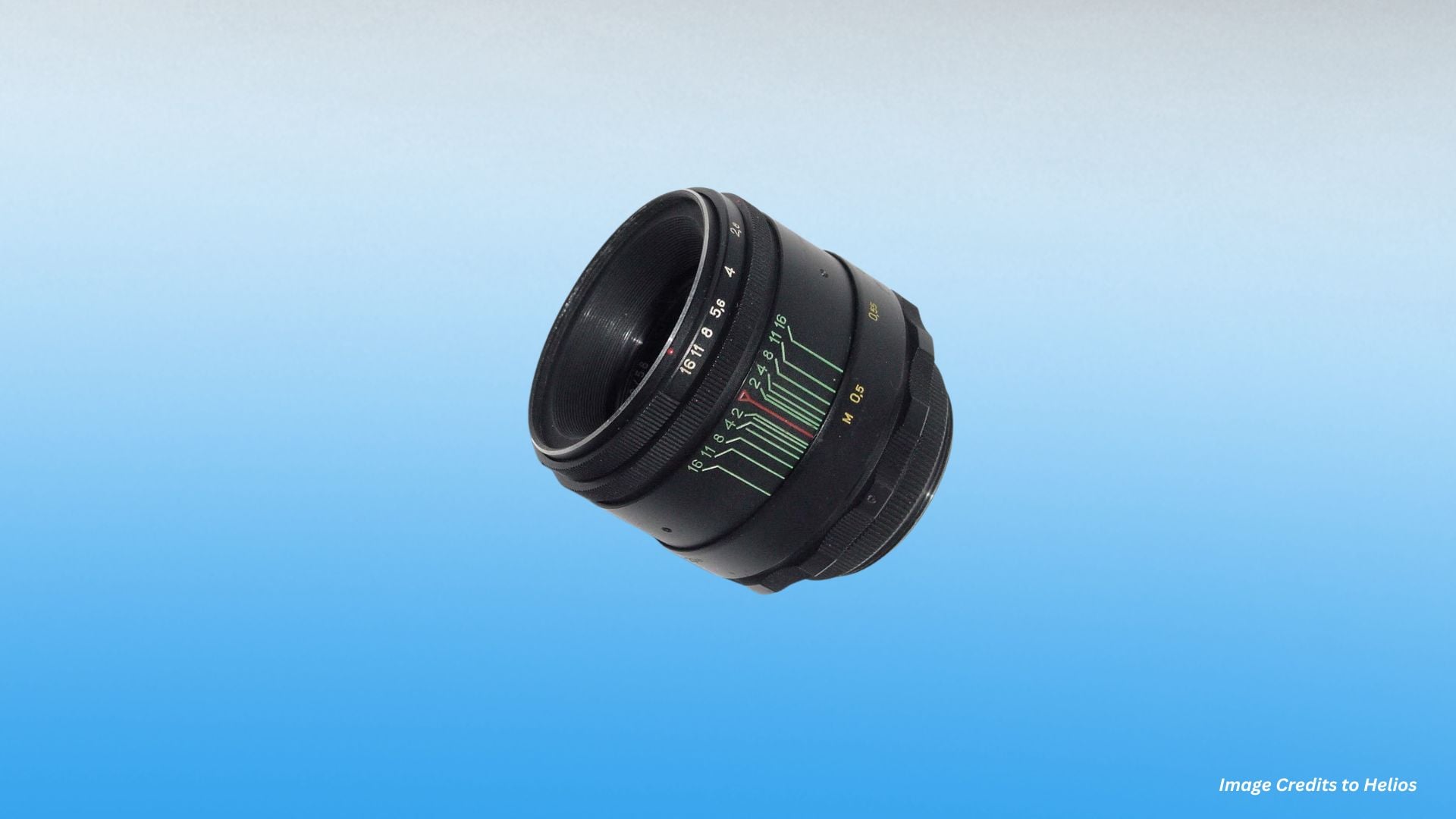
Lens specs/features:
- Distinctive swirling bokeh pattern
- Soviet-era manufacturing (adds to mystique)
- Available for under $100 in good condition
- Creates instant vintage film look
- Highly adaptable to modern mirrorless cameras
Super-Takumar 50mm f/1.4: Japanese Excellence
The Super-Takumar 50mm f/1.4, made by Asahi Optical Company, makers of the renowned Pentax line, is a 7-element, 6-group Zeiss Planar-inspired classic known for beautiful image quality and gorgeous bokeh.
This lens represents the golden age of Japanese lens manufacturing, when companies like Pentax were establishing reputations that would define them for decades. The Super-Takumar proved that Japanese manufacturers could match or exceed German optical quality at much more accessible prices.
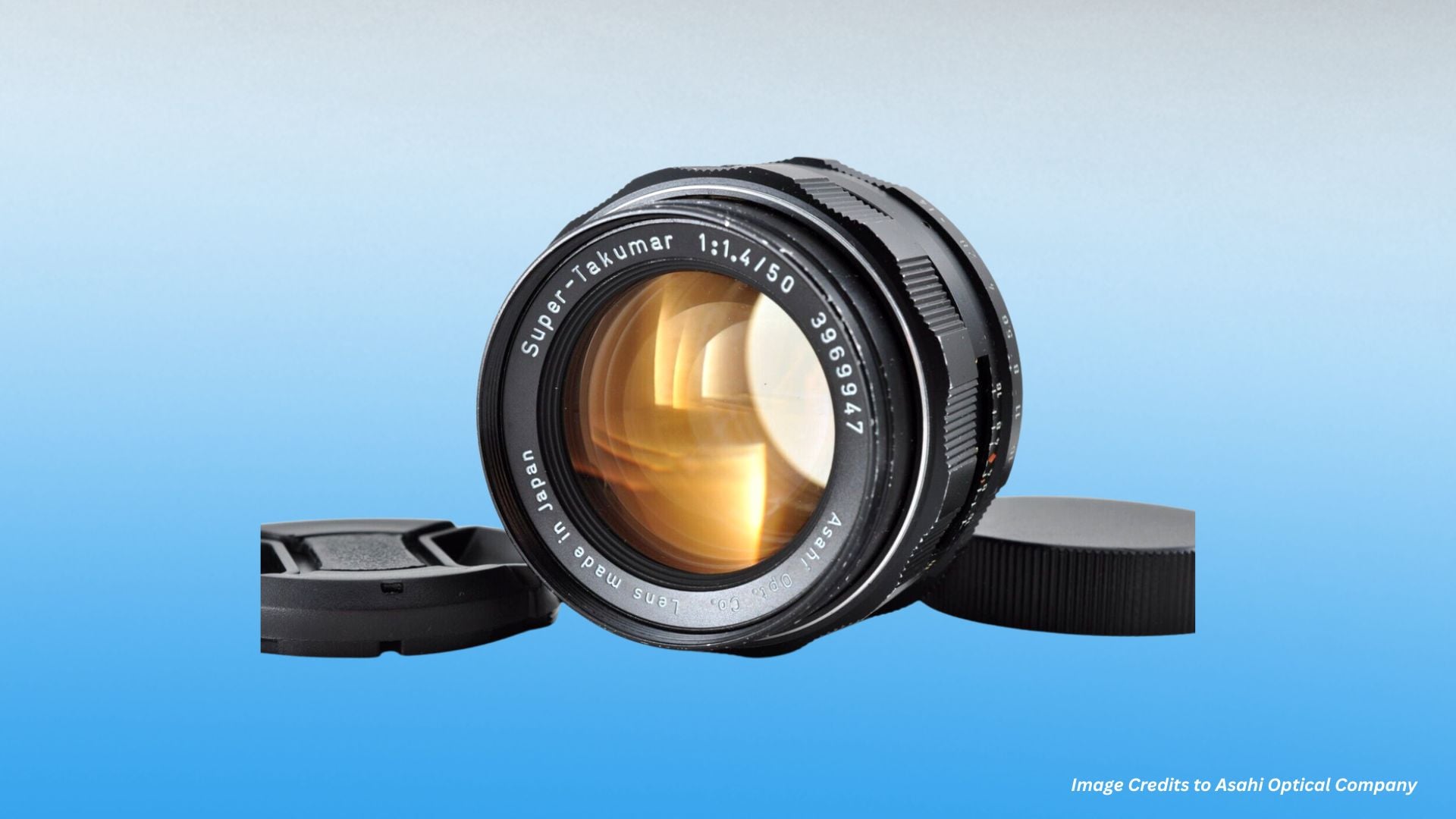
Lens specs/features:
- Seven elements in six groups (advanced for its time)
- Multiple coating versions available
- Excellent value compared to German alternatives
- Beautiful bokeh quality
- Available in M42 screw mount (highly adaptable)
Modern Contenders: Today’s Best Camera Lens of All Time
Technology keeps advancing, and some modern lenses are already earning legendary status through exceptional performance and widespread professional adoption.
Sony FE 85mm f/1.4 GM: Autofocus Perfection
While manual focus lenses like the Otus represent ultimate optical quality, Sony’s 85mm f/1.4 GM proves that modern autofocus lenses can achieve remarkable performance. Professional photographers note that compared to manual focus options, at this point unless you really need cross-platform functionality or larger than 135 format coverage, go with the 85S.
The GM lens represents the modern approach: excellent optical performance combined with lightning-fast autofocus, weather sealing, and image stabilization. For working photographers who need reliability above all else, lenses like this define what the best camera lens of all time means in practical terms.
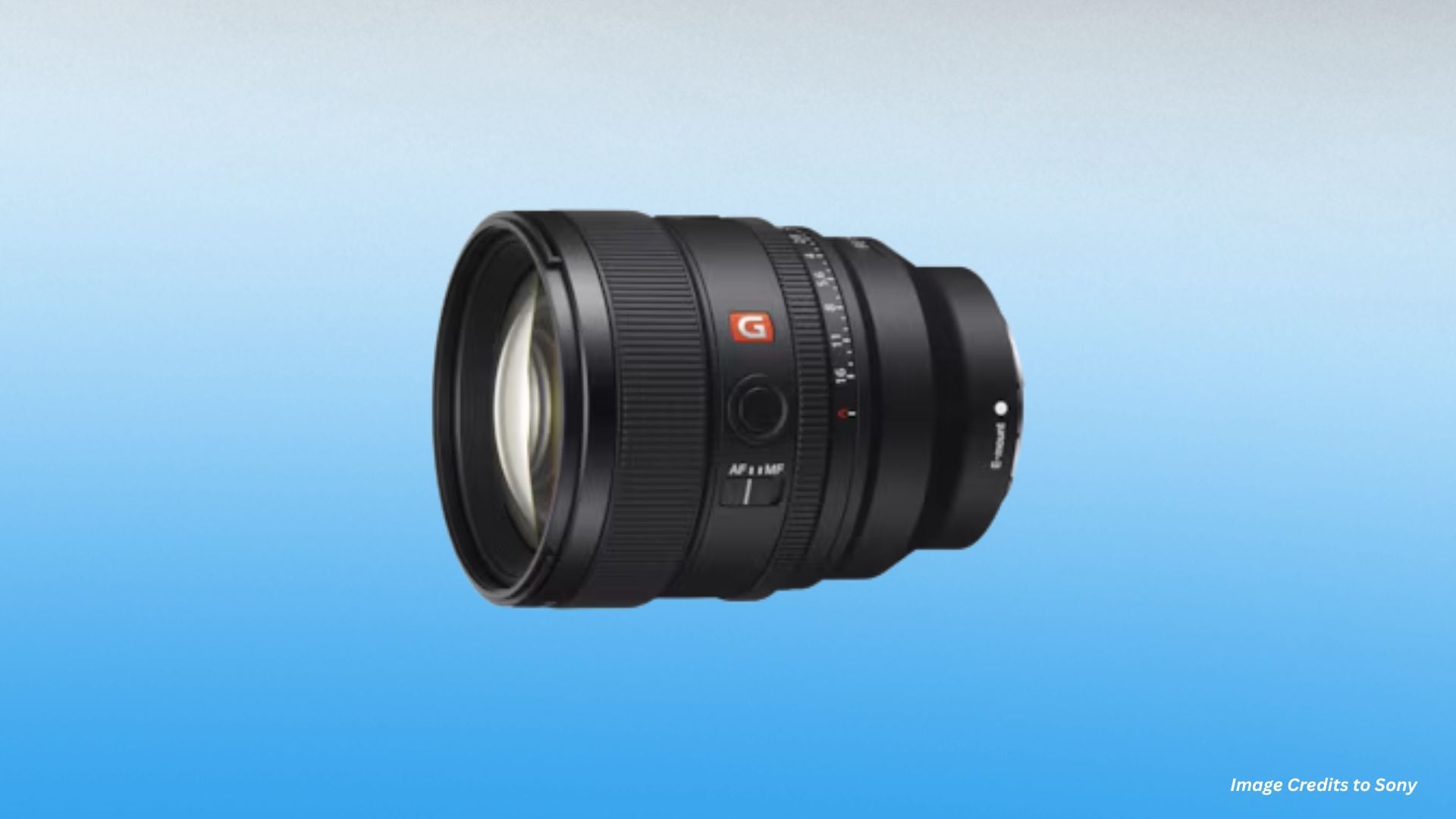
Lens specs/features:
- Lightning-fast autofocus with eye detection
- Weather sealing for professional use
- Optical image stabilization
- Excellent build quality
- Compatible with teleconverters
Nikon Z 50mm f/1.8 S: The New Standard
Nikon’s Z-mount 50mm f/1.8 S has earned acclaim as potentially the best normal lens ever made. Photographers report exceptional optical quality combined with modern features that make it a worthy successor to classic designs.
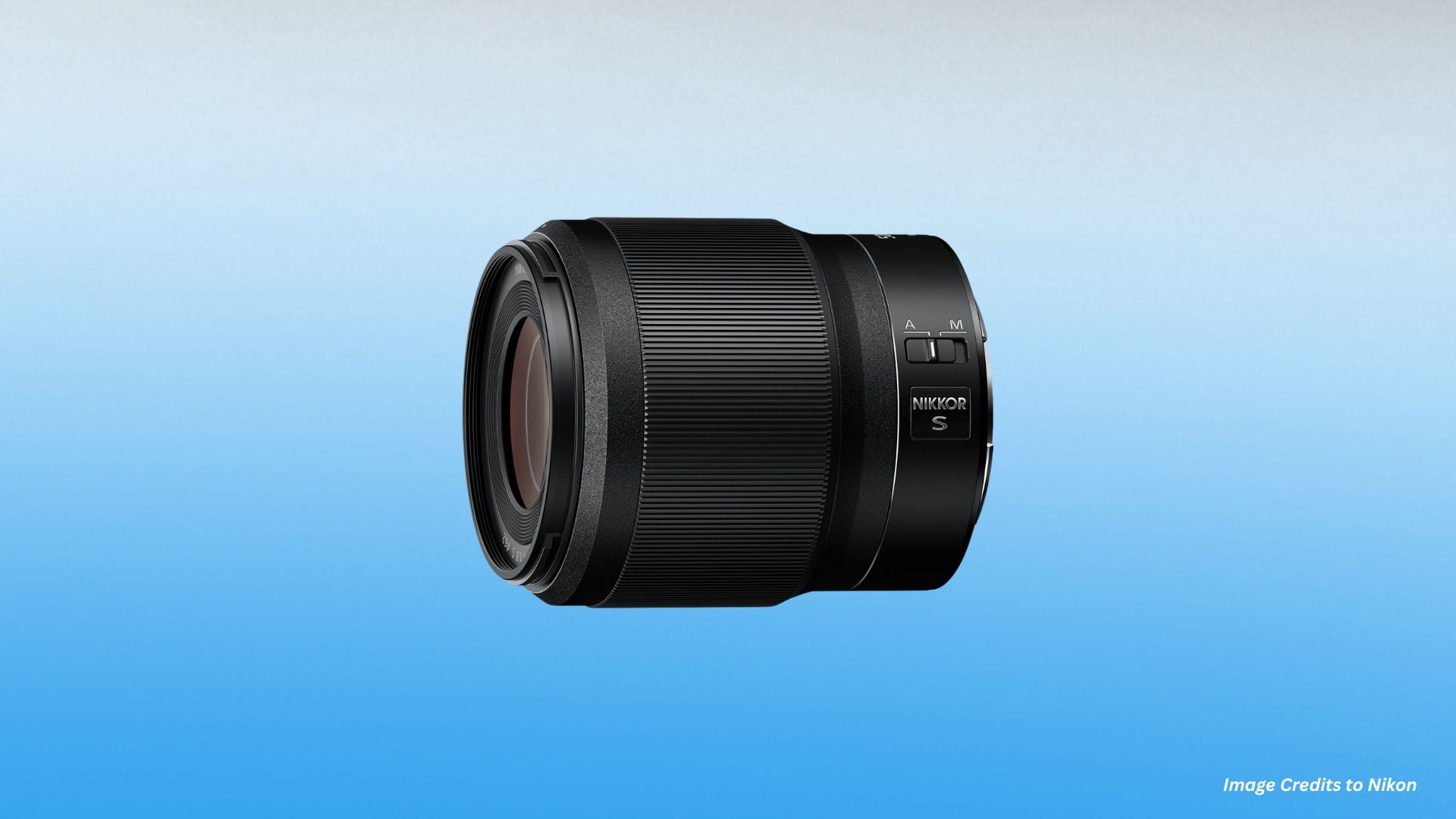
The lens shows how modern engineering can improve on classic formulas without losing their essential character. It’s sharp wide open, has beautiful bokeh, and focuses so quietly you can barely hear it working.
Niche Specialized Lenses
Some lenses become legendary not because they’re versatile, but because they’re absolutely perfect at one specific thing.
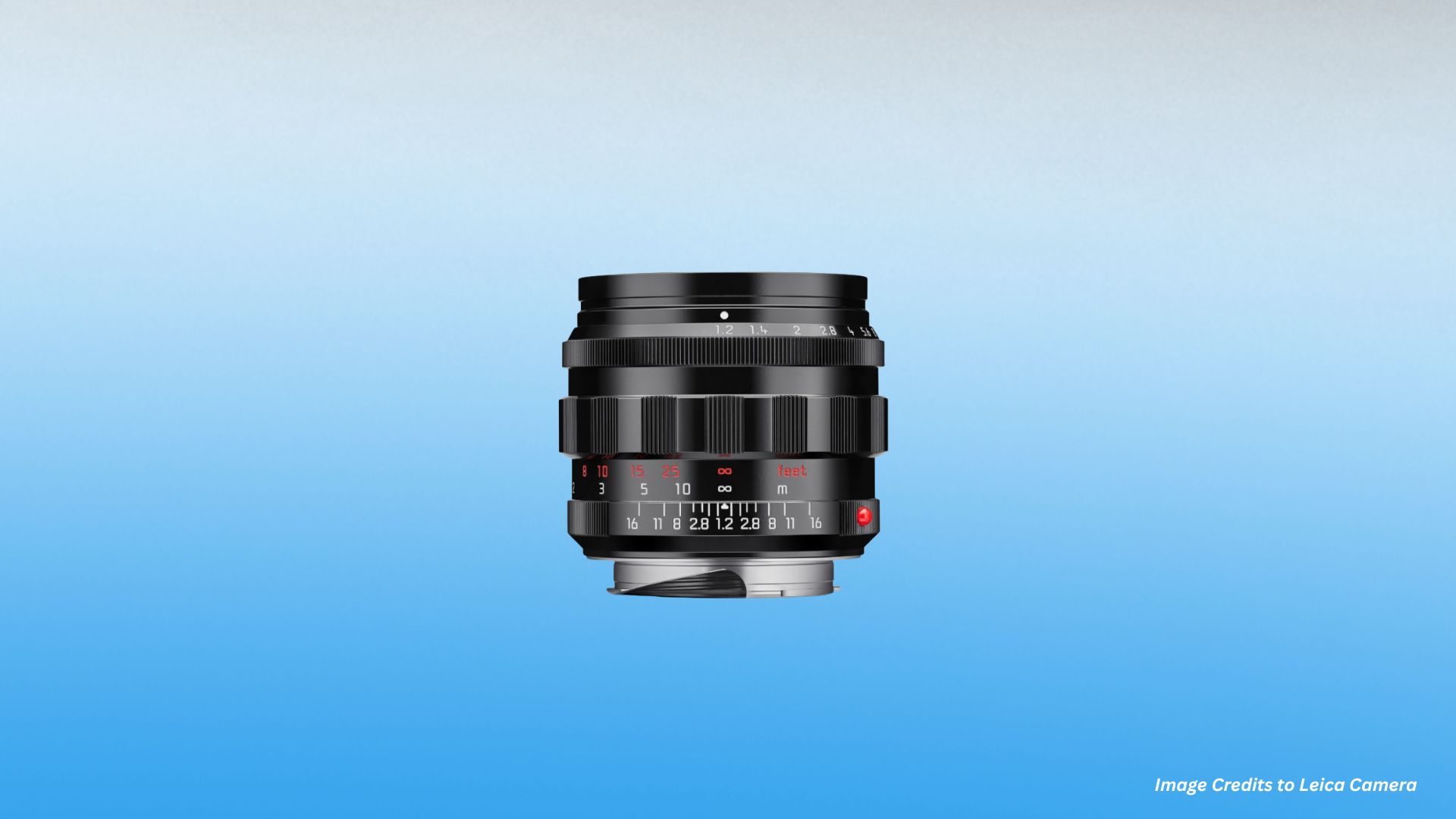
Leica Noctilux 50mm f/1.2 ASPH: Low Light King
The Noctilux 50mm f/1.2 astounded trade fair visitors and the trade press alike in 1966 with its almost revolutionary optical properties and was the first lens ever produced in series that had two aspherical lenses.
The modern Noctilux f/1.2 represents Leica’s return to extreme aperture design. While the f/0.95 version gets more attention, many photographers prefer the f/1.2 for its balance of speed and character. The lens allows me to create timeless portraits with a wonderful bokeh and soft skin tones.
Lens specs/features:
- f/1.2 maximum aperture
- Two aspherical lens elements
- Six lenses in four groups design
- Exceptional low-light performance
- Characteristic Leica rendering
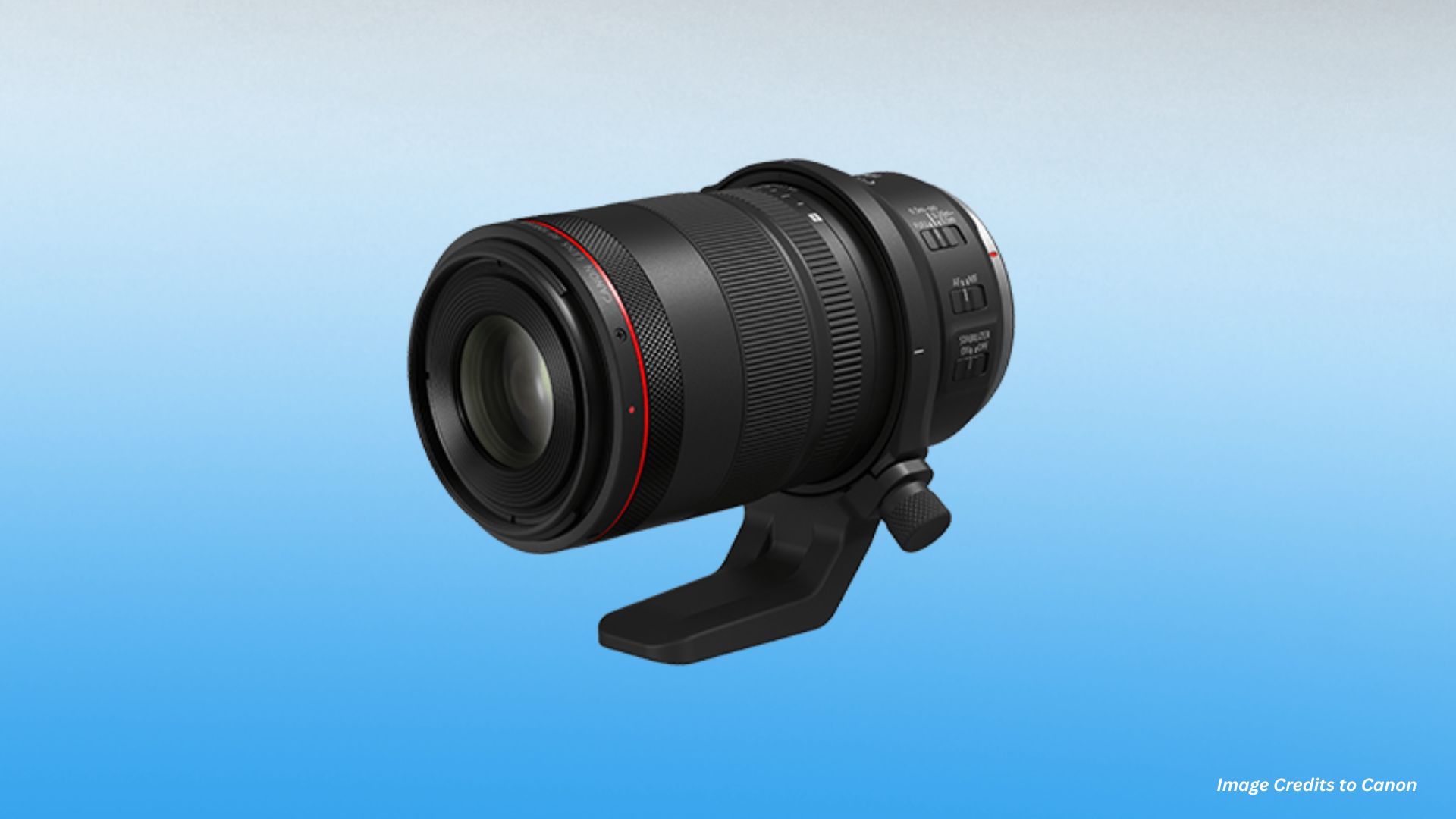
Canon EF 100mm f/2.8L Macro IS USM: Macro Mastery
While not typically considered among the best camera lens of all time for general photography, Canon’s 100mm macro represents perfection in its specialized field. The lens combines 1:1 magnification capability with excellent performance as a portrait lens, making it incredibly versatile.
The 100mm focal length is perfect for macro photography because it provides good working distance from your subject. You’re not breathing down a butterfly’s neck trying to get close enough for a good shot.
Lens specs/features:
- True 1:1 magnification ratio
- Hybrid image stabilization system
- Excellent as portrait lens too
- Weather sealing
- Internal focus design
What Makes a Lens Legendary?
Several factors elevate a lens from merely excellent to truly legendary status. Understanding these helps explain why certain lenses remain coveted decades after their introduction.
- Optical Innovation: Lenses that introduced new optical designs or pushed existing designs to new limits often achieve legendary status. The Petzval’s mathematical design approach, the Sonnar’s minimal air-glass surfaces, and the Otus series’ apochromatic correction all represent breakthrough innovations.
- Cultural Impact: Some lenses become legendary not just for their optical performance, but for their role in photography history. Kubrick’s use of the f/0.7 Zeiss or NASA’s moon photography with specialized lenses creates cultural significance that goes beyond technical achievement.
- Distinctive Character: The best camera lens of all time options often have distinctive rendering characteristics that make their images instantly recognizable. The Helios swirl, Leica micro-contrast, or Zeiss color rendition create signatures that photographers specifically seek out.
- Build Quality and Longevity: Legendary lenses often continue performing decades after manufacture. Many photographers still use 50-year-old Leica or Zeiss lenses that produce images indistinguishable from modern alternatives. Understanding proper lens calibration helps maintain peak performance over time.
- Professional Adoption: Lenses become legendary when working professionals stake their reputations on them. The widespread adoption of certain designs by concert photographers, street photographers, or commercial photographers helps establish legendary status.
Choosing the Best Lens
The best camera lens of all time for you depends entirely on your photographic needs and vision. A landscape photographer might consider the legendary Zeiss 21mm Distagon indispensable, while someone focused on understanding focal length effects on portraits might swear by the 85mm focal length.
For beginning photographers, starting with proven designs like the 50mm f/1.8 or 85mm f/1.8 from major manufacturers provides access to legendary optical formulas at accessible prices. These lenses trace their lineage directly back to the pioneering designs we’ve discussed.
More experienced photographers often graduate to the legendary originals. Genuine Leica Summicrons, vintage Zeiss glass, or modern Otus lenses represent the ultimate expression of their respective optical designs and provide the foundation for a lifetime of exceptional image-making. Remember that having exceptional camera gear doesn’t guarantee better photos – it’s about understanding how to use your tools effectively.
Budget considerations:
- Entry level: Modern 50mm f/1.8 lenses ($200-400)
- Enthusiast: Vintage classics like Super-Takumar ($100-300)
- Professional: Modern flagships like Sony GM series ($1,500-2,500)
- Ultimate: Leica, Zeiss Otus, rare classics ($3,000-15,000+)
Many photographers find that using less gear actually improves their photography by forcing creative problem-solving and keeping them focused on composition rather than technical choices.
The Enduring Legacy
Famous lens names echo through the history of photography: Biotar, Flektagon, Helios, Nikkor, Nokton, Rokkor, Skopar, Skoparon, Sonnar, Summar, Summicron, Takumar, Tessar, Ultron, Xenotar, Zuiko. Each represents years of optical development and refinement.
The best camera lens of all time isn’t a single piece of glass. It’s the entire progression of optical innovation that brought us from simple single elements to modern computational marvels. Every legendary lens built upon the discoveries of its predecessors, creating the rich ecosystem of exceptional optics we enjoy today.
Whether you’re shooting with a vintage Summicron, a modern Otus, or even an exceptional smartphone lens, you’re benefiting from over 180 years of optical refinement. The legendary lenses of the past continue influencing designs today, while current innovations will inspire the next generation of optical legends.
The magic of photography lies not just in the camera body or the photographer’s skill, but in the glass that transforms light into lasting images. The best camera lens of all time will always be the one that helps you capture your vision most effectively. But understanding the legends that came before enriches every photograph you create.
Understanding metering techniques and proper exposure becomes even more important when working with exceptional glass. Legendary lenses often have the resolution to show both perfect technique and subtle mistakes with equal clarity. Professional photographers often rely on specific camera techniques to get the most out of their legendary glass, especially when working in challenging conditions.
The Future of Legendary Glass
The next generation of legendary lenses is being developed right now, incorporating technologies that seemed like science fiction just a few years ago.
Computational Photography’s Impact
Modern smartphones have revolutionized photography through computational techniques, but they haven’t replaced the need for exceptional glass. Instead, they’ve shown us new possibilities for combining optical excellence with digital processing. Future legendary lenses will likely incorporate smart features while maintaining the optical purity that makes them special.
Emerging technologies include:
- Liquid lenses that can change focal length
- AI-assisted optical corrections
- Smart coatings that adapt to lighting conditions
- Metamaterials for impossible optical designs
- Integrated computational processing
New Technologies on the Horizon
Companies like Zeiss and Leica continue pushing boundaries, ensuring that future photographers will have access to lenses that surpass even today’s best camera lenses of all time options. The next breakthrough could come from anywhere, whether it’s a startup with revolutionary technology or an established manufacturer perfecting existing designs.
Finding Your Own Photographic Legend
The journey to finding your own legendary glass starts with understanding what makes certain lenses special. Whether you’re drawn to the clinical perfection of modern designs or the characterful rendering of vintage glass, there’s never been a better time to explore the rich world of exceptional optics.
Learning to master depth of field with telephoto lenses for portraits or mastering the 50mm focal length for landscapes can open up new creative possibilities with whatever legendary glass you choose. Understanding travel photography techniques also becomes more rewarding when you have exceptional optics to work with.
Every legendary lens tells a story. With the right glass in hand, you can write your own photographic legend. The best camera lens of all time is ultimately the one that helps you see the world in new ways and capture those moments that matter most to you.
See more from DIYPhotography.net on Google
Add DIYPhotography.net as a trusted source. This makes
our stories more likely to appear in your Google Search results.
 Add as a preferred source on Google

Darlene Lleno
Darlene Lleno brings a unique perspective to DIY Photography as someone who grew up surrounded by camera gear but chose words over lenses. With five years of writing experience, she specializes in photography content that’s both technically informed and genuinely passionate. Growing up with a photographer twin brother meant camera talk was everyday conversation in her household. While he mastered capturing moments, Darlene discovered she preferred being the subject and the storyteller behind the scenes. As a travel enthusiast and mother of two, she understands the importance of preserving life’s precious moments. When not exploring new destinations or writing for DIY Photography, you’ll find her reading or tending to her garden. Her approach to photography writing is refreshingly authentic, she may not be behind the camera, but she knows exactly what it takes to help others capture the shots that matter most.
Related Posts
 How street photography changed my lifestreet photography changed my lifeHow street photography changed my life
 3 ways the Fuji X100 changed the camera industry forever
 This is how some of Hollywood’s legendary historic lenses look on a modern cinema camera
 Canon has killed off its legendary MP-E 65mm f/2.8 1-5x Macro lens
Join the Discussion
DIYP Comment Policy
Be nice, be on-topic, no personal information or flames.
One response to “Best Camera Lens of All Time: The Legendary Glass That Changed Photography Forever”
Be professional is not About Dreaming But Trying