


























Rubin Observatory Captures A Giant Dwarf Planet Candidate Beyond Pluto
Oct 27, 2026
Soumyadeep Mukherjee
Soumyadeep Mukherjee is an award-winning astrophotographer from India. He has a doctorate degree in Linguistics. His work extends to the sub-genres of nightscape, deep sky, solar, lunar and optical phenomenon photography. He is also a photography educator and has conducted numerous workshops. His works have appeared in over 40 books & magazines including Astronomy, BBC Sky at Night, Sky & Telescope among others, and in various websites including National Geographic, NASA, Forbes. He was the first Indian to win “Astronomy Photographer of the Year” award in a major category.
Share:
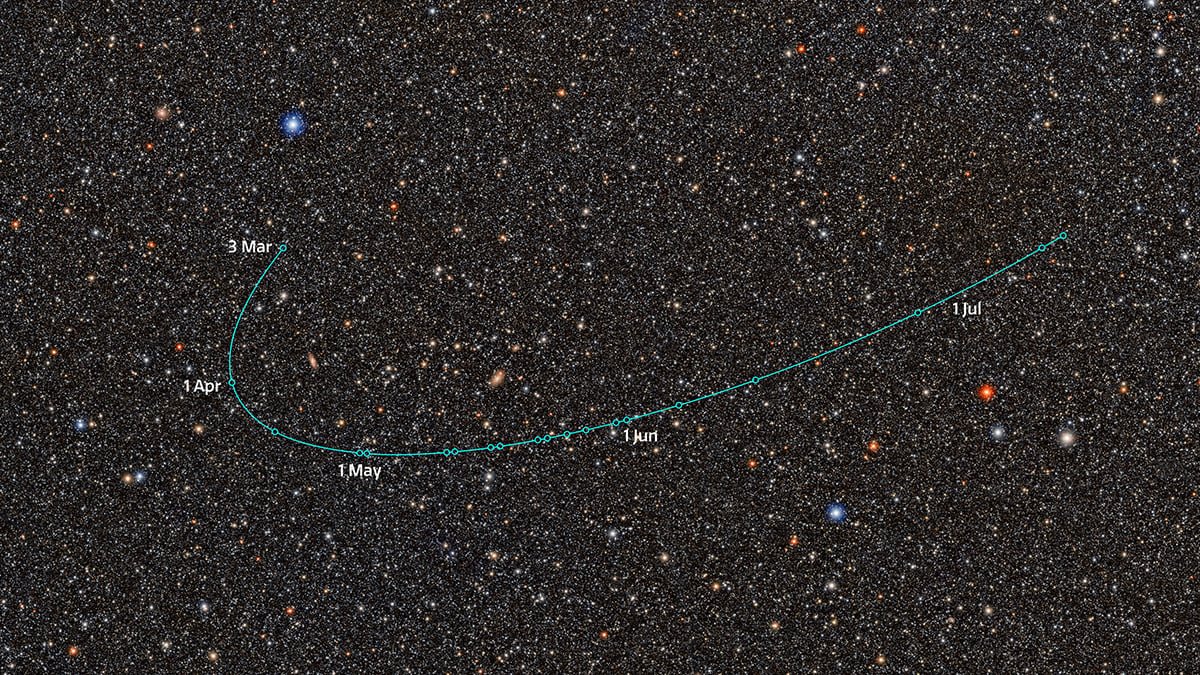
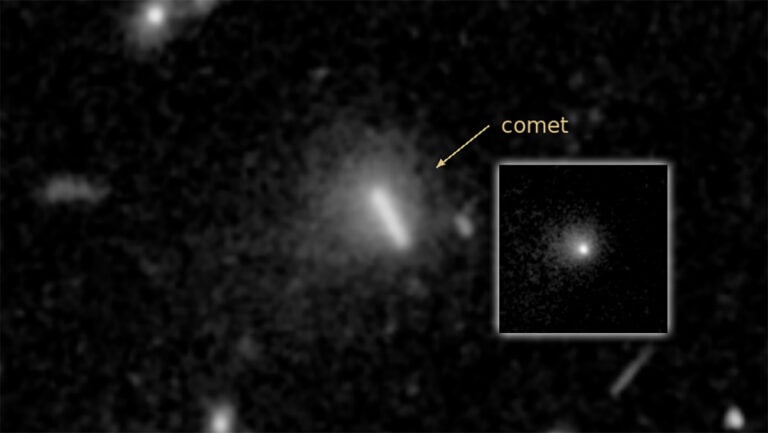
A faint object in a crowded field of stars has given astronomers a new target in the outer Solar System. The object, called 2026 ED138, orbits beyond Pluto and could be one of the largest dwarf planet candidates known in that region. Researchers estimate its diameter to be between 600 and 1,500 kilometers. They found it in observations from the NSF–DOE Vera C. Rubin Observatory in Chile.
The discovery took place when astronomer Matthew Holman noticed something unusual in Rubin’s data. The object’s brightness seemed surprising for a body so far from the Sun. Holman checked the results and searched for more sightings. His colleagues then found additional observations, including images captured years earlier. Those records helped the team trace the object’s movement and calculate its orbit.
How astronomers found 2026 ED138
On 13 October, Holman was analyzing observations that Rubin had collected earlier in 2026. He helps improve Rubin’s software for finding distant moving objects. His search code, developed with colleague Kevin Napier, compares billions of detections to identify those that belong to the same object.
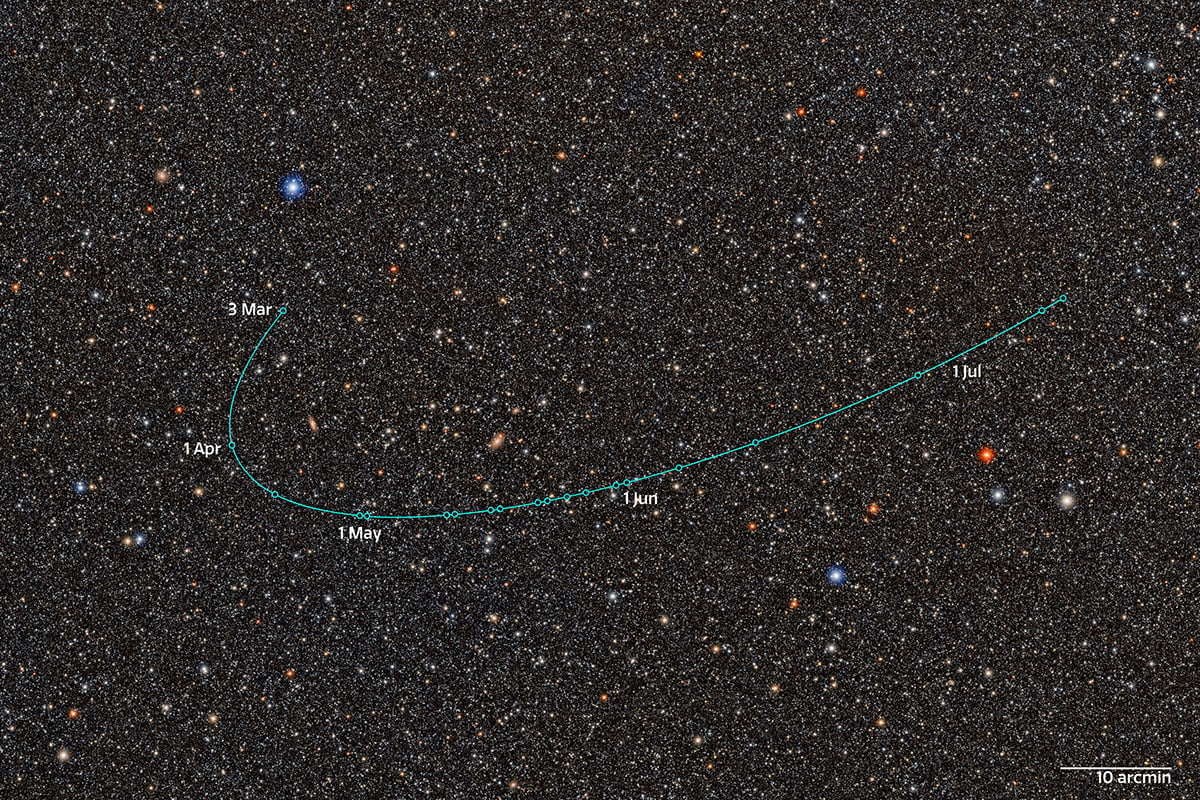
The software linked a series of observations that caught Holman’s attention. ED138 appeared unusually bright given its distance from the Sun. Objects of this size are rare beyond Neptune, so he first checked whether an error had affected the results. He then began looking for further sightings that could confirm the find.
Mario Jurić, Rubin’s Solar System lead scientist at the University of Washington, searched the observatory’s catalogues and images. He found 20 additional observations dating back to 4 March 2026. Rubin had recorded ED138 30 times across 20 nights between 4 March and 11 July.
The discovery also depended on images from another telescope. Researchers used archival observations from the Dark Energy Camera, or DECam, to extend the record further back.
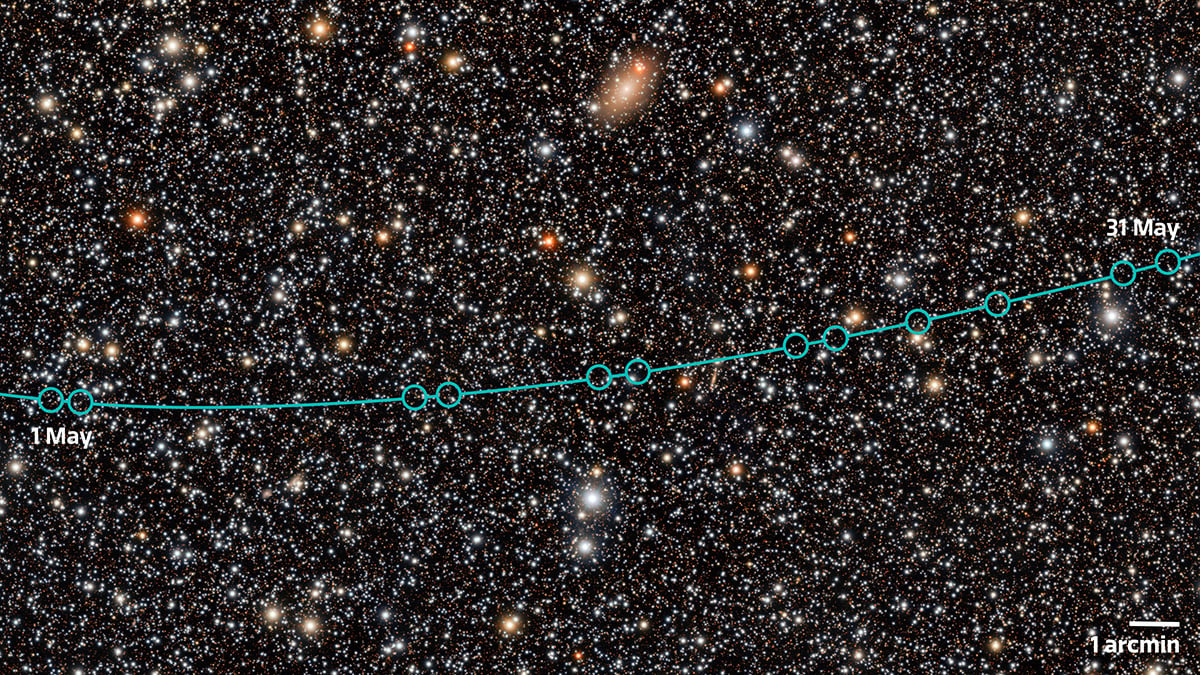
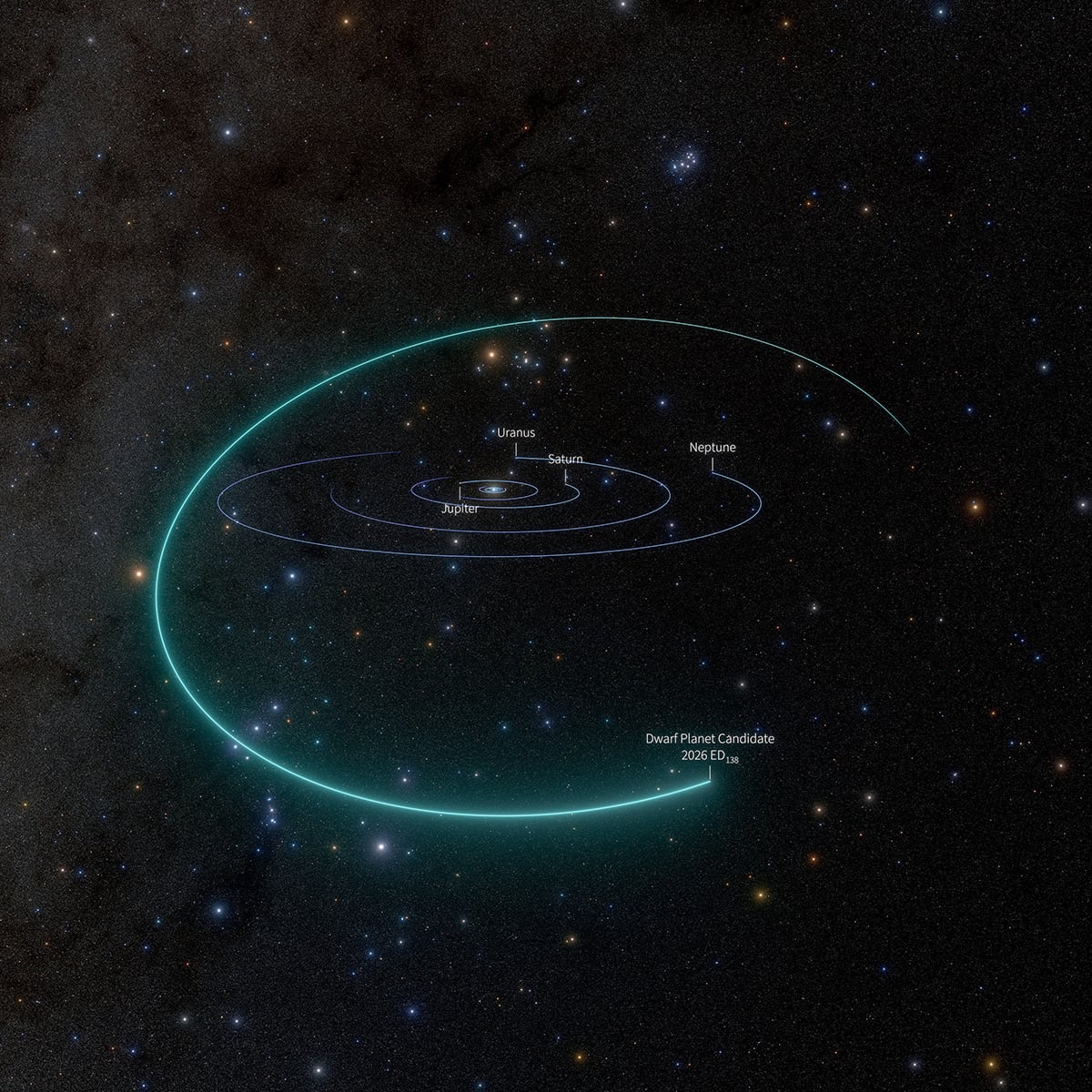
The dwarf planet candidate: ED138
ED138 currently lies about 46 astronomical units from the Sun. One astronomical unit, or AU, is the average distance between Earth and the Sun. Pluto’s average distance is about 40 AU, placing ED138 farther out at its current position. Astronomers classify it as a trans-Neptunian object, a member of the broad group of bodies that orbit beyond Neptune.
The object’s orbit offers another clue to its history. It tilts almost 25 degrees from the plane of the Solar System. That makes ED138 a hot-classical trans-Neptunian object. Researchers think gravitational interactions with Neptune may have disturbed it from its original orbit.
Astronomers study these distant bodies to reconstruct the Solar System’s early development. The giant planets may have shifted position as they interacted with one another and with smaller objects. Their gravity could scatter icy bodies into new orbits, leaving some far beyond Neptune. The orbital shapes and inclinations of trans-Neptunian objects help researchers test these ideas.

The dwarf planet label remains uncertain
Astronomers have estimated ED138’s diameter at between 600 and 1,500 kilometres. They based that range on its distance, observed brightness and estimated surface reflectivity, known as albedo. A bright surface reflects more sunlight than a dark one. As a result, two objects can appear equally bright even when their sizes differ considerably.
The broad estimate leaves room for uncertainty. Researchers expect an icy body of this size to have enough gravity to pull itself into a rounded shape. However, they need better measurements before they can confirm that ED138 qualifies as a dwarf planet. Infrared observations should help narrow its size estimate and reveal more about its physical properties.
The International Astronomical Union defines a dwarf planet as a body that orbits the Sun and has enough mass for its own gravity to make it nearly round. It must also share its orbital neighbourhood with other objects rather than clearing that region, as a planet does.
The IAU currently recognizes five dwarf planets: Pluto, Ceres, Eris, Haumea and Makemake. ED138 is yet to join that list. If follow-up observations confirm its size and nature, it could become another recognized dwarf planet. Until then, astronomers will continue to describe it as a candidate.
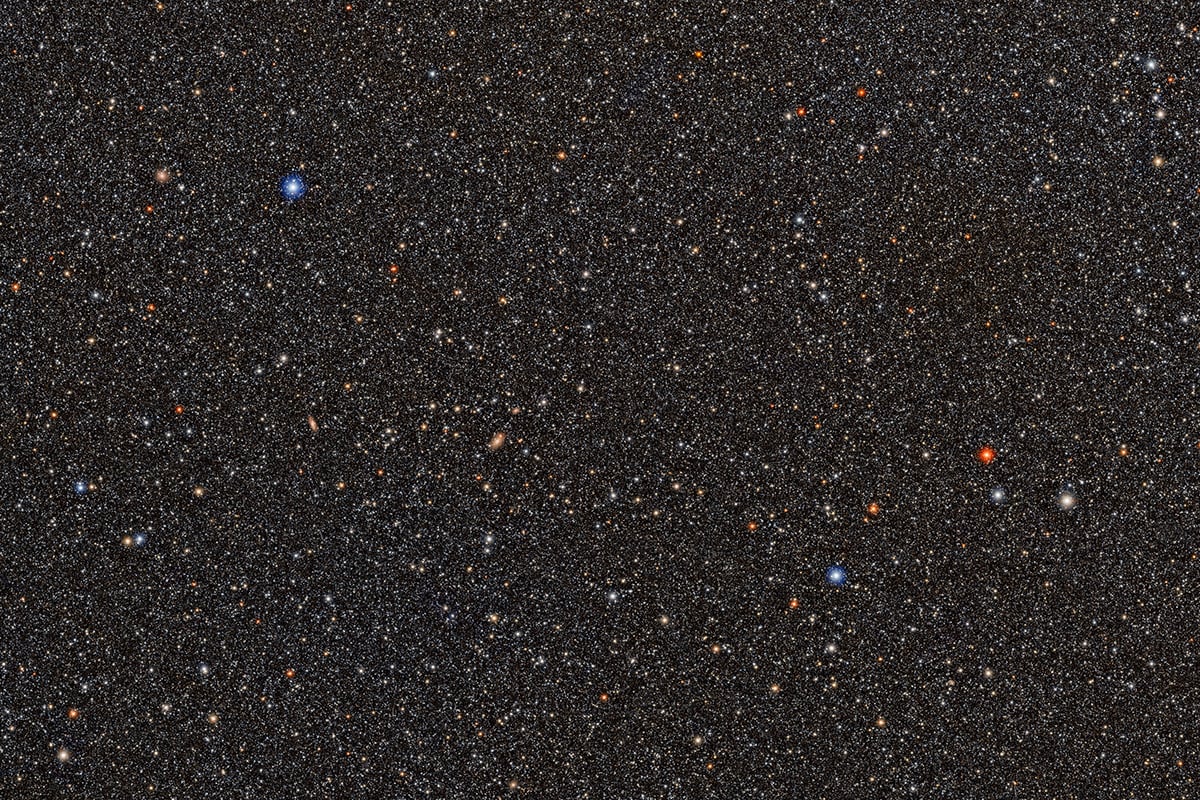
Clear skies!
See more from DIYPhotography.net on Google
Add DIYPhotography.net as a trusted source. This makes
our stories more likely to appear in your Google Search results.
 Add as a preferred source on Google

Soumyadeep Mukherjee
Soumyadeep Mukherjee is an award-winning astrophotographer from India. He has a doctorate degree in Linguistics. His work extends to the sub-genres of nightscape, deep sky, solar, lunar and optical phenomenon photography. He is also a photography educator and has conducted numerous workshops. His works have appeared in over 40 books & magazines including Astronomy, BBC Sky at Night, Sky & Telescope among others, and in various websites including National Geographic, NASA, Forbes. He was the first Indian to win “Astronomy Photographer of the Year” award in a major category.



Join the Discussion
DIYP Comment Policy
Be nice, be on-topic, no personal information or flames.