























This Spiral Galaxy Image was Selected and Named by Students
Sep 5, 2026
Soumyadeep Mukherjee
Soumyadeep Mukherjee is an award-winning astrophotographer from India. He has a doctorate degree in Linguistics. His work extends to the sub-genres of nightscape, deep sky, solar, lunar and optical phenomenon photography. He is also a photography educator and has conducted numerous workshops. His works have appeared in over 40 books & magazines including Astronomy, BBC Sky at Night, Sky & Telescope among others, and in various websites including National Geographic, NASA, Forbes. He was the first Indian to win “Astronomy Photographer of the Year” award in a major category.
Share:
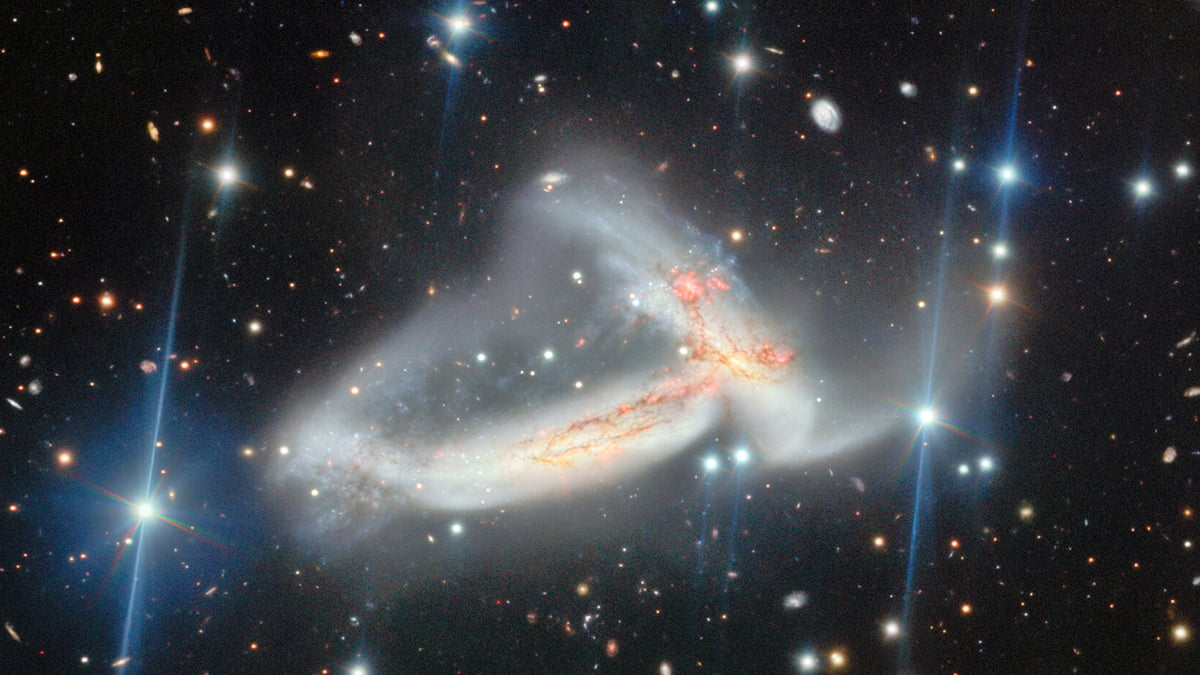
A pair of spiral galaxies is drifting toward a future merger more than 200 million light-years from Earth. The galaxies are known as NGC 7253A and NGC 7253B, forming the interacting system NGC 7253. Astronomers also know it as Arp 278, after Halton Arp included it in his catalogue of peculiar galaxies.
The 8.1-meter Gemini North telescope on Maunakea, Hawaiʻi, captured the photograph. But the most interesting part is not what the telescope captured. The target itself was chosen by a group of high school students, who later passed the project to another group of students to name the finished image. The result is called Nā ʻUhane Māhoe Huki Pū i ke Ola, which translates to “The Twin Spirits Pulling Together Creating Life.” It is a fitting description of both the galaxies and the story behind the photograph.
A galaxy pair in the middle of an interaction
NGC 7253 lies more than 200 million light-years away in the direction of Pegasus. It consists of two spiral galaxies, NGC 7253A and NGC 7253B, whose centers are separated by roughly four million light-years.
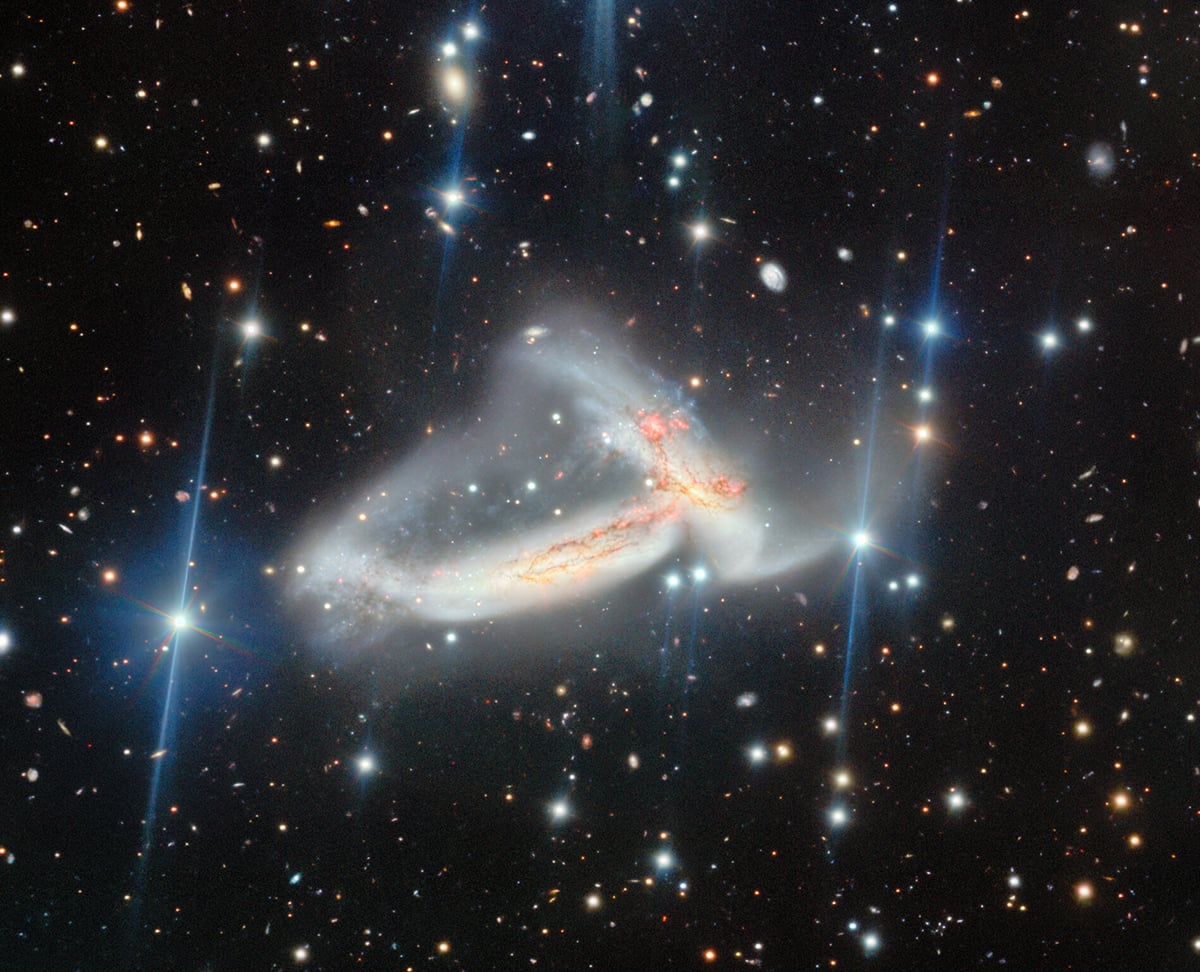
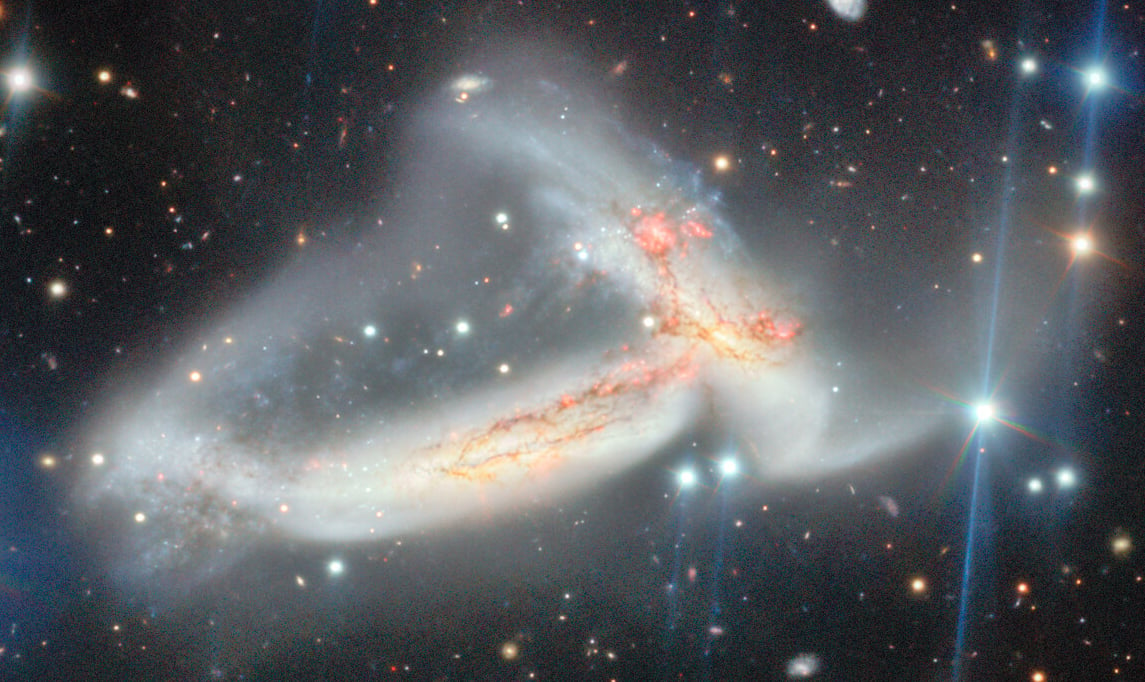
The galaxies are being drawn toward one another, and their shapes show the consequences. Their outer regions have been disturbed, producing structures that differ from the relatively orderly spiral patterns seen in isolated galaxies. This is what makes interacting systems such useful subjects for deep-sky imaging.
NGC 7253 has been known to astronomers for more than 160 years. German-British astronomer Albert Marth discovered the system in 1863. Much later, it became Arp 278 in Halton Arp’s Atlas of Peculiar Galaxies.
The target was chosen by students
The story behind the image began in October 2025. Raiyan Rahman, Rafan Rahman, and Alia Tamanha took part in Project Hōkūlani and spent a week at the Gemini North Hilo Base Facility. The program introduced them to the work carried out at the observatory and to the process of collecting astronomical data.
They were also given the opportunity to select an astronomical object for Gemini North to image. Their choice was NGC 7253.
The decision had a connection to Hawaiian astronomy. The galaxy pair lies within Ka Lupe o Kawelo, a Hawaiian navigational constellation associated with the region of the sky identified as Pegasus in Western astronomy. The students wanted their target to have a connection with both astronomy and the cultural setting of the observatory.
“NGC 7253 is a fascinating object because it’s two galaxies that are merging into one over billions of years. But we mainly picked this object because it was one of the few that actually lay within a Hawaiian constellation, Ka Lupe o Kawelo. After spending so much time on Maunakea, it was important to us to pick something that was both culturally and astronomically significant.”
-Raiyan Rahman
A second group gave the image its name
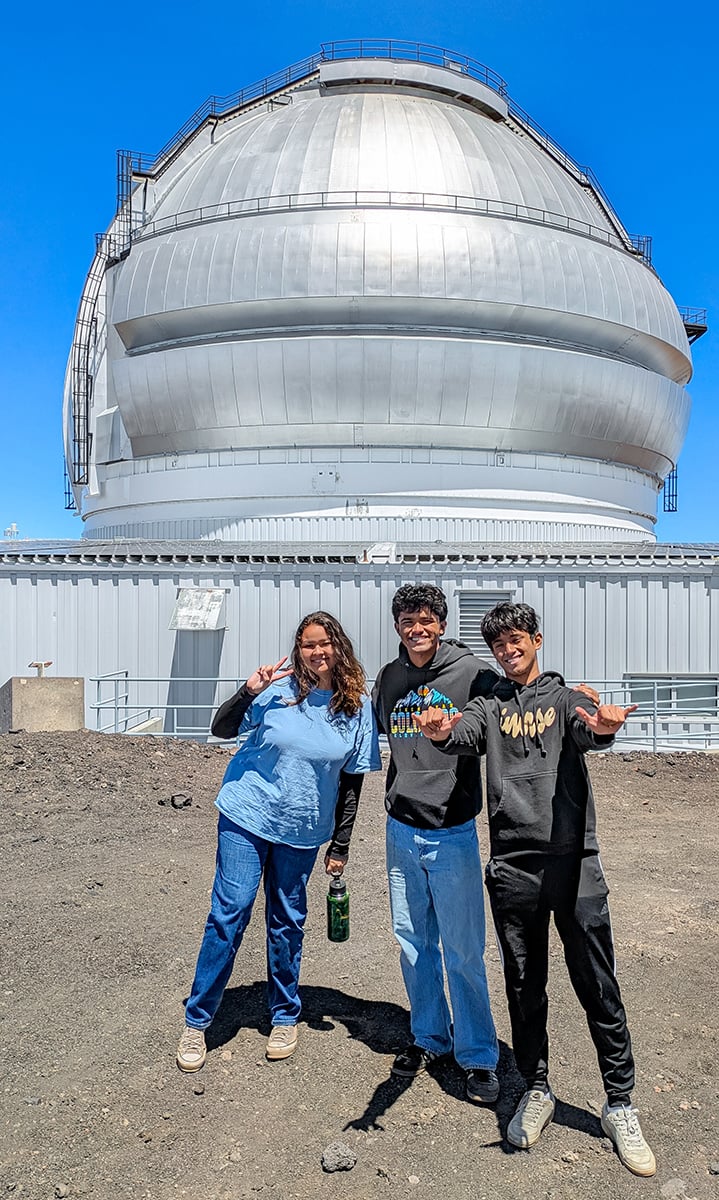
The student involvement continued after the observation. In June 2026, Mylin Wilson, Manu Silva-Sampaio and Samantha Silva-Sampaio joined Project Hōkūlani. They came from Keaʻau High School and Kamehameha Schools and worked on developing a Hawaiian name for the image. They named it Nā ʻUhane Māhoe Huki Pū i ke Ola.
“ʻUhane (spirit) was an important theme for our group. Our experiences throughout the week – ʻoli (stargazing), visiting the summit, and learning about the awesome scientific discoveries made possible by Maunakea – ignited our own spirits as we prepare for life after high school.”
-Samantha Silva-Sampaio.
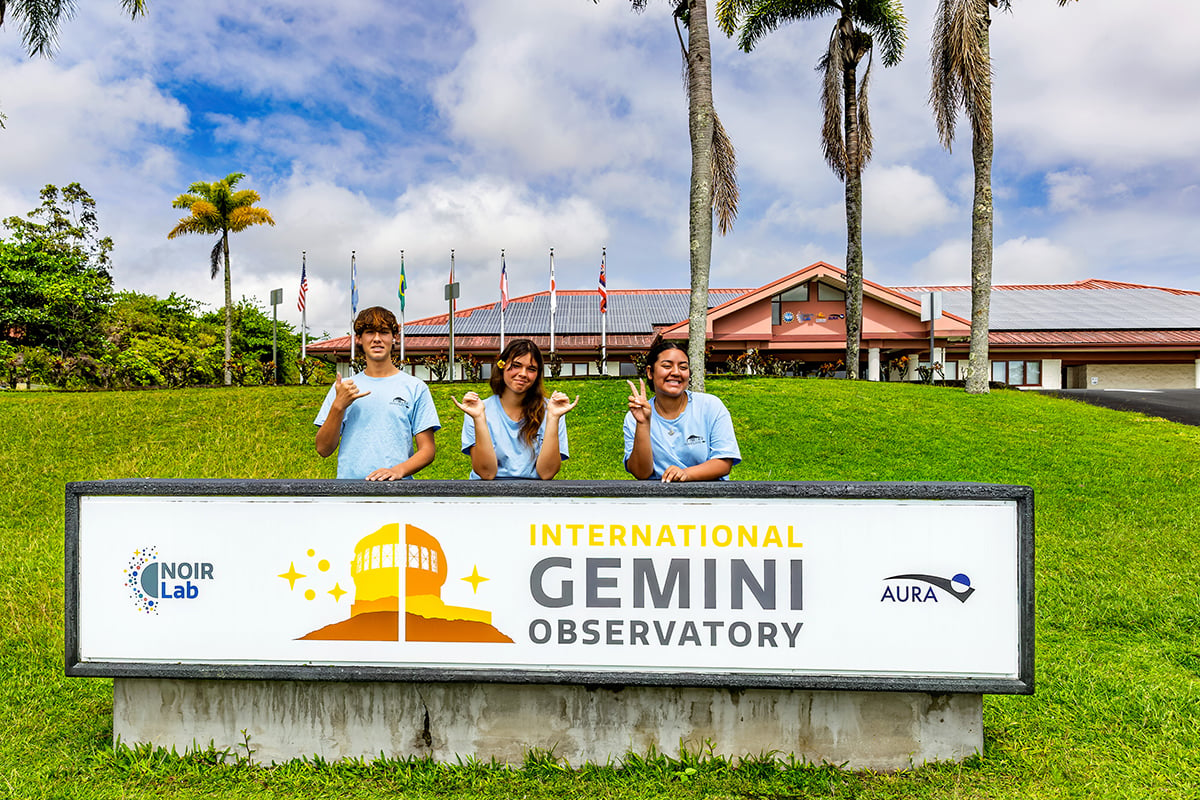
The name describes many aspects of this project. Nā ʻUhane Māhoe refers to the two galaxies, but the idea of two counterparts also fits the Gemini Observatory itself. Gemini operates as a pair of telescopes, with Gemini North in Hawaiʻi and Gemini South in Chile.

Huki Pū refers to pulling together. In the photograph, gravity is pulling the two galaxies into an increasingly complex interaction. The phrase also represents the students and observatory working together during the project.
The final part, i ke Ola, refers to life. This connection leads back to the pink emission regions scattered through the galaxies. The interaction has disturbed their gas, and young stars illuminate some of that material.
Clear skies!
See more from DIYPhotography.net on Google
Add DIYPhotography.net as a trusted source. This makes
our stories more likely to appear in your Google Search results.
 Add as a preferred source on Google

Soumyadeep Mukherjee
Soumyadeep Mukherjee is an award-winning astrophotographer from India. He has a doctorate degree in Linguistics. His work extends to the sub-genres of nightscape, deep sky, solar, lunar and optical phenomenon photography. He is also a photography educator and has conducted numerous workshops. His works have appeared in over 40 books & magazines including Astronomy, BBC Sky at Night, Sky & Telescope among others, and in various websites including National Geographic, NASA, Forbes. He was the first Indian to win “Astronomy Photographer of the Year” award in a major category.

Join the Discussion
DIYP Comment Policy
Be nice, be on-topic, no personal information or flames.