
























Svbony Launches SV530: Integrated Field Flattener on an 80mm Refractor
Sep 2, 2026
Soumyadeep Mukherjee
Soumyadeep Mukherjee is an award-winning astrophotographer from India. He has a doctorate degree in Linguistics. His work extends to the sub-genres of nightscape, deep sky, solar, lunar and optical phenomenon photography. He is also a photography educator and has conducted numerous workshops. His works have appeared in over 40 books & magazines including Astronomy, BBC Sky at Night, Sky & Telescope among others, and in various websites including National Geographic, NASA, Forbes. He was the first Indian to win “Astronomy Photographer of the Year” award in a major category.
Share:
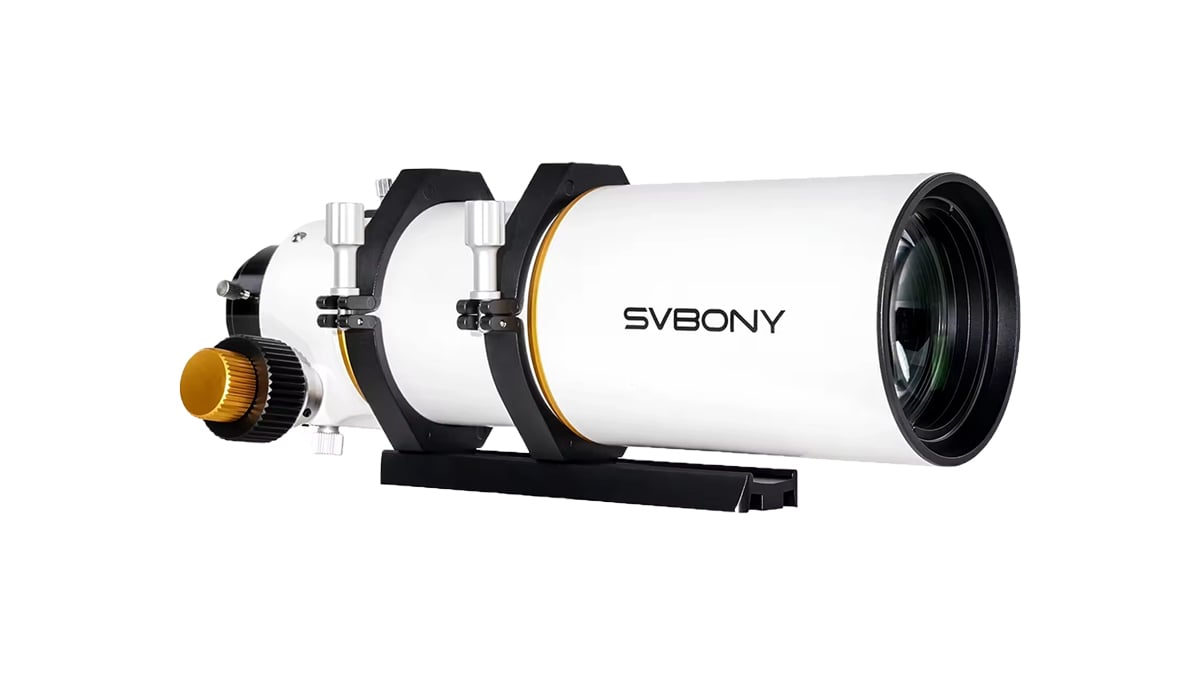
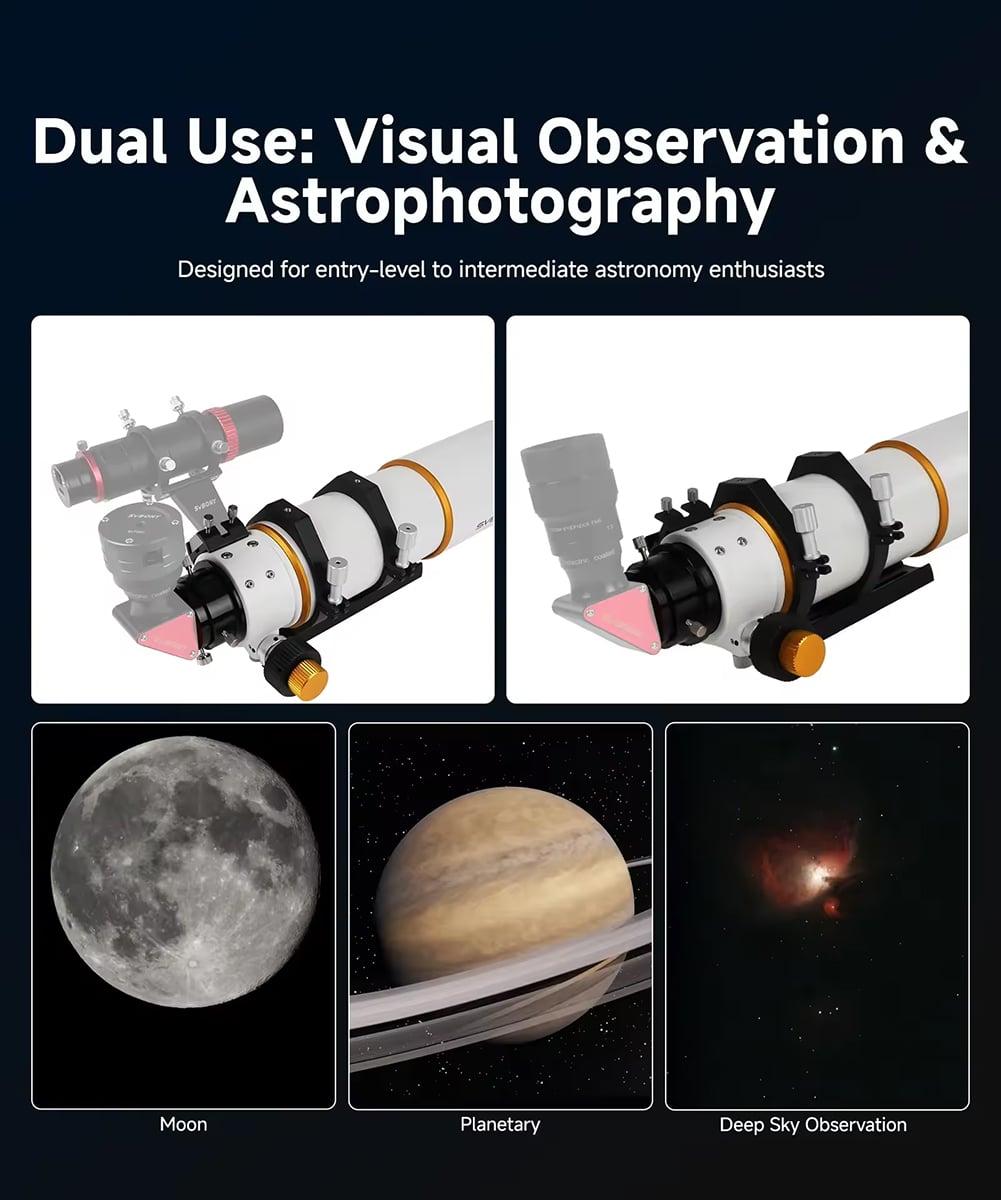
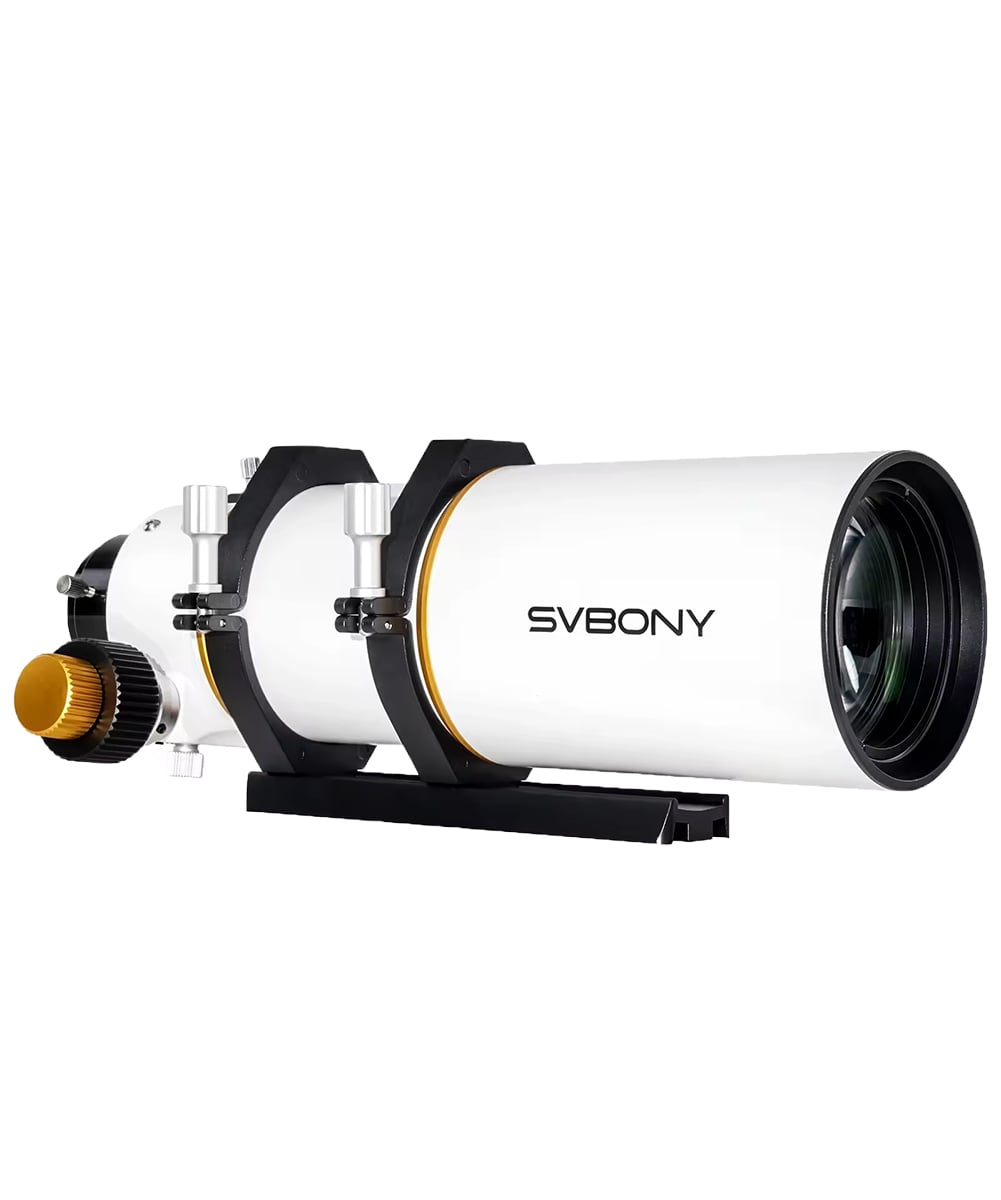
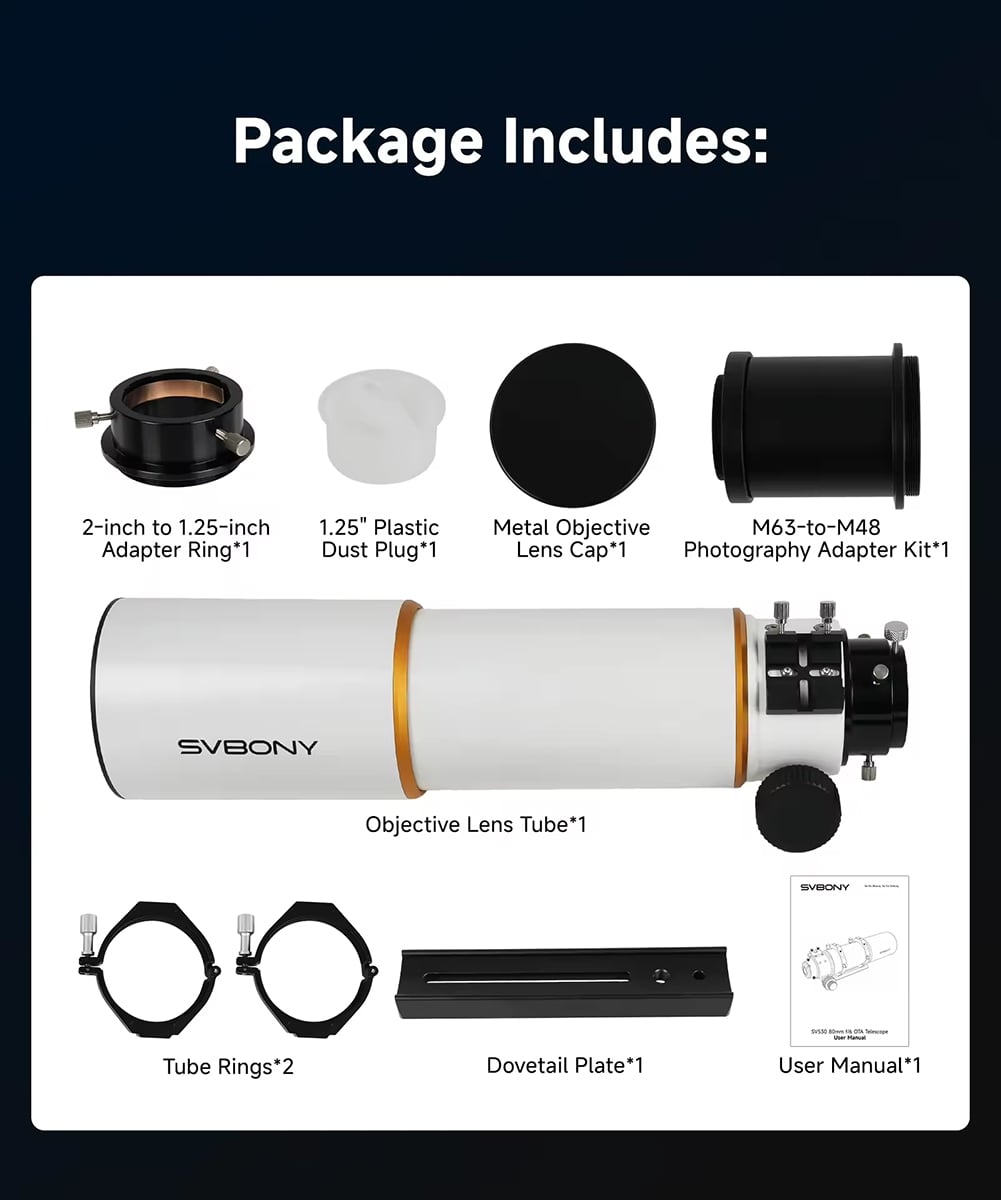
Svbony has added a new 80mm refractor to its astrophotography telescope lineup. The new SV530 combines an 80mm ED objective with a 480mm focal length and an f/6 focal ratio. The telescope is designed for deep-sky imaging, but Svbony also lists lunar and planetary observation among its uses. What sets it apart from many conventional ED refractors is what’s inside the optical tube. The SV530 uses a built-in field flattener, so users do not need to add a separate flattener to the optical train.
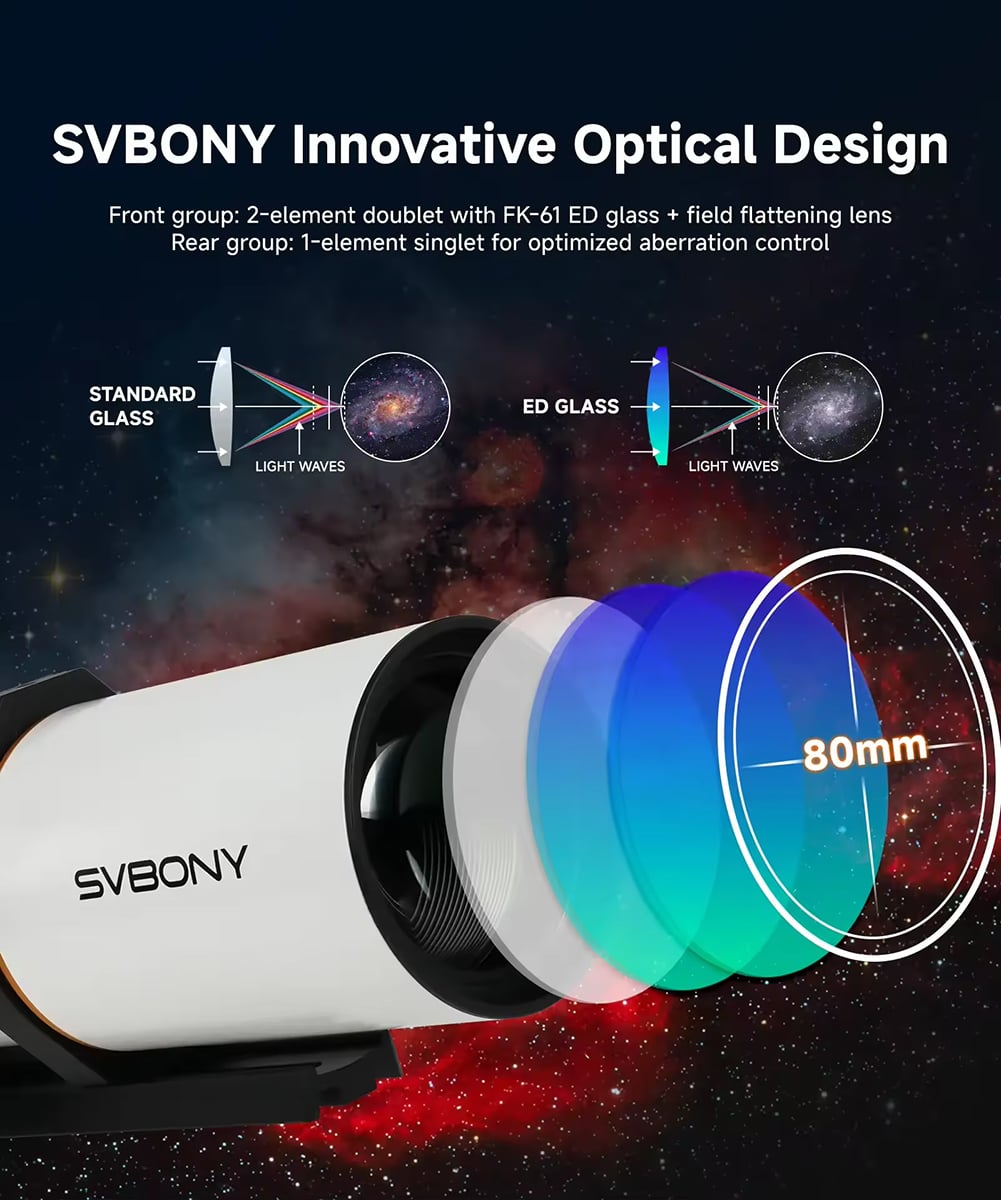
The telescope has an f/6 focal ratio and uses a three-element optical system. Svbony describes this as an ED doublet combined with a field-flattening element. The arrangement is designed for astrophotographers who want a relatively wide field without a separate flattener.
An 80mm aperture and 480mm focal length
The SV530 uses an 80mm objective with a 480mm focal length, giving it an f/6 focal ratio. The 480mm focal length gives astrophotographers a broader field than they would get from many longer refractors. Large emission nebulae, reflection nebulae, and star clusters are some of the obvious examples.
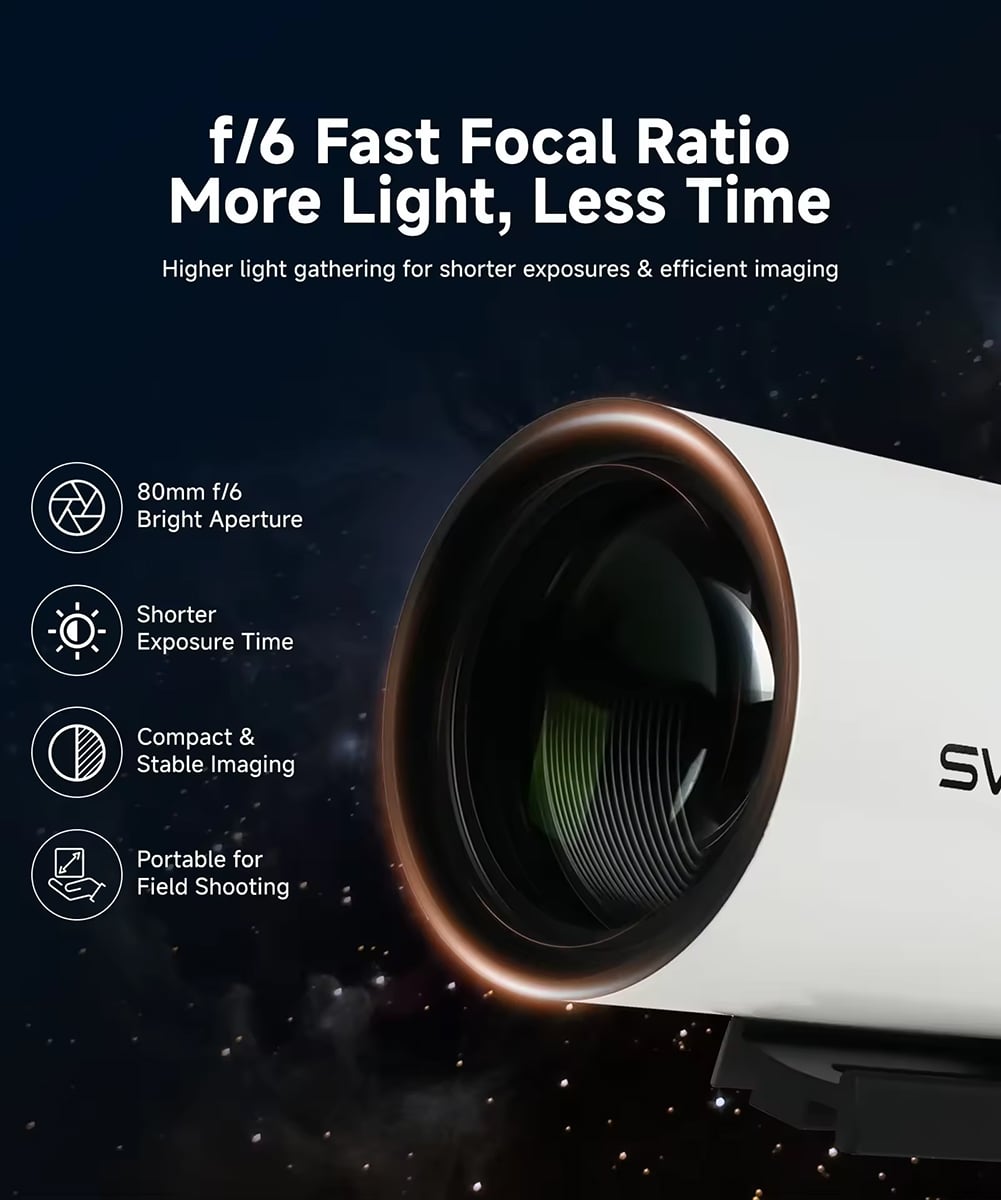
The exact field of view will, however, depend on the camera used. A full-frame camera will show a wider area than a smaller APS-C or astronomy camera sensor. The f/6 focal ratio also keeps the telescope reasonably fast for deep-sky imaging.
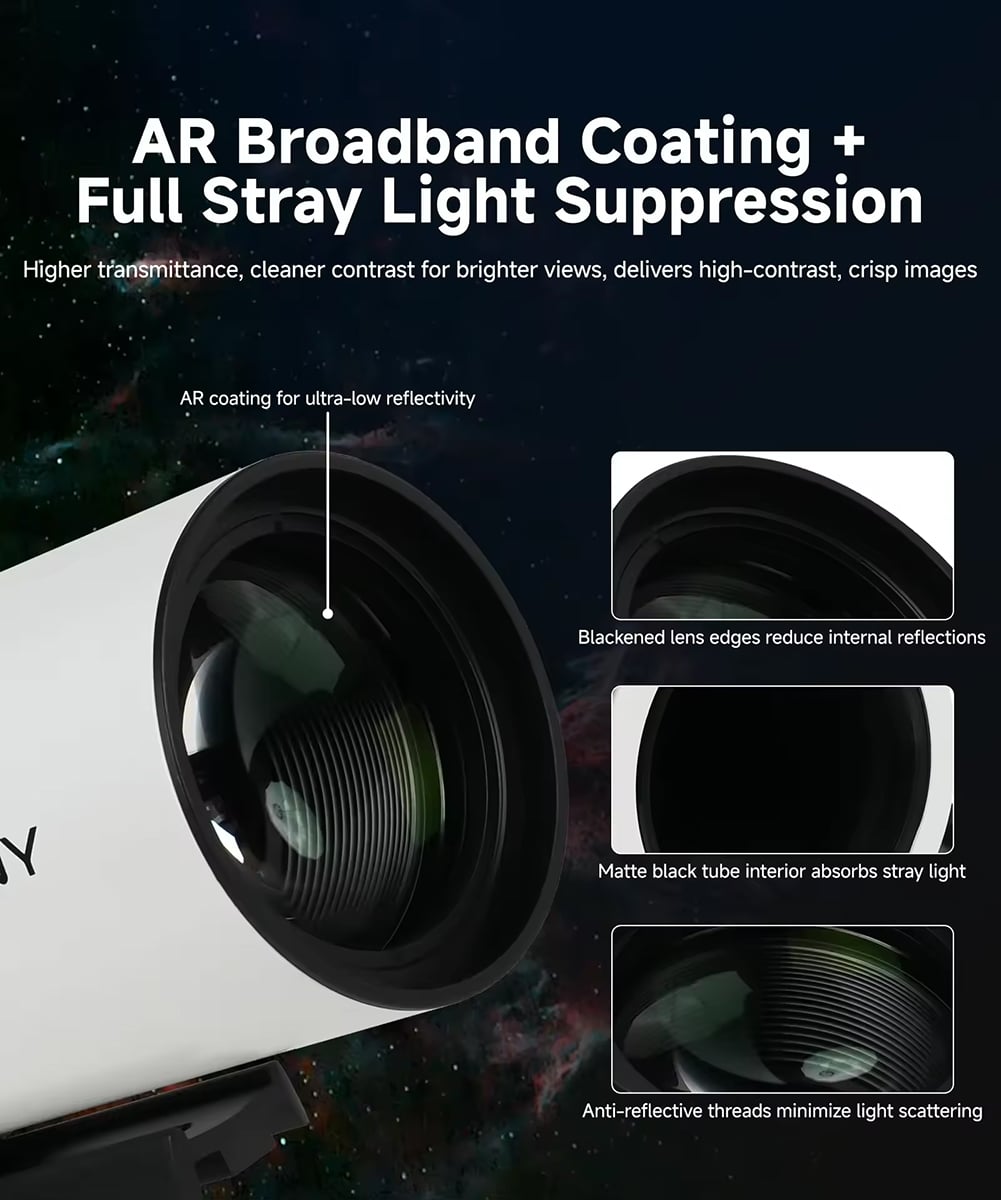
Svbony has also paid attention to the internal handling of light. The company says the objective uses multi-layer anti-reflective coatings, while the lens edges are blackened. The inside of the optical tube receives a black finish intended to reduce unwanted reflections and stray light.
Built-in field flattener
The SV530 uses an ED doublet objective along with a separate field-flattening element. Svbony describes the combination as a three-element optical design. The ED doublet is intended to reduce chromatic aberration. The additional element deals with field curvature.
This also sets the SV530 apart from some of Svbony’s other refractors. The company’s SV503 80ED, for example, can be paired with a separate reducer-flattener. With the SV530, the field-correction element forms part of the telescope’s optical design.
The focuser
Svbony has equipped the SV530 with a 2.5-inch rack-and-pinion focuser with 60mm of travel. A rack-and-pinion mechanism moves the drawtube through a geared system, not relying on friction between the focusing components. The SV530 also has a 10:1 fine-focus control, allowing much smaller adjustments after the main focus has been established.
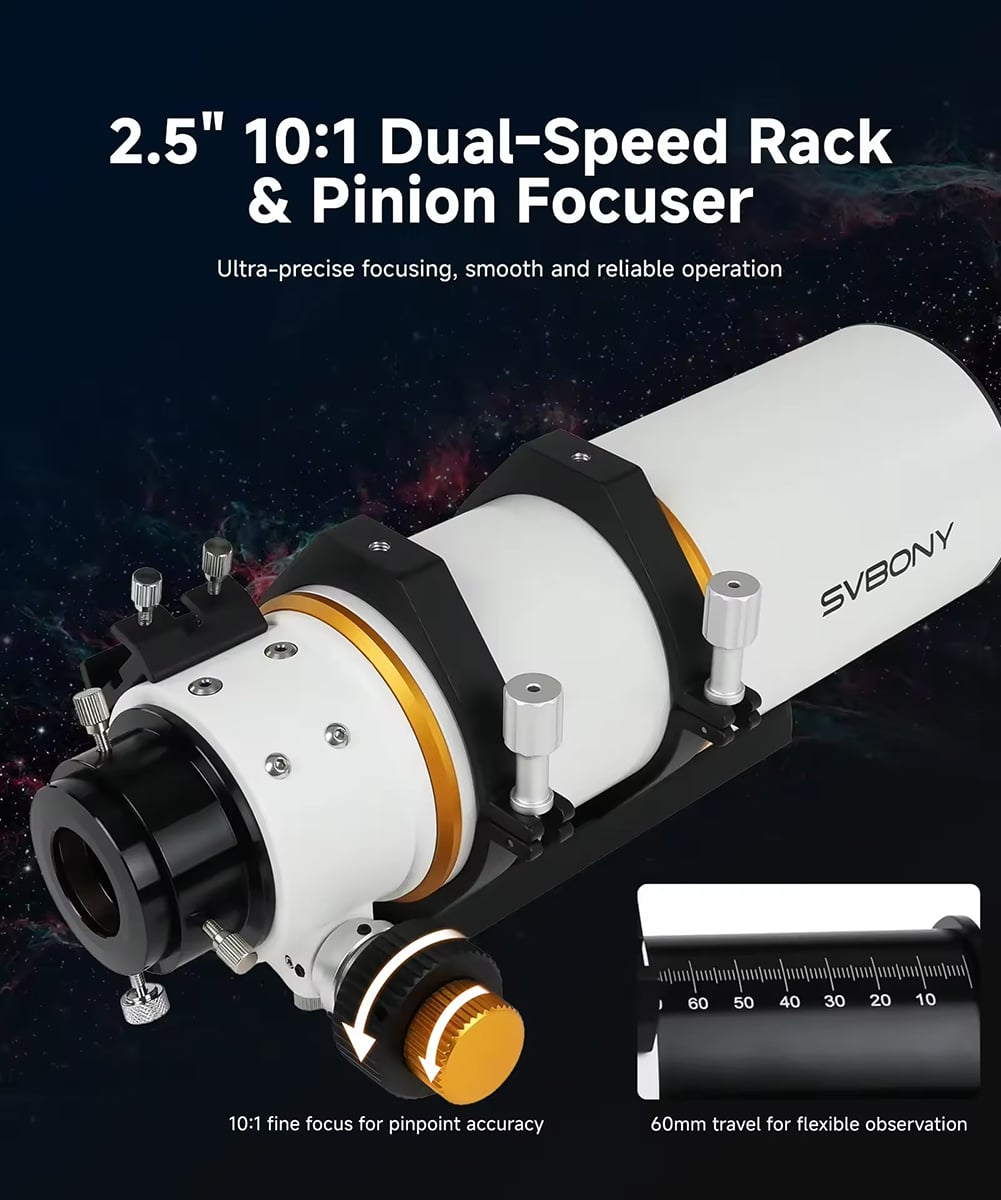
That fine adjustment has an obvious advantage in astrophotography. The focuser includes a locking mechanism to hold the selected position. Svbony has also provided adjustable tension, allowing the resistance of the focusing mechanism to be changed.
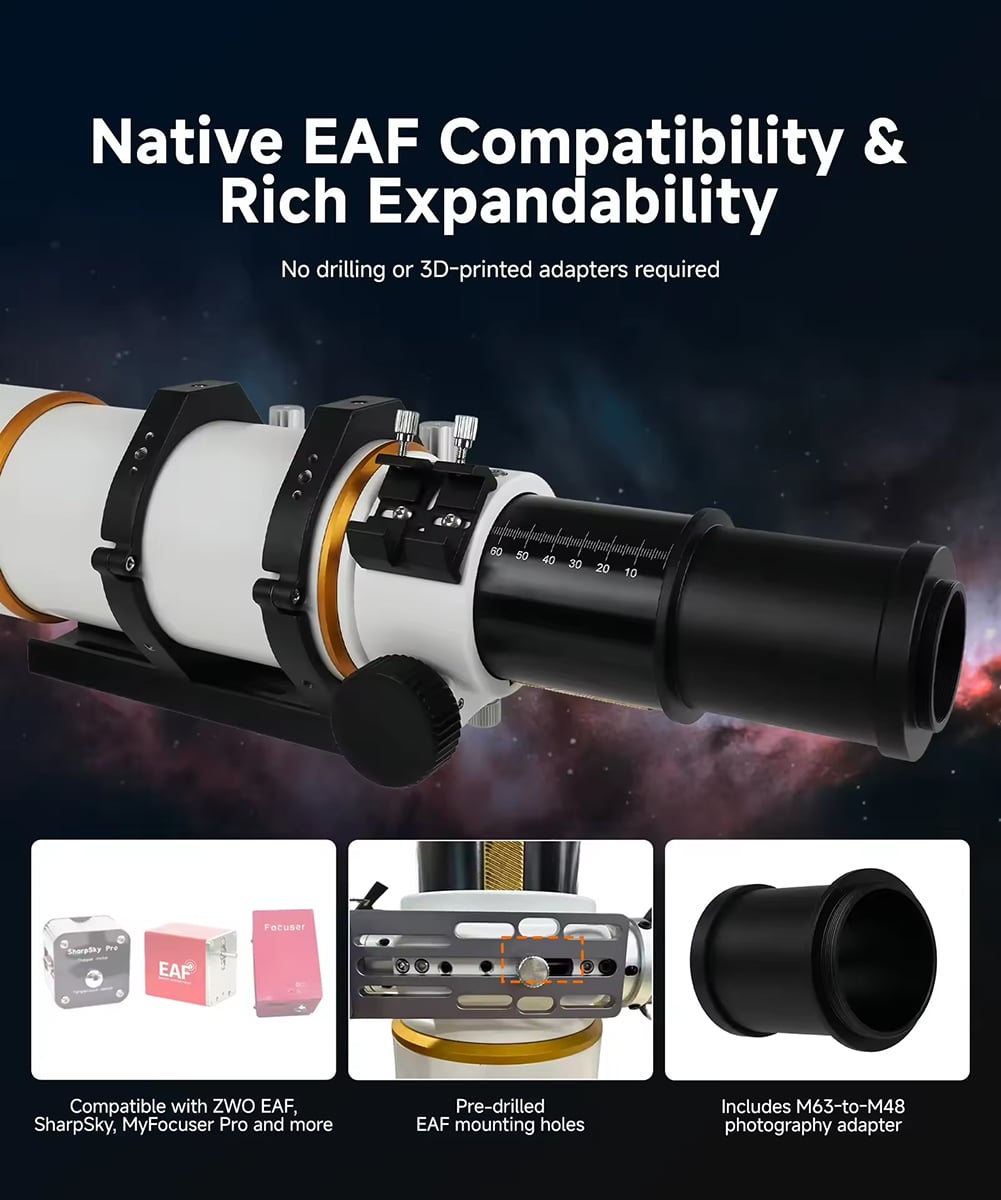
Another feature points toward automated imaging. The SV530 has mounting holes for an electronic automatic focuser (EAF).
Where the SV530 sits in Svbony’s range
The SV530 arrives alongside several other refractors in Svbony’s telescope range, but its design gives it a different role. The company already sells the SV503 series of ED refractors, while the SV550 range uses more advanced apochromatic designs.
The SV530 combines an ED doublet with integrated field correction. That makes it different from an ordinary ED refractor that relies on an external flattener. It also avoids the longer focal lengths associated with many telescopes intended for smaller deep-sky targets.
Its specifications place the telescope in a familiar part of the astrophotography market. An 80mm aperture and 480mm focal length provide a balanced combination for wide-field imaging, while the f/6 ratio keeps the optical system reasonably compact.
The more interesting question will be how the integrated optical system performs across different camera formats.
Price and availability
At the time of writing this article, information on pricing is not available. The product has been listed on the Svbony website. The pricing will be revealed, and the telescope will be available for pre-order on September 10, 2026. Shipping of the first batch will begin in October.
Clear skies!
See more from DIYPhotography.net on Google
Add DIYPhotography.net as a trusted source. This makes
our stories more likely to appear in your Google Search results.
 Add as a preferred source on Google

Soumyadeep Mukherjee
Soumyadeep Mukherjee is an award-winning astrophotographer from India. He has a doctorate degree in Linguistics. His work extends to the sub-genres of nightscape, deep sky, solar, lunar and optical phenomenon photography. He is also a photography educator and has conducted numerous workshops. His works have appeared in over 40 books & magazines including Astronomy, BBC Sky at Night, Sky & Telescope among others, and in various websites including National Geographic, NASA, Forbes. He was the first Indian to win “Astronomy Photographer of the Year” award in a major category.




Join the Discussion
DIYP Comment Policy
Be nice, be on-topic, no personal information or flames.