





















NASA’s Lunar Orbiter Captures the Falcon 9 Impact Crater on the Moon
Aug 19, 2026
Soumyadeep Mukherjee
Soumyadeep Mukherjee is an award-winning astrophotographer from India. He has a doctorate degree in Linguistics. His work extends to the sub-genres of nightscape, deep sky, solar, lunar and optical phenomenon photography. He is also a photography educator and has conducted numerous workshops. His works have appeared in over 40 books & magazines including Astronomy, BBC Sky at Night, Sky & Telescope among others, and in various websites including National Geographic, NASA, Forbes. He was the first Indian to win “Astronomy Photographer of the Year” award in a major category.
Share:
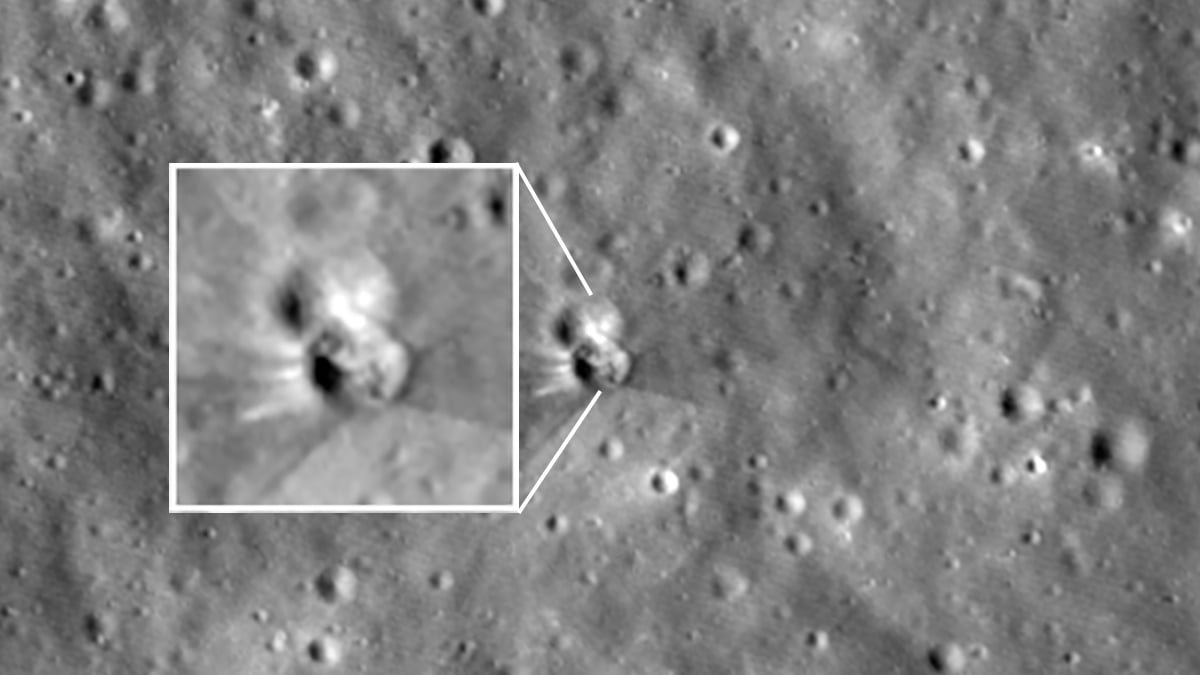
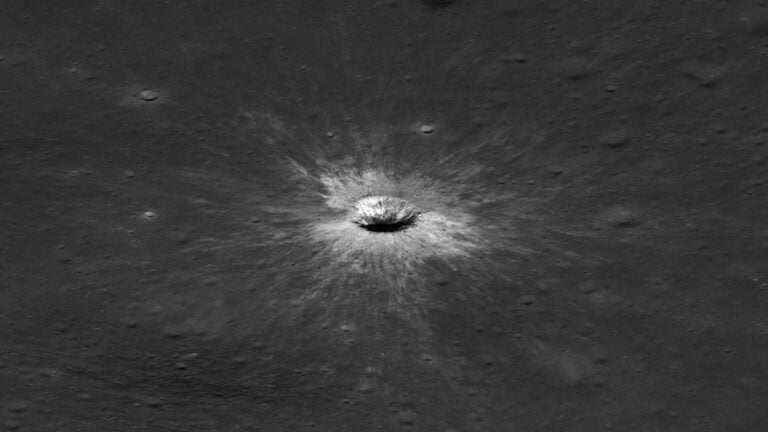
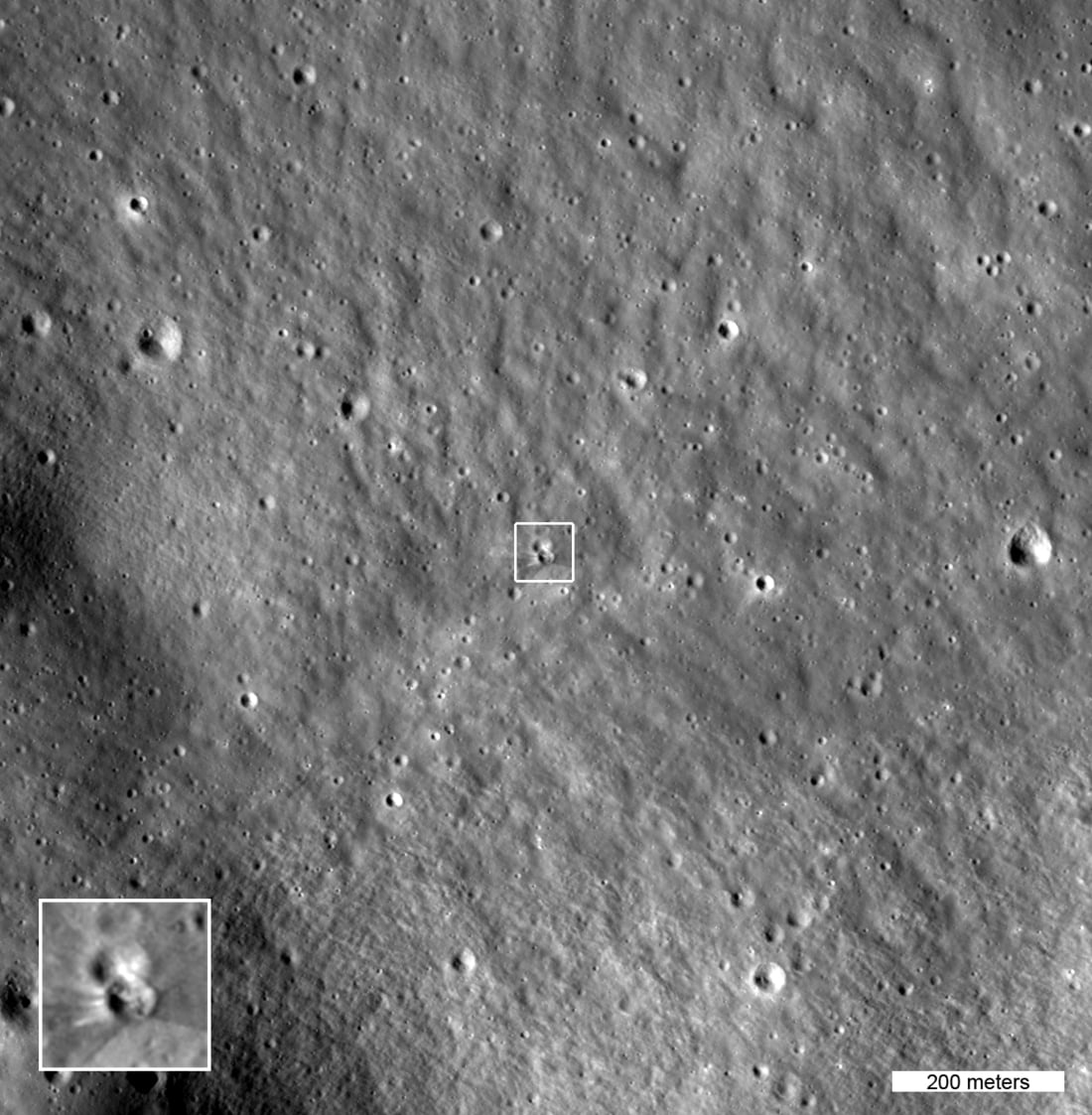
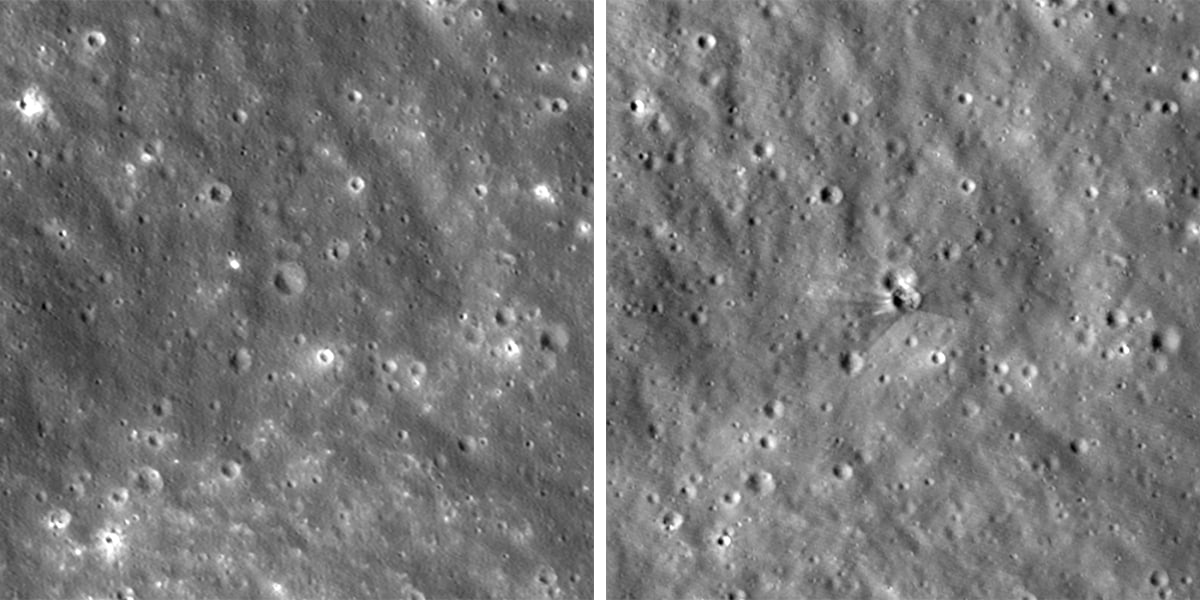
NASA’s Lunar Reconnaissance Orbiter (LRO) has photographed a fresh crater on the Moon created by a Falcon 9 rocket stage. The spacecraft captured the images just six days after the impact. They reveal a crater about 60 feet wide and less than 10 feet deep. The images also show bright and dark rays spreading across the surrounding lunar surface.
The impact took place on August 5, 2026, near the Einstein and Bell craters on the Moon’s far side. The object was the upper stage of a SpaceX Falcon 9. It had launched Firefly Aerospace’s Blue Ghost Mission 1 toward the Moon in January 2025. After completing its role in the mission, the upper stage remained on a trajectory that eventually brought it back to the Moon.
A Falcon 9 Stage ended its journey on the Moon
The story began on January 15, 2025. SpaceX launched Firefly Aerospace’s Blue Ghost Mission 1 from Launch Complex 39A at NASA’s Kennedy Space Center in Florida. The Falcon 9 carried Blue Ghost toward the Moon as part of NASA’s Commercial Lunar Payload Services program.
Blue Ghost later became the first commercial lunar lander to complete a soft landing on the Moon. It touched down in Mare Crisium on March 2, 2025. The lander then carried out more than 14 days of surface operations.
The Falcon 9 upper stage, however, had a different fate. After deploying its payload, it was left on a trajectory that did not provide a way to return it to Earth. Solar activity and gravitational forces altered its path over time.
By early August 2026, NASA had narrowed down the expected impact window and location. The agency predicted that the stage would hit the lunar surface on August 5, close to the Einstein and Bell craters. The team expected the collision to produce a crater roughly 60 feet across.
LRO had to catch the crater at the right time
Finding the new crater required more than knowing its approximate coordinates. LRO was already orbiting the Moon, and the spacecraft had to pass over the correct region under suitable observing conditions.
NASA launched LRO in June 2009. Its main mission has been to map the lunar surface at high resolution and investigate the Moon’s geology, environment, and potential resources. The spacecraft carries seven scientific instruments, including LROC, which provides detailed images of the surface.
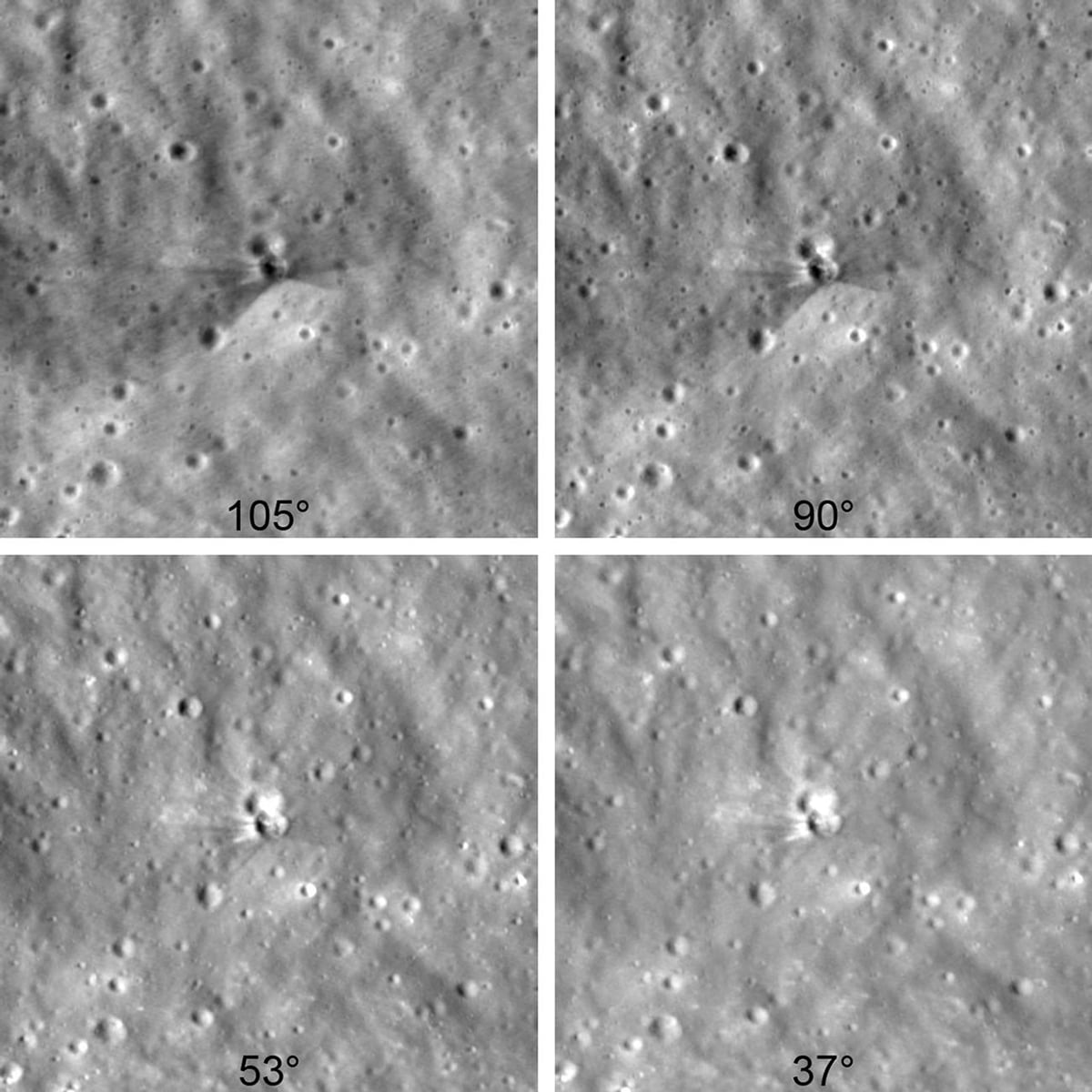
For this observation, the timing was the most important part. LRO moves rapidly around the Moon, so even a small difference in pointing or timing can shift the target considerably within the camera’s field of view.
The spacecraft photographed the impact site between August 11 and 12, about six days after the collision. LROC’s Narrow Angle Camera provided the detailed images needed to identify the new crater and examine the surrounding ejecta.
Danuri helped NASA locate the crater
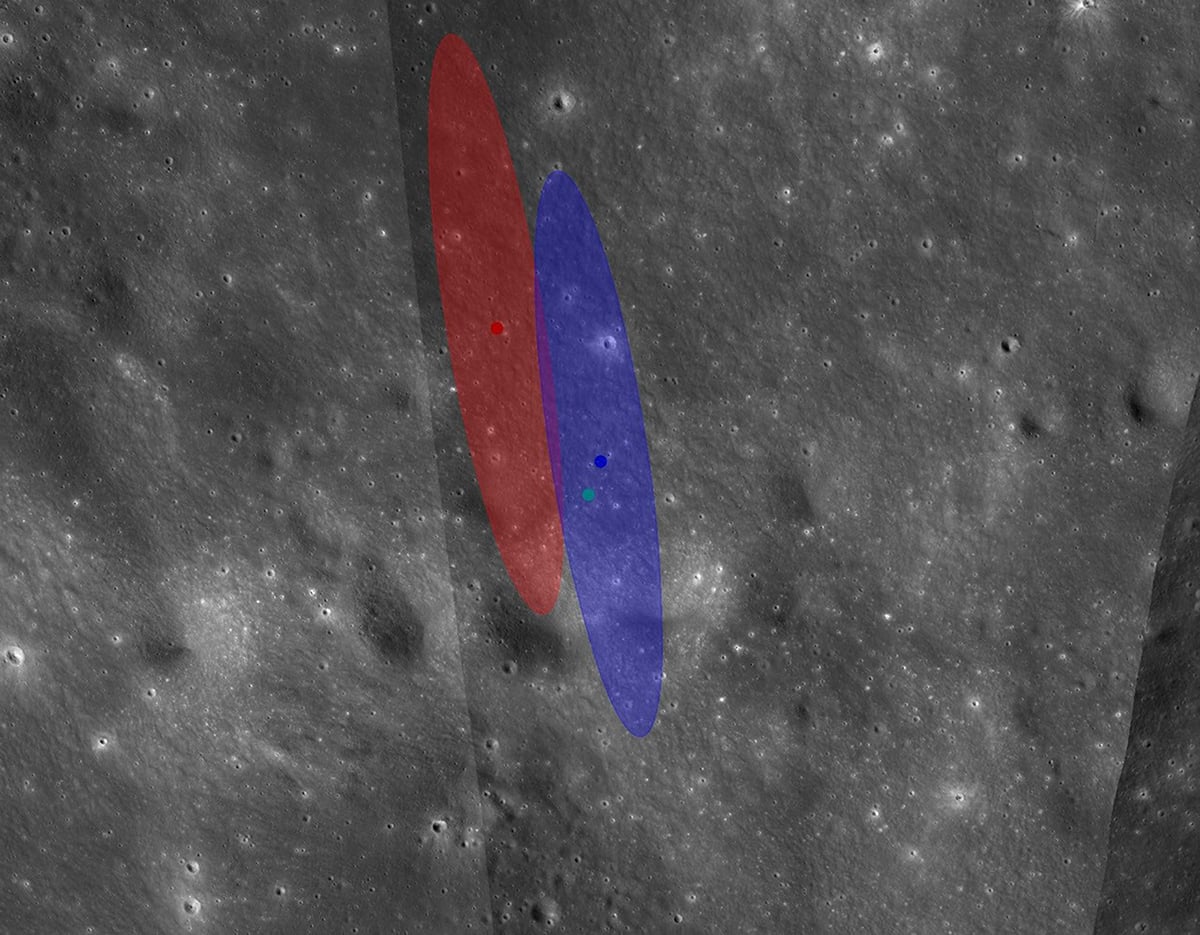
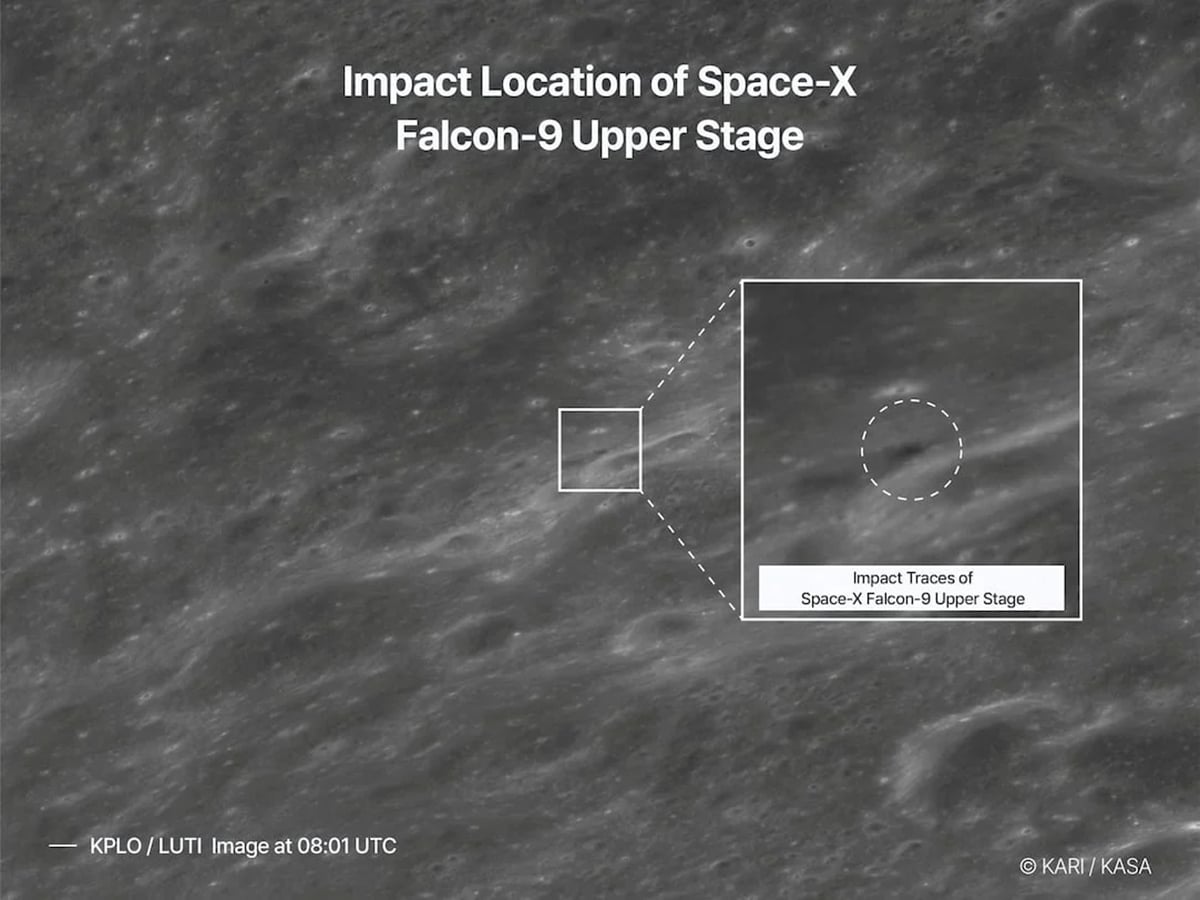
NASA was not the only organization watching for the impact. South Korea’s Korea Pathfinder Lunar Orbiter, better known as Danuri, also searched for the site. Danuri carries the Lunar Terrain Imager, or LUTI, which can produce high-resolution images of the lunar surface. NASA shared its predicted impact location with the Korean mission team before the collision.
Danuri photographed the region only a few hours after the impact. Those observations helped confirm where the Falcon 9 stage had struck. The observed crater fell close to NASA’s predicted impact region. NASA says the prediction placed the impact within about 0.6 miles of the eventual crater. The Danuri observations then helped the LRO team refine the target for its higher-resolution imaging.
The Moon gets a new crater
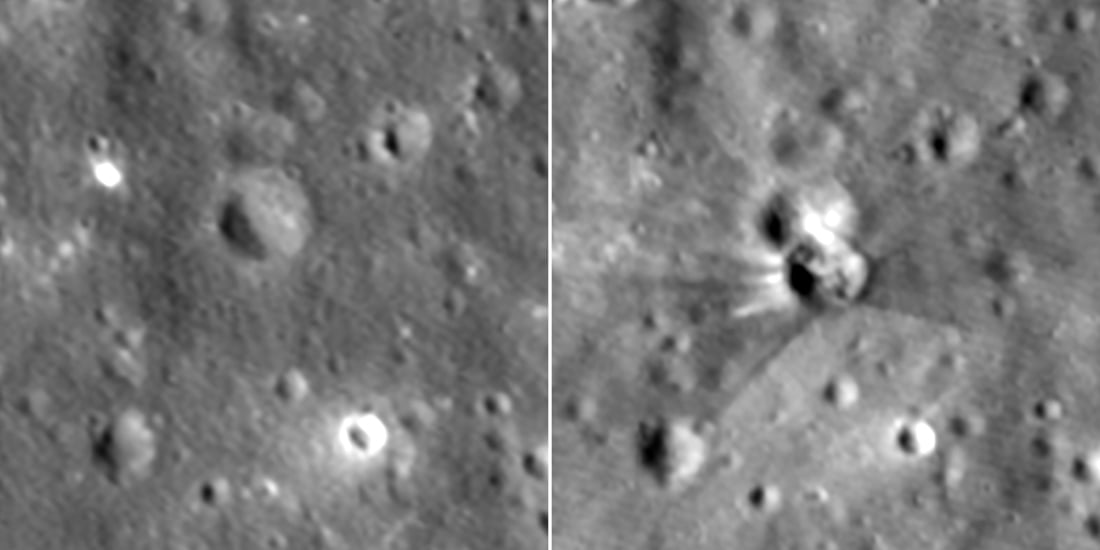
The new crater measures about 60 feet across. NASA estimates its depth at less than 10 feet from the shadows visible inside it. The dimensions fit reasonably well with the expected result of an impact by a large rocket stage.
LROC images show rays extending away from the new crater. Some parts of the ejecta appear darker than the surrounding surface, while other areas are brighter. The contrast comes from the different types of material disturbed by the collision.
The crater will remain useful for future studies. LRO can return to the site in the coming years and monitor how its appearance changes. Small impacts will gradually modify the ejecta, while radiation will continue altering the exposed material.
Clear skies!
See more from DIYPhotography.net on Google
Add DIYPhotography.net as a trusted source. This makes
our stories more likely to appear in your Google Search results.
 Add as a preferred source on Google

Soumyadeep Mukherjee
Soumyadeep Mukherjee is an award-winning astrophotographer from India. He has a doctorate degree in Linguistics. His work extends to the sub-genres of nightscape, deep sky, solar, lunar and optical phenomenon photography. He is also a photography educator and has conducted numerous workshops. His works have appeared in over 40 books & magazines including Astronomy, BBC Sky at Night, Sky & Telescope among others, and in various websites including National Geographic, NASA, Forbes. He was the first Indian to win “Astronomy Photographer of the Year” award in a major category.


Join the Discussion
DIYP Comment Policy
Be nice, be on-topic, no personal information or flames.