





















The Future of Live Production: Insights from Blackmagic Design’s Post-NAB Vision
May 4, 2026

Share:
The dust has finally settled on another National Association of Broadcasters (NAB) Show, and for the team at Blackmagic Design, the “recovery” is well underway. In a recent interview, Bob Caniglia, Director of Sales Operations at Blackmagic Design, shared deep insights into the company’s latest innovations, ranging from groundbreaking live audio software to next-generation cinema cameras designed for live environments. And for professionals and enthusiasts alike, the announcements represent more than just new hardware; they signal a shift toward a more integrated, accessible, and high-performance production ecosystem.
Fairlight Live: Revolutionizing the Audio Workflow
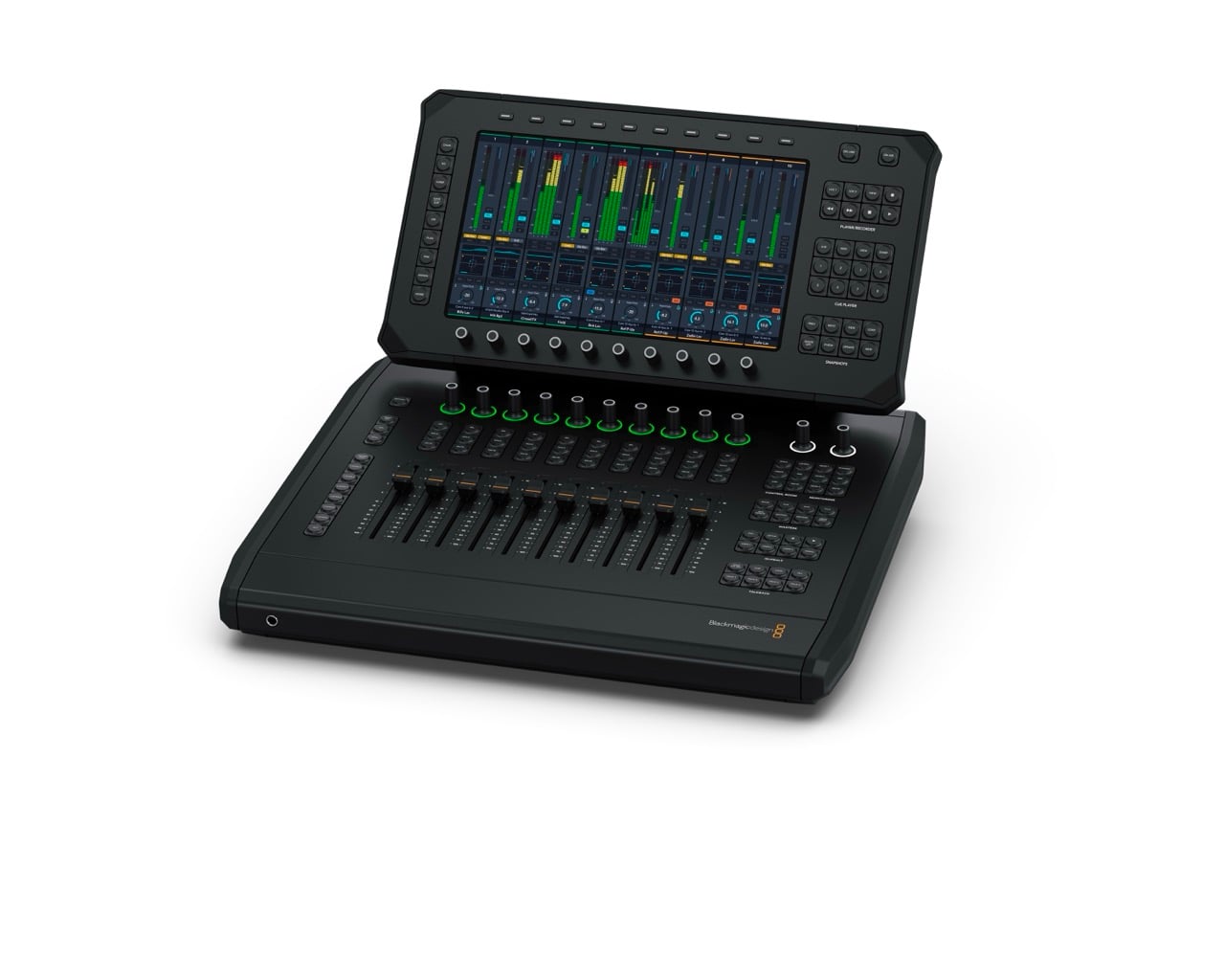
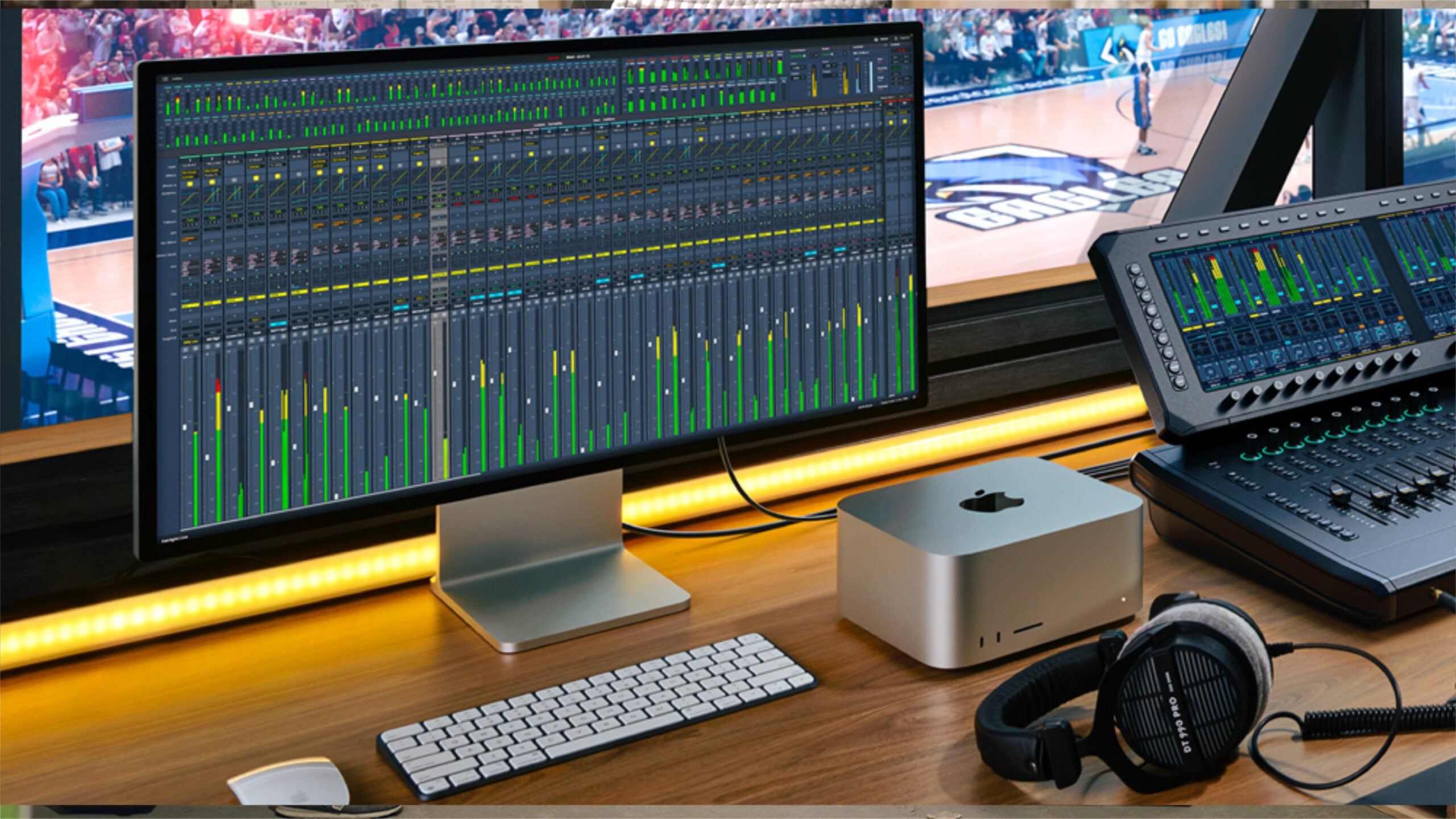
One of the most significant announcements from the show was the introduction of Fairlight Live. Unlike the Fairlight page found within DaVinci Resolve, Fairlight Live is a standalone software application specifically engineered for live audio mixing. It is designed to handle the most demanding environments, capable of mixing up to 1,000 channels of audio.
To accompany the software, Blackmagic introduced a new range of dedicated control surfaces available in 10, 20, and 40-fader configurations. These panels feature motorized faders, a high-quality touchscreen interface, and extensive tools for EQ, panning, and compression. Crucially, even the smallest 10-fader panel can address any channel in the mix, mirroring the flexibility of the ATEM Advanced Panels.
Caniglia noted that Fairlight Live is being offered as free software, following the company’s established philosophy of offsetting software development through hardware sales. This approach allows users to explore the toolset without financial risk, eventually scaling up to professional hardware panels as their needs grow.
Bridging Cinema and Live: The URSA Cine 12K 100G
Blackmagic is also blurring the lines between cinematic storytelling and live broadcasting with the new URSA Cine 12K 100G. Recognizing that many users are now deploying high-end cinema cameras for live events, the company added a SMPTE 2110 100-gigabit port directly onto the camera. This allows for seamless ATEM camera control and high-bandwidth data transfer.
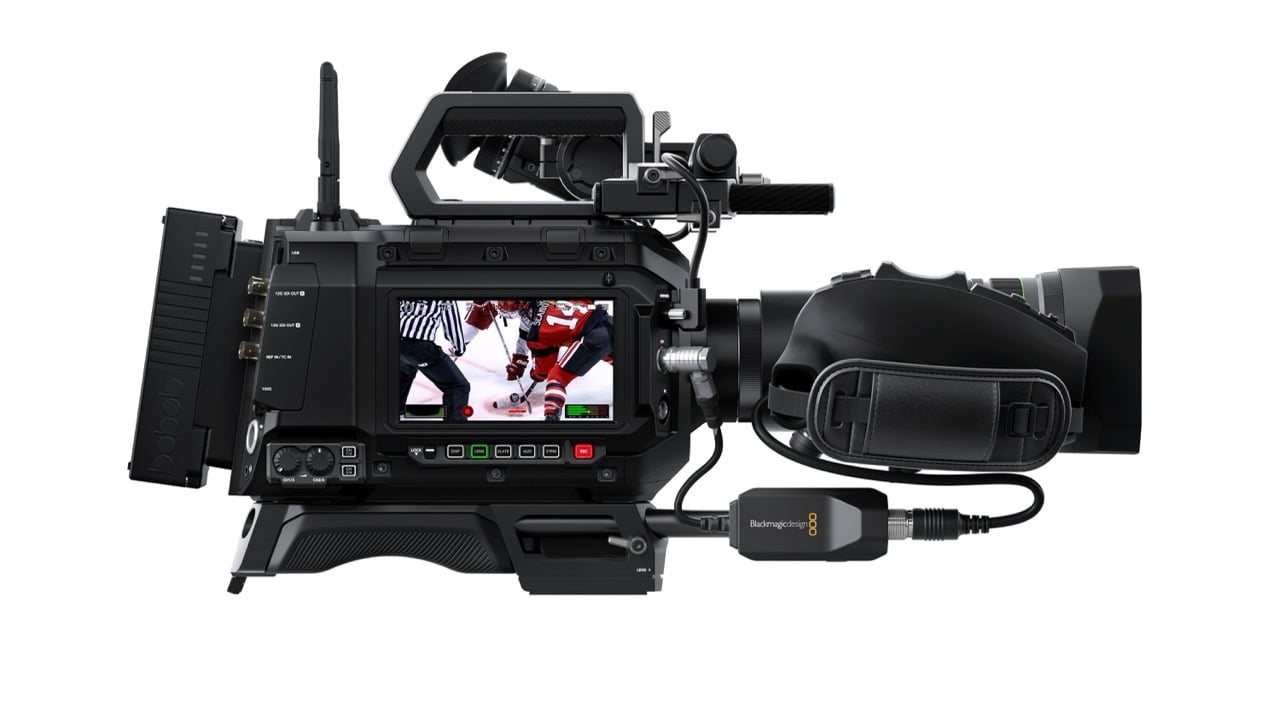
Furthermore, responding to the needs of the live broadcast market, Blackmagic added a B4 mount option and a specialized module for Apple Immersive Live. This module enables the camera to capture and compress stereoscopic (right and left eye) 12K data for immersive live streaming, such as professional basketball games. As Mr. Caniglia put it, this was a direct response to industry demand: “This is what we want to do, what are you guys gonna do about it?”.
Designing for Accessibility: From Schools to Houses of Worship
A recurring theme in the discussion was Blackmagic’s commitment to “ease of use” across its entire product line. As an A/V consultant for houses of worship and adult education, one of the biggest hurdles is finding solutions that have the horsepower necessary for professional applications while being accessible to all – from professionals to volunteers. In my conversation with Mr. Caniglia, Blackmagic’s design philosophy relies on a dedicated UI team that ensures a consistent experience across all devices. Whether a user is operating a Pocket Cinema Camera or a high-end URSA Cine, the menu structures remain nearly identical. This consistency is vital for organizations relying on volunteers. “If you use one camera, you know how to use them all,” Caniglia explained, noting that the goal is to allow users to grow with the business—starting with a small ATEM in high school and moving up to major network configurations without needing to relearn the system.
Navigating the “Memory Crunch” and Fair Pricing
The interview also touched on the broader industry challenges, specifically the rising cost of memory modules driven by the boom in AI investment. Caniglia acknowledged that Blackmagic has had to make price adjustments due to these supply chain pressures, though he emphasized the company’s history of both raising and lowering prices based on the actual cost of goods.
“Grant [Petty] is pretty good about making sure that he’s always playing fair,” Caniglia said. The company avoids artificial market segmentation—the practice of separating “professional” and “broadcast” tiers—preferring instead to build products that serve everyone from individual creators to the largest global networks.
The Road Ahead: IP and 100GB Connectivity
Looking to the future, Blackmagic is heavily invested in SMPTE 2110 IP and 100GB connectivity. While these technologies are forward-facing, the company aim is to provide a “stepping stone” process, allowing customers to adopt new workflows at their own pace.
Whether it is the new Photo Page in DaVinci Resolve—developed directly from user requests—or the rapid development of the Fairlight Live panels, Blackmagic continues to focus on filling workflow gaps. As the industry moves toward more integrated, IP-based production, Blackmagic’s mix of high-end performance and volunteer-friendly accessibility ensures they remain at the center of the conversation.
See more from DIYPhotography.net on Google
Add DIYPhotography.net as a trusted source. This makes
our stories more likely to appear in your Google Search results.
 Add as a preferred source on Google


Join the Discussion
DIYP Comment Policy
Be nice, be on-topic, no personal information or flames.