
























Stars that Grow Butterflies: Astronomers Mapped a Young Star’s Magnetic Cycle
Nov 9, 2025
Soumyadeep Mukherjee
Soumyadeep Mukherjee is an award-winning astrophotographer from India. He has a doctorate degree in Linguistics. His work extends to the sub-genres of nightscape, deep sky, solar, lunar and optical phenomenon photography. He is also a photography educator and has conducted numerous workshops. His works have appeared in over 40 books & magazines including Astronomy, BBC Sky at Night, Sky & Telescope among others, and in various websites including National Geographic, NASA, Forbes. He was the first Indian to win “Astronomy Photographer of the Year” award in a major category.
Share:
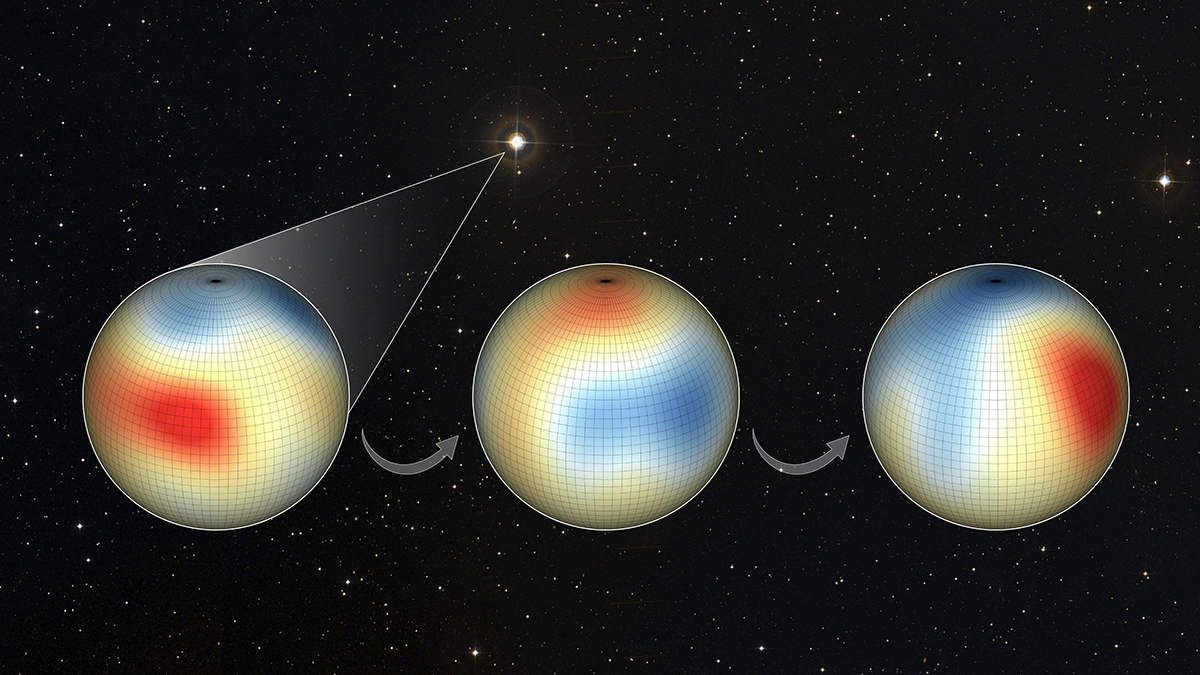
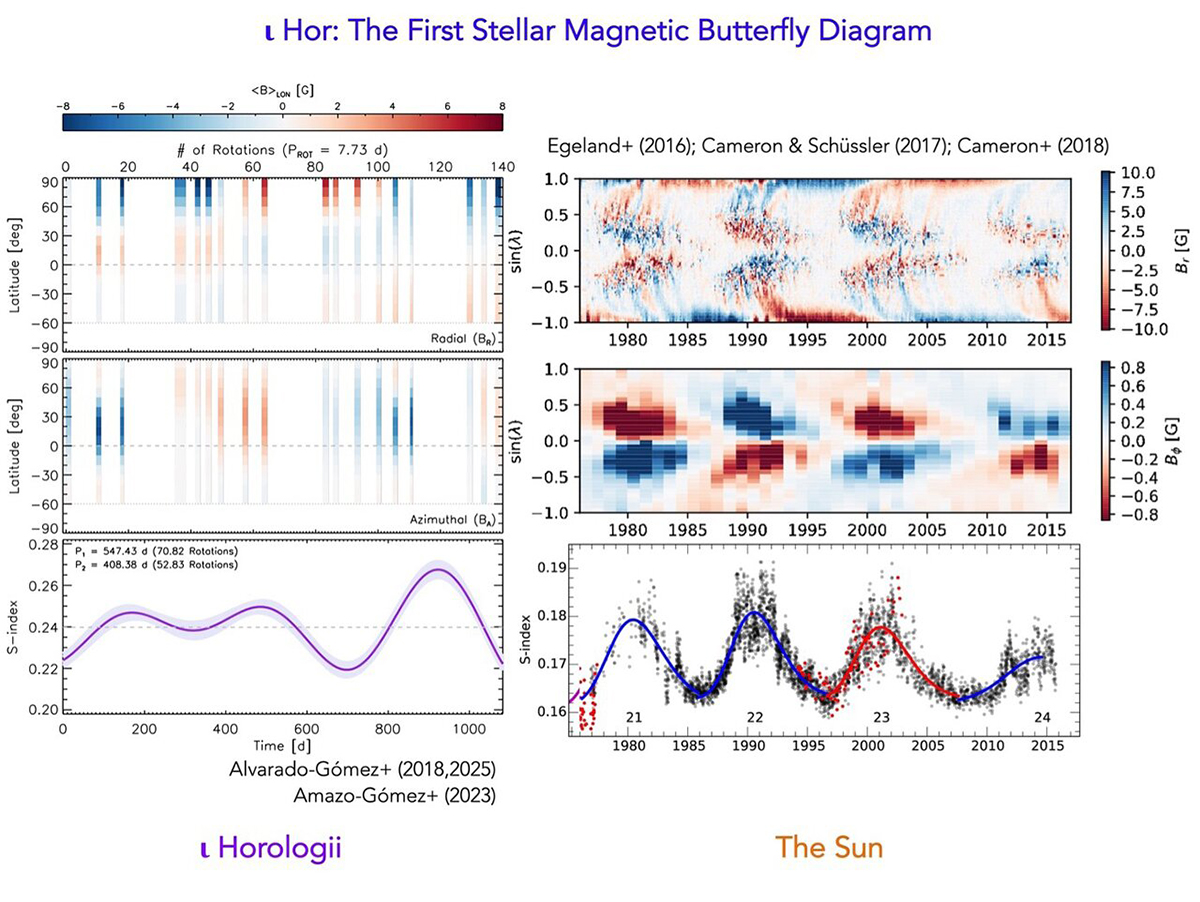
Astronomers have done something the Sun once held exclusive rights to. They have mapped the magnetic life of another star and watched its magnetic poles flip over time. For the first time, they created a true “butterfly diagram” for a Sun-like star beyond our Solar System. The star is Iota Horologii, about 56 light-years away in the southern constellation Horologium. It’s younger, faster, and far more restless than the Sun. Yet its behavior provides astronomers with a unique glimpse into how solar-type stars evolve and how their magnetic hearts beat.
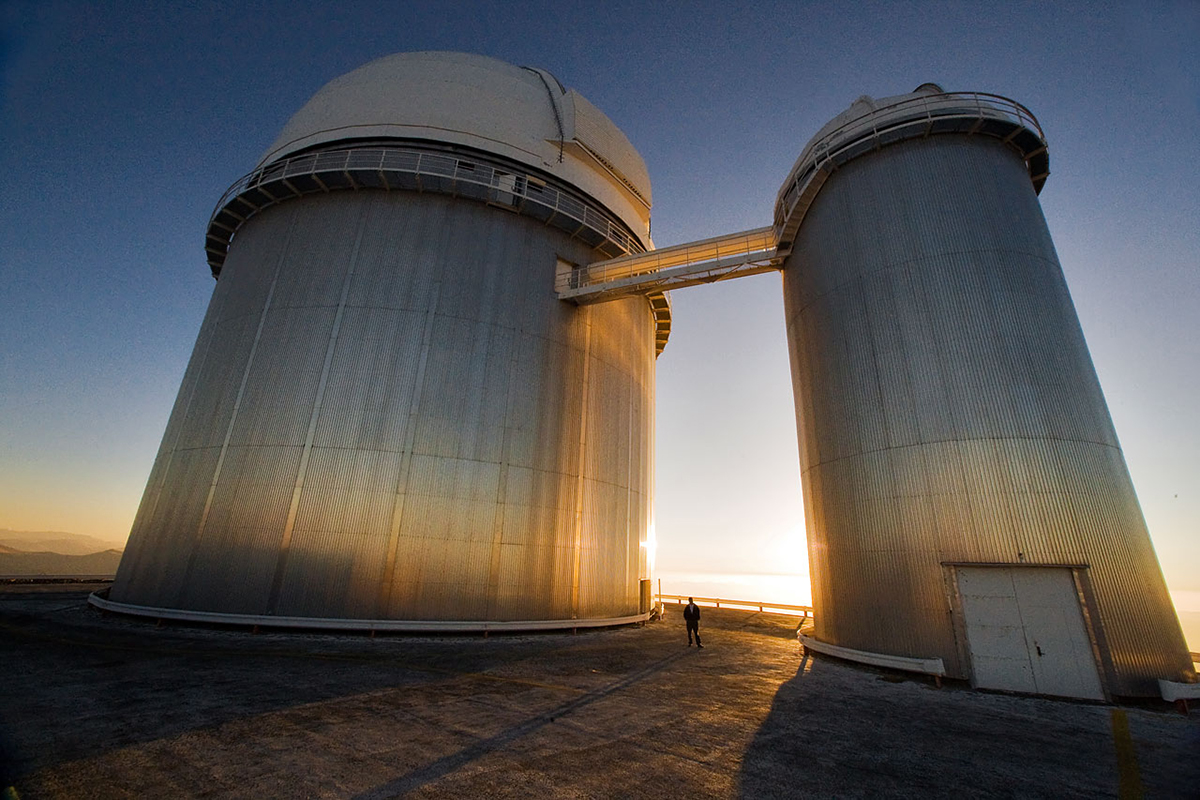
The work, led by researchers using the European Southern Observatory’s 3.6-metre telescope at La Silla in Chile, represents a breakthrough in stellar magnetism. It shows that even stars far from us can be observed in enough detail to trace their magnetic cycles, just as we do with the Sun.
What are magnetic butterflies?
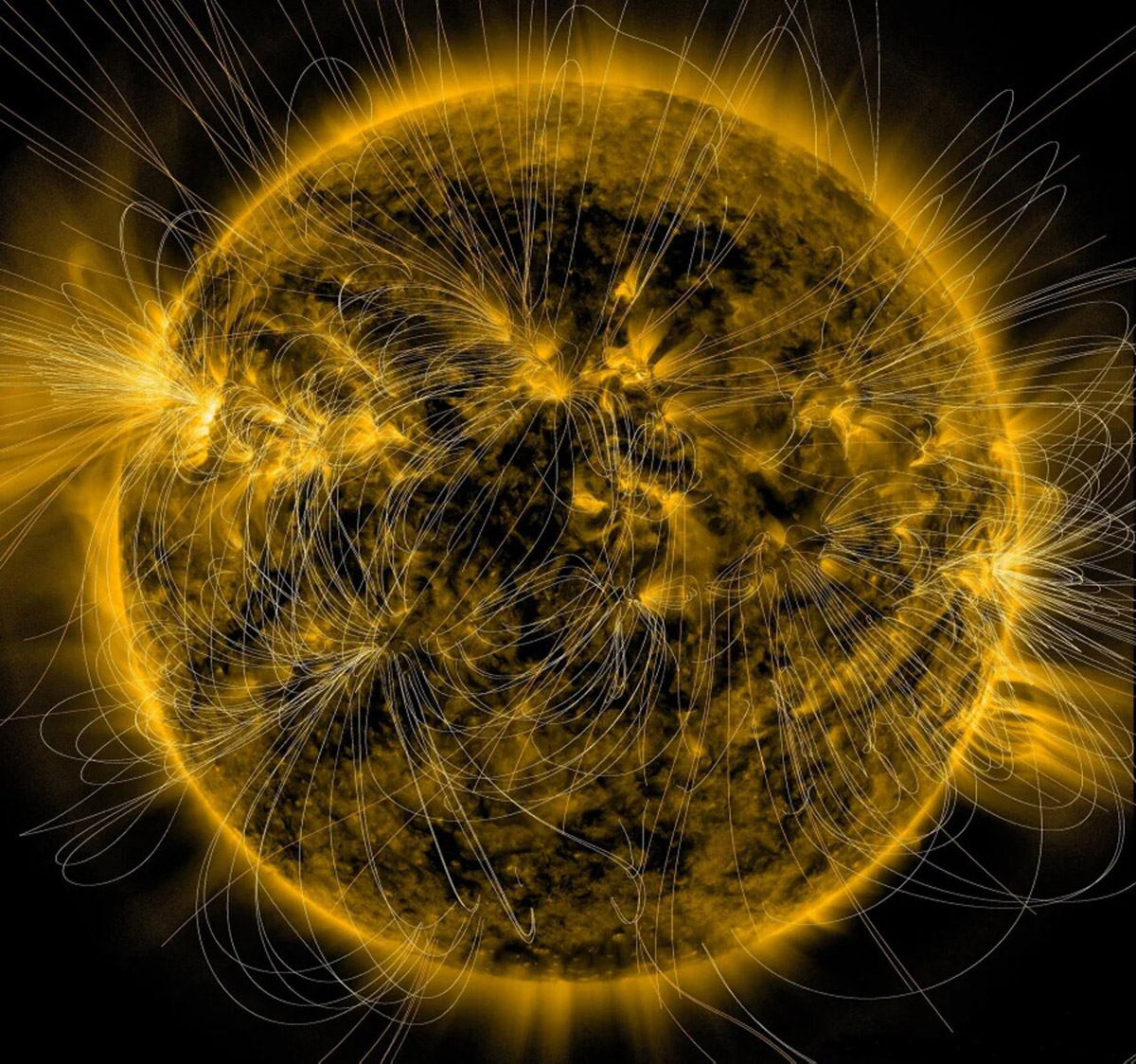
When scientists study the Sun, they often examine the locations of sunspots over time. If you plot the latitude of these spots against time, you get a pattern that looks like a pair of wings. Early in each 11-year solar cycle, sunspots emerge near the Sun’s mid-latitudes. As the cycle continues, they drift toward the equator.
This repeating, mirrored pattern is called a butterfly diagram. It’s one of the clearest records of how the Sun’s magnetic field changes. Each pair of “wings” marks a full activity cycle. The field flips every 11 years and completes a full magnetic reversal every 22.
These diagrams help solar physicists understand the solar dynamo, the process that generates magnetic fields inside stars. Until now, however, no other star had ever been observed with enough detail to make a comparable butterfly diagram. The Sun was the only one with wings.
The star: Iota Horologii
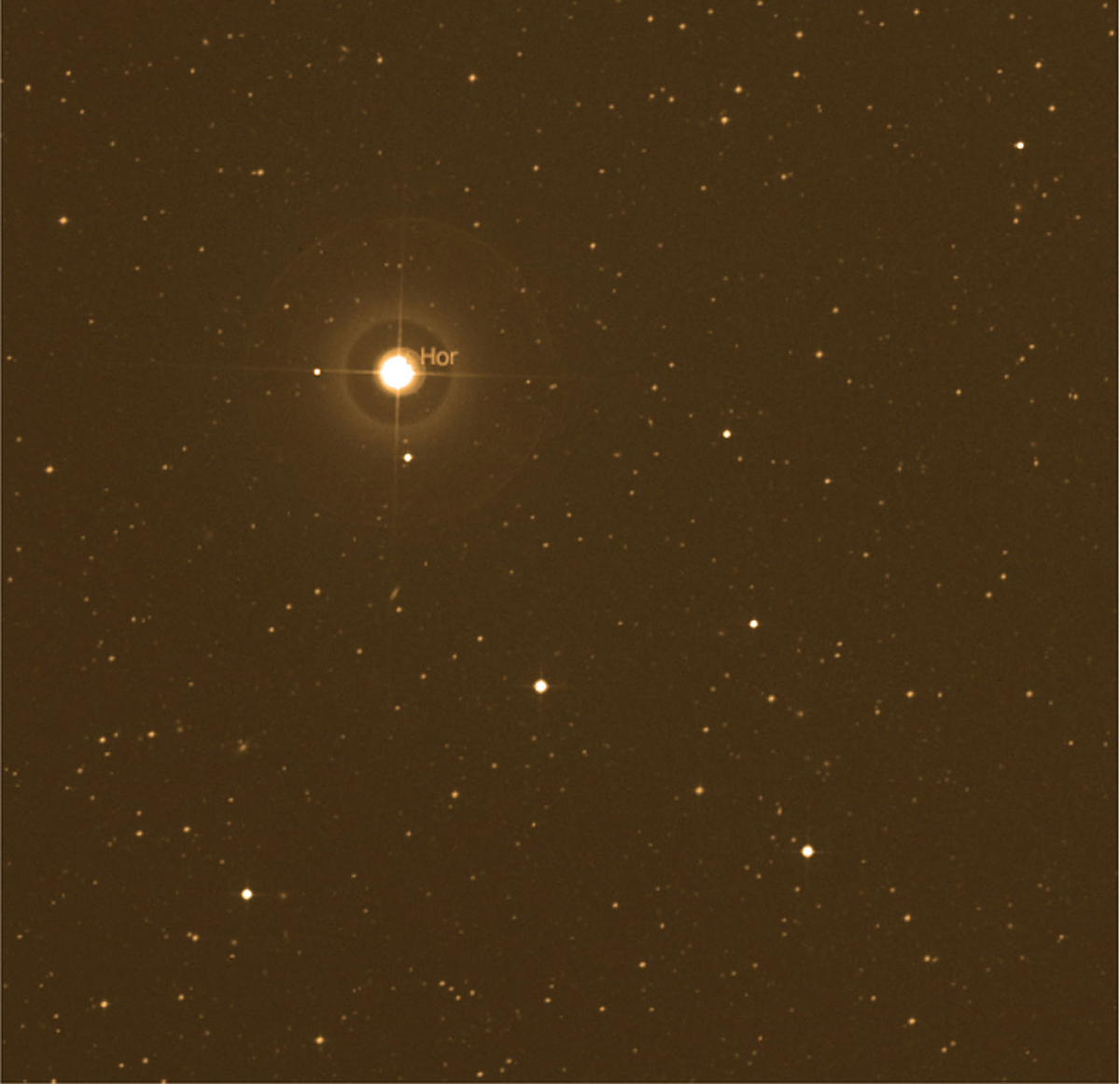
Iota Horologii, or Iota Hor for short, is a G-type star like the Sun but only about 600 million years old. That makes it a youthful version of what our own star once was. It spins faster, roughly once every eight days, and that rapid rotation drives stronger magnetic activity. For astronomers studying stellar dynamos, this kind of target is gold. By watching how magnetic cycles change with age and rotation, they can test whether the Sun’s long 11-year rhythm is typical or unique.
The team, led by researchers from France, Brazil, and Chile, chose Iota Hor because earlier observations already showed it had a short chromospheric activity cycle of about two years. They wanted to see if that short rhythm also appeared in its magnetic field. To find out, they needed to map the star’s magnetism directly, something that had never been done in such detail outside the Solar System.
Watching a star’s magnetism turn
Between 2015 and 2018, astronomers observed Iota Hor for nearly 200 nights using HARPSpol, the polarimetric mode of ESO’s HARPS spectrograph on the 3.6-metre telescope. HARPS is best known for its ultra-precise radial-velocity measurements in planet searches, but with its polarimeter attached, it can also detect the faint magnetic fingerprints left in starlight. Each observation recorded how the star’s light was polarized by magnetic fields on its surface. By collecting data across many rotation phases and many months, the team could reconstruct the star’s global magnetic structure.
They used a technique called Zeeman-Doppler Imaging (ZDI). It works a bit like medical tomography but for stars. As the star spins, regions with different magnetic polarities rotate in and out of view. Tiny shifts in spectral lines reveal those regions’ magnetic signatures. When combined, these signals create a map of the star’s magnetic field.
This required patience and precision. Each season of data had to be perfectly calibrated. The signal from the magnetic field was so weak that the team had to combine thousands of spectral lines to see it clearly. But after years of effort, the result was worth it.
The star that flips every two years
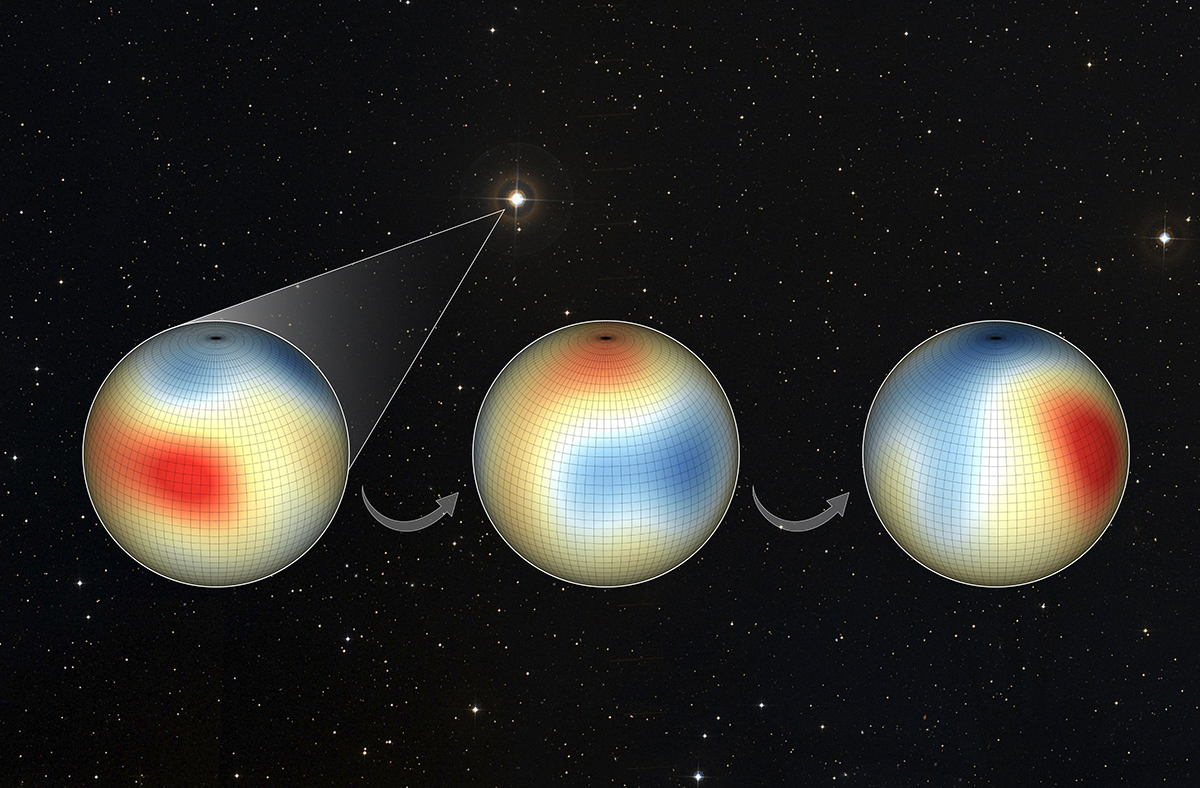
The data revealed a clear pattern. Over roughly 2.1 years, Iota Hor’s magnetic field reversed its polarity, just like the Sun does, but much faster. That means its magnetic north and south poles swap places every two years. When the researchers plotted how magnetic regions appeared and moved in latitude over time, the diagram showed two striking wings. It looked remarkably like the Sun’s butterfly pattern, but with a compressed timescale.
This was the first time such a diagram had been built for a star other than the Sun. It confirmed that Iota Hor undergoes a recurrent magnetic cycle, with alternating periods of positive and negative polarity. The maps also showed that the star’s magnetic regions drifted in latitude during the cycle, revealing surface flows similar to those on the Sun. These drifts are part of the same dynamo processes that transport magnetic fields toward the equator or poles.
The researchers found that the star’s toroidal field (the wrapped, ring-like component) and its poloidal field (the open, radial one) varied in different ways. The toroidal field often dominated when the star’s chromospheric activity peaked. The poloidal field shifted smoothly between cycles, showing the underlying flow of magnetic energy inside the star.
Building a library of stellar butterflies
Iota Hor is only the first step. Astronomers now plan to build a library of stellar butterfly diagrams across many solar-type stars. By comparing stars of different ages and rotation speeds, they hope to uncover how dynamos evolve over billions of years. That work will need continued access to high-resolution spectropolarimeters like HARPSpol and its successors. Instruments in the northern hemisphere, such as ESPaDOnS in Hawaii and NARVAL in France, are already expanding the dataset.
Eventually, this collection of magnetic cycles will help answer a simple but profound question: Is the Sun normal? If many stars show similar butterfly patterns, then our Sun is just one example among many. But if most behave differently, then our local star might have a special kind of dynamo that makes life on Earth possible.
Clear skies!
See more from DIYPhotography.net on Google
Add DIYPhotography.net as a trusted source. This makes
our stories more likely to appear in your Google Search results.
 Add as a preferred source on Google

Soumyadeep Mukherjee
Soumyadeep Mukherjee is an award-winning astrophotographer from India. He has a doctorate degree in Linguistics. His work extends to the sub-genres of nightscape, deep sky, solar, lunar and optical phenomenon photography. He is also a photography educator and has conducted numerous workshops. His works have appeared in over 40 books & magazines including Astronomy, BBC Sky at Night, Sky & Telescope among others, and in various websites including National Geographic, NASA, Forbes. He was the first Indian to win “Astronomy Photographer of the Year” award in a major category.
Related Posts
 Star Photographed with “Boring” Disc: MP Mus Surprises Astronomers
 Magnetic curtains on the sun: The sharpest image of our star’s surface
 Capture One is changing its perpetual license and ditches annual release cycle but it’s not as bad as it sounds
 Hubble’s New Look at N159: Young Stars Carving Bubbles in LMC
Join the Discussion
DIYP Comment Policy
Be nice, be on-topic, no personal information or flames.