




















Indian Astrophotographer’s Journey with DIY Spectroheliograph
Aug 2, 2025
Soumyadeep Mukherjee
Soumyadeep Mukherjee is an award-winning astrophotographer from India. He has a doctorate degree in Linguistics. His work extends to the sub-genres of nightscape, deep sky, solar, lunar and optical phenomenon photography. He is also a photography educator and has conducted numerous workshops. His works have appeared in over 40 books & magazines including Astronomy, BBC Sky at Night, Sky & Telescope among others, and in various websites including National Geographic, NASA, Forbes. He was the first Indian to win “Astronomy Photographer of the Year” award in a major category.
Share:

Astrophotography, in a sense, is indulging in the universe. While some sectors of it can be quite expensive, DIY astrophotography is a way out. Vishal Sharma, an Indian astrophotographer, created a DIY spectroheliograph for the first time in his country, which not only allows him to observe and photograph the sun in different wavelengths but also allows him to appreciate the intricacy of the ever-changing solar disk. In this article, we share a conversation with Vishal learning about this passion and creation.
What is a spectroheliograph? How is it different from other methods of photographing the sun? Are there any advantages or disadvantages?
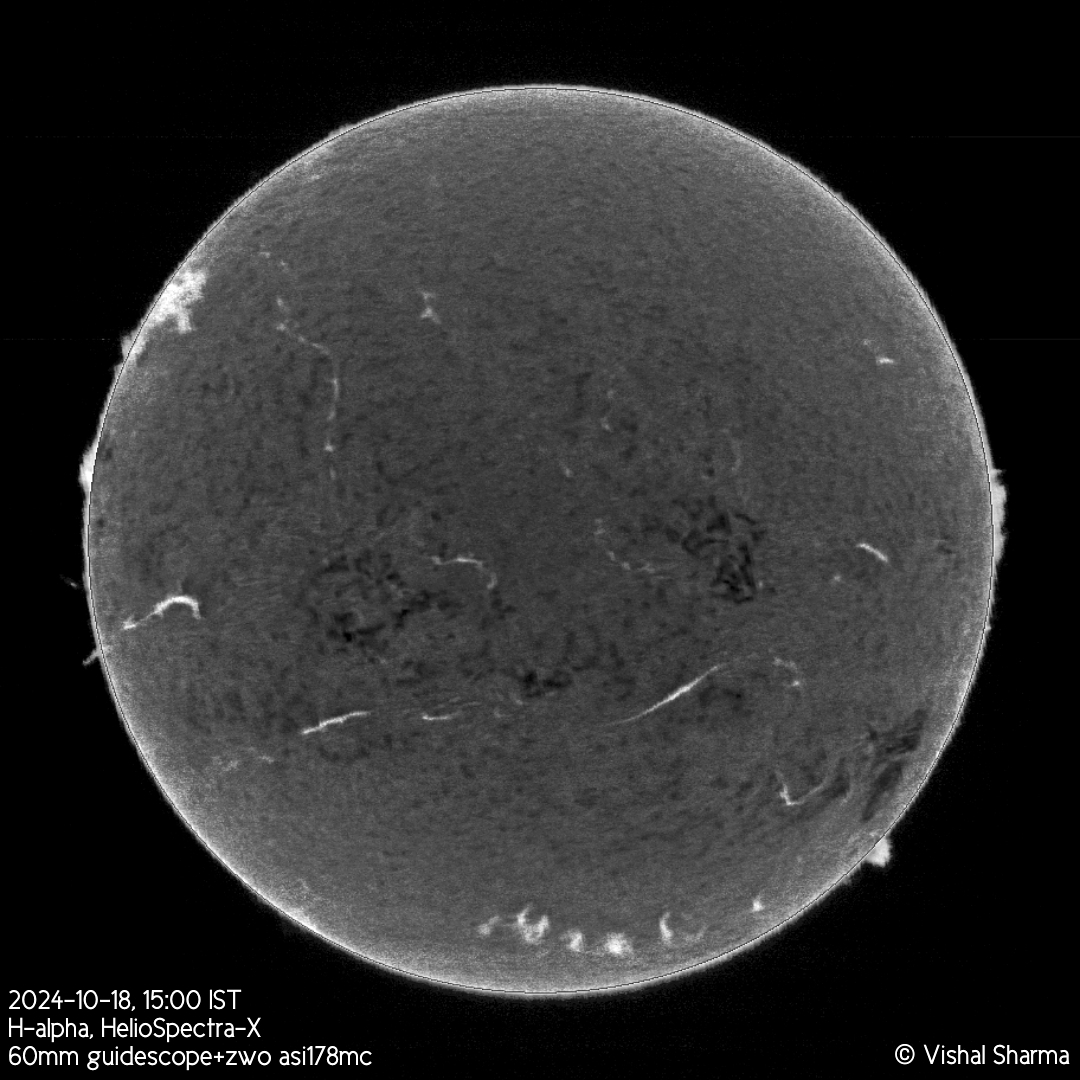
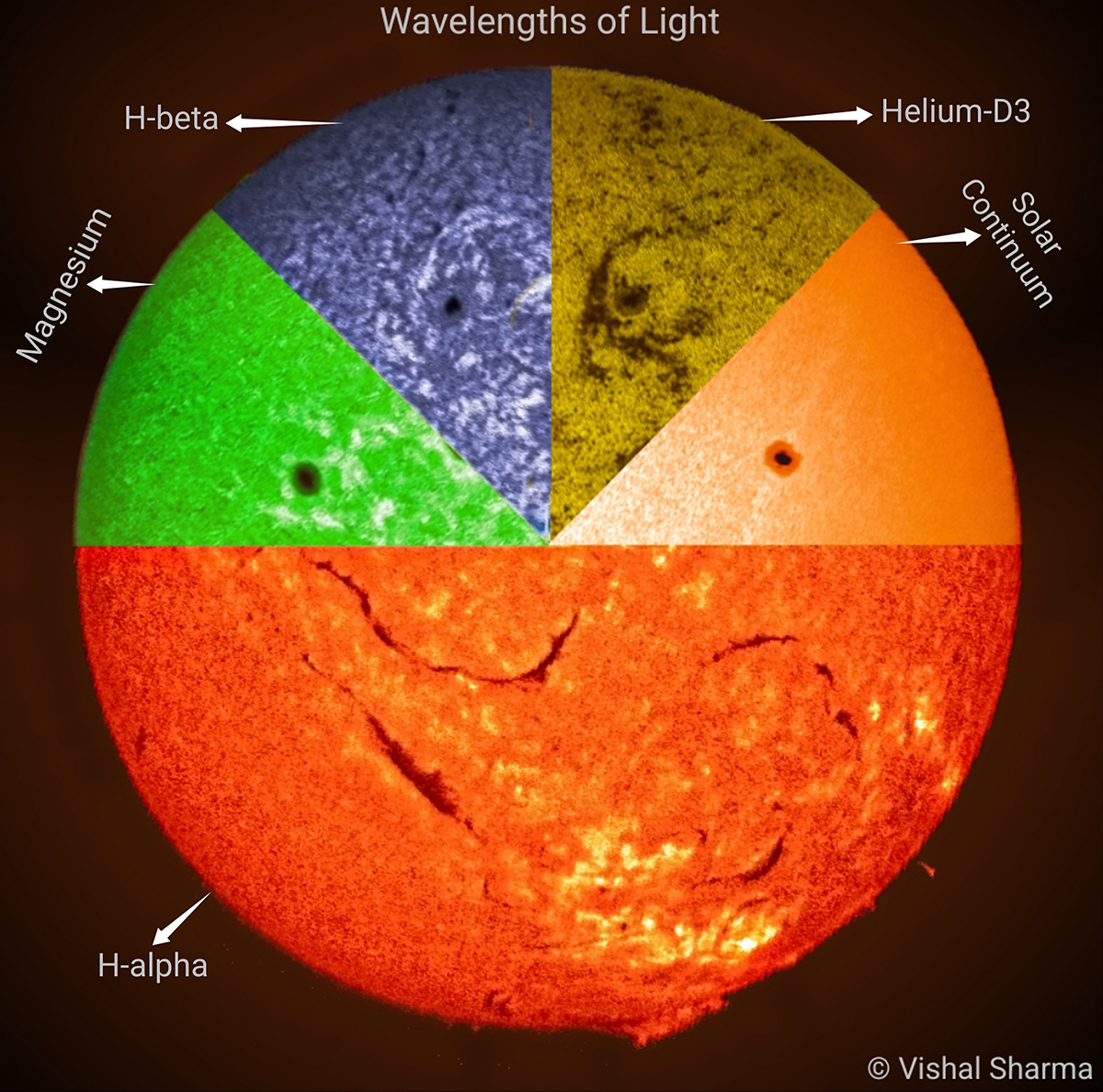
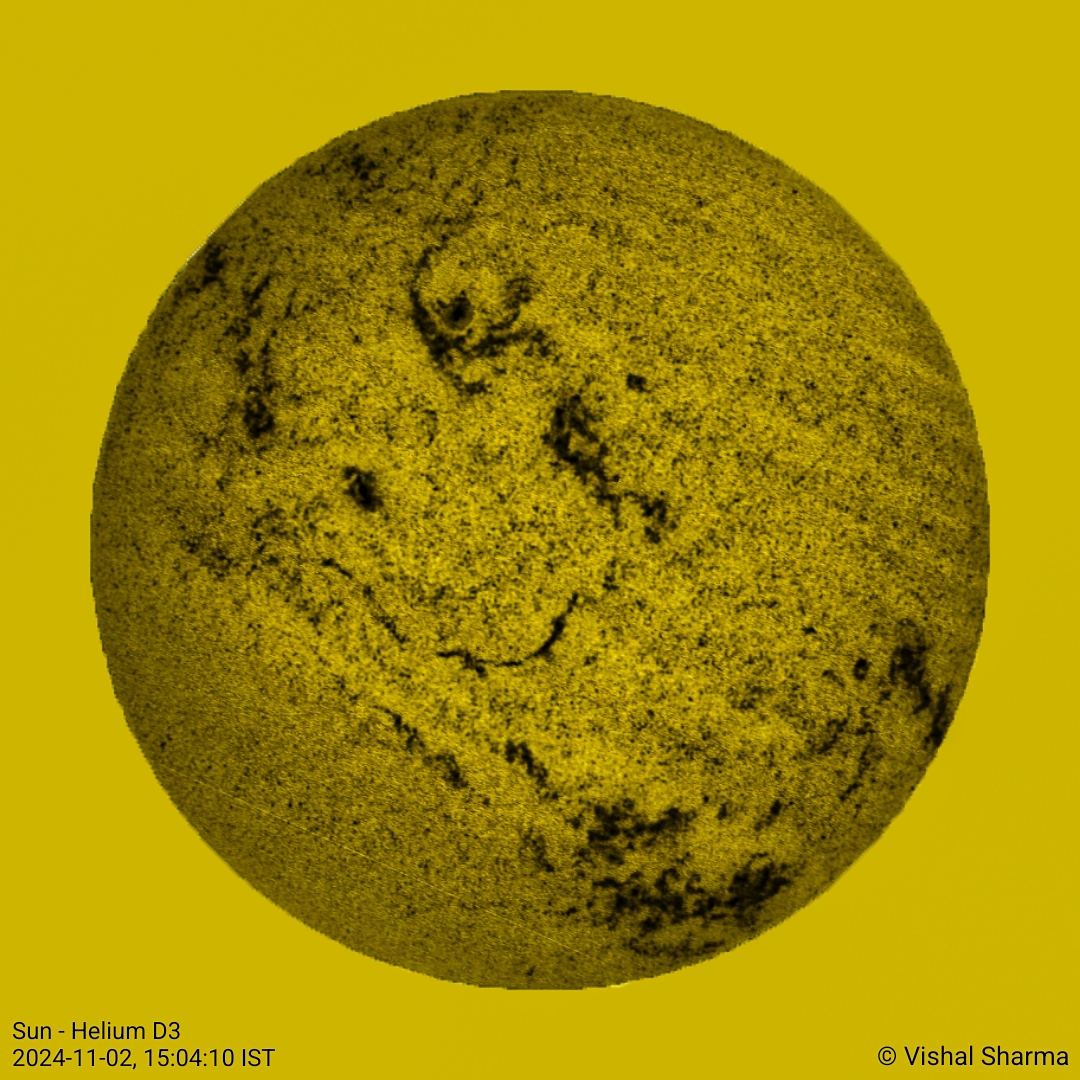
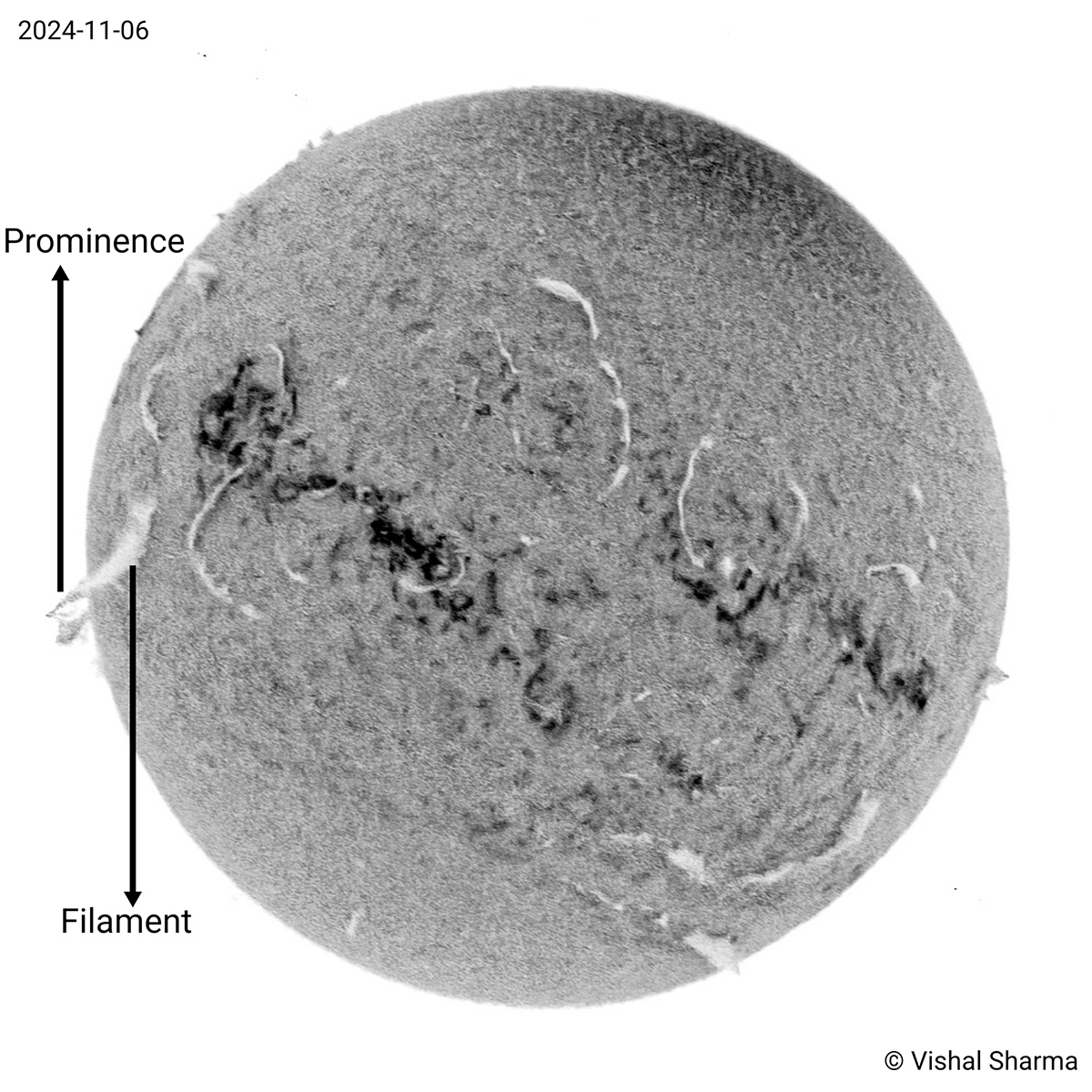
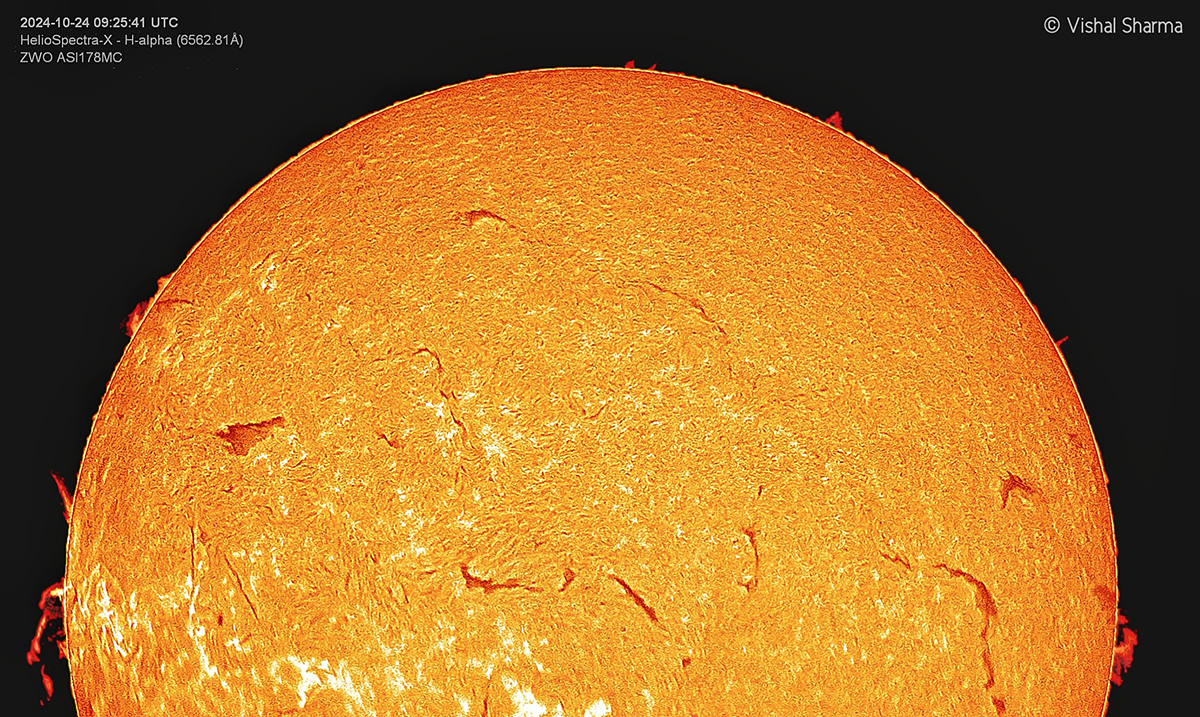
A spectroheliograph (SHG) is a scientific instrument that allows you to photograph the sun in multiple wavelengths of light, such as H-alpha, H-beta, Ca-K, as well as emission helium lines, etc., revealing details like prominences, filaments, chromospheric and magnetic activity that are otherwise invisible in white light imaging. Unlike a regular solar filter that gives a general view, a spectroheliograph isolates one wavelength at a time and scans the full solar disk line by line to build a complete image. SHG is an all-in-one state-of-the-art device, through which one can image the solar disk in multiple wavelengths rather than a limited to a specific spectral band. The advantage is the level of fine spectral detail it offers, almost like peeling back a layer of the Sun’s atmosphere. The downside? It’s mechanically and optically more complex, harder to learn than standard imaging, and requires careful adjustments to reach the exact focal point and refocusing while switching between different wavelengths of light, but the results are worth it.
What equipment do you use for this kind of solar photography?
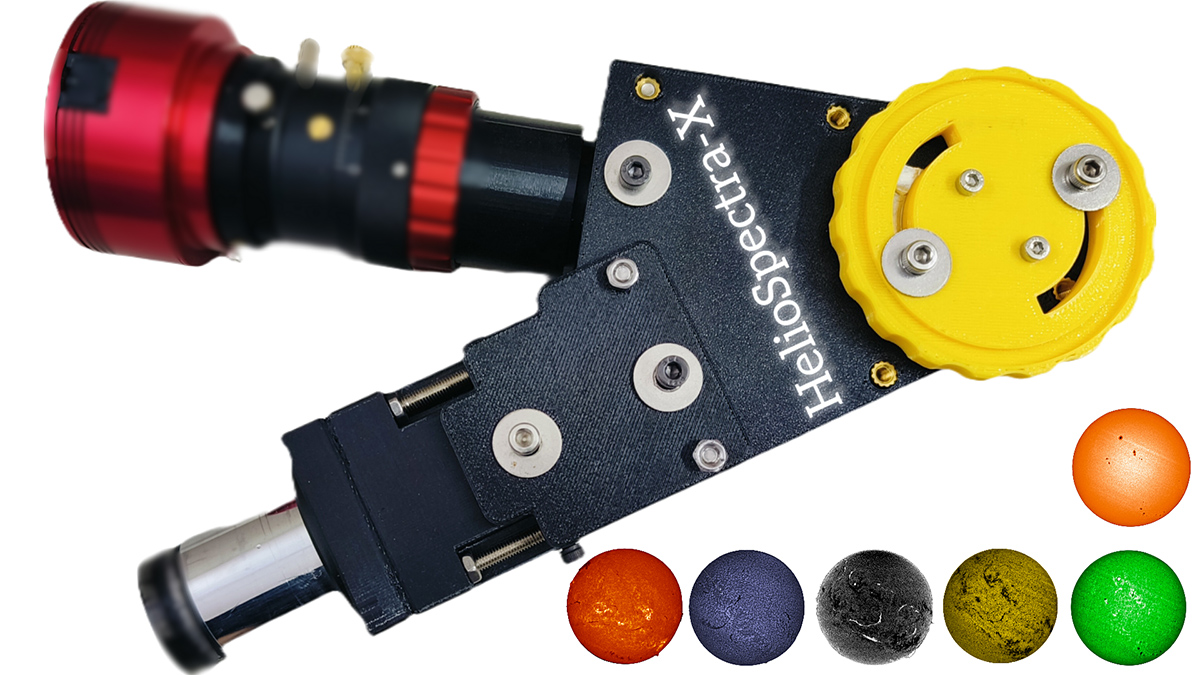
I’ve built my DIY spectroheliograph, using 3D-printed parts to keep the device lightweight. I named it “HelioSpectra-X”
The model is based on Christian Buil’s concept of the Spectroheliograph. I made it on my own first time in India and customized it with a Rotary encoder and OLED Display that can tell us the name and number of wavelengths in the center. It includes a very high-quality diffraction grating, doublet lenses, a rotary encoder wheel for wavelength selection, and an Arduino-driven OLED display to show the current wavelength. I pair it with a ZWO 178MC planetary camera, a 70mm and 60mm refractor, ND Filters, and control everything through SharpCap for live imaging and scanning. It’s compact but highly functional, perfect for urban solar spectroscopy.
How did you come across the idea of photographing the sun with a spectroheliograph, and what has been your experience so far?
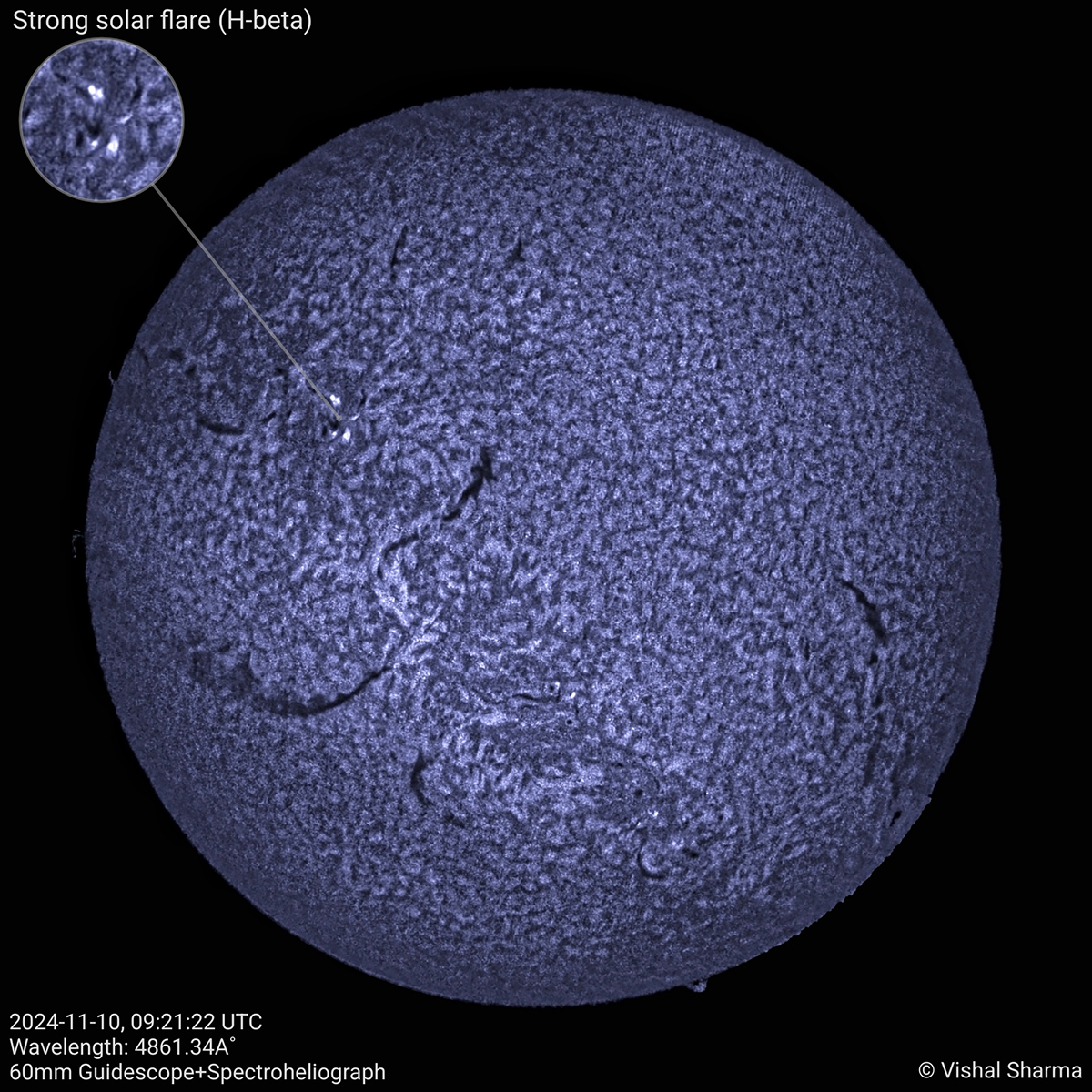
This spectroheliograph is a miniature, working model inspired by NASA’s Solar Dynamics Observatory (SDO) and the Solar and Heliospheric Observatory (SOHO), a joint mission by NASA and ESA, both of which are installed in space for continuous solar observation. My interest in solar imaging has been growing for years, and with my background in Geographic Information System (GIS), Planetary Sciences, Astronomy, precise measurement, and data interpretation were already part of my skillset, and the spectroheliograph felt like a natural extension of my curiosity. The experience has been incredibly rewarding. I’ve managed to capture decent solar data in H-alpha and other wavelengths and see how solar activity evolves over time. Every image feels like a reward for the patience the instrument demands. Some of the images were featured as Picture of the Day on reputable platforms.
As an amateur astronomer, what were your takeaways after using the spectroheliograph, of course, other than the images?
One major takeaway has been appreciation for solar physics and spectral science. It’s one thing to look at the sun; it’s another to dissect its light and understand its behavior layer by layer. I’ve also learned the importance of mechanical stability, precision alignment, and data patience, as scanning is slower, any mechanical error becomes obvious. It’s also taught me the value of community collaboration; most of what I learned came from open source forums and amateur solar spectroscopists.
Last but not least, the HelioSpectra-X SHG is a cost-effective device that, with some practice and patience, allows anyone to image the Sun in a completely new way, without the need to invest in expensive equipment that is often limited to specific wavelengths and inaccessible to many, especially in developing countries like India.
What would be your tips for aspiring photographers who would like to use this method of solar imaging?
My mantra – start small, and understand the physics before jumping into hardware. You don’t need a solar observatory, just an SHG, a refractor, a goto mount, patience, and the willingness to experiment. Invest time in learning how diffraction and wavelength isolation work, because those principles are key to aligning your spectroheliograph. And don’t be discouraged by early errors. With proper guidance, it takes a few sessions to tune everything right. Also, safety first: always use appropriate filters when dealing with solar light, even indirectly. Never look or point your camera directly towards the sun.
Please tell us a little about yourself and your journey with solar photography.
I’m Vishal Sharma, a GIS Assistant Manager at TCS by profession and an amateur astronomer by passion. I’ve always been drawn to both the Earth and the skies, one through GIS mapping, designing, and planning by using Satellite Imagery, and the other through astrophotography. Over time, I’ve explored planetary imaging, deep-sky observation, Lunar imaging, and 3D terrain mapping, solar and stellar (stars and DSO) spectroscopy. Building a spectroheliograph from scratch has been one of the most fulfilling projects for me. It’s not just about capturing the sun, it’s about understanding a star that’s alive in every sense.
You can look at more of Vishal’s images on his Instagram feed.
[All images used in the article are by Vishal Sharma, used with permission.]
Clear skies!
See more from DIYPhotography.net on Google
Add DIYPhotography.net as a trusted source. This makes
our stories more likely to appear in your Google Search results.
 Add as a preferred source on Google

Soumyadeep Mukherjee
Soumyadeep Mukherjee is an award-winning astrophotographer from India. He has a doctorate degree in Linguistics. His work extends to the sub-genres of nightscape, deep sky, solar, lunar and optical phenomenon photography. He is also a photography educator and has conducted numerous workshops. His works have appeared in over 40 books & magazines including Astronomy, BBC Sky at Night, Sky & Telescope among others, and in various websites including National Geographic, NASA, Forbes. He was the first Indian to win “Astronomy Photographer of the Year” award in a major category.


Join the Discussion
DIYP Comment Policy
Be nice, be on-topic, no personal information or flames.