











Fuji X-T2 Review and Real-World Concert Photography Test
Nov 18, 2016
Rui Bandeira

We love it when our readers get in touch with us to share their stories. This article was contributed to DIYP by a member of our community. If you would like to contribute an article, please contact us here.
Share:
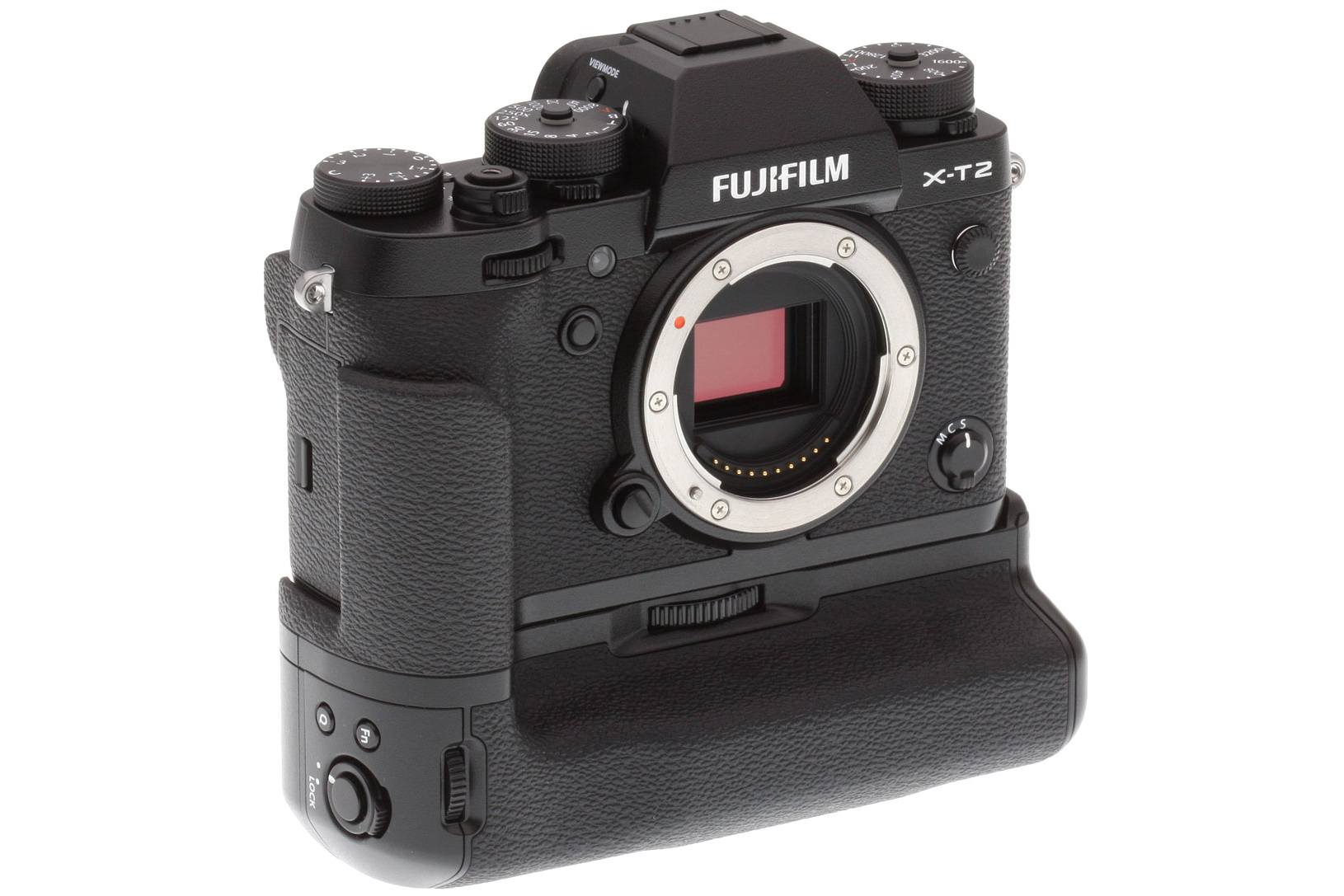
Recently I had the opportunity to test the new Fuji X-T2.
At start, it was only possible to do some tests with natural light and mainly in the street. Although it is not the kind of environment I usually photograph in, this first test had a specific purpose. Its main objective was to serve as my first contact with the equipment. This way, in a second test, which I intend to do soon during a concert, I will already be somewhat familiar with the X-T2’s menus and buttons.
This text is not a technical review and I am not an engineering expert. However, I’m sure the Fuji engineers have their reasons for designing the X-T2 as it is. Here, I will only share what I observed about the X-T2 and how I felt while photographing with it.
My intention with this test – and the upcoming concert photography test – is to determine whether the X-T2 is a viable alternative to my Canon gear, at least for concert work. I like Canon and have been using it for years, but I’m very disappointed with Canon Portugal’s recent decision. They closed their official service center in Porto without warning, leaving local customers abandoned. I don’t want to be forced to mail my equipment to Lisbon for repairs by a company I don’t know and don’t trust.
I should note that Fuji has the official technical service for Portugal and Spain based in Oporto.
[Related reading: The Ultimate Guide to Concert Photography: Gear, Settings, Techniques & More]
Fuji X-T2 Appearance and Construction Quality
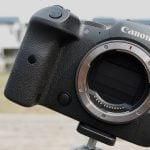
What pops right into view is the retro look and small size… Especially for those who are accustomed to large and heavy SLRs.
The big round buttons on the top of the body are the first thing that catch my attention. On the left side we can select the ISO. This button, in addition to looking quite robust, has a button in the middle to lock it. Great to prevent it of inadvertently changing the ISO! In addition, this button serves to choose the shooting mode.
On the right side of the body we have another large button. It controls the speed and the measurement mode and also has a lock.
Then we have the third large button that serves to control exposure compensation.
The shutter button is in the middle of these two last ones . It also serves to turn the machine on and off.
Another aspect that you quickly notice is the quality of the construction. Even without picking up the X-T2, you perceive its very well built. You confirm this it after picking it up for the first time. The camera is balanced and light: a blessing for those who, like me, come from an SLR. Even without checking the weight, I believe I can say that the X-T2 with grip and with the 50-140mm F2.8 R LM OIS WR lens is lighter than my Canon 70-200 f2 .8L II lens.
[Related reading: Best Cameras for Concert Photography: Features to Look for and Cameras to Pick]
Use and Ergonomics
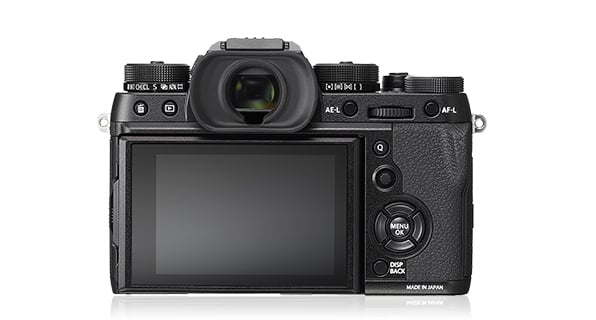
At first, the camera seemed like it would be difficult to use. For someone like me, who has used Canon for some years, it was a shock to look at the X-T2 and try to figure out where the commands were and what they were for.
However, it did not take long to adapt, at least to understand the basic commands. I quickly got used to adjusting ISO, Shutter Speed, Aperture, which are on the buttons on the camera body.
When I ventured to navigate the menu everything was different from what I’m used to. Still, I quickly found my way around that, too. Of course, I did not dominate the equipment, and to change some parameters, I had to stop and think. But I was able to do what I wanted without help.
During use it is very easy to change the parameters. The buttons on the top of the body are well-positioned and very easy to use. The the “dial” button is also in an ideal place.
The screen has good quality, at least it’s good to use the menu, to view the images neither better nor worse than the one found in other equipment. For me, the small screens are not the best choice to verify the quality of the images …
Using the X-T2 with the grip makes all the difference. First it allows greater autonomy, since it makes possible the use of more batteries. This is a point that can be critical, according to what I could read the autonomy of the X-T2. It will not be big: supposedly, each battery lasts about 340 shots. Of course, this is always relative and also depends on the use of the screen. For example, this is something that I intend to test better in the next test.
The grip also gives more ergonomics to the equipment, and has a shutter button and one “dial” just like on the body. One thing I did not liked very much was the position of the trigger button on the grip. When I use the X-T2 in the horizontal position more than once, I inadvertently triggered the grip button with the palm of my hand. Even having a brake is not very practical: we have to unlock the button when we need it. But this is another situation that I will certainly see better in a concert test.
Fuji X-T2 Images
Better than talking about the images its to show some of the tests I did, but one thing I noticed when I downloaded the images to the computer was its size … the 24M sensor produces RAWs with about 48M which might Indicate that the RAW files has tons of information …
I made images under and over exposed to see where the dynamic range of the sensor is capable of…
Highlight Recovery Test
Shadow Recovery Test
Focus Test, Hand Held, ISO 500, 1/250 F2.8
Fuji X-T2 Real World Usage: Concert Photography
This time I took the X-T2 to photograph a concert.
As with the first part of this post, I don’t intend to influence anyone. It is only meant to share what I felt and the results I got with the X-T2.
First of all I would like to express my sincere thanks to Fuji Portugal for the help and loan of the equipment for me to carry out the tests.
It is ironic to find a brand so helpful and so available to lend me equipment, even though I have never spent a single euro on Fuji equipment. On the other hand I see Canon, the brand whose customer I have been, to abandon me and the other customers of the North of Portugal by closing the official technical service without even warning us,…
When I went to get the X-T2 to Fuji headquarters, I already knew I could test it during Mariza’s concert at the Porto Coliseum. I decided to take my usual equipment, the Canon, to make the first 5 or 6 songs of the concert with the security of the equipment that I already know well. I wanted to guarantee my usual work. And then, the plan was to use Fuji for the rest of the concert to test it without pressure.
I ended up not being able to do what I had planned. When I arrived at the concert, I realized that I had to register images during the whole concert. So, I decided to use my usual equipment along with Fuji throughout the concert, alternating between them.
This change turned out to be beneficial, because I was able to make images very similar between Canon and Fuji. This helps me to understand the differences between the two, and also made me work with Fuji in a way that is closer to reality.
Fuji X-T2 First Impressions
Right from the start, the first impact was the difference in size and weight. With the Canon 5DMkII with the 70-200 2.8 L II next to the Fuji X-T2 with the XF50-140mmF2.8 R LM OIS WR, the difference is much more noticeable.
In the first few minutes, and considering that it had a large SLR on the other side, the impression is that the X-T2 is a fragile piece and you should treat it very carefully. But over time I got the idea that, even though it is not as “tough” as an SLR, it is strong enough to withstand the “punishment” of the hardest jobs.
When the concert started, it was rather strange to move from the SLR viewfinder to the X-T2. The digital viewfinder requires, at least for me, some time to get used to it. Call me old-fashioned, but I still prefer the SLR viewfinder.
A huge advantage, especially when shooting a fado concert, is the silence of the X-T2. In fado, I have a few moments in which I can not photograph because of the noise. But with the X-T2, I can always photograph without worrying.
Battery
At first, the main concern I had with the X-T2 was the battery life. Unfortunately, for this test it was not possible to use the grip, so I only used one battery. However, I still chose not to take extra measures to save the battery, such as turning off the display for example. I decided to leave everything on.
At the end of the concert I was surprised that the battery indicator indicates full battery! Of course I did not use the X-T2 intensely, but when the brand announces a duration of approximately 360 images per battery, it was a surprise to exceed this value and the battery still remaining full.
Speed Of Use
As I had noticed in the first test, the X-T2 is easy to use. During the concert I felt I had to stop and think before making any changes, it happened to forget to unlock the ISO or Speed buttons. But this is something you can quickly overcome with frequent use, but I have not lost any image because it took me some time to change the X-T2 settings.
Focus And Images
During the concert I felt the X-T2 is fast to focus, although a fado concert is not very demanding in terms of focus speed. Still, it has some dark or backlit areas, but here too the X-T2 performed well. Only in two or three extreme situations I as struggling to focus.
The quality of the images is good, (for me a good image is an image that when seen at 100% in the computer is well focused and sharp, an image that is only used for Internet, since reduced even a blurry image looks good , does not serve me and ends up being deleted.) But a good image may be something relative, so it is best to show some of the images.
FUji X-T2 Images
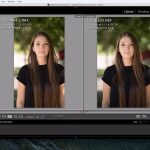
Original image without editing (Before) and with quick editing to recover dark areas and improve white balance (After)
Fuji X-T2 | ISO:2000 | f/2.8 | 1/200 | XF50-140mmF2.8 R LM OIS WR @ 72mm
Comparing Fuji And Canon
Image with Fuji(Before) and with Canon(After)
Fuji X-T2 | ISO:2500 | f/2.8 | 1/160 | XF50-140mmF2.8 R LM OIS WR @ 87mm <> Canon 5DMkII | Canon EF 70-200mm f/2.8L IS II USM | ISO:1600 – f/2.8 – 1/125s | @170mm
Image with Fuji(Before) and with Canon(After)
Fuji X-T2 | ISO:2500 | f/2.8 | 1/1250 | XF50-140mmF2.8 R LM OIS WR @ 50mm <> Canon 5DMkII | Canon EF 70-200mm f/2.8L IS II USM | ISO:1600 – f/2.8 – 1/250s | @70mm
Same Images At 100%
It’s not a fair comparison because the Canon has a 36x24mm sensor with 21 Mpx and Fuji has a 23.6×15.6mm sensor with 24.3 Mpx, and of course the most important thing about a sensor is the size of each pixel and here The Canon clearly has an advantage, and I have always used Fuji with a higher ISO than Canon.
Conclusion
- I really liked the Fuji X-T2, it does not disappoint and it does its job wonderfully.
- It has several advantages over an SLR-like light weight and quiet operation.
- The images are good and if photographed in RAW it leaves plenty of room to recover the highlights or dark areas.
- Of course we are talking about a small sensor where they have to fit 24.3 million pixels very tight, and if for most users this is no problem, it may be for those who need a lot of detail, and great prints, however I believe that this test with a prime lens would have even better results.
- For those who are thinking about buying an X-T2. You will certainly not be disappointed, but I always advise you to try to test it under the conditions in which you will use the equipment, so that you can draw your own conclusion which is basically the only one that matters.

About Rui Bandeira
We love it when our readers get in touch with us to share their stories. This article was contributed to DIYP by a member of our community. If you would like to contribute an article, please contact us here.



Join the Discussion
DIYP Comment Policy
Be nice, be on-topic, no personal information or flames.
3 responses to “Fuji X-T2 Review and Real-World Concert Photography Test”
Actually, ergonomics is pitiful on the XT2. Not comfortable to hold and will require a “thumb rest” type of add on, like the one made by LensMate (or the LensMate knockoffs on Amazon), in order to hold the camera and shoot one handed. Lens release is on the left side, not right, so for the majority of the human population who are right handers, you cant release the lens with your left hand while holding the camera with your right- it’s a terrible design flaw to mount it backwards.
The joystick that’s used to select focus points is also mounted next to the screen lower down the camera, so you cant hold the camera and select focus and shoot one handed- it just won’t work. You must hold it with both hands in order to use the joystick. They could have moved it higher up next to the AE lock button, in which case you could use it and shoot. Again, a very bad design that didn’t go through good testing.
Shooting with both hands, good camera. Trying to shoot one handed, terrible camera.
You buy the grip, only way to shoot anything serious. Once you have that, ergonomics are great.
Thanks for sharing this. I’m considering on buying this camera.