




















Here is why your photos change colour when you export from Photoshop and how to fix it
Jan 31, 2020
John Aldred
John Aldred is a photographer with over 25 years of experience in the portrait and commercial worlds. He is based in Scotland and has been an early adopter – and occasional beta tester – of almost every digital imaging technology in that time. As well as his creative visual work, John uses 3D printing, electronics and programming to create his own photography and filmmaking tools and consults for a number of brands across the industry.
Share:
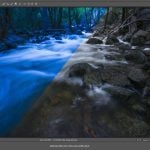
Several times a day I see people posting online that they’ve exported images from Photoshop and the final JPG looks nothing like what they thought it would. They’re actually not the wrong colours, you’re just outputting them in a different colour space.
In this video, Unmesh at PiXimperfect explains what colour profiles are, how they affect your image, and how to solve the problem when your images don’t look quite the way you expected.

Colour spaces are basically designed to allow you to see the maximum number of colours on various different devices and formats (typically print). For computers, that mostly means the sRGB colour space. That has been changing in recent years with monitors capable of displaying 100% Adobe RGB or DCI-P3, but it’s still the standard that most software (like web browsers) defaults to.
If your colours are mapped to something else, like Adobe RGB or ProPhoto RGB, then when that software attempts to display them back as sRGB, it maps the colours incorrectly. The real colours are still there, the software just doesn’t know how to show them accurately.
But sRGB is a relatively small colour space for editing purposes. Often, photographers will edit in larger colour spaces like Adobe RGB and ProPhoto RGB in order to retain the maximum amount of colour and detail possible while adjusting things around before saving out. Even if you can’t see all the colours in the wider profiles, the data is there, and you can bring some of it back into a viewable realm.
The problem comes when you don’t convert the final edit, which was made in Adobe RGB or ProPhoto RGB or something else to the appropriate profile (usually sRGB) when exporting. Colour spaces are also often why your prints from the lab can come back looking nothing like the photos on your monitor, too, even if your display is calibrated. Unmesh shows a couple of different ways to do this in the video so that you can export out the colours you want in your image properly.
Of course, you could just always import your raw files as sRGB, too, but then you may find yourself at an editing disadvantage, depending on the imagery you’re using.
[via FStoppers]
See more from DIYPhotography.net on Google
Add DIYPhotography.net as a trusted source. This makes
our stories more likely to appear in your Google Search results.
 Add as a preferred source on Google

John Aldred
John Aldred is a photographer with over 25 years of experience in the portrait and commercial worlds. He is based in Scotland and has been an early adopter – and occasional beta tester – of almost every digital imaging technology in that time. As well as his creative visual work, John uses 3D printing, electronics and programming to create his own photography and filmmaking tools and consults for a number of brands across the industry.



Join the Discussion
DIYP Comment Policy
Be nice, be on-topic, no personal information or flames.
5 responses to “Here is why your photos change colour when you export from Photoshop and how to fix it”
What is photoshop, people still pay yearly fees for photoshop.
Yes, some people do. It’s also been true of every Photoshop version ever released (including the perpetual license versions). It’s also true of many other photo editing applications. :)
My camera is set to sRGB and process my images to lightroom then exported as sRGB. I have calibrated my monitor already however there’s still colour shift. I’m thinking that it is my monitor that has a problem or my cpu.
Hey man, did you ever find a solution to this issue? I’ve been struggling with the same problem for the longest time.
Insightful article and video about colour profiles. Thanks for sharing John!