





















Don’t miss these astrophotography opportunities in February 2025
Jan 20, 2025
Soumyadeep Mukherjee
Soumyadeep Mukherjee is an award-winning astrophotographer from India. He has a doctorate degree in Linguistics. His work extends to the sub-genres of nightscape, deep sky, solar, lunar and optical phenomenon photography. He is also a photography educator and has conducted numerous workshops. His works have appeared in over 40 books & magazines including Astronomy, BBC Sky at Night, Sky & Telescope among others, and in various websites including National Geographic, NASA, Forbes. He was the first Indian to win “Astronomy Photographer of the Year” award in a major category.
Share:
Every month brings some unique astronomical events which can be seen with the naked eye and can be photographed. In this article, let us take a look at the astrophotography opportunities in February 2025.
Table of contents
- February 2: Conjunction of Moon and Venus
- February 7: Conjunction of Moon and Jupiter
- February 10: Lunar occultation of Mars
- February 12: Full snow Moon
- February 16: Venus reaches peak brightness
- February 21: Lunar occultation of Antares
- February 25: Conjunction of Saturn and Mercury
- Other opportunities throughout the month
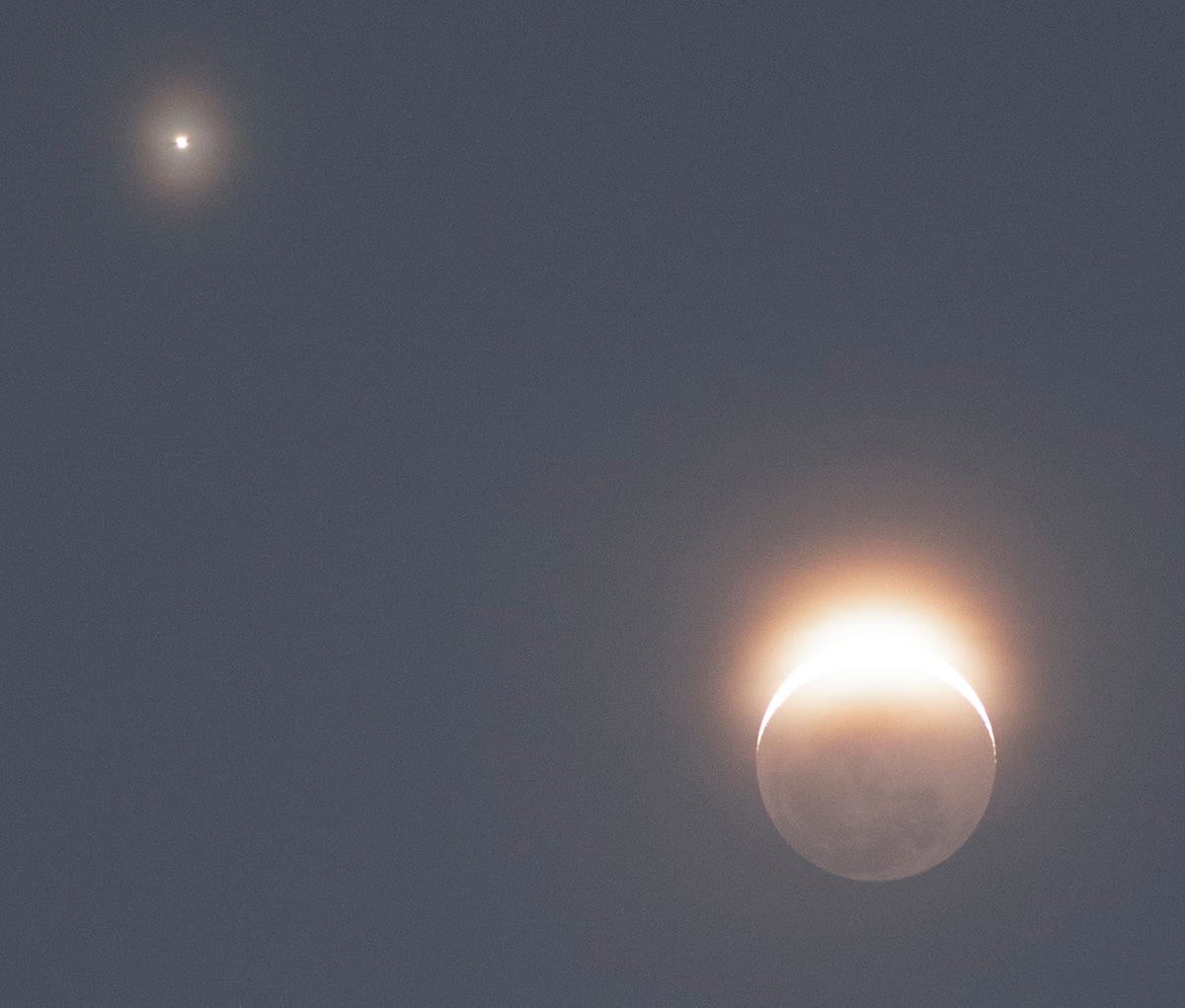
February 2: Conjunction of Moon and Venus
On the evening of 2nd February, the Moon and Venus form a dazzling duo in the western sky. Right after sunset, these two come close to one another, forming a conjunction (from some locations) or a close approach (from other locations). Both of them would be easily visible to the naked eye. This would be an excellent opportunity for astrophotographers to capture this duo either with a telephoto lens (capturing only these two objects in the sky) or with a wide-field lens, photographing the Moon and Venus and landscape elements. We recommend planning for this ahead with the help of planetarium apps like Stellarium.
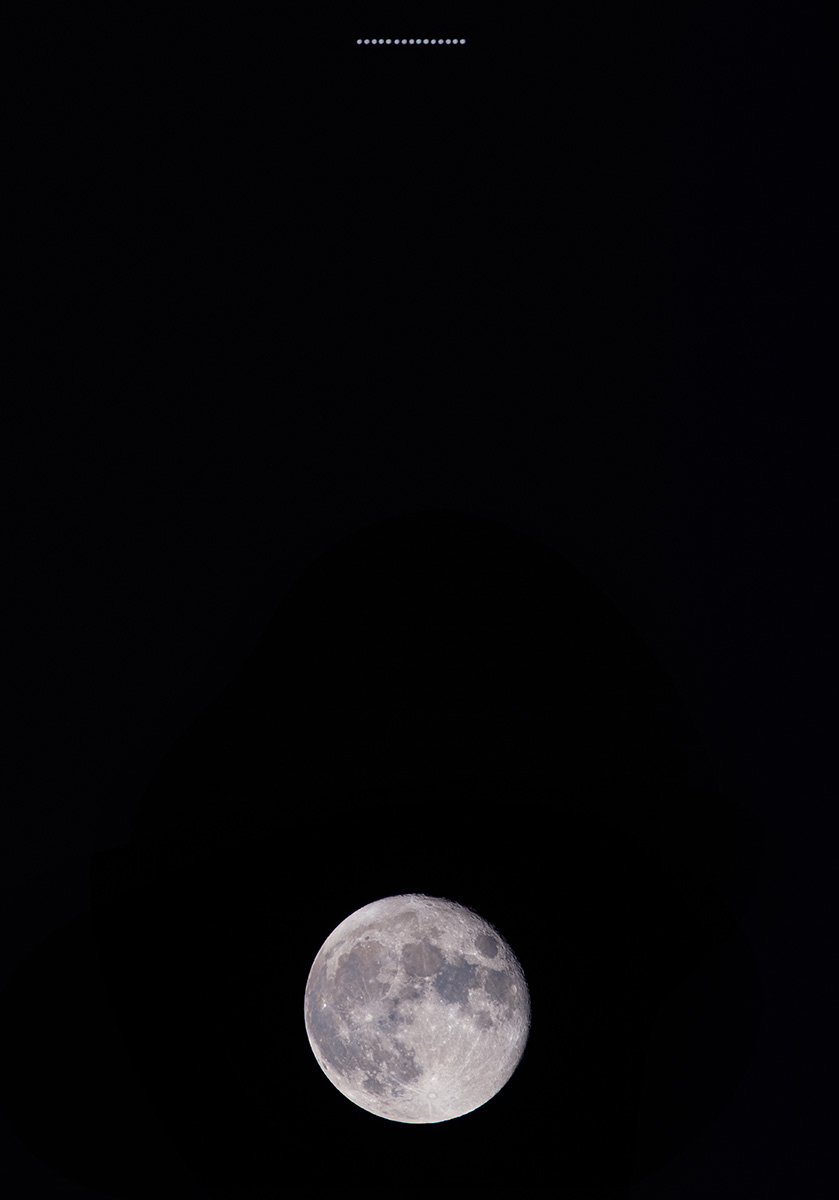
February 7: Conjunction of Moon and Jupiter
Moon joins the King of the planets, Jupiter, to form a conjunction. After sunset, they will be high in the sky. From some locations, however, they will only be seen making a close approach to one another. Both the Moon and Jupiter can be seen with the naked eye. They will form a perfect subject to photograph with a mid-telephoto or a telephoto lens.
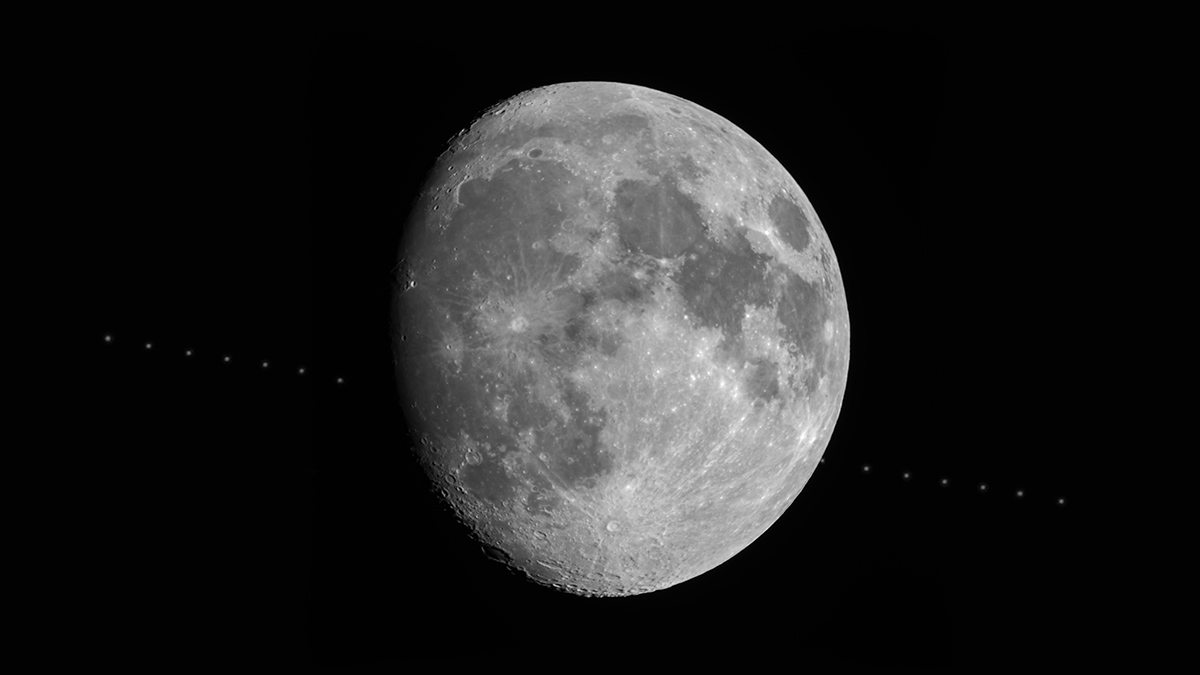
February 10: Lunar occultation of Mars
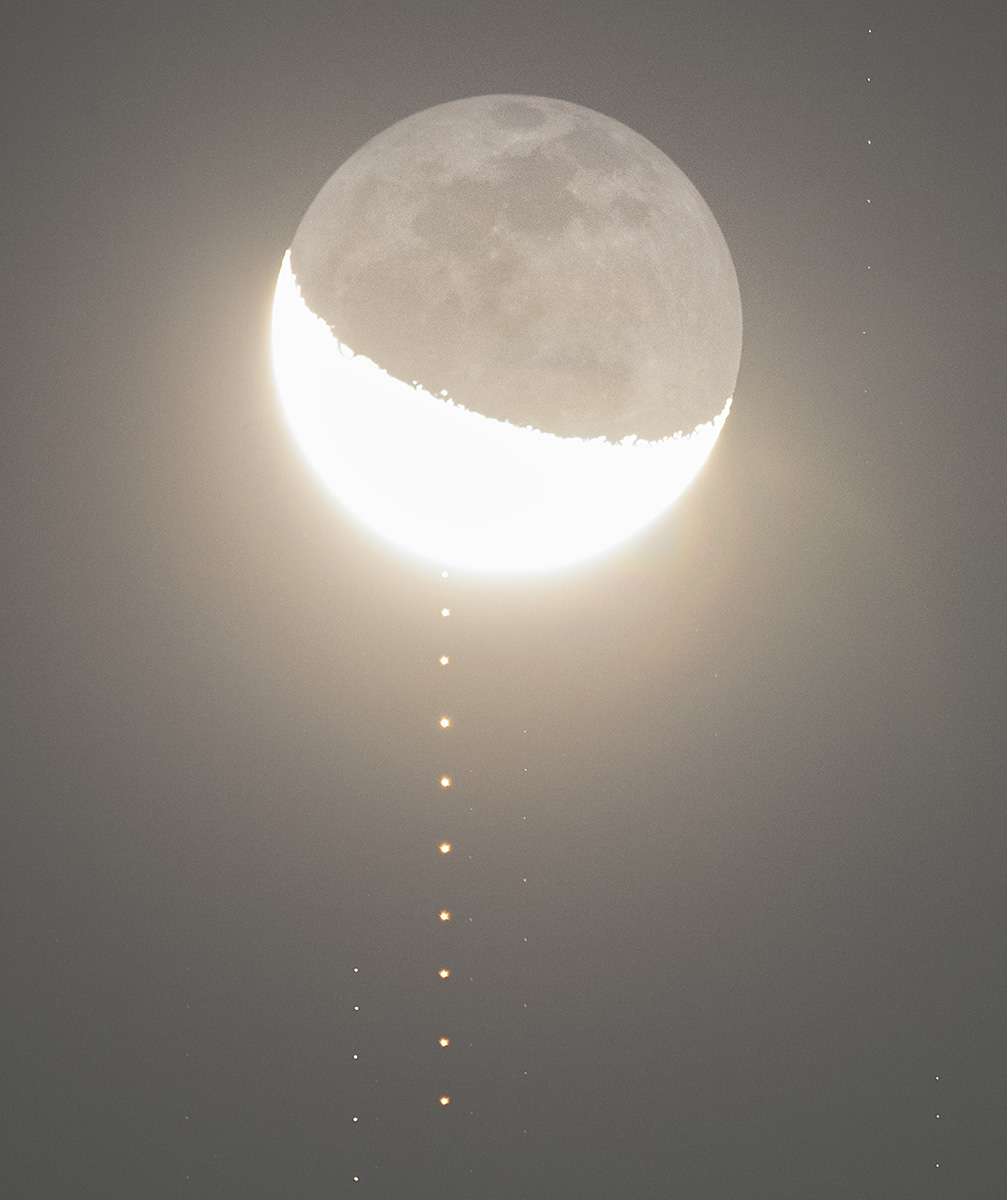
On the night of 10th February, the red planet Mars will disappear behind the moon, of course, from our perspective. Like any other occultation, it will occur in two parts: the disappearance, when Mars hides behind the moon, and the reappearance, when Mars reveals itself from the other side. This occultation, however, won’t be visible from all locations in the world. For some locations, it will only appear as a close approach or a conjunction between the Moon and Mars. We recommend checking Stellarium to see if it is visible from your location.
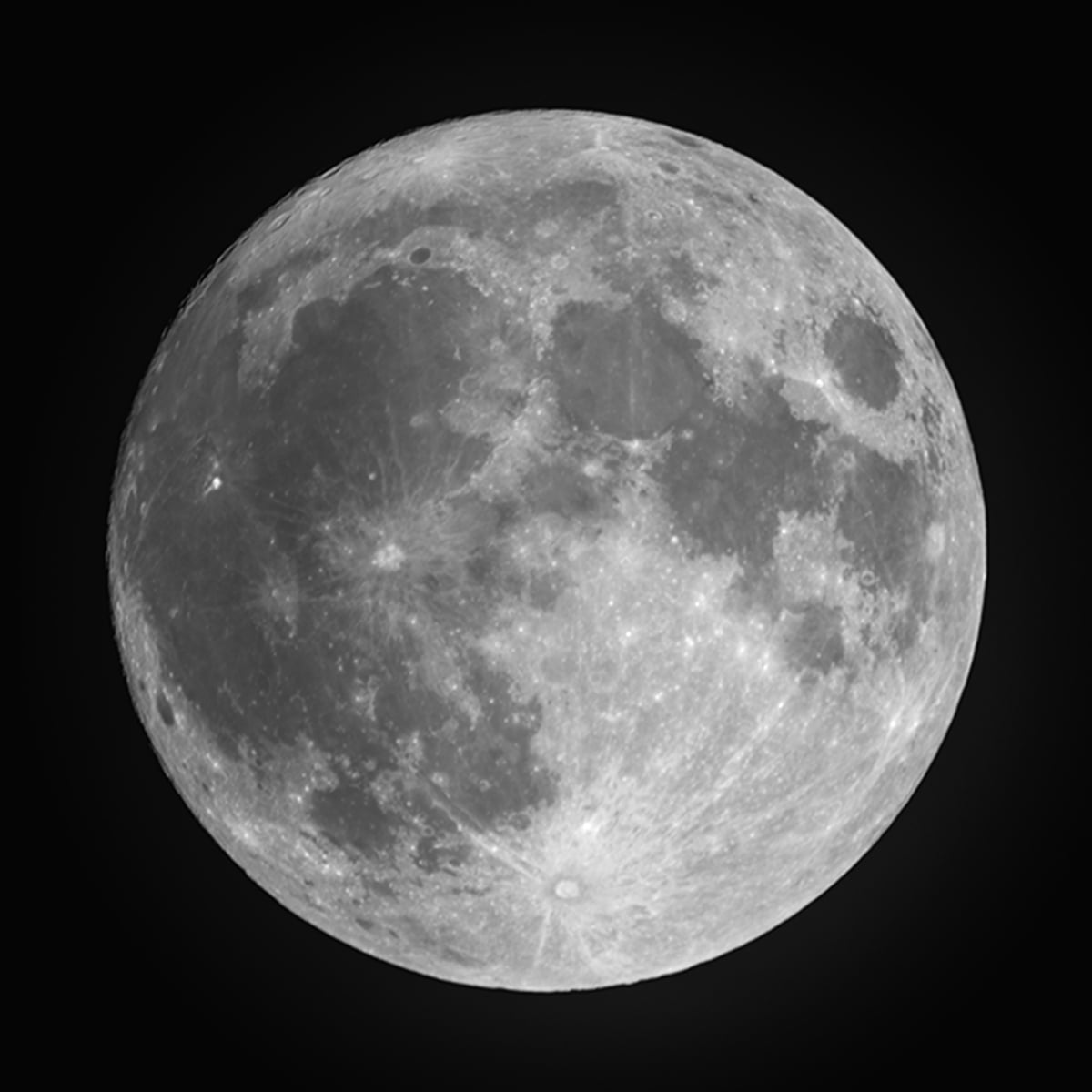
February 12: Full snow Moon
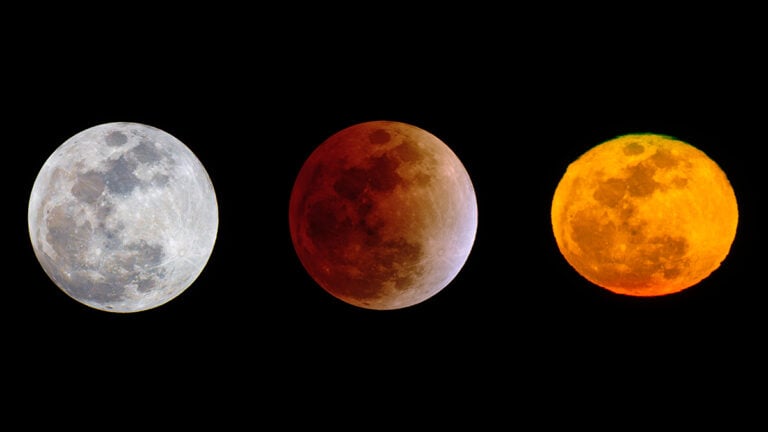
The second full moon of 2025 will appear on the 12th of February. The February full moon is also known as the snow moon. Full moons are always a great opportunity to photograph it with a telephoto lens. It will also allow you to capture the moonrise in the evening and moonset in the early morning.
February 16: Venus reaches peak brightness
Venus has been shining bright (above Mag -4) for the past few months. However, it will reach its peak brightness of -4.7 on 16th February. It is hard to miss the bright planet in the western sky, right after sunset.
February 21: Lunar occultation of Antares
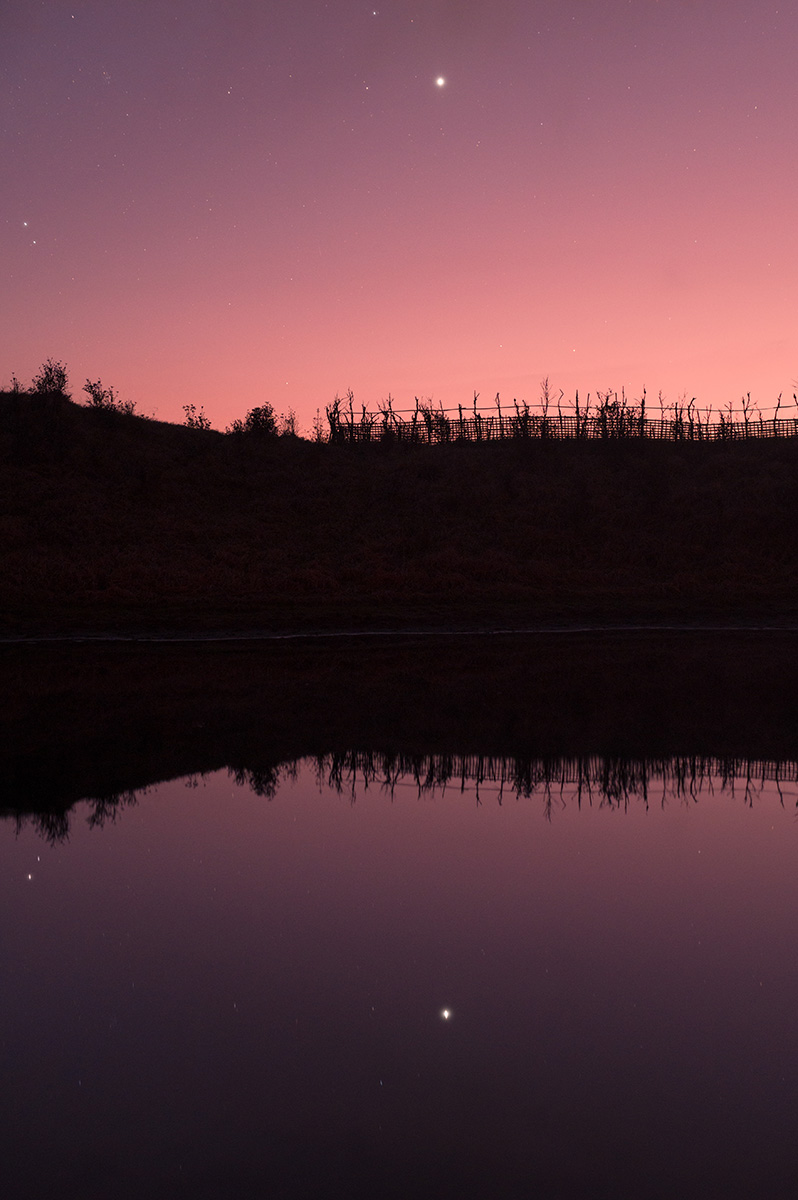
On the night of 21st February, the bright star Antares will disappear behind the moon, of course, from our perspective. This occultation, however, won’t be visible from all locations in the world. For some locations, it will only appear as a close approach or a conjunction between the Moon and Antares. We recommend checking Stellarium to see if it is visible from your location.
February 25: Conjunction of Saturn and Mercury
The ringed planet Saturn will come close to the innermost planet Mercury on 25th February. Photographing the conjunction of these two planets, however, might be challenging as both of them stay low near the horizon. If you plan to photograph the event, you must find a dark location with an unobstructed western horizon. The planets can be seen on the western horizon right after sunset.
Other opportunities throughout the month
Along with the celestial events mentioned above, the sky will present more opportunities to catch a few more objects. And some will be better than before.
Venus shines bright in the evening sky
Venus continues to shine at -4.5 magnitude and is difficult to miss in the western sky after sunset. It will also come close to the moon on 2nd February. This bright planet is visible from light-polluted skies, and you can photograph it with a wide-field or mid-telephoto lens with landscape elements.
Milky Way season never ends
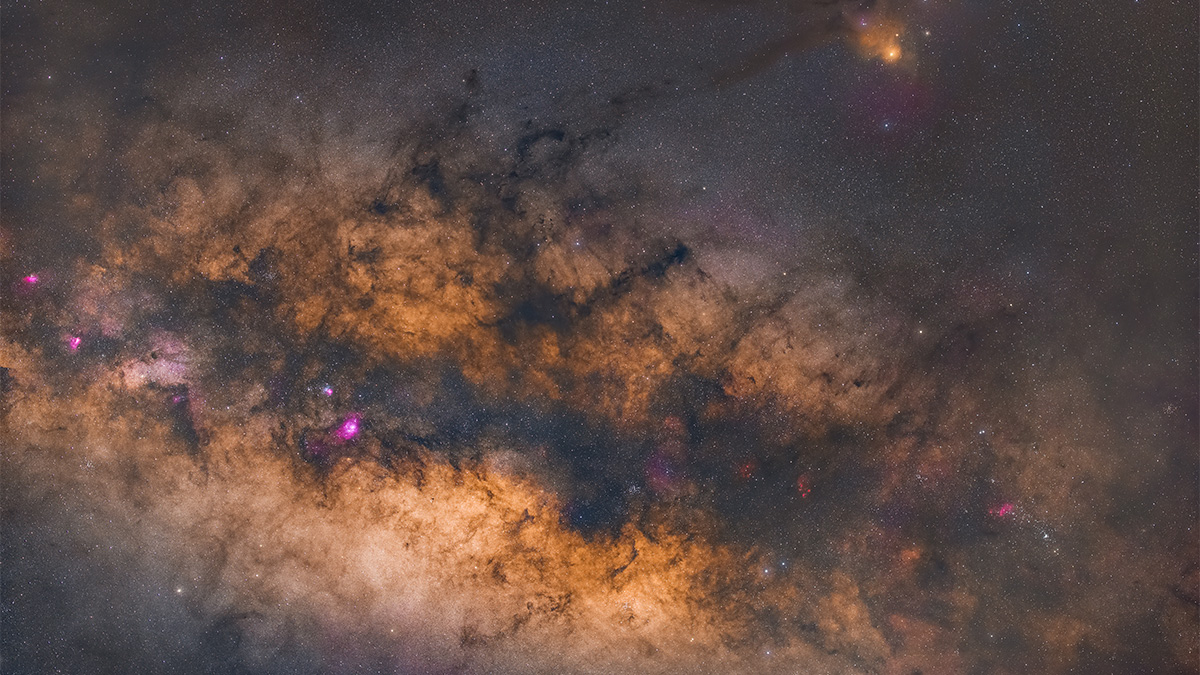
The Orion arm of the Milky Way remains visible throughout the month. The Sagittarius arm is making a comeback to the night sky late at night. This region rises in the eastern skies an hour before sunrise creating a great opportunity to photograph it with a wide-field lens and/or capturing deepscape images with a mid-telephoto lens.
Parade of planets
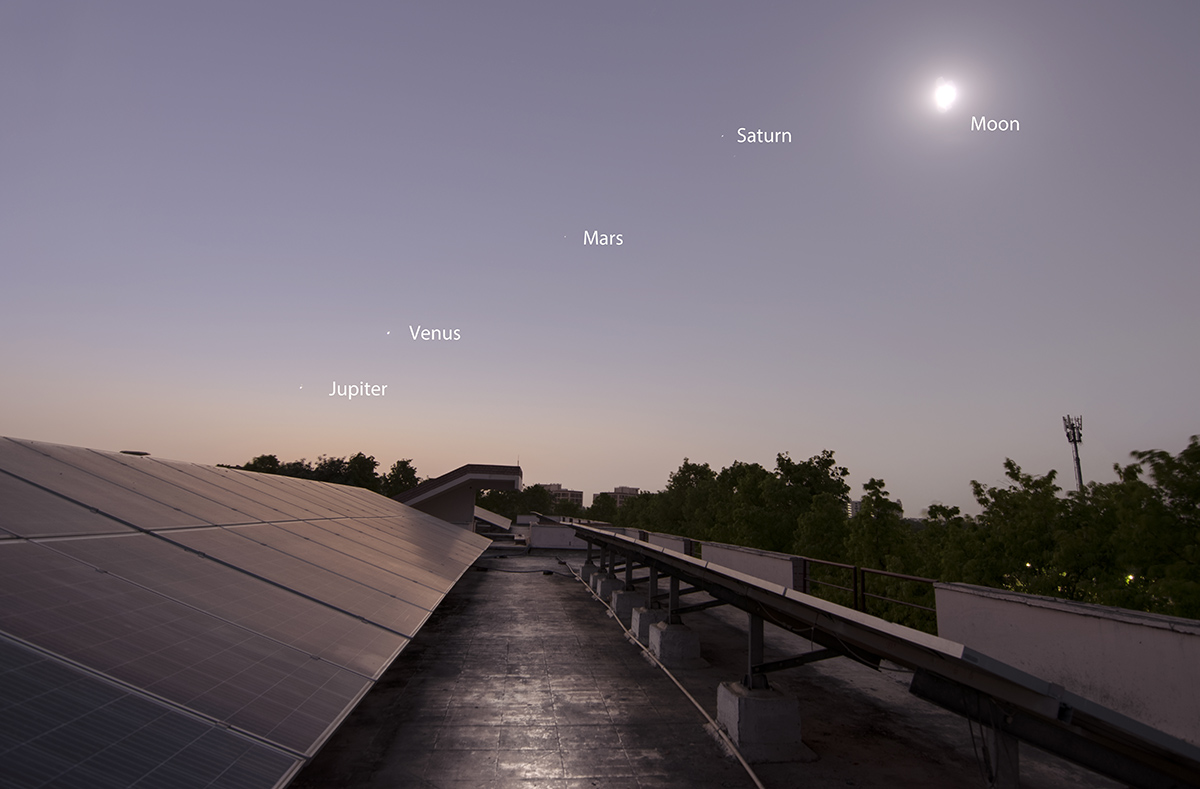
All the bright planets, including Mercury, Venus, Saturn, Jupiter, and Mars, can be easily spotted in the night sky throughout the month. With long exposures or with a telescope, you can also spot Neptune and Uranus in the sky.
Hope you have a great month with lots of astrophotography opportunities ahead.
Clear skies!
See more from DIYPhotography.net on Google
Add DIYPhotography.net as a trusted source. This makes
our stories more likely to appear in your Google Search results.
 Add as a preferred source on Google

Soumyadeep Mukherjee
Soumyadeep Mukherjee is an award-winning astrophotographer from India. He has a doctorate degree in Linguistics. His work extends to the sub-genres of nightscape, deep sky, solar, lunar and optical phenomenon photography. He is also a photography educator and has conducted numerous workshops. His works have appeared in over 40 books & magazines including Astronomy, BBC Sky at Night, Sky & Telescope among others, and in various websites including National Geographic, NASA, Forbes. He was the first Indian to win “Astronomy Photographer of the Year” award in a major category.


Join the Discussion
DIYP Comment Policy
Be nice, be on-topic, no personal information or flames.