




















Dancing Dust Devils on Mars Reveal Hidden Winds in New ESA Images
Oct 12, 2025
Soumyadeep Mukherjee
Soumyadeep Mukherjee is an award-winning astrophotographer from India. He has a doctorate degree in Linguistics. His work extends to the sub-genres of nightscape, deep sky, solar, lunar and optical phenomenon photography. He is also a photography educator and has conducted numerous workshops. His works have appeared in over 40 books & magazines including Astronomy, BBC Sky at Night, Sky & Telescope among others, and in various websites including National Geographic, NASA, Forbes. He was the first Indian to win “Astronomy Photographer of the Year” award in a major category.
Share:

For decades, Mars has appeared as a quiet, dusty world frozen in silence. However, new research from the European Space Agency (ESA) reveals a very different story. It shows a planet filled with motion, energy, and wind. Scientists have traced over a thousand swirling dust devils dancing across the Martian surface using detailed images from ESA’s Mars Express and ExoMars Trace Gas Orbiter. The results show that near-surface winds can reach astonishing speeds of up to 44 meters per second, about 158 kilometers per hour, far higher than previously measured by rovers on the ground.
The study, published in Science Advances, marks the first global catalogue of dust devils ever built for Mars. It offers a new way to understand the planet’s turbulent weather and atmospheric behavior, while also showcasing how space photography and optics can extract motion data from what were once just still images.
Tracing tornadoes on the red planet
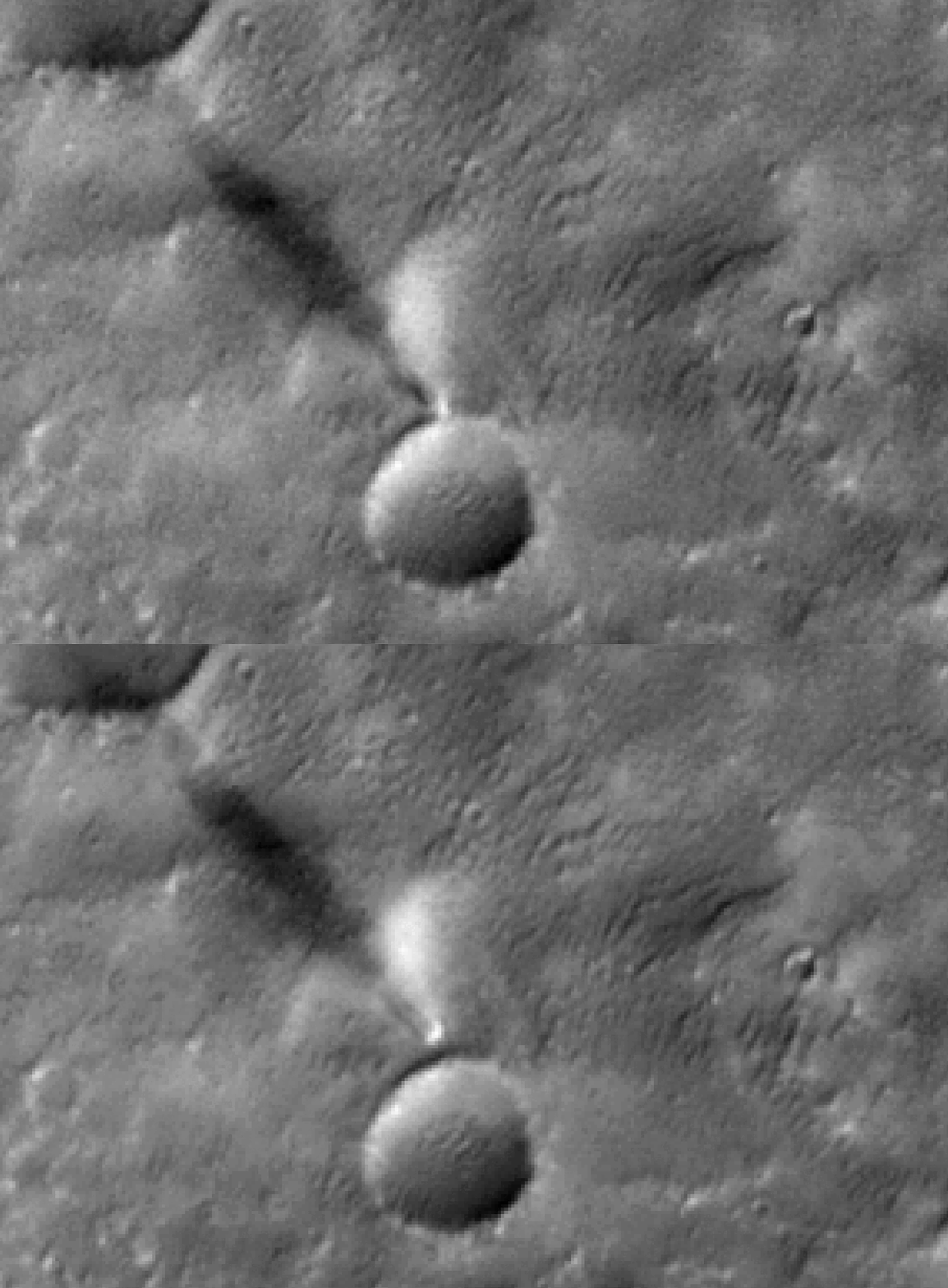
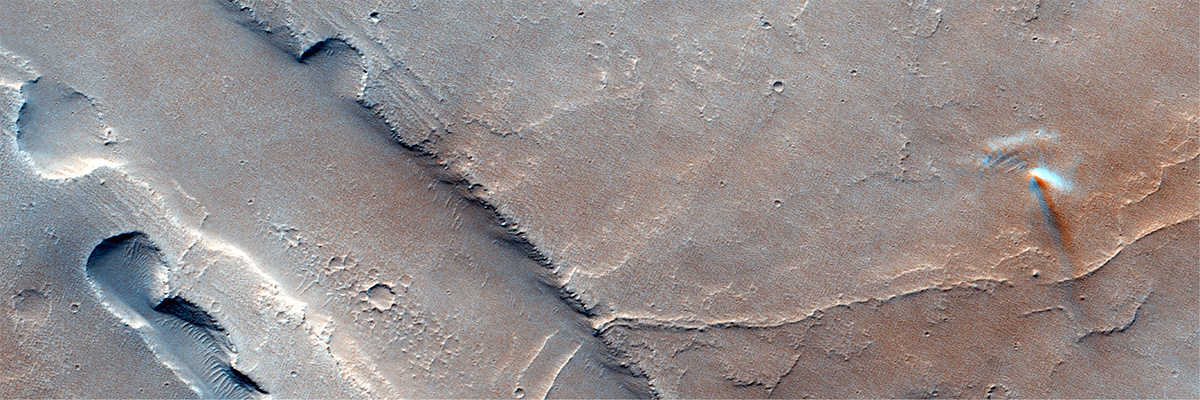
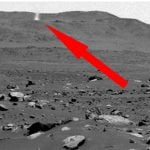
Dust devils are not storms in the usual sense. They are short-lived whirlwinds that form when sunlight heats the ground, causing warm air to rise and twist as it meets cooler air above. On Mars, they can grow several kilometers high and leave dark, snake-like trails on the surface as they sweep away the fine dust layer.
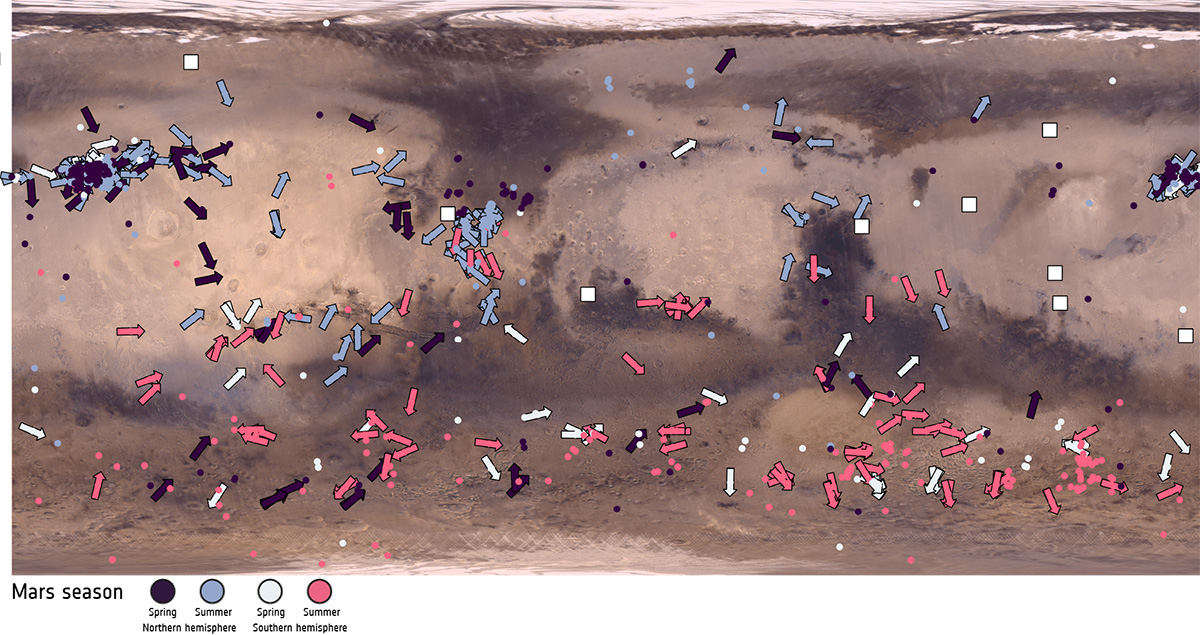
Using decades of high-resolution images from Mars Express and the ExoMars Trace Gas Orbiter (TGO), ESA scientists identified 1,039 dust devils and their tracks spread across the planet. By comparing data across different seasons and latitudes, researchers found that dust devils occur most frequently during the spring and summer months in each hemisphere, peaking around late morning to early afternoon, roughly 11 a.m. to 2 p.m. local time. This is when sunlight is most intense and convection is strongest.
Some of the most active regions include Amazonis Planitia, Elysium Planitia, and the southern highlands, wide, flat plains that heat up easily. These areas become natural laboratories for atmospheric motion on Mars.
How Mars Express and TGO captured the motion
One of the most impressive aspects of this work is how the scientists turned static orbital photos into dynamic weather data. The secret lies in how the spacecraft cameras capture their images.
The Mars Express spacecraft carries the High Resolution Stereo Camera (HRSC). It takes images through multiple sensors at slightly different angles and at slightly different times. Meanwhile, the ExoMars Trace Gas Orbiter uses CaSSIS (Colour and Stereo Surface Imaging System), which records color and stereo information through several imaging channels that each expose the scene a few seconds apart.
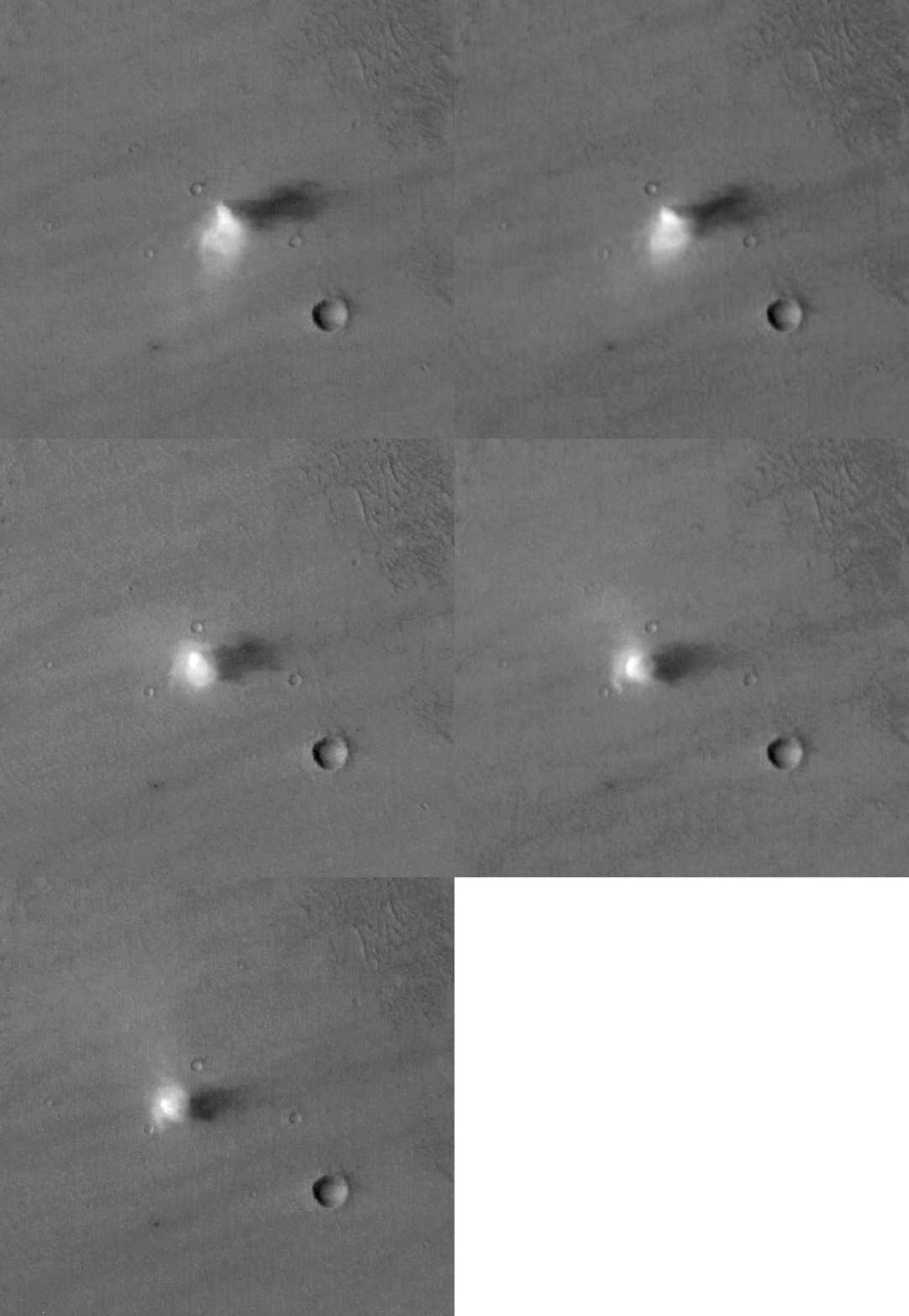
Normally, these time delays are a small quirk of the camera system. But the research team realized that they could use those delays to detect movement. If a dust devil shifted position between one channel and the next, the displacement could reveal its speed and direction.
By measuring those subtle shifts, sometimes separated by as little as 7 to 46 seconds, scientists turned color offsets into velocity measurements. In essence, they transformed each camera into a natural wind sensor.
This is a clever form of planetary photography. The difference between red, green, and blue channels, which most people think of as color data, became a frame-by-frame sequence of a moving event. Although these orbiters were never designed for atmospheric motion tracking, their optical designs enabled the indirect measurement of winds through timing differences between exposures.
The optics behind the discovery
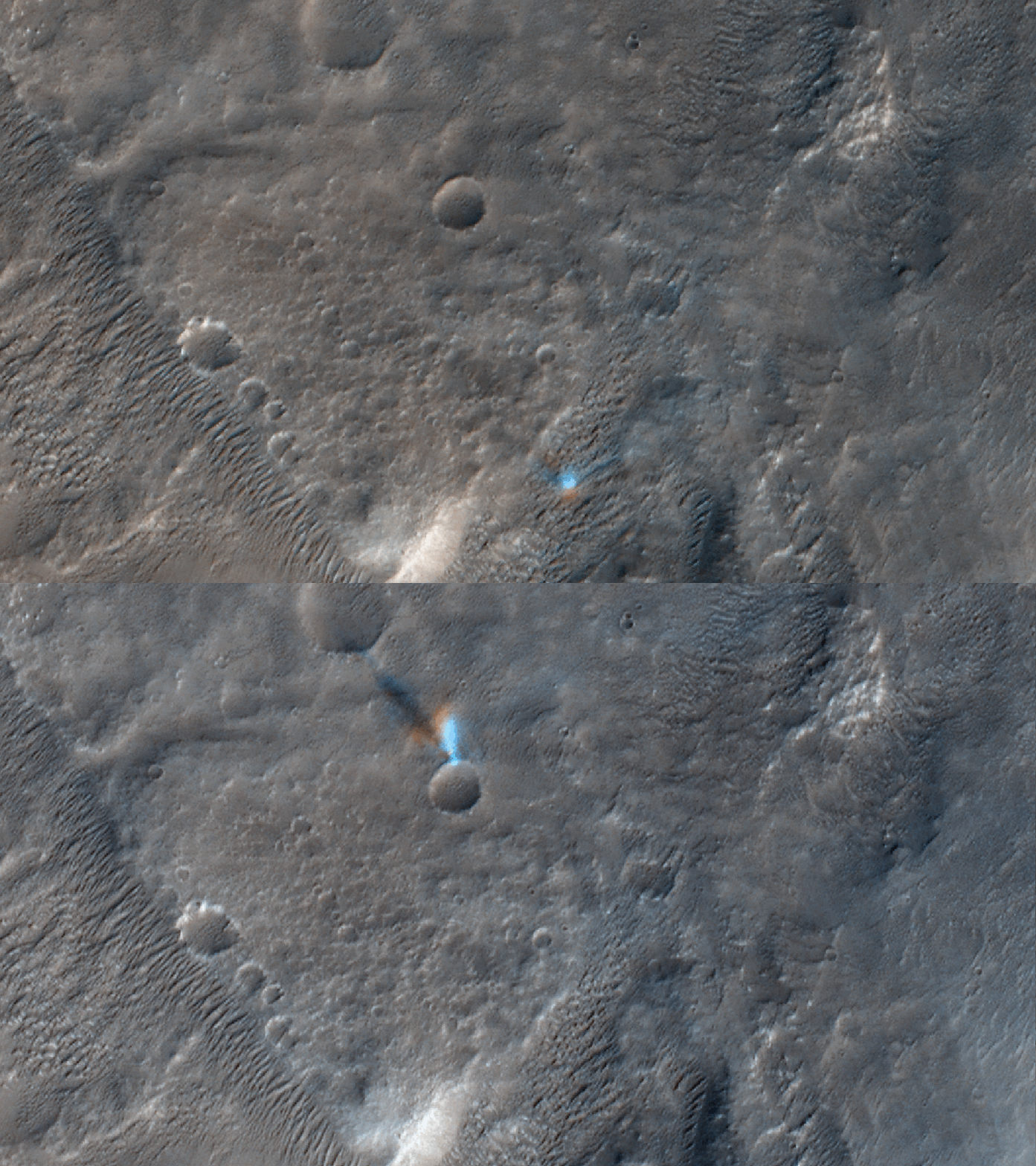
For those interested in imaging and optics, the process is fascinating. Both HRSC and CaSSIS operate as push-broom scanners, recording narrow strips of the surface line by line as the spacecraft moves overhead. Each color channel in these instruments is mounted slightly offset from the others along the flight direction. That means the same ground area is photographed at slightly different times.
On Mars, where dust devils can move rapidly, this delay becomes noticeable as a tiny spatial shift between channels. By precisely calibrating the camera geometry, the team measured that shift to determine how far a dust column had moved. Knowing the time between exposures, they could then compute the wind speed.
The HRSC’s multi-angle design also helps reconstruct the height of dust columns, offering hints about vertical structure. CaSSIS adds high spatial resolution and true color imaging, making it ideal for detecting subtle brightness differences caused by lifted dust.
Dust devils and the Martian weather
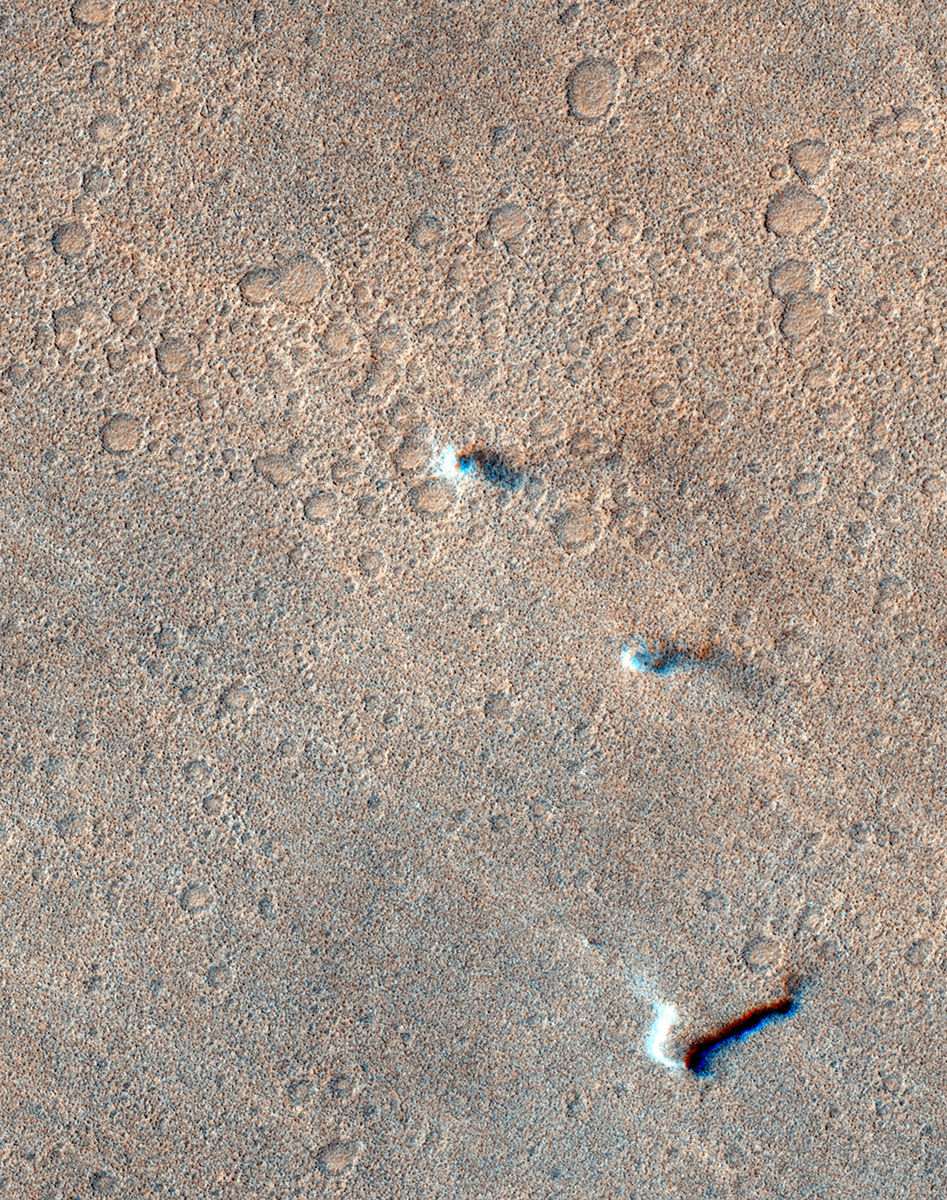
The results change what we know about Mars’s lower atmosphere. Until now, most wind measurements came from landers and rovers, which operate in limited areas and under calmer conditions. The new data show that Martian winds can be far stronger and more variable than expected.
Many dust devils move faster than the background winds predicted by atmospheric models. This suggests that the planet’s boundary layer dynamics, the thin zone where surface and atmosphere interact, are more complex than current models assume. Dust devils may help mix heat and momentum vertically, redistributing fine particles that eventually form regional and even global dust storms.
The findings come at an important time for Mars exploration. ESA’s upcoming Rosalind Franklin rover, part of the ExoMars program, is now scheduled to launch in 2030. Knowing the strength and direction of winds is crucial for landing-site selection, entry and descent planning, and even for understanding how dust might accumulate on instruments once the rover is on the ground.
Moreover, the new global catalogue provides a reference for climate models. Scientists can now test how well those models reproduce the observed wind speeds and dust-lifting events. Discrepancies will help refine simulations of the Martian atmosphere, making them more accurate for predicting future dust storms.
Clear skies!
See more from DIYPhotography.net on Google
Add DIYPhotography.net as a trusted source. This makes
our stories more likely to appear in your Google Search results.
 Add as a preferred source on Google

Soumyadeep Mukherjee
Soumyadeep Mukherjee is an award-winning astrophotographer from India. He has a doctorate degree in Linguistics. His work extends to the sub-genres of nightscape, deep sky, solar, lunar and optical phenomenon photography. He is also a photography educator and has conducted numerous workshops. His works have appeared in over 40 books & magazines including Astronomy, BBC Sky at Night, Sky & Telescope among others, and in various websites including National Geographic, NASA, Forbes. He was the first Indian to win “Astronomy Photographer of the Year” award in a major category.
Join the Discussion
DIYP Comment Policy
Be nice, be on-topic, no personal information or flames.