



















Astronomy technology identifies AI-generated portraits by looking into their eyes
Jul 24, 2024
Dunja Đuđić Kalinin
Dunja Djudjic is a multi-talented artist based in Novi Sad, Serbia. With 15 years of experience as a photographer, she specializes in capturing the beauty of nature, travel, concerts, and fine art. In addition to her photography, Dunja also expresses her creativity through writing, embroidery, and jewelry making.
Share:
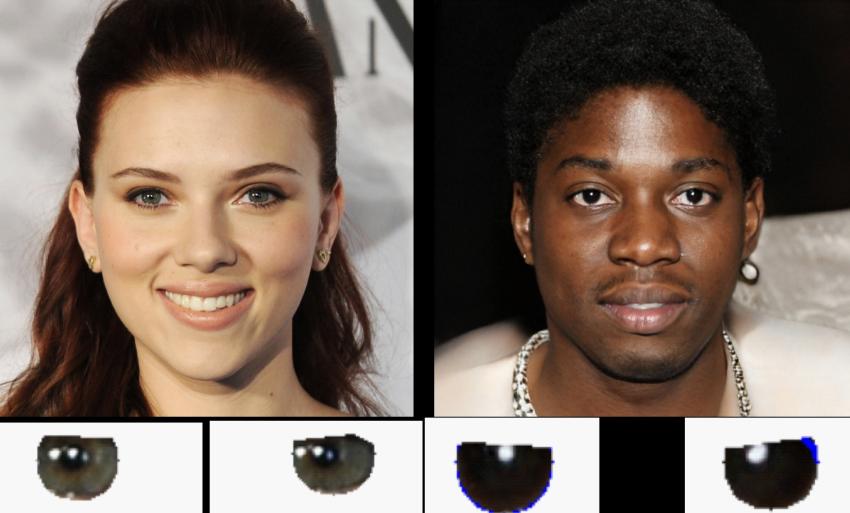
Spotting AI-generated images, especially deepfakes of people, is becoming increasingly difficult as creating them with AI becomes easier. But you know the saying that the eyes are the windows to the soul? Well, new research presented at the Royal Astronomical Society’s National Astronomy Meeting relies on eyes to debunk deepfake images of people.
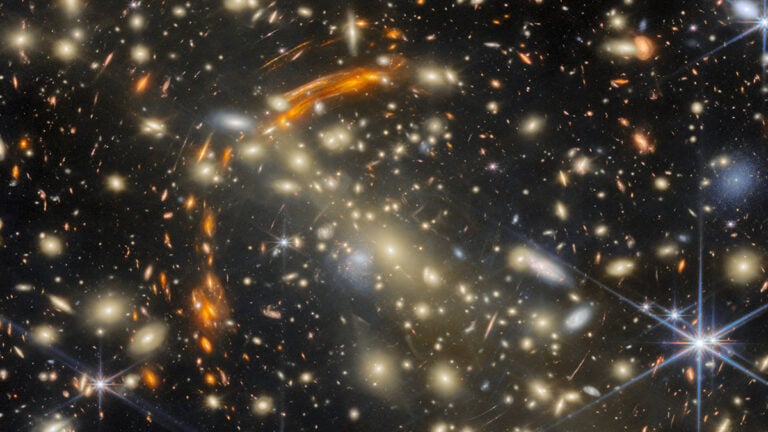
The study shows how AI-generated fakes can be spotted by analyzing human eyes, using techniques astronomers employ to study galaxies. The key lies in reflections in the eyeballs, and it’s actually pretty simple. If the reflections match, the image likely shows an actual human. If they don’t, the image is probably AI-generated.
“The reflections in the eyeballs are consistent for the real person, but incorrect (from a physics point of view) for the fake person,” said Kevin Pimbblet, professor of astrophysics and director of the Centre of Excellence for Data Science, Artificial Intelligence and Modelling at the University of Hull. “To measure the shapes of galaxies, we analyse whether they’re centrally compact, whether they’re symmetric, and how smooth they are,” Prof. Pimbblet added. “We analyse the light distribution.
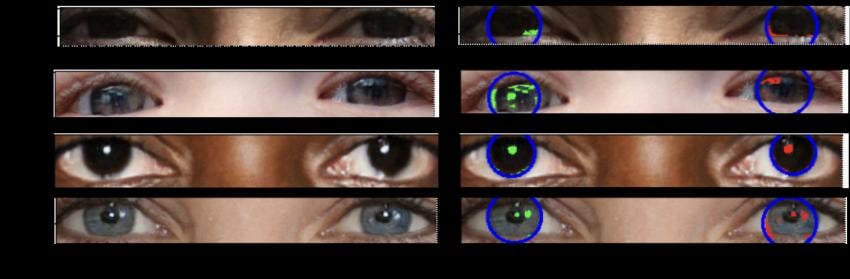
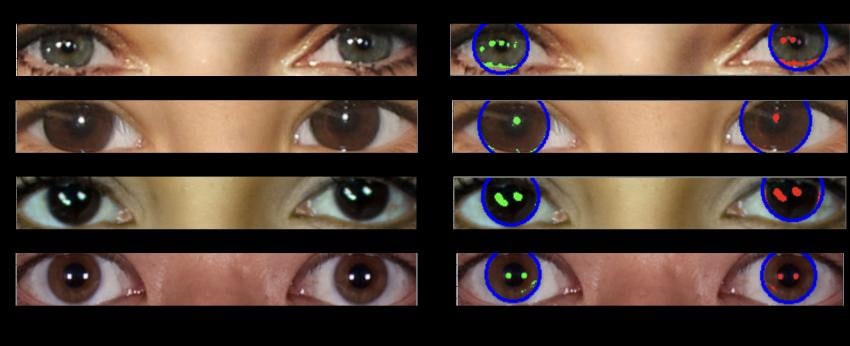
“We detect the reflections in an automated way and run their morphological features through the CAS [concentration, asymmetry, smoothness] and Gini indices to compare similarity between left and right eyeballs.
The findings show that deepfakes have some differences between the pair.
The Gini coefficient, typically used to measure light distribution in galaxy images, compares the actual distribution to a perfectly even one. A 0 indicates even light distribution, while 1 signifies all light concentrated in one pixel.
The team also tested CAS parameters to detect AI-generated human eyes. Astronomers originally developed this tool to measure the light distribution of galaxies to determine their morphology. However, this approach didn’t prove successful in detecting fake eyes.
It’s important to note that this is not a silver bullet for detecting fake images,” Prof. Pimbblet added. “There are false positives and false negatives; it’s not going to get everything. But this method provides us with a basis, a plan of attack, in the arms race to detect deepfakes.”
[via Extreme Tech]
See more from DIYPhotography.net on Google
Add DIYPhotography.net as a trusted source. This makes
our stories more likely to appear in your Google Search results.
 Add as a preferred source on Google

Dunja Đuđić Kalinin
Dunja Djudjic is a multi-talented artist based in Novi Sad, Serbia. With 15 years of experience as a photographer, she specializes in capturing the beauty of nature, travel, concerts, and fine art. In addition to her photography, Dunja also expresses her creativity through writing, embroidery, and jewelry making.



Join the Discussion
DIYP Comment Policy
Be nice, be on-topic, no personal information or flames.