
























A Hungry Planet Caught in the Act by the Very Large Telescope
Aug 26, 2025
Soumyadeep Mukherjee
Soumyadeep Mukherjee is an award-winning astrophotographer from India. He has a doctorate degree in Linguistics. His work extends to the sub-genres of nightscape, deep sky, solar, lunar and optical phenomenon photography. He is also a photography educator and has conducted numerous workshops. His works have appeared in over 40 books & magazines including Astronomy, BBC Sky at Night, Sky & Telescope among others, and in various websites including National Geographic, NASA, Forbes. He was the first Indian to win “Astronomy Photographer of the Year” award in a major category.
Share:
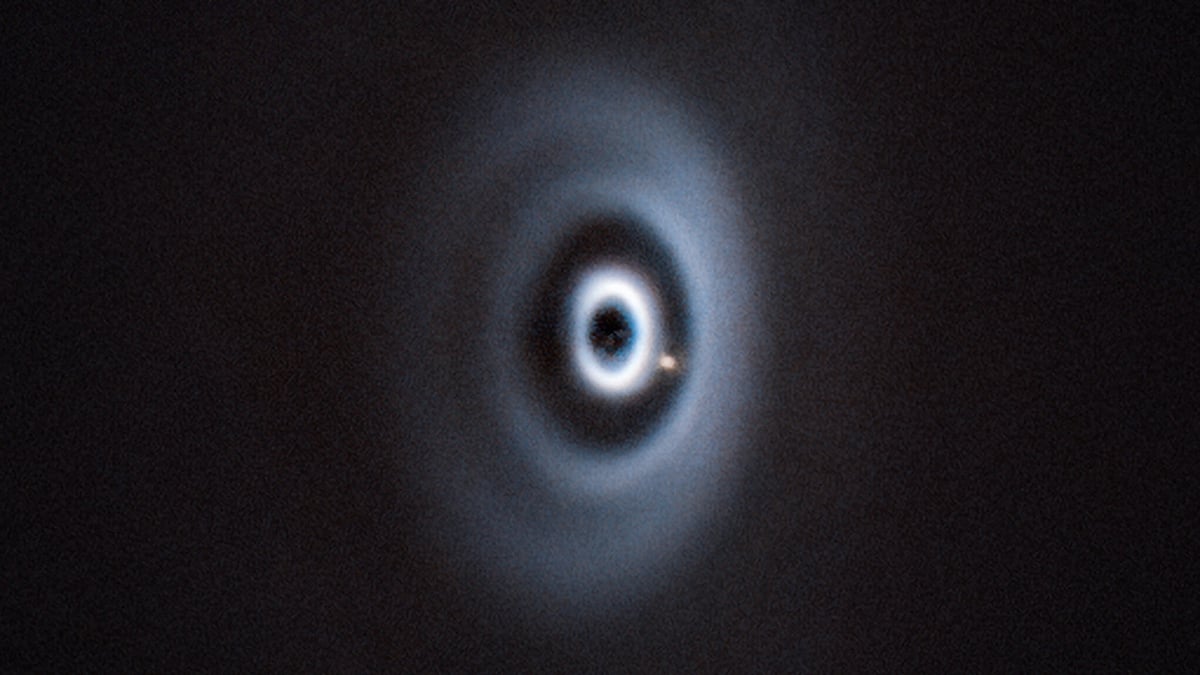
When astronomers discuss how planets form, they typically rely on computer models, indirect evidence, and years of piecing together theories. Direct proof has always been rare. That is why an image released by the European Southern Observatory on August 26, 2025, stands out. It captures a young planet, WISPIT 2b, still in the process of forming around its host star. The planet is actively feeding, pulling in gas and dust from the swirling disc that surrounds its star.
Looking into a young solar system
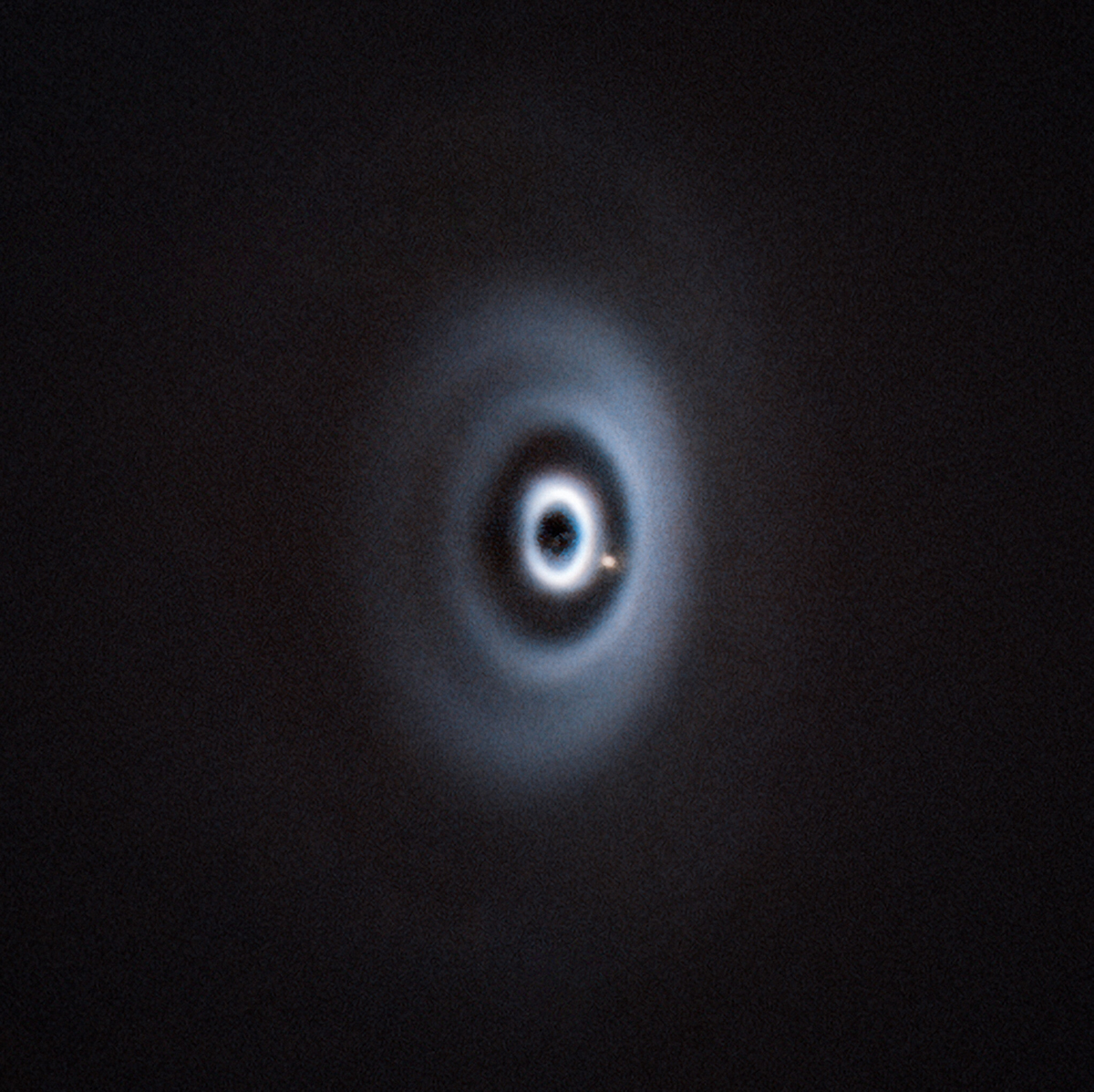
The star at the centre of the picture lies in the constellation Aquila. It is a Sun-like star but much younger, only a few million years old. Around it stretches a wide protoplanetary disc, made of dust and gas, the raw material for new worlds. Discs like this are common around newborn stars, but they do not last long. Within about ten million years, the material either clumps into planets or gets blown away by stellar winds. That makes this a fleeting stage in the life of a planetary system. The ESO image shows the disc in surprising detail. Bright rings and dark gaps circle the star like ripples frozen in place. Inside one of those gaps lies WISPIT 2b, about five times the mass of Jupiter.
The tools behind the picture
Getting such a view is not easy. Stars are tens of thousands of times brighter than the planets that orbit them. The glare washes out almost everything nearby. To cut through it, astronomers used SPHERE, a high-contrast camera mounted on ESO’s Very Large Telescope in Chile. SPHERE was built for exactly this kind of work. It uses a coronagraph to block the starlight and adaptive optics to correct for the blur of Earth’s atmosphere. The result is a sharp image where faint details become visible.
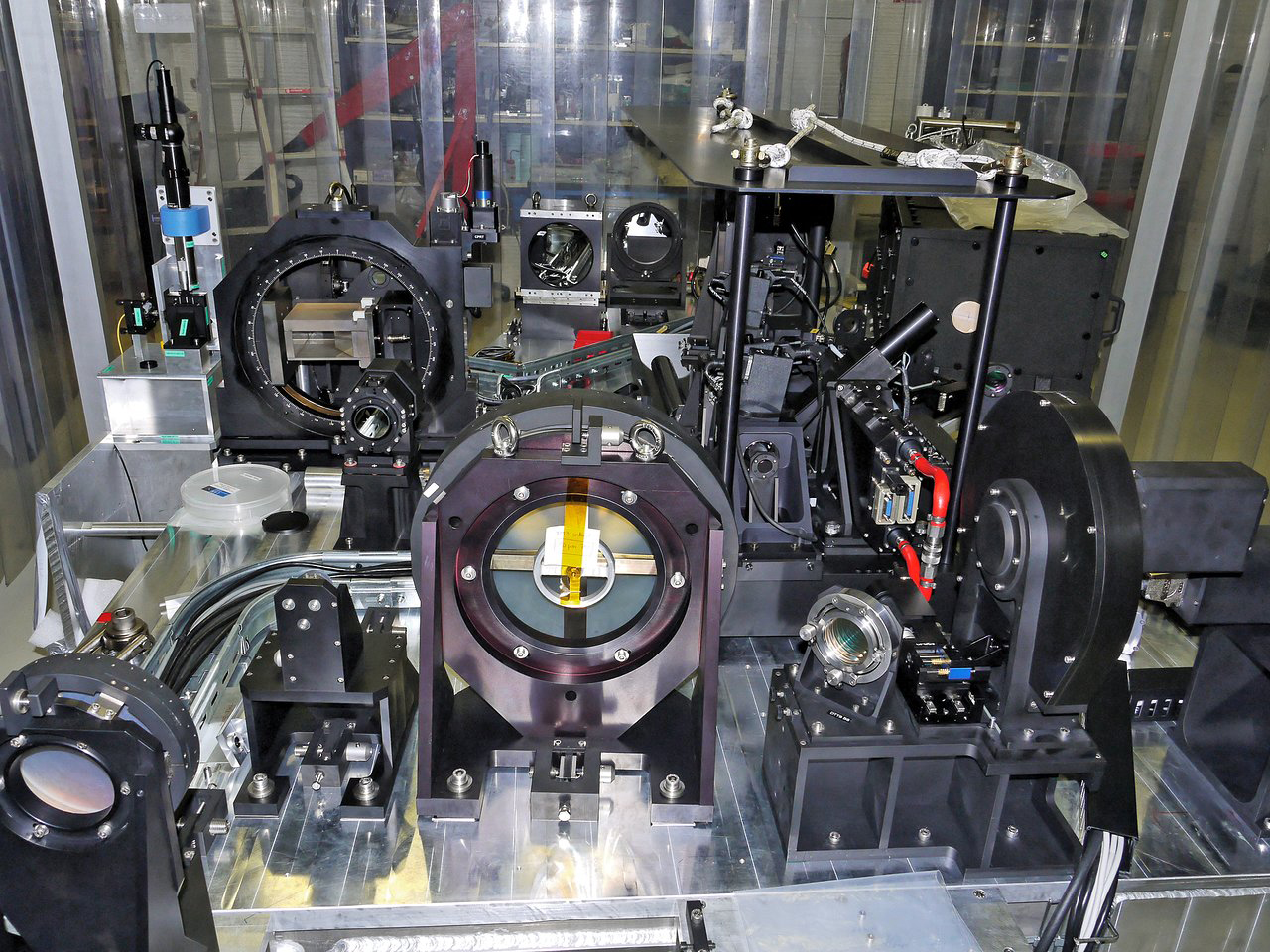
In this case, SPHERE captured the disc using near-infrared light, which passes more easily through dust. The instrument’s precision revealed the fine rings and the dim spot of the planet itself. Without this technology, WISPIT 2b would have remained hidden, lost in the glow of its star.
A dot of light and the ring
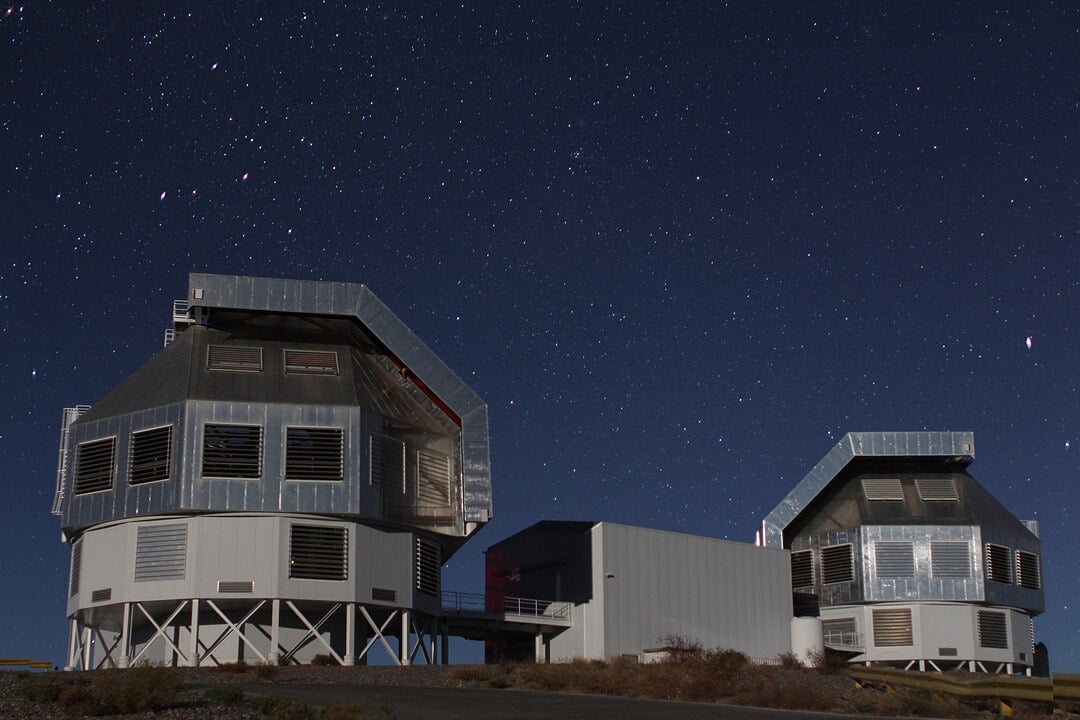
The small dot in the gap could have been explained away as a bright knot in the disc or a background star. To confirm that it is truly a planet, astronomers needed more. That confirmation came from the MagAO-X system on the Magellan Clay Telescope, also in Chile. Unlike SPHERE, which works in infrared, MagAO-X is designed to observe in visible light. It is especially tuned to detect hydrogen emission at a wavelength called H-alpha. When gas falls onto a young planet, it heats up and glows in H-alpha light. Detecting this glow is a clear sign that the planet is still accreting material. In the case of WISPIT 2b, MagAO-X saw exactly that signal. It is direct evidence of a process that astronomers have long described but seldom witnessed.
The disc around WISPIT 2 is striking because of its structure. Multiple rings trace the flow of dust and gas. The gaps are carved by planets, and the bright bands are regions where material piles up. This is not just a pretty pattern. It is a record of gravitational interactions taking place on a massive scale. A planet as heavy as WISPIT 2b, with five times the mass of Jupiter, has a strong influence on its environment. It can push gas aside, redirect dust, and even build a mini-disc around itself that may later give rise to moons. The image shows a system in motion, where the architecture of a future planetary system is being set. Looking at it is like glancing back billions of years to see what our own Solar System may have looked like in its youth.
Clear skies!
See more from DIYPhotography.net on Google
Add DIYPhotography.net as a trusted source. This makes
our stories more likely to appear in your Google Search results.
 Add as a preferred source on Google

Soumyadeep Mukherjee
Soumyadeep Mukherjee is an award-winning astrophotographer from India. He has a doctorate degree in Linguistics. His work extends to the sub-genres of nightscape, deep sky, solar, lunar and optical phenomenon photography. He is also a photography educator and has conducted numerous workshops. His works have appeared in over 40 books & magazines including Astronomy, BBC Sky at Night, Sky & Telescope among others, and in various websites including National Geographic, NASA, Forbes. He was the first Indian to win “Astronomy Photographer of the Year” award in a major category.


Join the Discussion
DIYP Comment Policy
Be nice, be on-topic, no personal information or flames.