





















NASA Turns Images of Four Star-Forming Regions into Music
Nov 18, 2026
Soumyadeep Mukherjee
Soumyadeep Mukherjee is an award-winning astrophotographer from India. He has a doctorate degree in Linguistics. His work extends to the sub-genres of nightscape, deep sky, solar, lunar and optical phenomenon photography. He is also a photography educator and has conducted numerous workshops. His works have appeared in over 40 books & magazines including Astronomy, BBC Sky at Night, Sky & Telescope among others, and in various websites including National Geographic, NASA, Forbes. He was the first Indian to win “Astronomy Photographer of the Year” award in a major category.
Share:
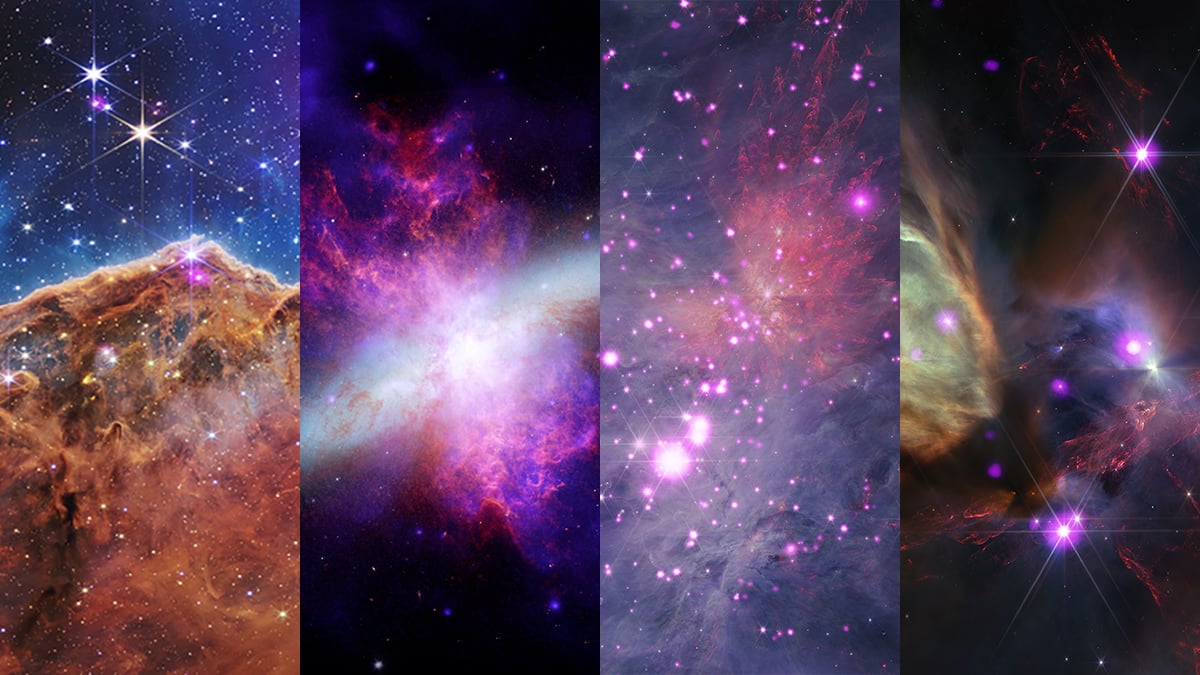
NASA has released four new sonifications based on telescope observations of star-forming regions. The recordings cover the galaxy Messier 82, the Orion Nebula, the Cosmic Cliffs in the Carina Nebula, and the Rho Ophiuchi cloud complex. Each comes with a video showing the astronomical image alongside the sounds created from its data.
The project comes from NASA’s Chandra X-ray Observatory, which studies high-energy activity across the universe. Its latest release focuses on young stars and the environments where they develop.
How NASA turns telescope observations into music
Astronomers collect information about distant objects by studying the electromagnetic radiation they emit. Different telescopes detect different parts of this radiation, including visible light, infrared light, and X-rays. Scientists process the measurements to create images and study the physical properties of their targets. Sonification takes the same information and translates selected features into sound.
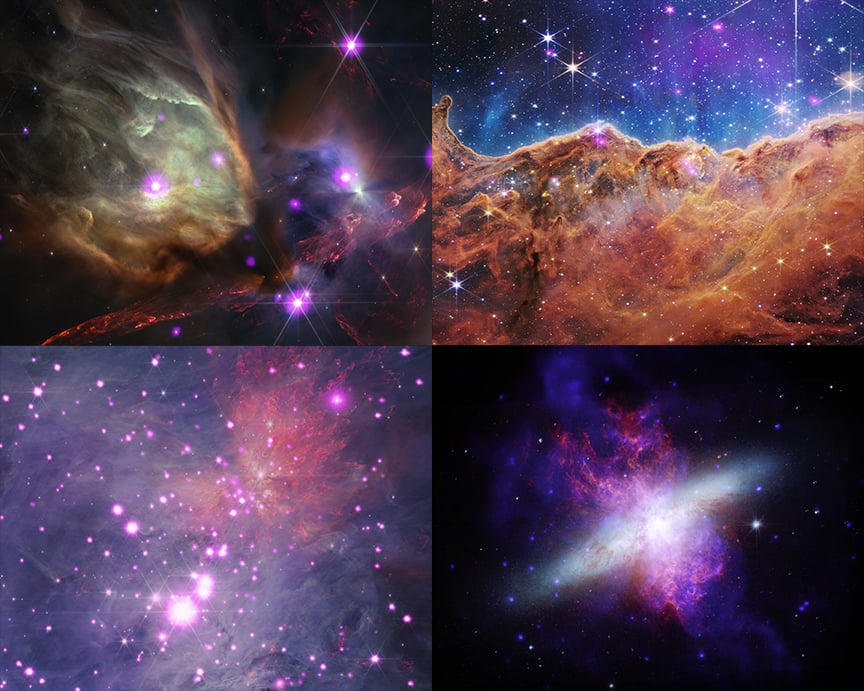
For this sonification project, the Chandra team created short videos with a moving activation line. As the line crosses each image, it encounters stars and other structures. The associated data determines the sounds that viewers hear. The position and brightness of individual sources influence the musical output, while different types of emission receive distinct treatments.
The team uses several musical instruments and electronic sounds to separate the information. Individual stars can produce short, sharp notes, while extended emission creates longer sounds. Some sections use strings; others feature electronic tones or metallic plucks. The choice depends on the astronomical data and the features the team wants listeners to recognize.
M82: A Starburst Galaxy
The first sonification features Messier 82, commonly called the Cigar Galaxy. It lies about 12 million light-years away in the constellation Ursa Major. M82 is a starburst galaxy, which means it produces stars at an unusually high rate. NASA’s release describes its star formation rate as tens or even hundreds of times higher than that of the Milky Way.
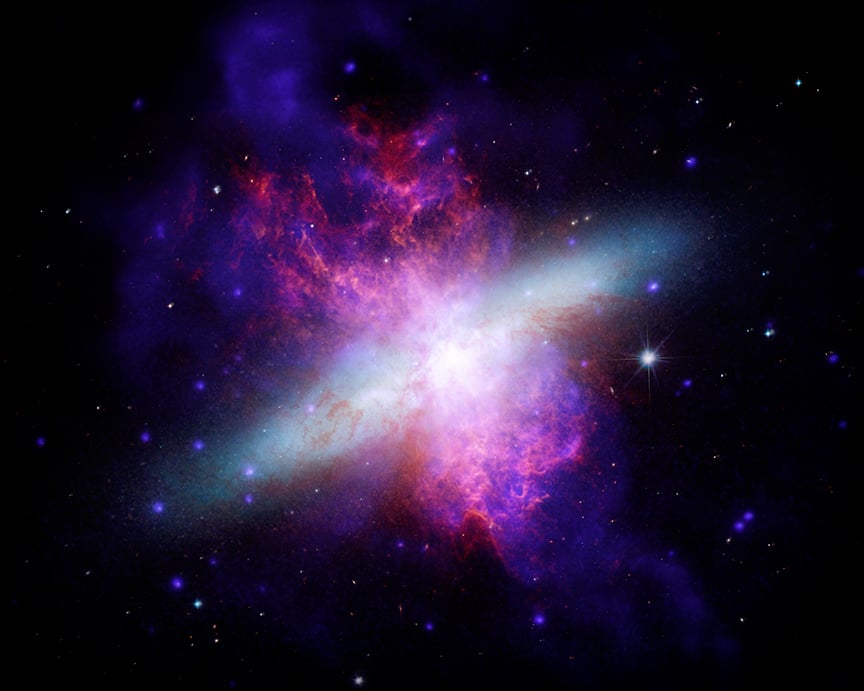
Astronomers suspect that an encounter with another galaxy triggered much of this activity. The interaction disturbed M82 and changed the distribution of its gas. Large amounts of material gathered in regions where new stars could form. The galaxy now contains many young, massive stars that release enormous amounts of energy into their surroundings.
Orion Nebula
The second sonification features the Orion Nebula, one of the closest and busiest star-forming regions to Earth. It lies approximately 1,310 light-years away, below Orion’s Belt. The nebula is a familiar target for amateur astronomers because observers can find it with binoculars or a small telescope under dark skies.
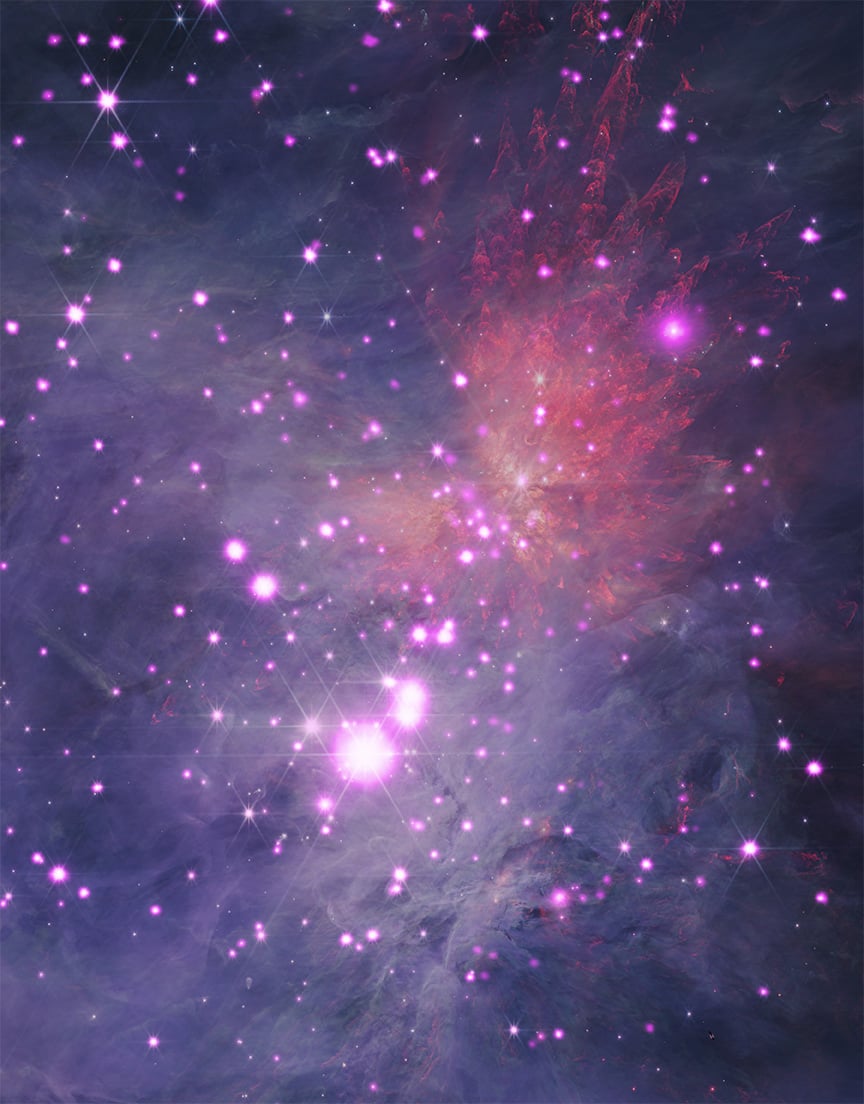
The sonification gives individual stars twinkling sounds. Diffuse X-ray emission across the nebula produces pure, high-pitched tones. This distinction allows listeners to hear the difference between individual stellar sources and the broader emission across the region.
Carina Nebula
The third recording takes listeners to the Cosmic Cliffs, a region within the Carina Nebula. Located approximately 7,670 light-years from Earth, this structure became widely known through James Webb’s infrared observations. Its mountain-like appearance comes from the boundary between a cavity and denser clouds of gas and dust.
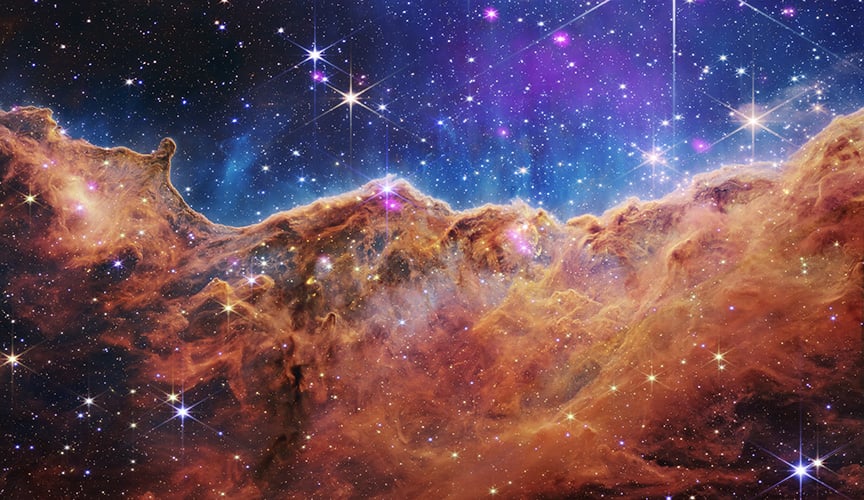
Massive young stars have shaped this part of the nebula. Their radiation heats the surrounding material, while powerful stellar winds push gas away. These processes gradually change the structure of the clouds. They also influence the conditions in nearby areas where new stars may develop.
Rho Ophiuchi
The final recording features the Rho Ophiuchi cloud complex, approximately 390 light-years away in the constellation Ophiuchus. It contains dense clouds of gas and dust, along with stars of different ages and sizes. Some of its youngest members produce powerful X-ray flares that Chandra can detect.
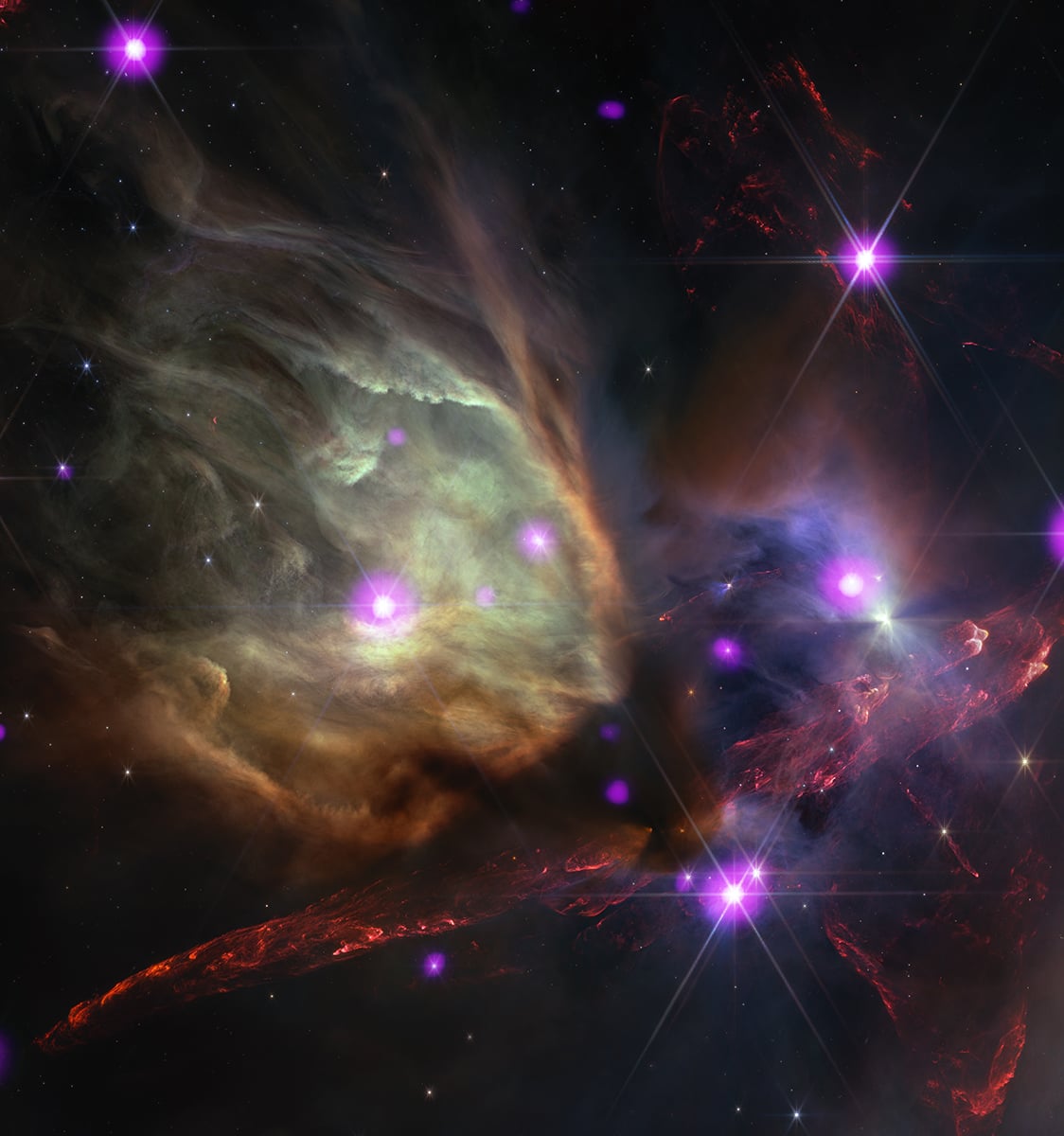
Young stars often show intense magnetic activity. Their magnetic fields can produce energetic outbursts that release large amounts of X-ray radiation. Chandra‘s observations allow astronomers to study this activity during the early stages of stellar development. James Webb adds infrared views of the surrounding clouds, revealing structures that visible-light observations may miss because of intervening dust.
Which one is your favourite? Let us know in the comments.
Clear skies!
See more from DIYPhotography.net on Google
Add DIYPhotography.net as a trusted source. This makes
our stories more likely to appear in your Google Search results.
 Add as a preferred source on Google

Soumyadeep Mukherjee
Soumyadeep Mukherjee is an award-winning astrophotographer from India. He has a doctorate degree in Linguistics. His work extends to the sub-genres of nightscape, deep sky, solar, lunar and optical phenomenon photography. He is also a photography educator and has conducted numerous workshops. His works have appeared in over 40 books & magazines including Astronomy, BBC Sky at Night, Sky & Telescope among others, and in various websites including National Geographic, NASA, Forbes. He was the first Indian to win “Astronomy Photographer of the Year” award in a major category.


Join the Discussion
DIYP Comment Policy
Be nice, be on-topic, no personal information or flames.