














Canon Marks 15 Years of Cinema EOS With New Camera Updates
Nov 9, 2026
Alysa Gavilan
Alysa Gavilan has spent years exploring photography through photojournalism and street scenes. She enjoys working with both film and mirrorless cameras, and her fascination with the craft has grown over the decades. Inspired by Vivian Maier, she is drawn to capturing everyday moments that often go unnoticed.
Share:

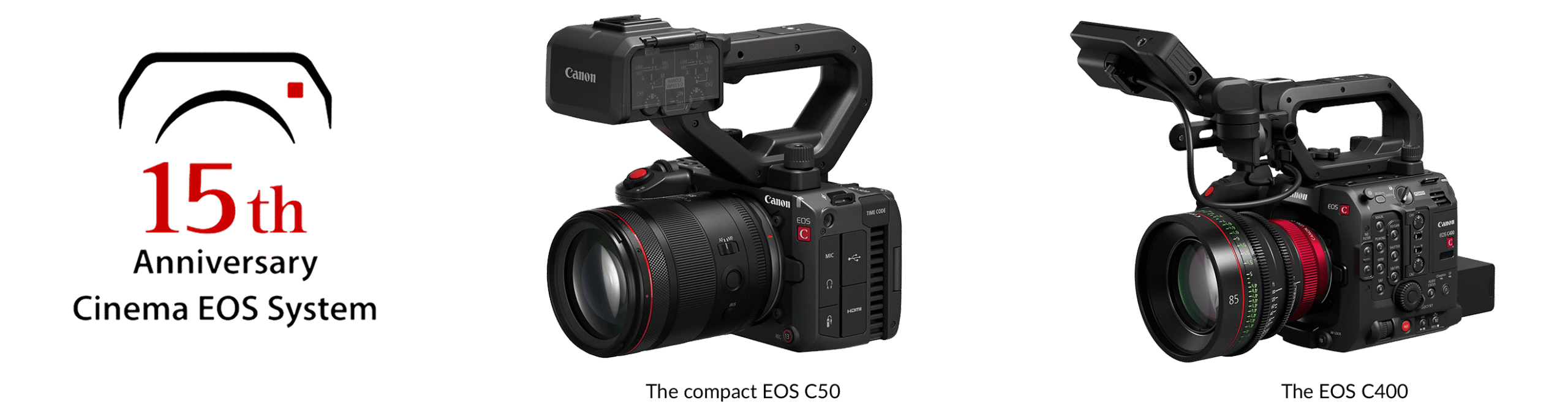
Canon is marking 15 years of its Cinema EOS system with a reminder that professional video cameras are no longer limited to traditional film and television sets. The company is also using the anniversary to announce free firmware updates for three cameras, adding broadcast and virtual production tools, expanded autofocus options, and even Speedlite flash support for its compact EOS C50.
Launched in 2011, Cinema EOS has grown into a system covering cameras, lenses, and production workflows for films, television, documentaries, livestreams, corporate video, and virtual production. Canon says it has released 17 Cinema EOS cameras and 53 lenses since the system’s introduction.
From the EOS 5D Mark II to a cinema camera system
Canon’s move into professional video production followed the reception of the EOS 5D Mark II, released in November 2008. Its Full HD video capabilities attracted filmmakers who wanted a camera that could combine still photography with video recording.
The company then consulted filmmakers and production professionals about their shooting requirements, workflows, and preferred camera features. That work led to the Cinema EOS system, beginning with the EOS C300 in January 2012 and the EOS C500 later that year.
Subsequent models introduced different approaches to camera design. The EOS C500 Mark II and EOS C300 Mark III brought modular configurations, while the EOS R5 C and EOS C50 extended the range with smaller, more versatile bodies. Canon has also developed tools for newer production methods, including virtual production.
Cinema EOS cameras have appeared in several internationally recognized productions. These include All the Empty Rooms, which won the 2026 Academy Award for Best Documentary Short Film, and All That Breathes, which received major documentary honors at Cannes and Sundance.

Three cameras get new firmware features
The latest firmware updates cover the EOS C400, EOS C80, and EOS C50. Canon says the changes respond to feedback from professional users and address production requirements across broadcast, filmmaking, and hybrid photography and video work.
One major addition is Multi-Matrix Support, which gives users more precise control over color and saturation across selected color ranges. This can help match footage from multiple cameras and improve integration with LED volumes used in virtual production.
Other broadcast and production improvements include expanded CV metadata for focus and zoom encoder information, Black Level adjustment when recording in Canon Log 2 or Canon Log 3, and image stabilization support for lenses longer than 1,000mm. The cameras will also support audio output during Slow & Fast recording, useful for productions that need sound alongside high-speed footage.
For the EOS C400 and EOS C80, the update expands autofocus support during Slow & Fast recording. Additional frame rates between 60 and 120 frames per second include 72p, 75p, 90p, and 96p.
The cameras will also display additional operational information, including Base ISO and fan indicators, helping operators monitor settings while recording.
The EOS C50 receives another notable addition. Its Multi-Function Accessory Shoe will support compatible Canon Speedlite accessories, including EL-series and EX-series flashes, Macro Lights, and Speedlite Transmitters.
This gives wedding and event photographers another reason to consider the camera for assignments involving both stills and video. They can use compatible flash equipment when taking photographs, alongside the camera’s video capabilities.
Fifteen years in, the system keeps evolving
Canon will release the firmware updates for the EOS C400, EOS C80, and EOS C50 free of charge in December 2026 through its support website.
For existing owners, the updates add capabilities without requiring a new camera purchase. For the rest of the industry, they show how manufacturers are increasingly expected to keep professional camera systems useful long after their initial release. How much can a firmware update change the way a camera works on set?
See more from DIYPhotography.net on Google
Add DIYPhotography.net as a trusted source. This makes
our stories more likely to appear in your Google Search results.
 Add as a preferred source on Google

Alysa Gavilan
Alysa Gavilan has spent years exploring photography through photojournalism and street scenes. She enjoys working with both film and mirrorless cameras, and her fascination with the craft has grown over the decades. Inspired by Vivian Maier, she is drawn to capturing everyday moments that often go unnoticed.




Join the Discussion
DIYP Comment Policy
Be nice, be on-topic, no personal information or flames.