


















NASA’s SpaceX CRS-35 Launch Creates a Giant Jellyfish in the Sky
Oct 15, 2026
Soumyadeep Mukherjee
Soumyadeep Mukherjee is an award-winning astrophotographer from India. He has a doctorate degree in Linguistics. His work extends to the sub-genres of nightscape, deep sky, solar, lunar and optical phenomenon photography. He is also a photography educator and has conducted numerous workshops. His works have appeared in over 40 books & magazines including Astronomy, BBC Sky at Night, Sky & Telescope among others, and in various websites including National Geographic, NASA, Forbes. He was the first Indian to win “Astronomy Photographer of the Year” award in a major category.
Share:
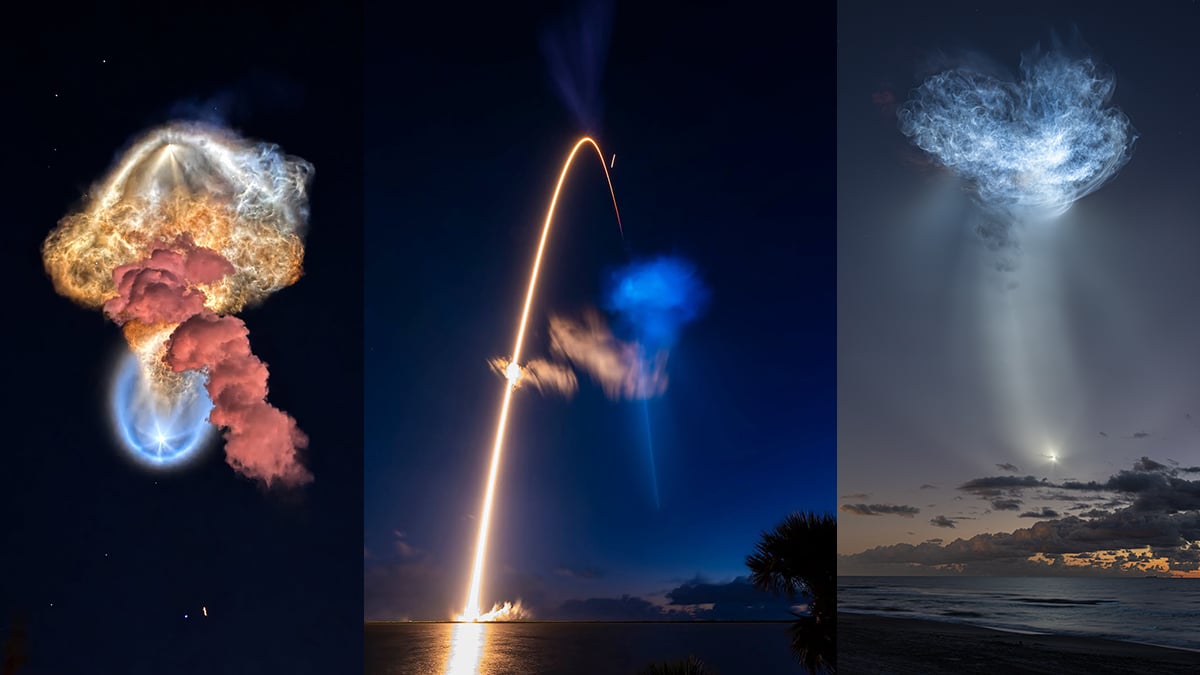
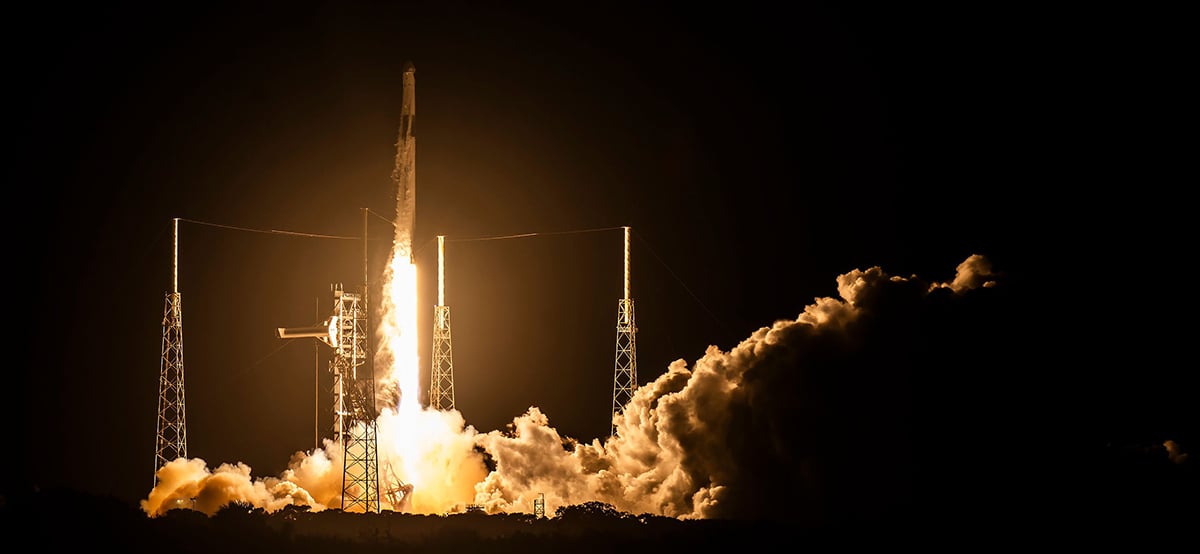
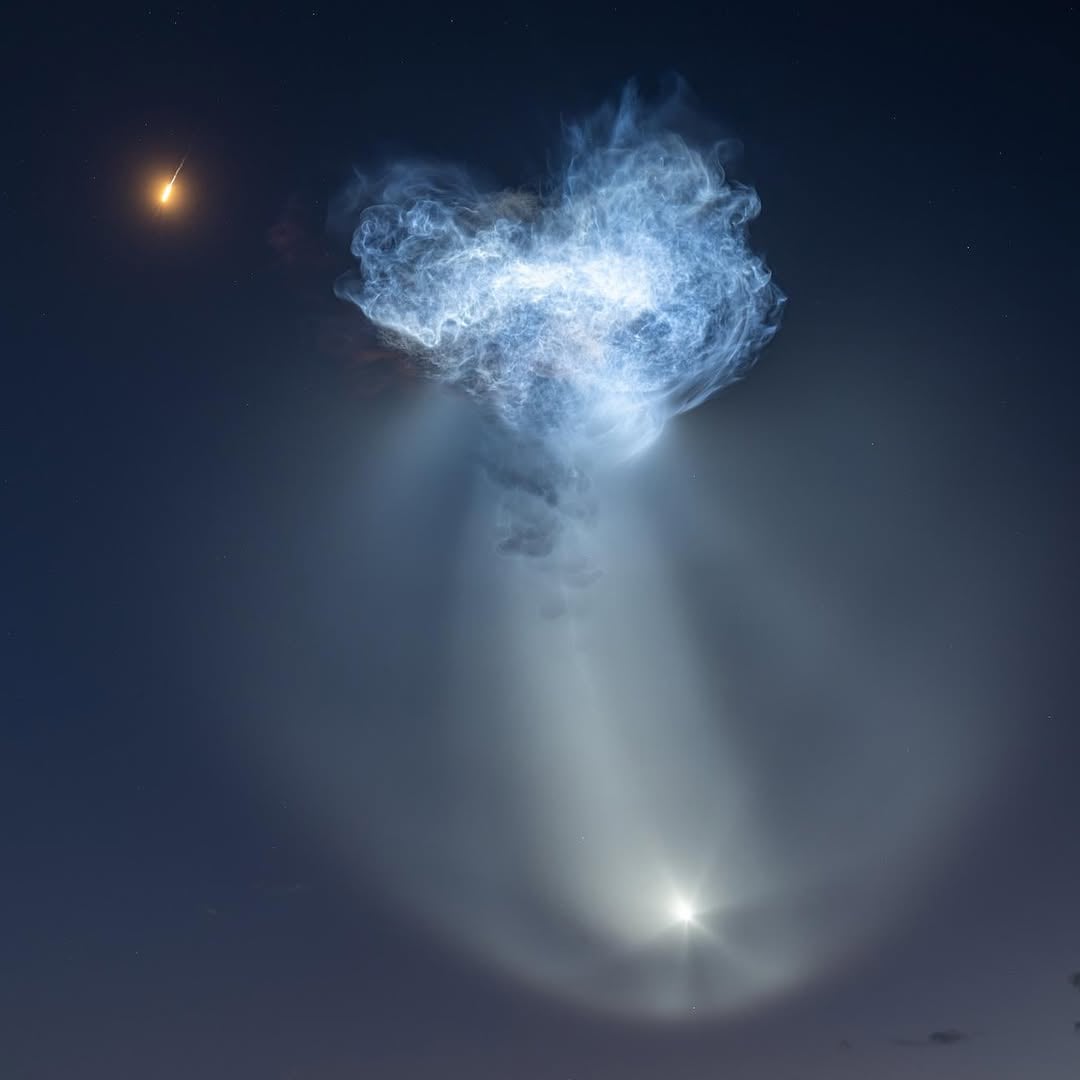
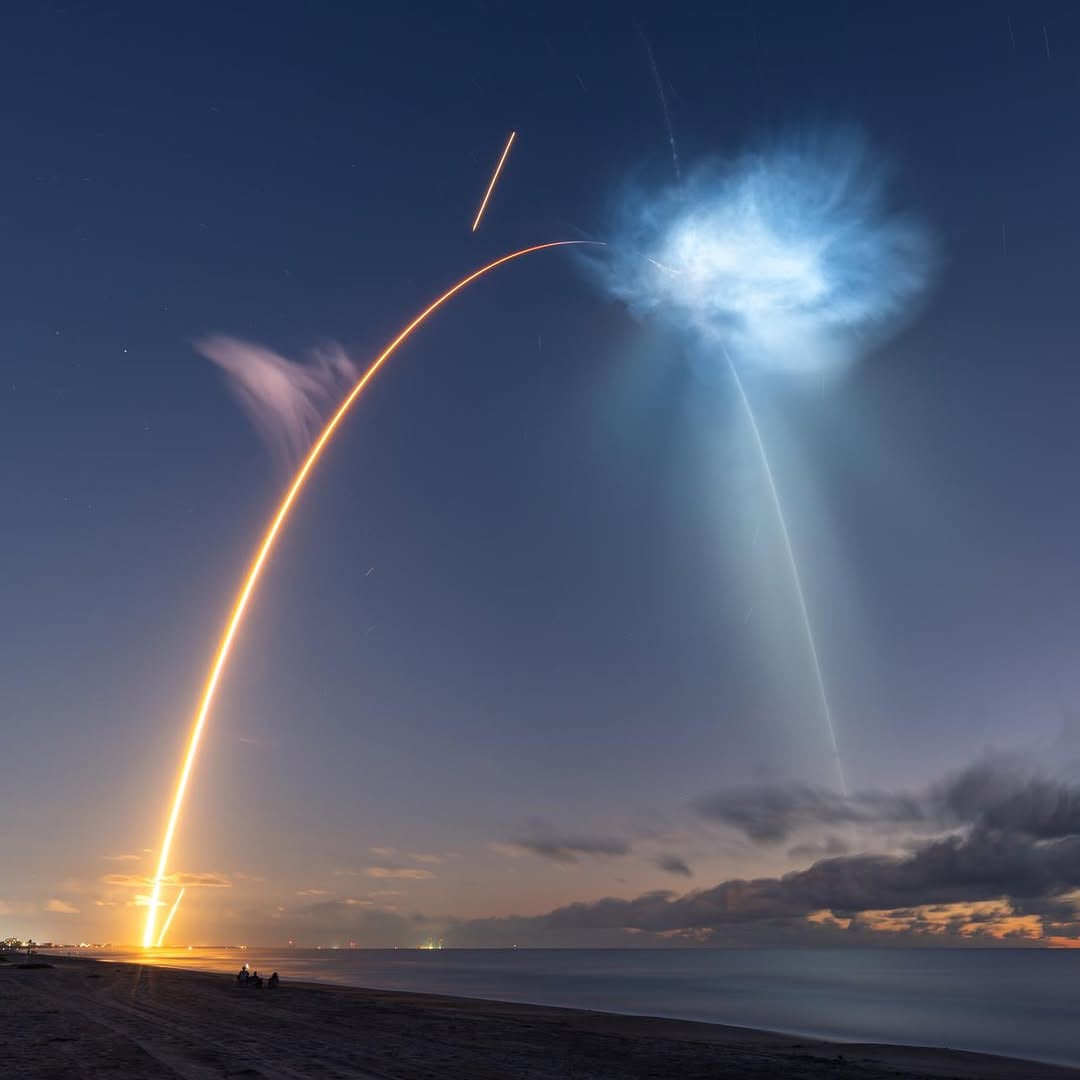
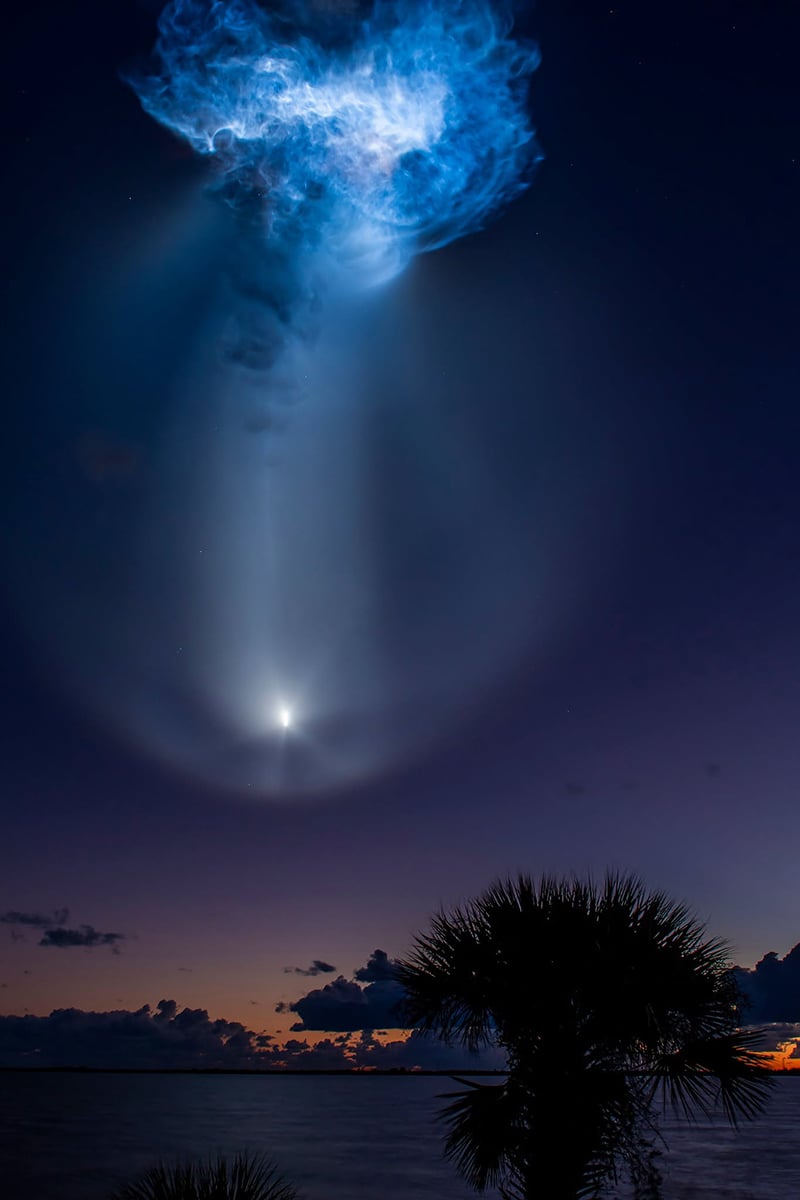
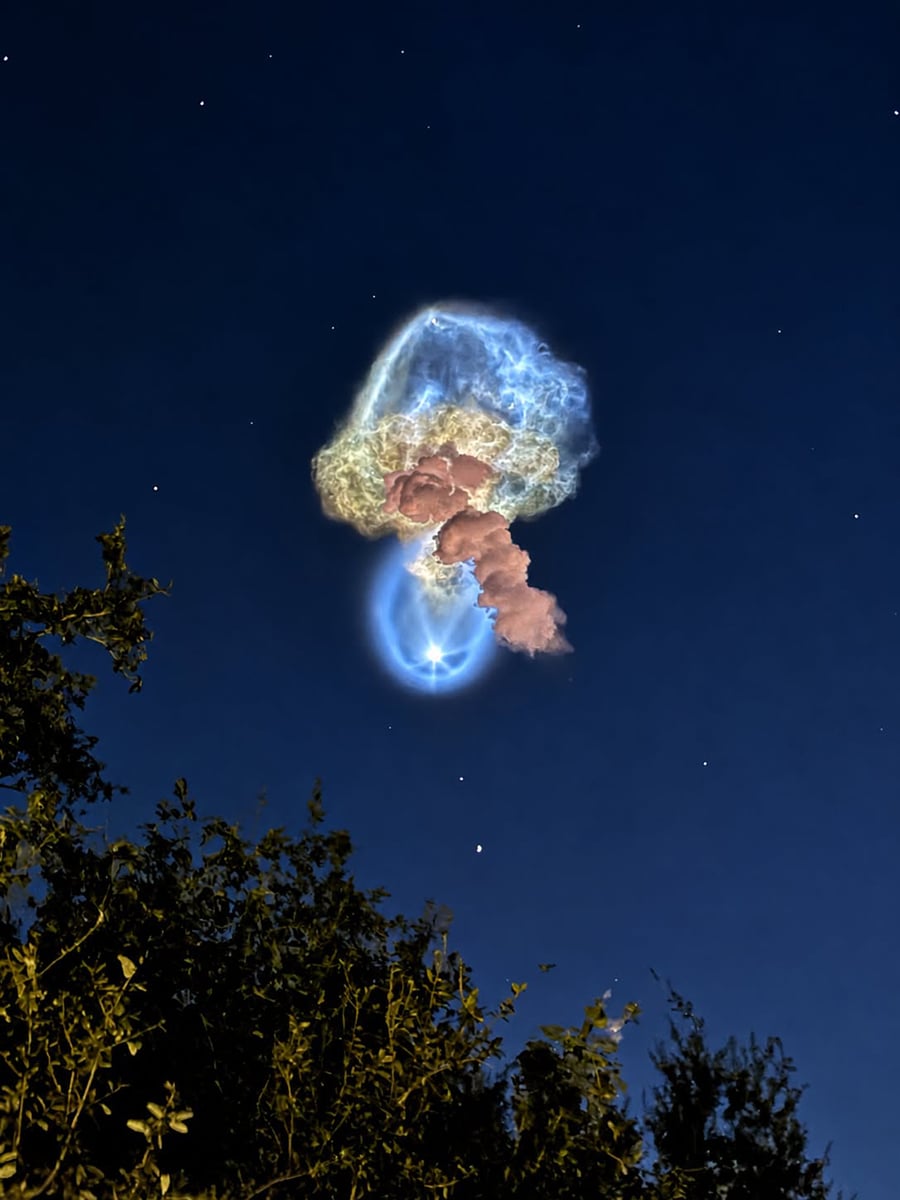
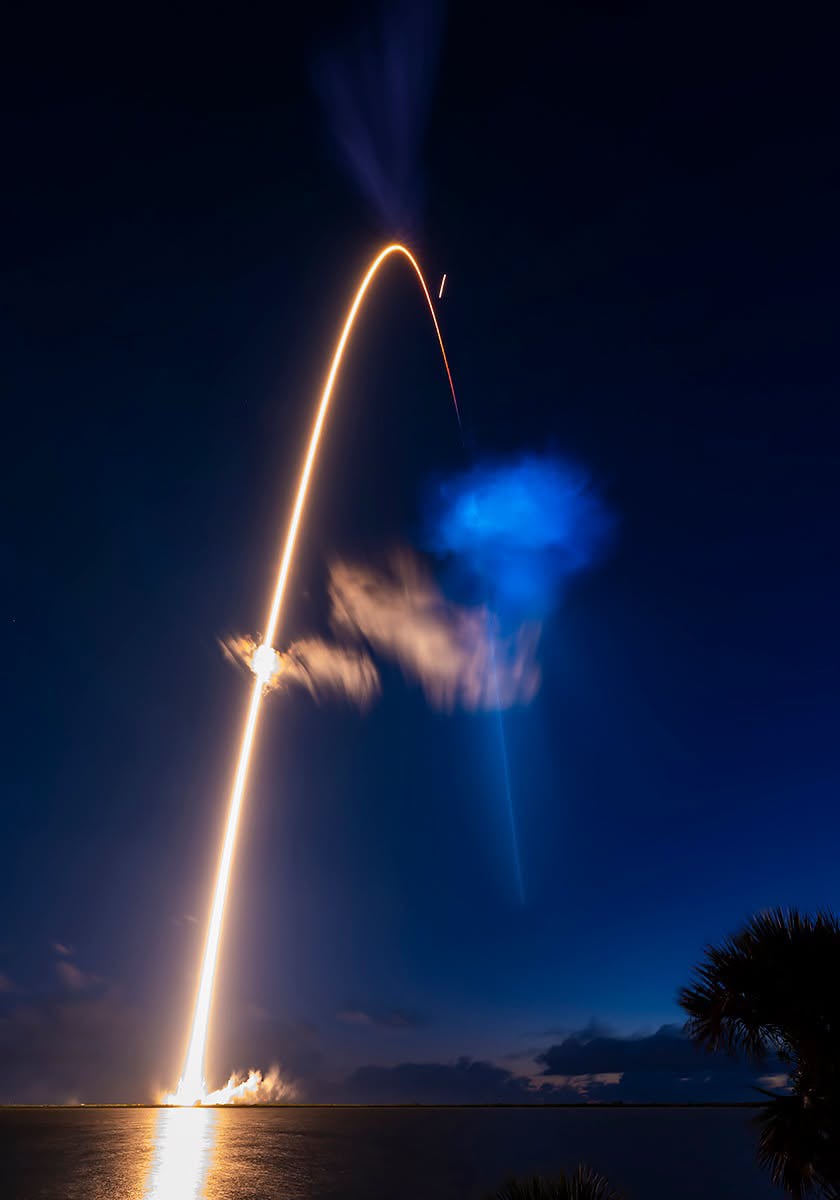
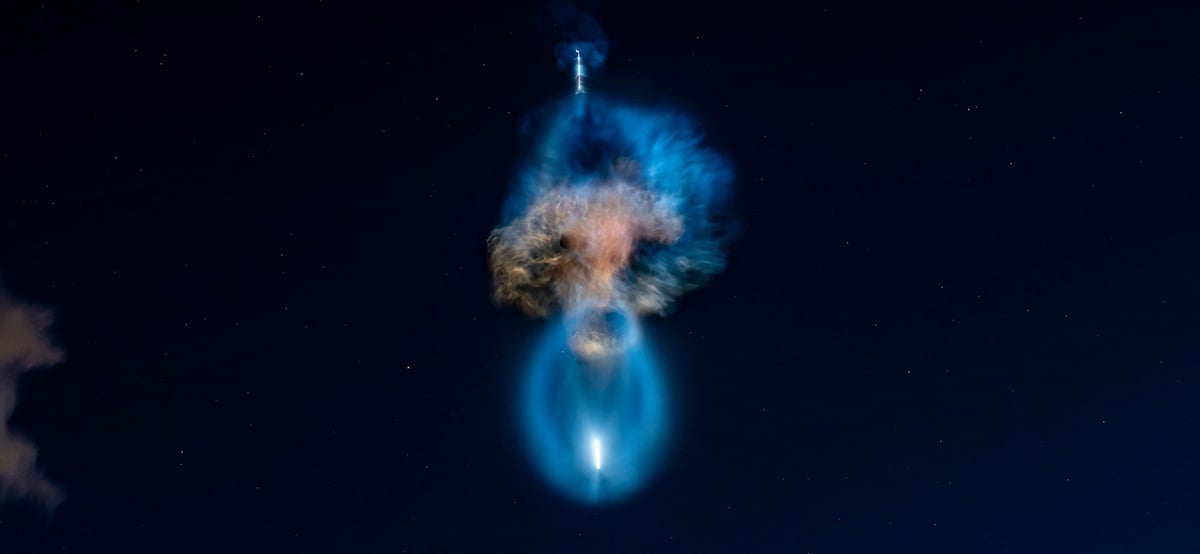
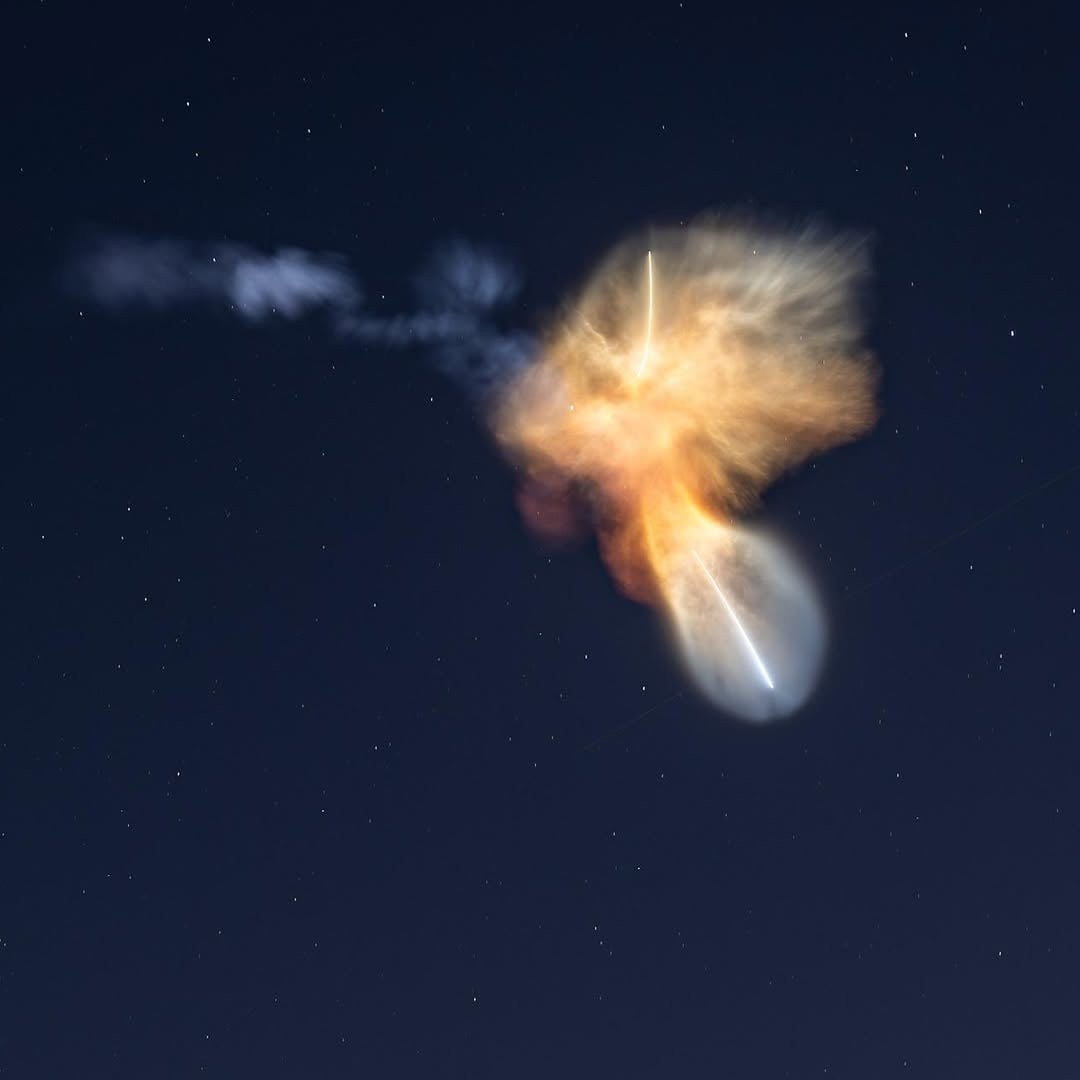
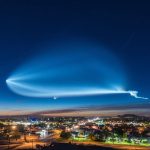
On October 13, a Falcon 9 rocket rose from Cape Canaveral, Florida, carrying a Dragon spacecraft packed with cargo for the International Space Station (ISS). The launch took place before sunrise, and the timing produced an unusual sight. As the rocket climbed, its exhaust spread into a broad, glowing shape that resembled a giant jellyfish. People across parts of the eastern United States photographed the plume, even from hundreds of miles away.
Falcon 9 launches Dragon on its 35th cargo mission
The Falcon 9 lifted off at 6:33 a.m. Eastern Daylight Time from Space Launch Complex 40 at Cape Canaveral Space Force Station. NASA’s CRS-35 mission marked the 35th commercial resupply flight SpaceX has flown for the agency. Dragon was making its fourth flight to the station, having previously flown missions CRS-26, CRS-29, and CRS-33.
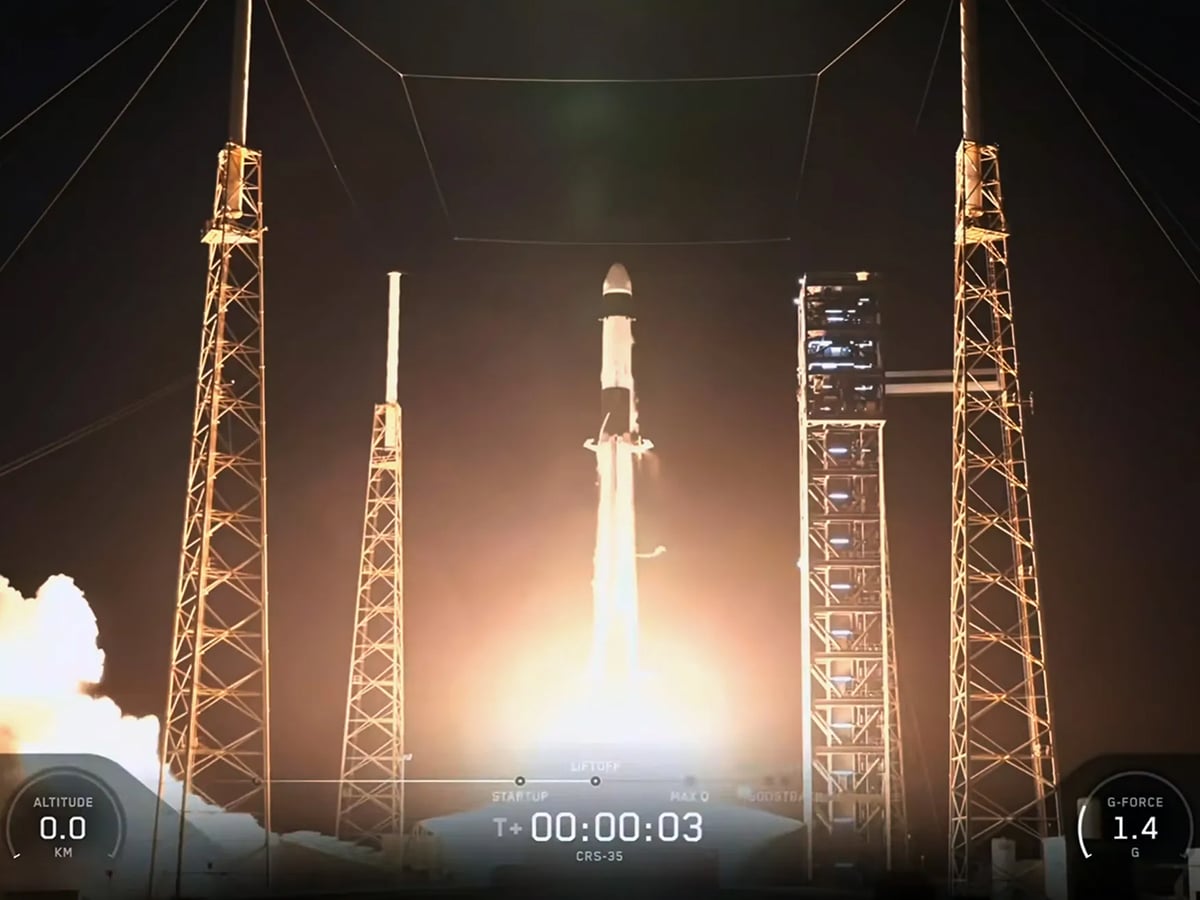
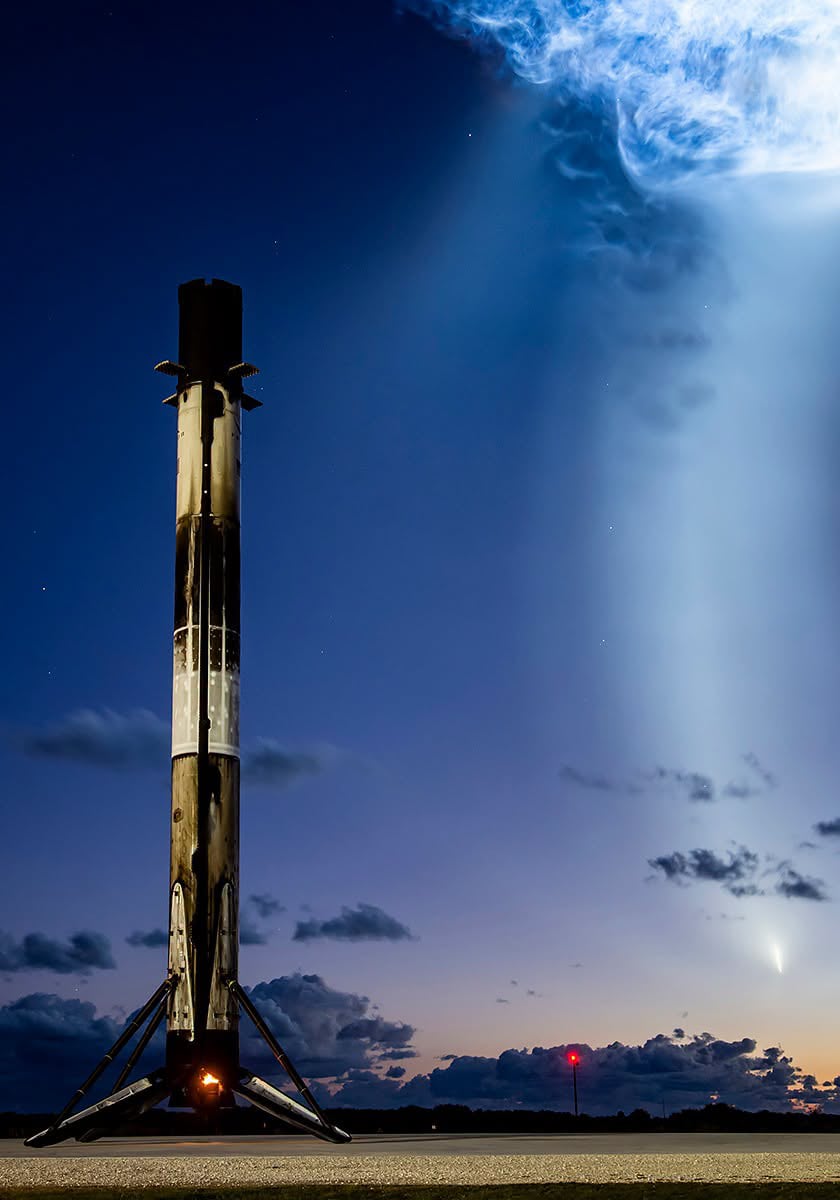
The rocket’s first stage had flown seven times before this mission. About two minutes after liftoff, it separated from the upper stage, which continued accelerating Dragon towards orbit. The booster then turned back towards Florida. It completed its landing sequence at Landing Zone 40, close to the launch site, about seven and a half minutes after liftoff.
The jellyfish in the sky
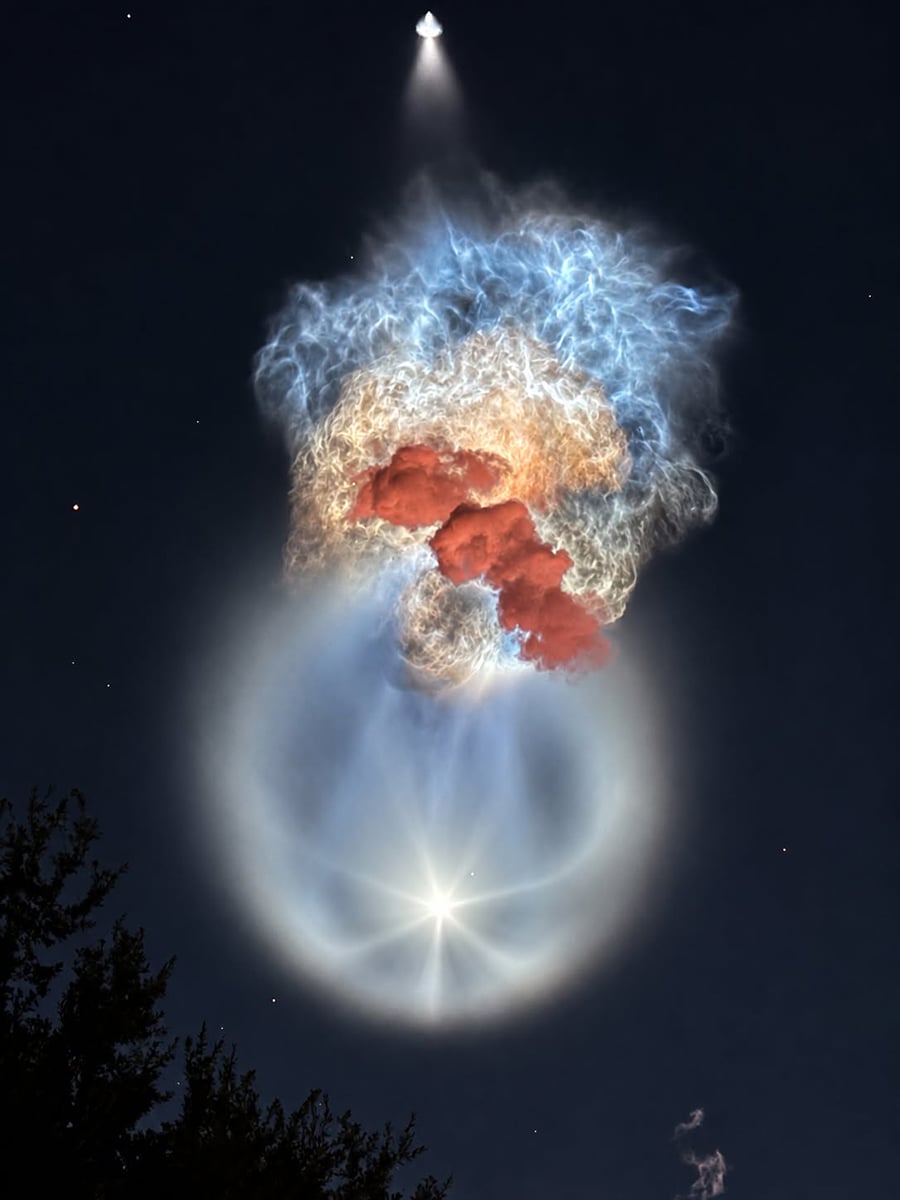
The jellyfish effect comes from the relationship between a rocket’s exhaust plume and the Sun. During launch, the engines release hot gases that expand as the vehicle climbs into thinner air. At high altitude, the plume can spread over a large area. The gases cool as they expand, and water vapor in the exhaust can freeze into tiny ice crystals.
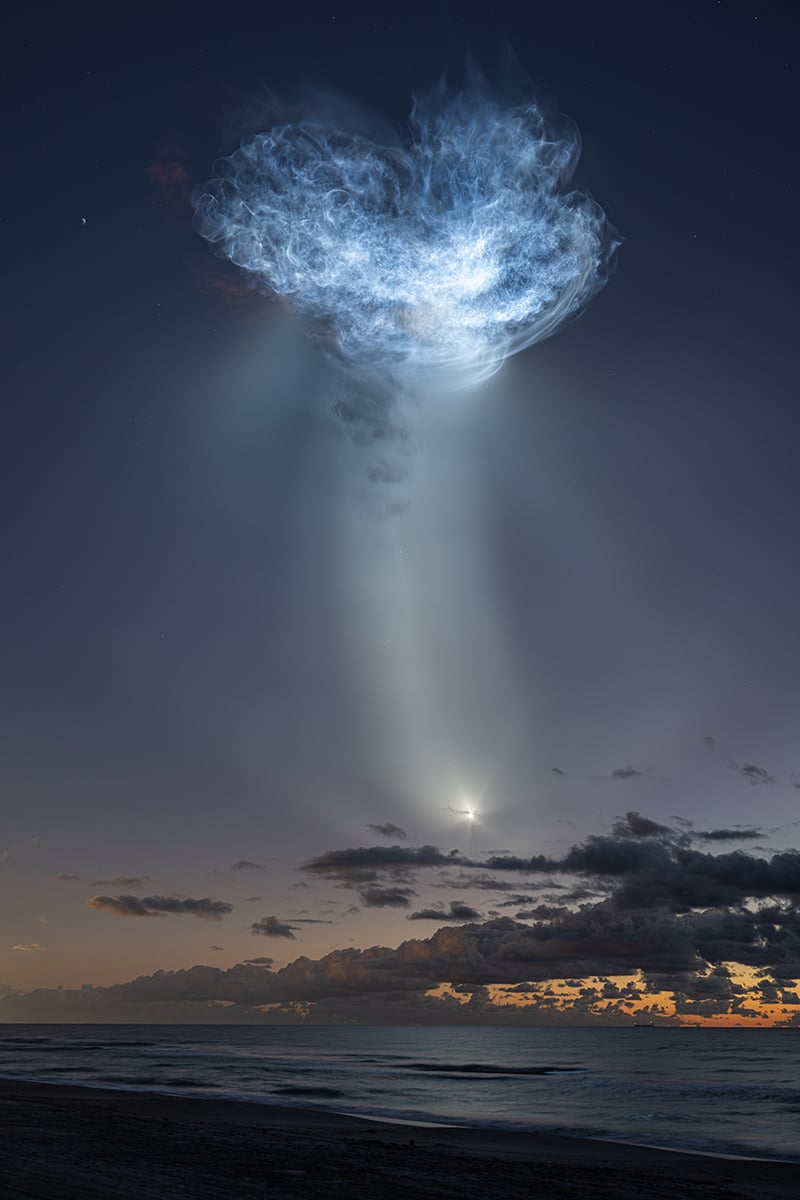
Sunlight illuminates the plume when the rocket reaches an altitude where the Sun is visible, even though people on the ground may still be in darkness. The crystals scatter the light, making the exhaust glow against the darker sky. The narrow trail behind the rocket forms the central part of the shape, while the expanding plume creates the wide top that gives it the jellyfish-like appearance.
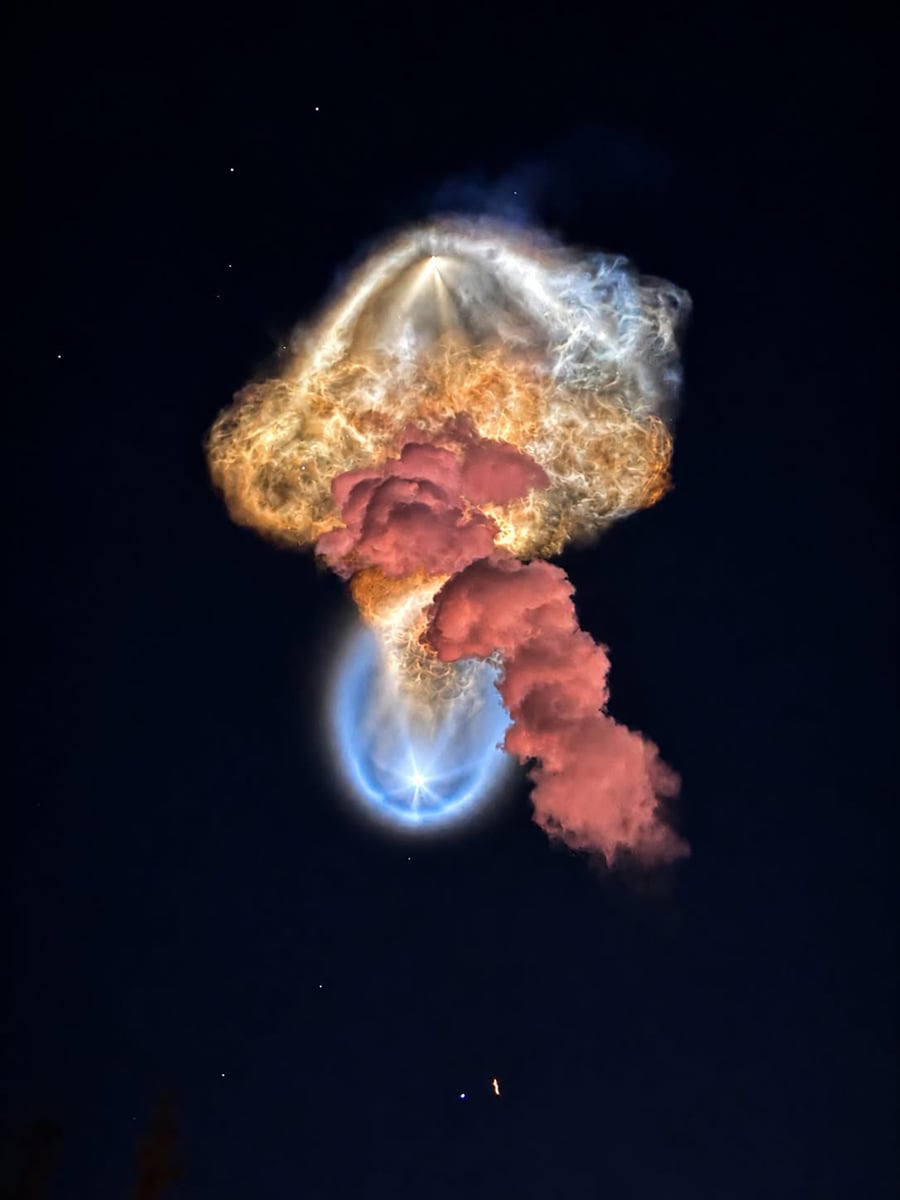
The timing of CRS-35 helped produce the effect. The rocket lifted off shortly before sunrise in Florida, so the plume climbed into sunlight while the ground remained in pre-dawn conditions. That contrast made the exhaust visible over a wide area. NASA noted that the plumes could be seen across the eastern United States.
What is Dragon delivering to the space station?
Among the research payloads, one experiment will test methods for manufacturing artificial retinas in microgravity. LambdaVision is investigating whether conditions aboard the ISS can help produce thin layers of light-sensitive protein for a potential retinal implant. The work could support future treatments for some forms of vision loss.
Dragon also carried 3D heart-tissue models for research into drug testing. Scientists can use engineered tissue to study how cells respond to different compounds. Microgravity offers another environment in which to examine tissue behaviour and the challenges of conducting biological research during space missions.
It is also carrying a pair of Roll-Out Solar Arrays that will support the ISS’s electrical system. The arrays fold into compact packages for launch and extend once they reach orbit. Astronauts will install them during spacewalks planned for later in the fall. Once installed, the arrays will add to the station’s power-generation capacity, supporting experiments, equipment, and routine operations.
More launch photos
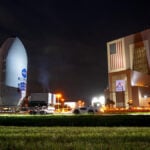
Enjoy some more photos of the launch event.
Clear skies!
See more from DIYPhotography.net on Google
Add DIYPhotography.net as a trusted source. This makes
our stories more likely to appear in your Google Search results.
 Add as a preferred source on Google

Soumyadeep Mukherjee
Soumyadeep Mukherjee is an award-winning astrophotographer from India. He has a doctorate degree in Linguistics. His work extends to the sub-genres of nightscape, deep sky, solar, lunar and optical phenomenon photography. He is also a photography educator and has conducted numerous workshops. His works have appeared in over 40 books & magazines including Astronomy, BBC Sky at Night, Sky & Telescope among others, and in various websites including National Geographic, NASA, Forbes. He was the first Indian to win “Astronomy Photographer of the Year” award in a major category.


Join the Discussion
DIYP Comment Policy
Be nice, be on-topic, no personal information or flames.