
















Sky-Watcher Joins the Smart Telescope Party: Here Is What We Know So Far
Oct 20, 2026
Soumyadeep Mukherjee
Soumyadeep Mukherjee is an award-winning astrophotographer from India. He has a doctorate degree in Linguistics. His work extends to the sub-genres of nightscape, deep sky, solar, lunar and optical phenomenon photography. He is also a photography educator and has conducted numerous workshops. His works have appeared in over 40 books & magazines including Astronomy, BBC Sky at Night, Sky & Telescope among others, and in various websites including National Geographic, NASA, Forbes. He was the first Indian to win “Astronomy Photographer of the Year” award in a major category.
Share:
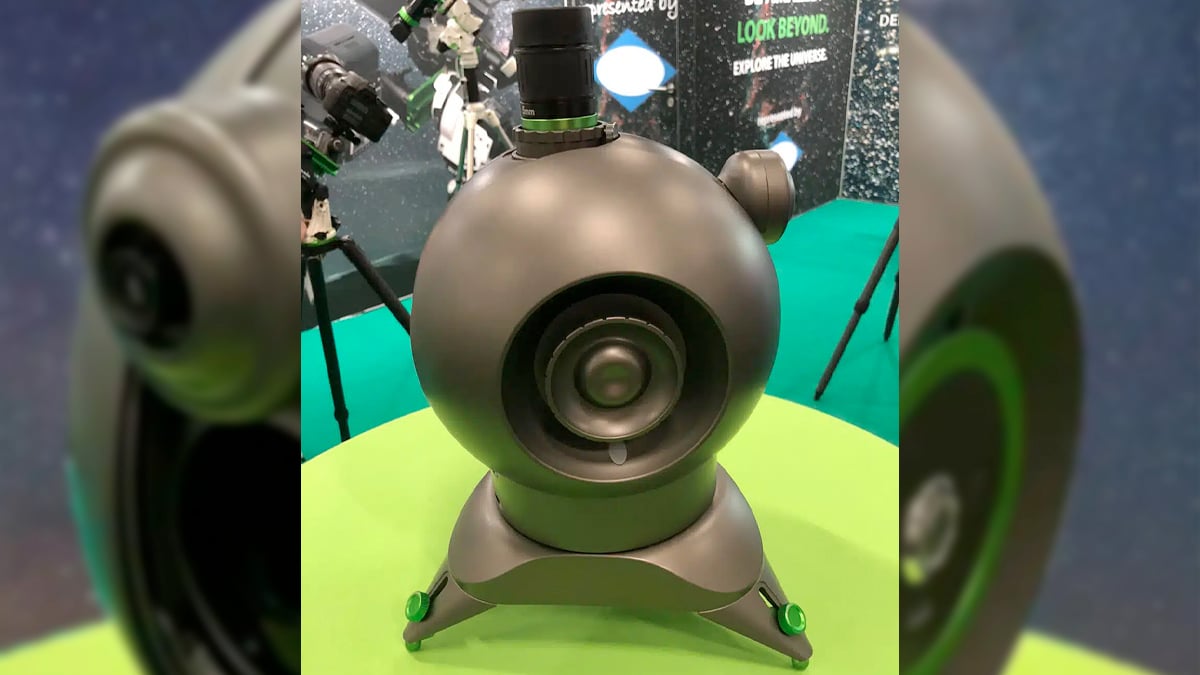
Sky-Watcher is entering the smart telescope market with the ORBIS. The new telescope combines automated imaging with the option of observing through an eyepiece. The company has shown two versions: the ORBIS 60ED and ORBIS 60EDX. Both use a 60mm refractor, include two cameras, and offer automated tracking through a smartphone app. Sky-Watcher presented the ORBIS at Imaging World in Nuremberg, Germany, in early October 2026.
Sky-Watcher’s first step into smart telescopes
For many beginners, astrophotography involves a steep learning curve. Smart telescopes ease much of the process. With an integrated system, users can select a celestial target through an app and let the telescope find it. The mount tracks the object while the camera records exposures. Software then combines and processes the images.
Sky-Watcher’s ORBIS follows the same route, but they have added a feature that deserves attention. Both the ORBIS versions include a physical eyepiece for visual observing. Owners can use the telescope to capture digital images, then switch to looking through the optics themselves. That makes the ORBIS different from other smart telescopes.
The two models share the same optical design. Each uses a four-element, extra-low-dispersion refractor with a 60mm aperture, a 300mm focal length, and an f/5 focal ratio.
ORBIS 60ED and 60EDX: What is different?
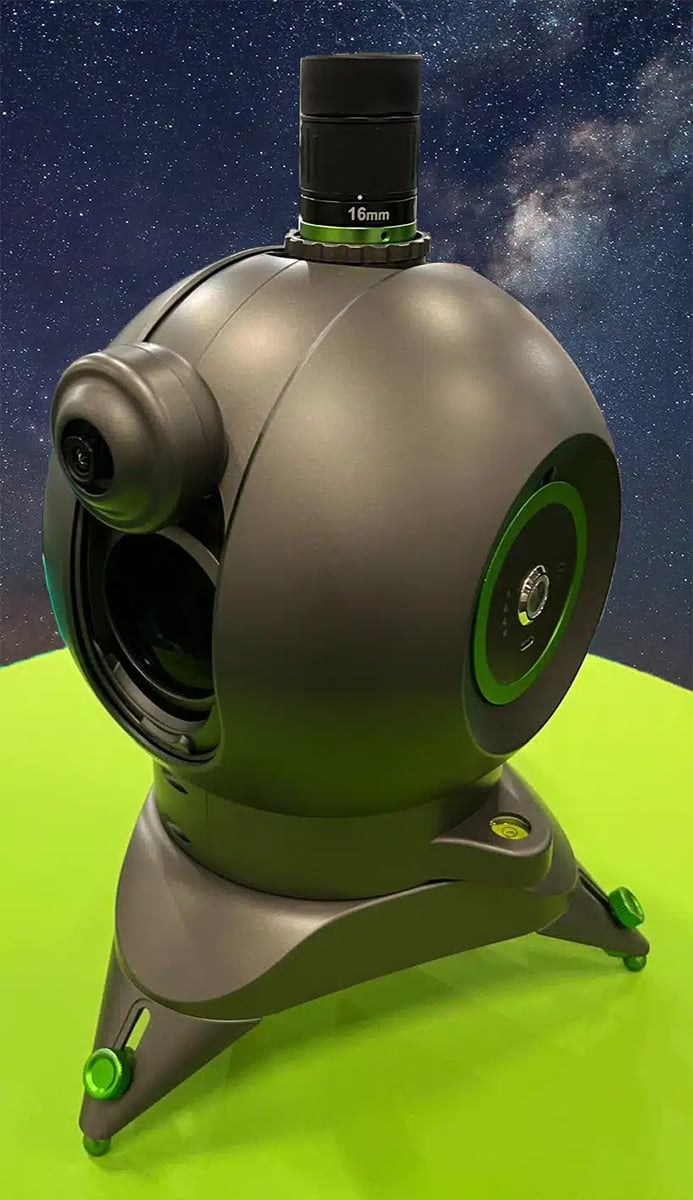
The ORBIS 60ED uses a single Sony IMX662 main camera with a resolution of approximately 2.1 megapixels. It has a field of view of 1.06° × 0.6° through the main telescope optics. This relatively tight framing can suit smaller targets.
The ORBIS 60EDX, on the other hand, has a dual-camera setup. It uses a Sony IMX585 sensor with approximately 8.3 megapixels. It has a field of view of 2.1° × 1.2° for this camera and supports 4K imaging. The larger sensor records more pixels and covers a wider area of the sky than the 60ED’s main camera.
The 60EDX version also has a second camera for wide-field photography. It uses a Sony IMX662 sensor behind an integrated wide-angle lens, giving it a field of view of approximately 67 degrees. On the ED version, we also get the wide-field option, but it does not have a separate sensor for that.
An eyepiece for observing
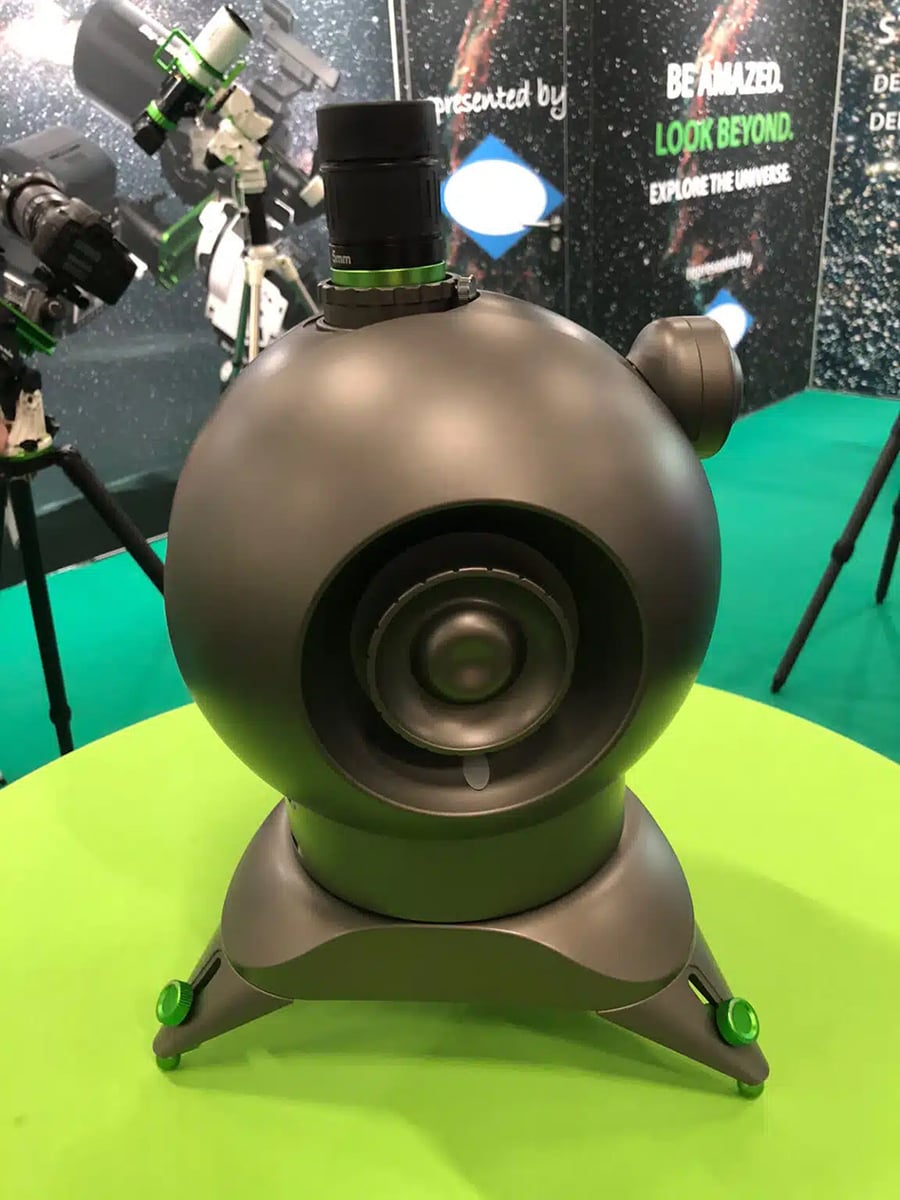
The ORBIS has another feature that makes it different from other smart telescopes: users can look through it. Most smart telescopes focus on digital imaging, with users watching their targets appear on a screen. Sky-Watcher has included an eyepiece for people who still want to observe the sky with their own eyes.
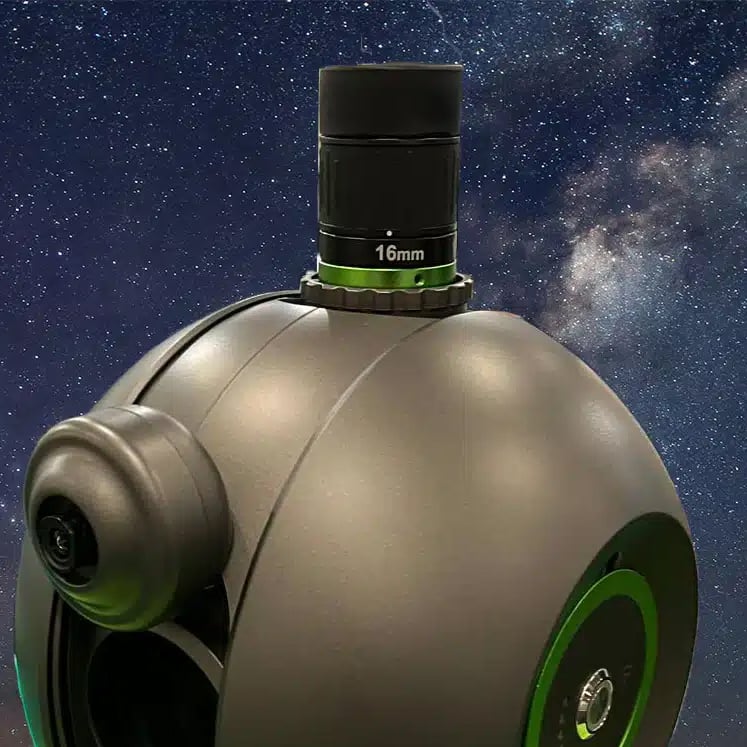
Sky-watcher will include a zoom eyepiece with a focal length ranging from 5mm to 16mm. Paired with the telescope’s 300mm focal length, it provides magnifications of approximately 18× to 60×. The eyepiece uses a standard 1.25-inch fitting, so owners can replace it with another compatible model if they prefer.
An internal flip mirror directs light towards either the camera or the eyepiece. Users can switch between imaging and visual observing. They could photograph a deep-sky target, then turn to the eyepiece to examine the Moon or a bright star cluster.
Tracking, filters and built-in features
The ORBIS uses a motorised alt-azimuth mount that can find, point towards and track celestial objects. Sky-Watcher also lists an integrated field de-rotator with a range of ±180 degrees.
Both models include 128GB of internal storage. Sky-Watcher Italia says users can transfer images to a USB device without additional software. A built-in 12,000mAh battery should provide around eight hours of continuous operation, according to the published specifications.
Each camera has its own motorized focusing mechanism. The telescope also includes an integrated anti-dew system to reduce condensation on the optics. A three-slot filter wheel provides space for different filters: UV/IR, Ha/OIII filter, and a dark filter.
Price and availability
Sky-Watcher lists summer 2027 as the expected availability window for the ORBIS 60ED and 60EDX. The company has not announced its prices. If you were to guess, what would be an optimal price for these two models? Let us know in the comments.
Clear skies!
See more from DIYPhotography.net on Google
Add DIYPhotography.net as a trusted source. This makes
our stories more likely to appear in your Google Search results.
 Add as a preferred source on Google

Soumyadeep Mukherjee
Soumyadeep Mukherjee is an award-winning astrophotographer from India. He has a doctorate degree in Linguistics. His work extends to the sub-genres of nightscape, deep sky, solar, lunar and optical phenomenon photography. He is also a photography educator and has conducted numerous workshops. His works have appeared in over 40 books & magazines including Astronomy, BBC Sky at Night, Sky & Telescope among others, and in various websites including National Geographic, NASA, Forbes. He was the first Indian to win “Astronomy Photographer of the Year” award in a major category.



Join the Discussion
DIYP Comment Policy
Be nice, be on-topic, no personal information or flames.