


















ESA’s New 50cm Cebreros Telescope Captures Its First Image
Sep 24, 2026
Soumyadeep Mukherjee
Soumyadeep Mukherjee is an award-winning astrophotographer from India. He has a doctorate degree in Linguistics. His work extends to the sub-genres of nightscape, deep sky, solar, lunar and optical phenomenon photography. He is also a photography educator and has conducted numerous workshops. His works have appeared in over 40 books & magazines including Astronomy, BBC Sky at Night, Sky & Telescope among others, and in various websites including National Geographic, NASA, Forbes. He was the first Indian to win “Astronomy Photographer of the Year” award in a major category.
Share:
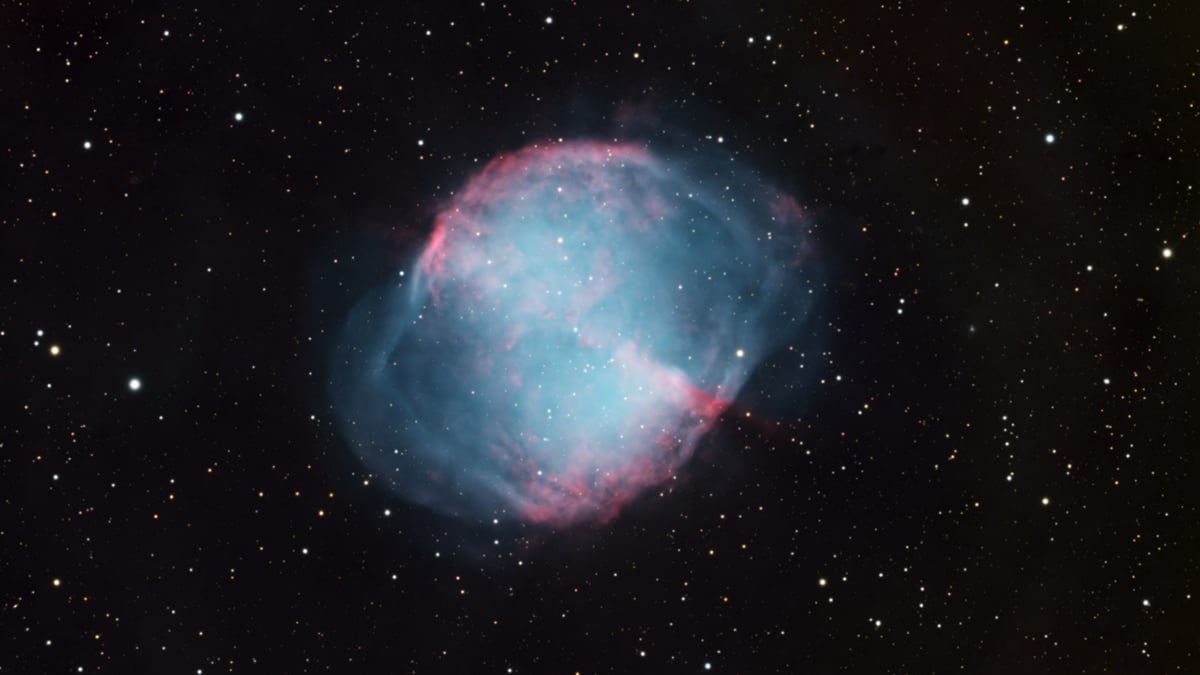
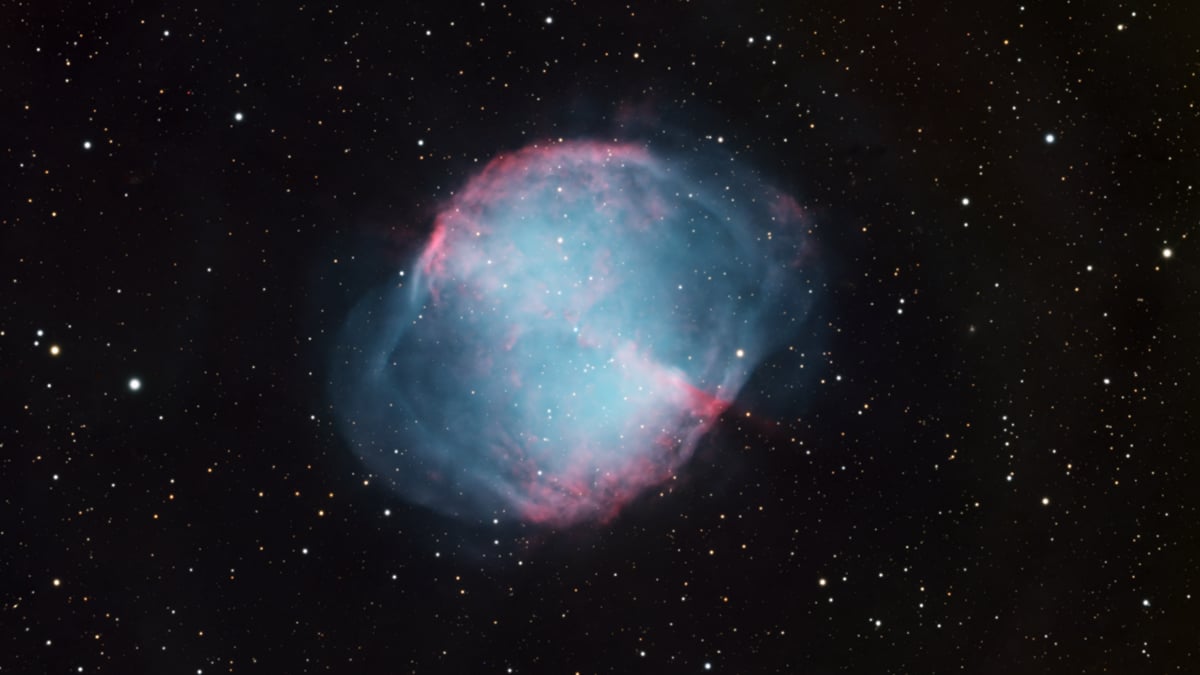
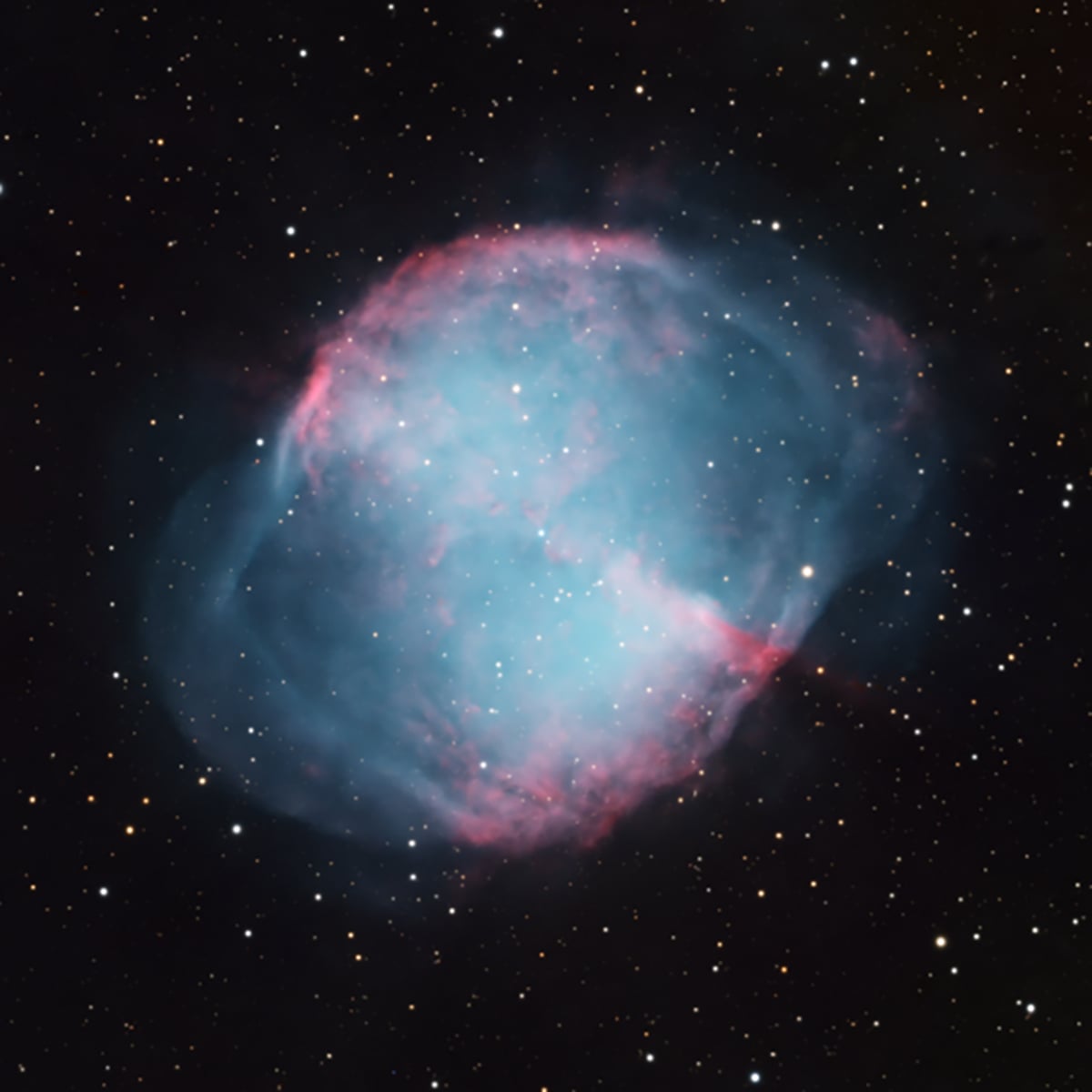
ESA has a new telescope pointing at the night sky from its Cebreros Deep Space Station in Spain. The 50cm instrument has now captured its first astronomical image, and the target was the Dumbbell Nebula, or M27. The observation took place during the night of September 3–4, 2026.
The image forms part of the commissioning work for the CESAR Cebreros Telescope (CCT). The team used the session to check the telescope, camera, filters, and observing procedures under real observing conditions. ESA plans to bring the telescope into its education programme during the first half of 2027. Schools and other educational institutions will then be able to plan observations and work with data from the telescope.
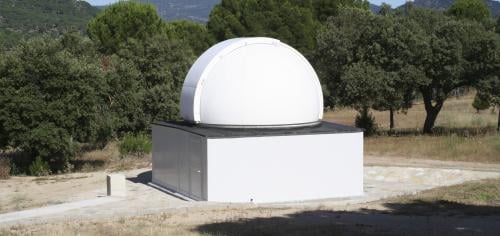
A 50cm telescope at one of ESA’s deep-space stations
The Cebreros Telescope sits at ESA’s Deep Space Tracking Station near Cebreros in Ávila, Spain. The location is better known for its role in communicating with spacecraft. The station’s large antenna forms part of ESA’s deep-space network.
The optical telescope operates separately from the communications system. It uses a 50cm primary mirror and a 5m focal length, giving it an f/10 optical system. CESAR describes it as a classic Cassegrain telescope, with a parabolic primary mirror and a hyperbolic secondary mirror.
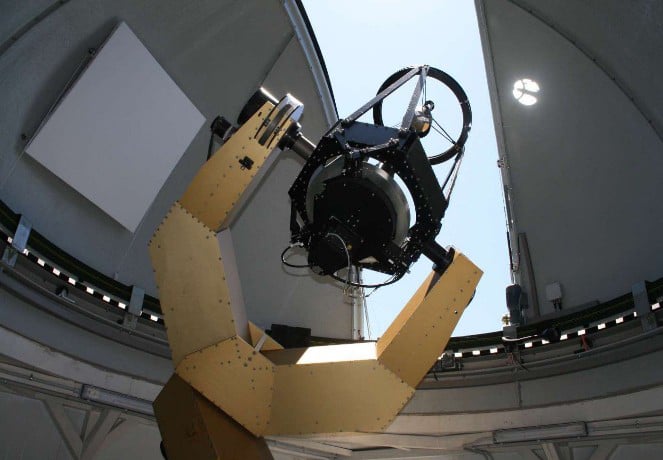
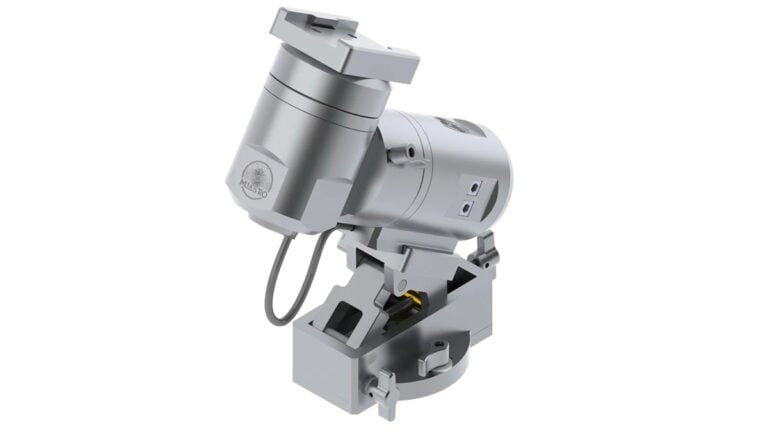
The telescope sits inside an automated 3.5m dome. Its equatorial fork mount uses high-precision drive systems on both axes. CESAR lists relative pointing accuracy of less than 0.5 arcseconds and tracking resolution below 0.3 arcseconds with its closed-loop servo system. The mount can also follow objects at non-sidereal rates.
CESAR also operates the observatory through a control system that handles the telescope, dome, filter wheel, focus, and camera. The wider CESAR infrastructure includes a control center that manages observations and transfers the resulting data for storage and distribution.
The first target: M27 or the Dumbbell Nebula
The CESAR team chose M27 for the first-light observations. The Dumbbell Nebula is a planetary nebula and one of the brighter objects in this category. It also has strong emission features that make it a useful target for testing color imaging.
M27 has another useful advantage during commissioning. The nebula sits among numerous stars, giving the team plenty of points with which to examine the image and assess the telescope’s performance.
The observing session ran from roughly 17:00 to 02:00 UTC. During that time, the team photographed M27 through luminance, red, green, and blue filters. The CMOS camera operated at a temperature of -15°C. The team also captured flat, dark, and bias frames. These files provide the calibration data needed before the science images can undergo reduction and stacking.
Students will take part in the observations
ESA plans to start educational activities with the Cebreros Telescope during the first half of 2027. Schools and other educational institutions will work with experts from the CESAR programme as they use the facility.
ESA says that the students will follow the observing process from selecting scientific targets through planning and executing observations. They will then analyse the data they receive.
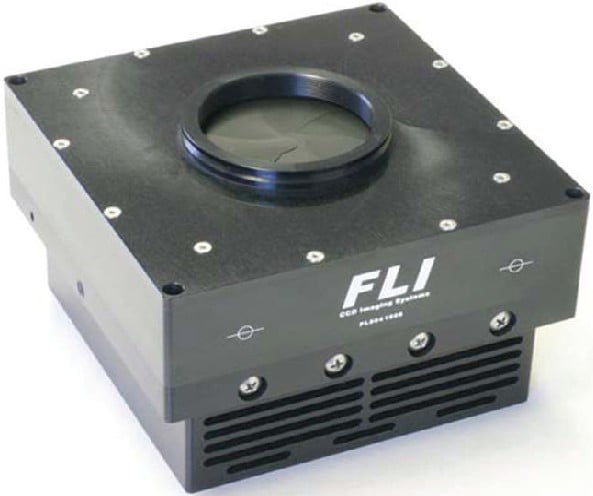
The students could first learn where the object sits in the sky and decide when it will be visible from Cebreros. They could then select suitable filters and exposure settings before the observation. Once the images arrive, they can examine the raw data and calibration frames. They can see the difference between an unprocessed exposure and a calibrated image. They can also compare images taken through different filters.
CESAR already uses astronomy and space science to support classroom activities. ESA runs the programme with Spain’s National Institute for Aerospace Technology (INTA) and Systems Engineering for Defense of Spain (ISDEFE). Its activities include school projects, teacher training, scientific cases and access to observatories.
Clear skies!
See more from DIYPhotography.net on Google
Add DIYPhotography.net as a trusted source. This makes
our stories more likely to appear in your Google Search results.
 Add as a preferred source on Google

Soumyadeep Mukherjee
Soumyadeep Mukherjee is an award-winning astrophotographer from India. He has a doctorate degree in Linguistics. His work extends to the sub-genres of nightscape, deep sky, solar, lunar and optical phenomenon photography. He is also a photography educator and has conducted numerous workshops. His works have appeared in over 40 books & magazines including Astronomy, BBC Sky at Night, Sky & Telescope among others, and in various websites including National Geographic, NASA, Forbes. He was the first Indian to win “Astronomy Photographer of the Year” award in a major category.


Join the Discussion
DIYP Comment Policy
Be nice, be on-topic, no personal information or flames.