


























Subaru’s Deep Image of M77 Reveals an Ancient Galaxy Merger
Sep 23, 2026
Soumyadeep Mukherjee
Soumyadeep Mukherjee is an award-winning astrophotographer from India. He has a doctorate degree in Linguistics. His work extends to the sub-genres of nightscape, deep sky, solar, lunar and optical phenomenon photography. He is also a photography educator and has conducted numerous workshops. His works have appeared in over 40 books & magazines including Astronomy, BBC Sky at Night, Sky & Telescope among others, and in various websites including National Geographic, NASA, Forbes. He was the first Indian to win “Astronomy Photographer of the Year” award in a major category.
Share:
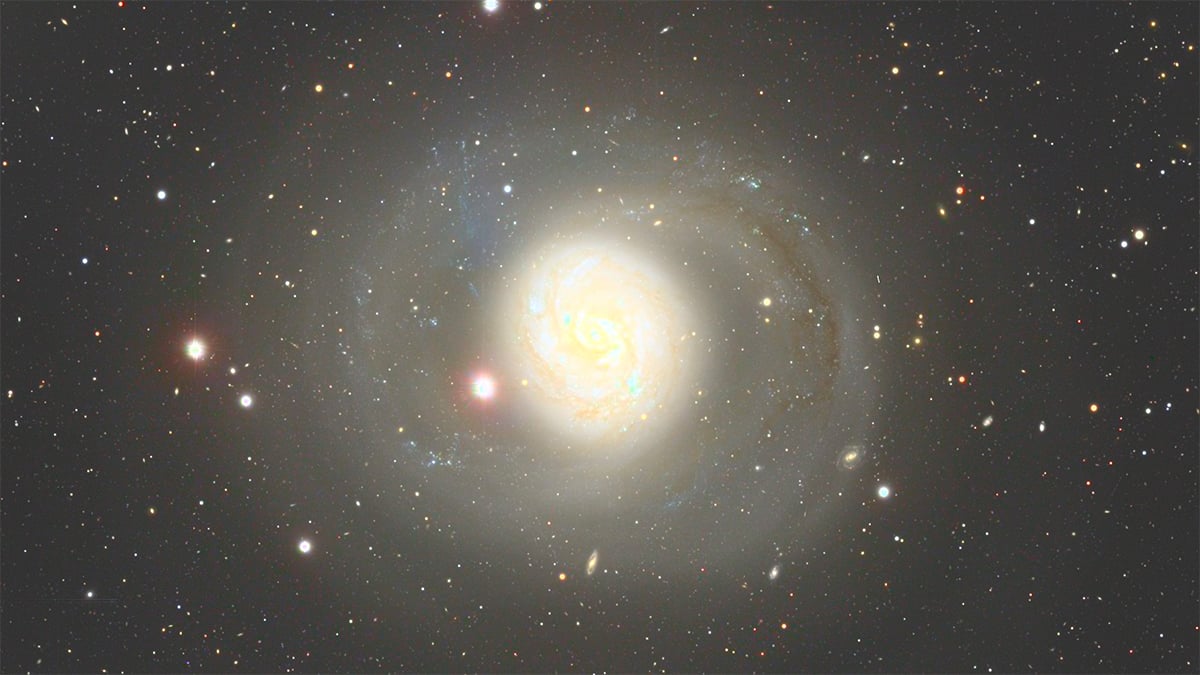
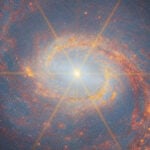
M77 has always been a popular target for astronomers and astrophotographers. Its broad spiral arms surround a bright central region, giving it the familiar appearance of a nearby spiral galaxy. However, something very different happens at its core. A supermassive black hole powers an active nucleus that releases enormous amounts of energy.
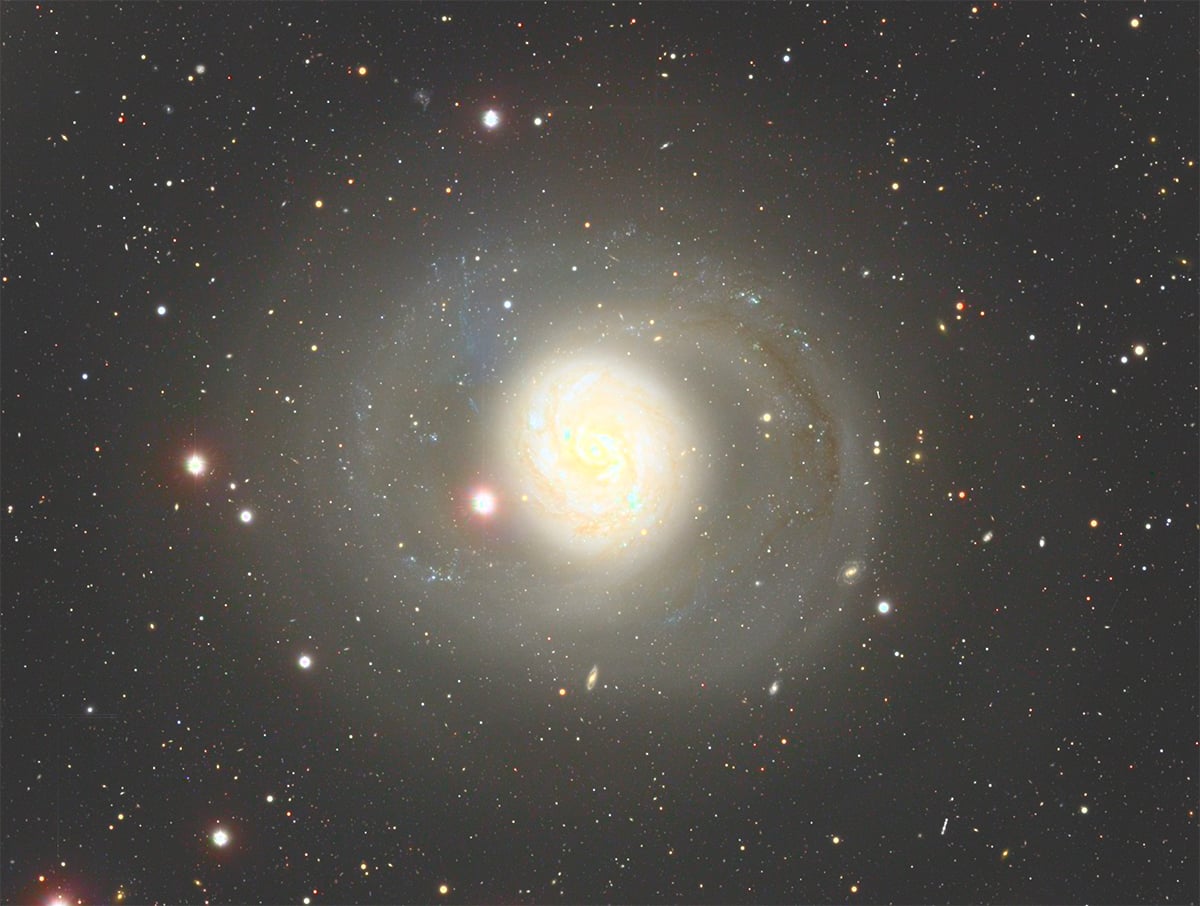
For years, astronomers struggled to explain why this particular galaxy had such an energetic center. A deep image from the Subaru Telescope might have answered the question. The telescope picked up faint structures around M77. The structures include an asymmetric outer arm, a ripple-like feature, and several diffuse objects.
A spiral galaxy with an active centre
M77, also known as NGC 1068, lies about 48 million light-years away in the constellation Cetus. It belongs to a class of galaxies called Seyfert galaxies. These galaxies have unusually energetic centers, known as active galactic nuclei.
The source of M77’s activity sits at its core. A supermassive black hole with an estimated mass of about 10 million Suns occupies the central region. Gas and dust around the black hole become extremely hot as gravity pulls them inward. That material releases energy across a wide range of wavelengths, from X-rays to radio waves.
This creates an obvious question. Where does the central black hole get enough material to sustain such powerful activity? Gas in a galaxy cannot simply fall straight into a black hole. It rotates around the galactic center and carries angular momentum. As the gas moves inward, that rotation makes the final journey increasingly difficult.
Astronomer Yoshiaki Taniguchi proposed a connection between this process and Seyfert galaxies in 1999. He suggested that a minor merger could help activate the central black hole in galaxies such as M77.
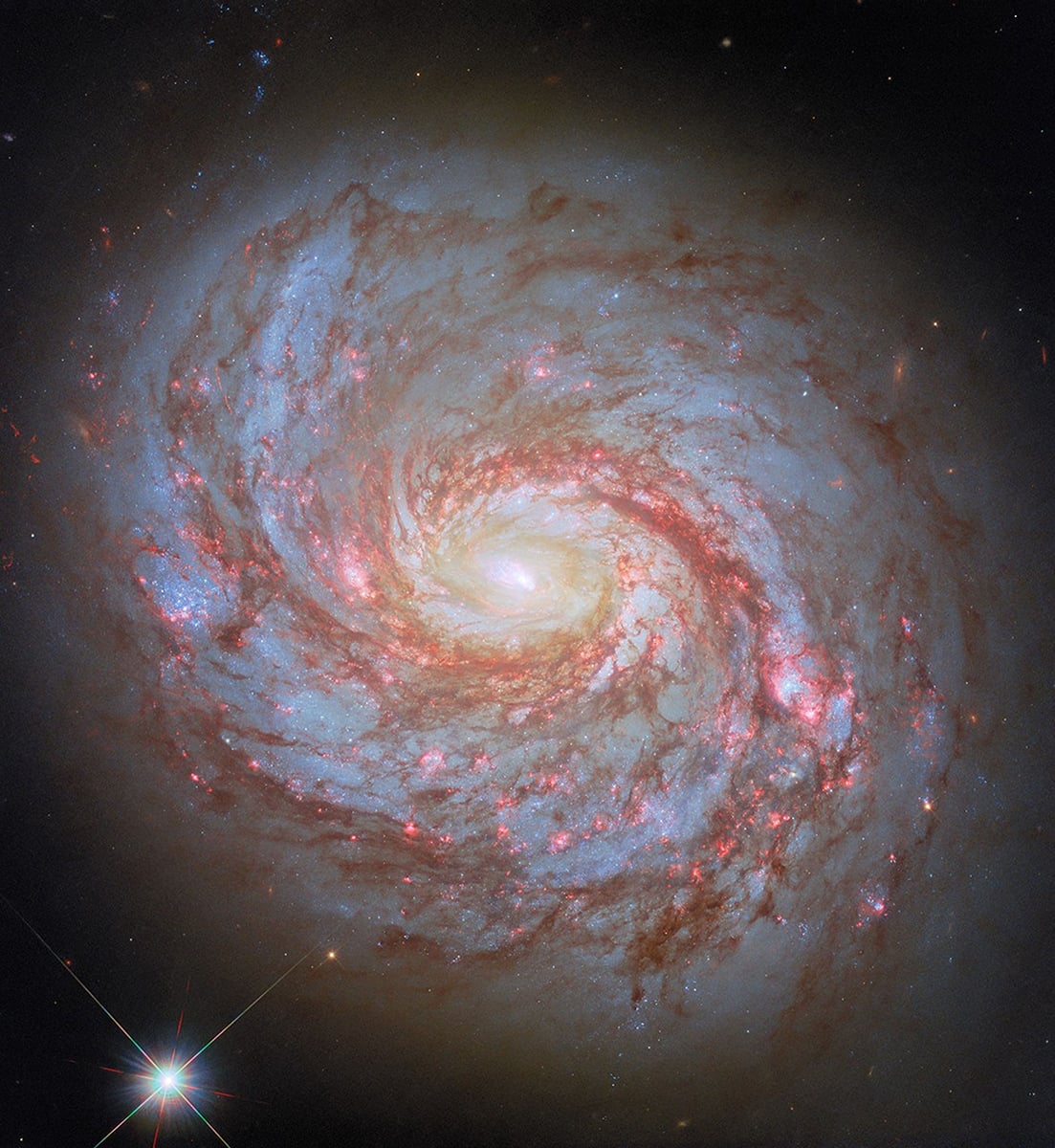
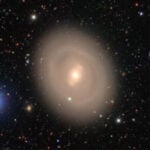
Subaru’s deep image of M77
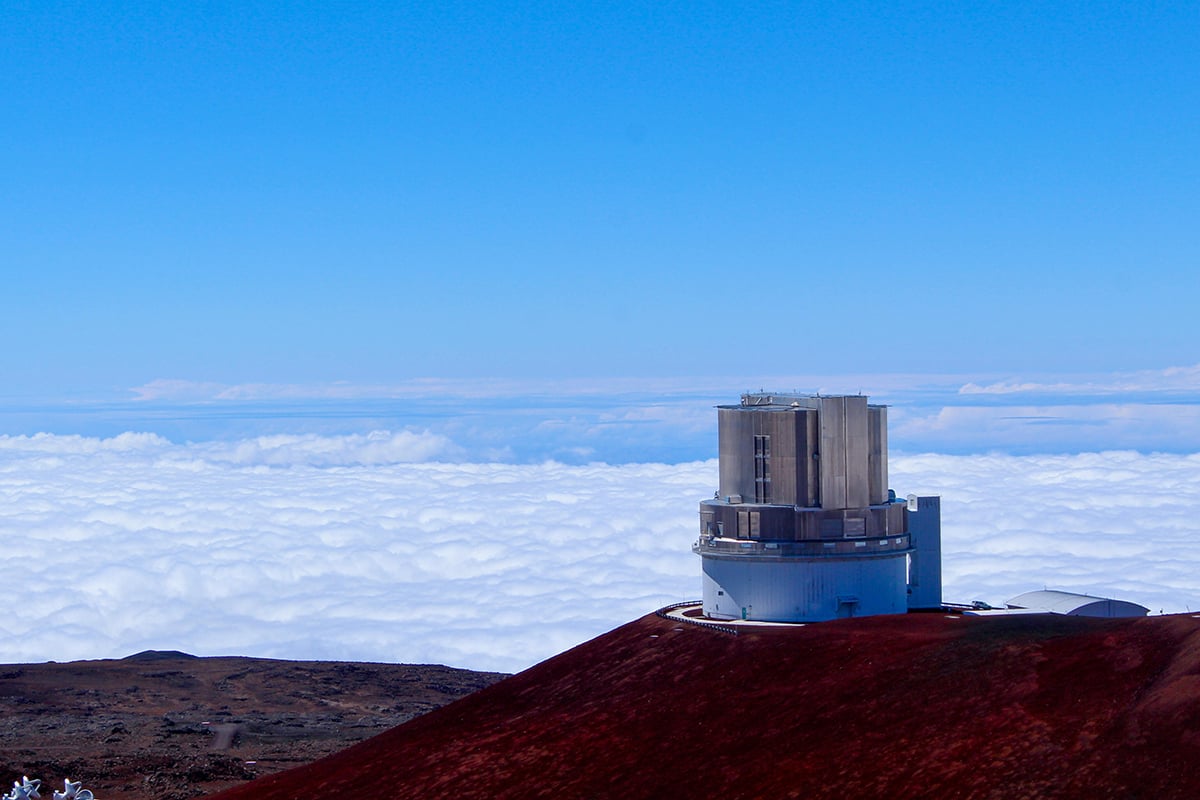
The key observations came from the Hyper Suprime-Cam, or HSC, on Subaru‘s 8.2-metre telescope. The large primary mirror gives it considerable light-gathering power, while the Hyper Suprime-Cam provides a wide field for deep optical imaging.
The observation took place back in 2016. The researchers also added older Subaru data from the telescope’s archive. The combination of the datasets gave a much deeper view of the galaxy and its surroundings.
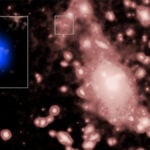
After processing the observations, the team found several features apart from the normal spiral pattern. A faint one-armed feature extends from the western side of M77. On the opposite side, the researchers found a ripple-like structure that does not follow the galaxy’s normal spiral pattern. Neither feature had appeared clearly in earlier images.
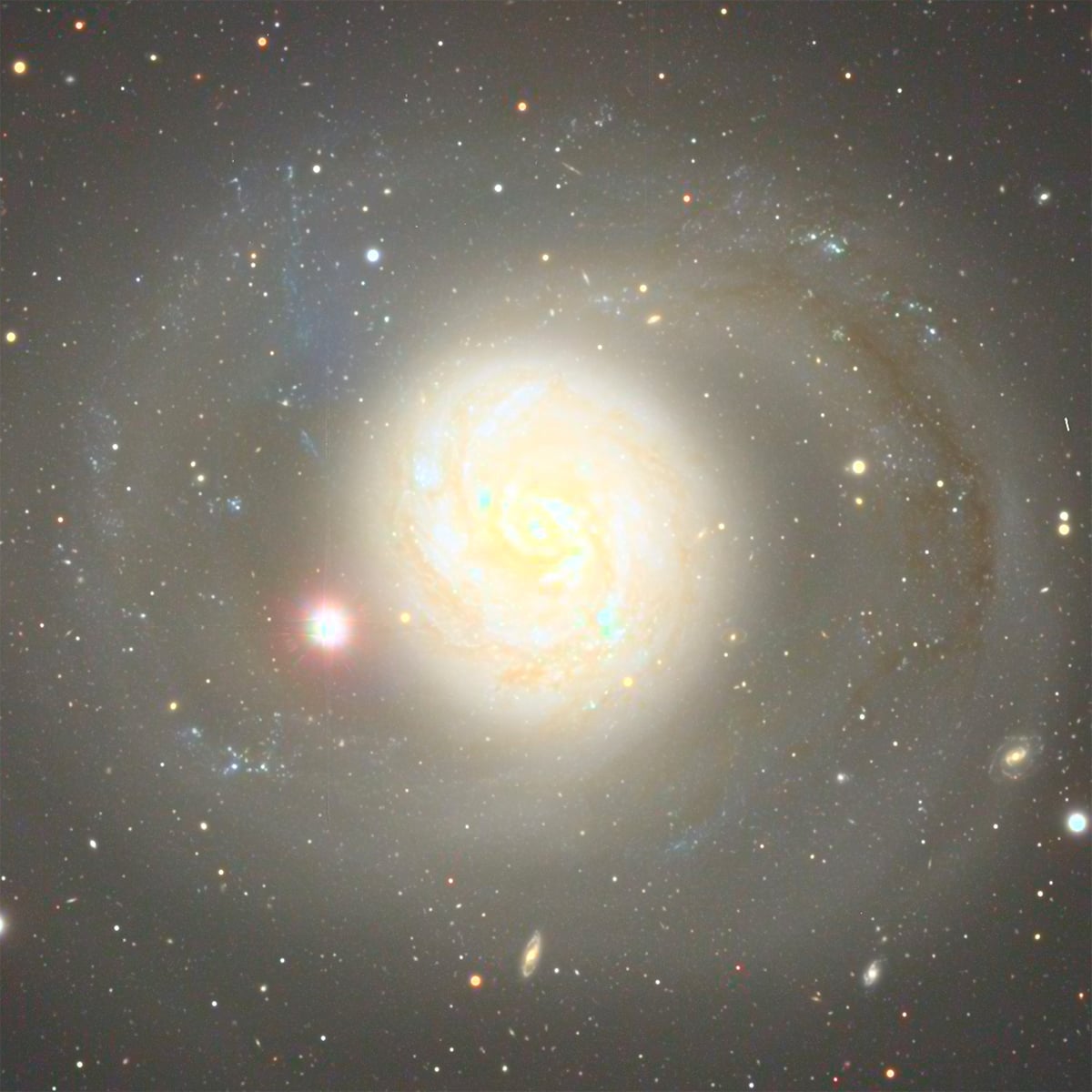
A 250,000-light-year loop surrounds M77
The research team found three large, diffuse objects farther from the main disk. These objects became the most intriguing part of the investigation. The researchers called the three diffuse objects ultra-diffuse objects, or UDOs. Two of them sit along what appears to be a much larger loop or stream around M77.
The loop stretches about 250,000 light-years across. That makes it several times wider than the bright stellar disk of the Milky Way. One of the diffuse objects may be a tidal dwarf galaxy. The team also found another much fainter object along the same general structure. Its position suggests that it could belong to the same ancient interaction.
The researchers concluded that M77 experienced a minor merger several billion years ago. A smaller satellite galaxy approached the much larger M77 and eventually became disrupted by its gravity. Its debris spread through the outer regions of the host galaxy.
Clear skies!
See more from DIYPhotography.net on Google
Add DIYPhotography.net as a trusted source. This makes
our stories more likely to appear in your Google Search results.
 Add as a preferred source on Google

Soumyadeep Mukherjee
Soumyadeep Mukherjee is an award-winning astrophotographer from India. He has a doctorate degree in Linguistics. His work extends to the sub-genres of nightscape, deep sky, solar, lunar and optical phenomenon photography. He is also a photography educator and has conducted numerous workshops. His works have appeared in over 40 books & magazines including Astronomy, BBC Sky at Night, Sky & Telescope among others, and in various websites including National Geographic, NASA, Forbes. He was the first Indian to win “Astronomy Photographer of the Year” award in a major category.
Join the Discussion
DIYP Comment Policy
Be nice, be on-topic, no personal information or flames.