



















Nikon Z8 Photographed Two Satellites Burning Up From an Airplane
Sep 7, 2026
Soumyadeep Mukherjee
Soumyadeep Mukherjee is an award-winning astrophotographer from India. He has a doctorate degree in Linguistics. His work extends to the sub-genres of nightscape, deep sky, solar, lunar and optical phenomenon photography. He is also a photography educator and has conducted numerous workshops. His works have appeared in over 40 books & magazines including Astronomy, BBC Sky at Night, Sky & Telescope among others, and in various websites including National Geographic, NASA, Forbes. He was the first Indian to win “Astronomy Photographer of the Year” award in a major category.
Share:
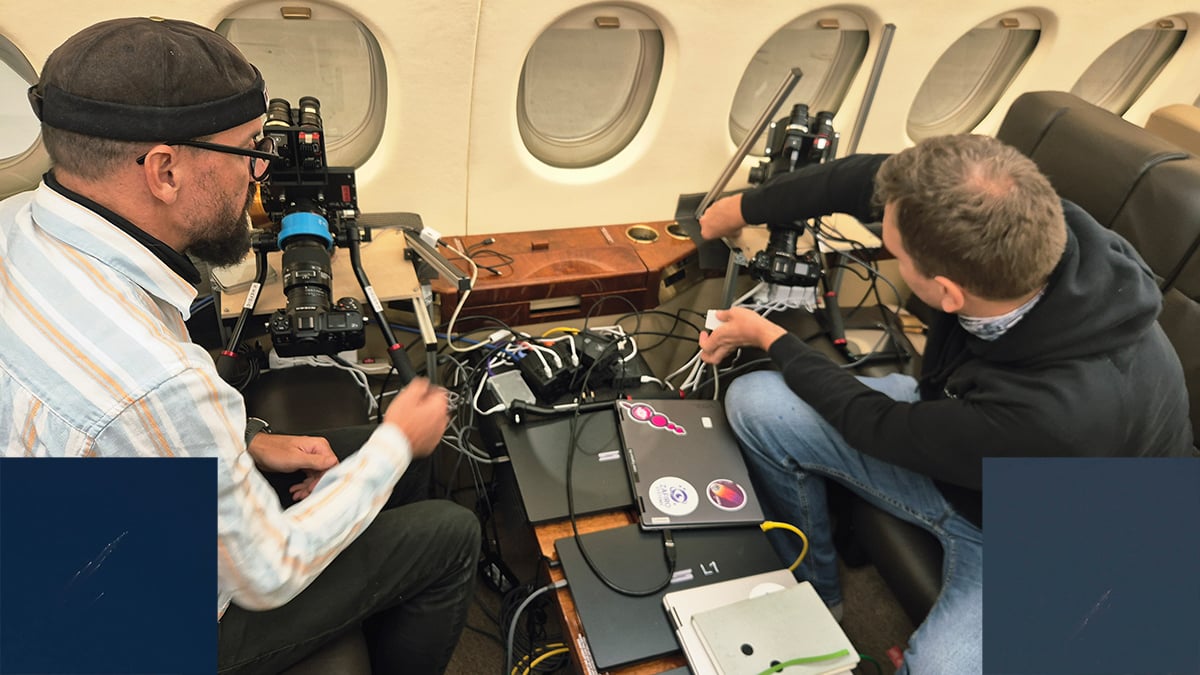
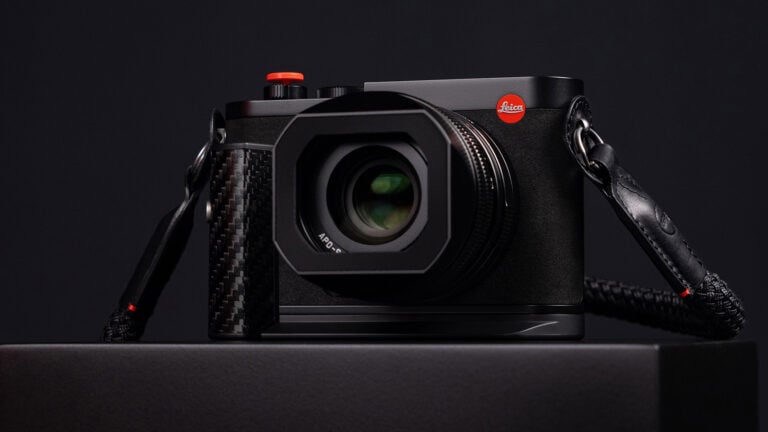
A Nikon Z8 has captured something most photographers will never get the chance to photograph: a satellite breaking apart as it falls back to Earth. The camera was aboard a research aircraft flying over the South Pacific. Its target was not a rocket launch or a spacecraft passing overhead, but two ageing satellites making their final journey through Earth’s atmosphere. Samba reentered on August 31, followed by Tango on September 1. Both belonged to ESA’s Cluster mission, which spent 26 years studying Earth’s magnetosphere.
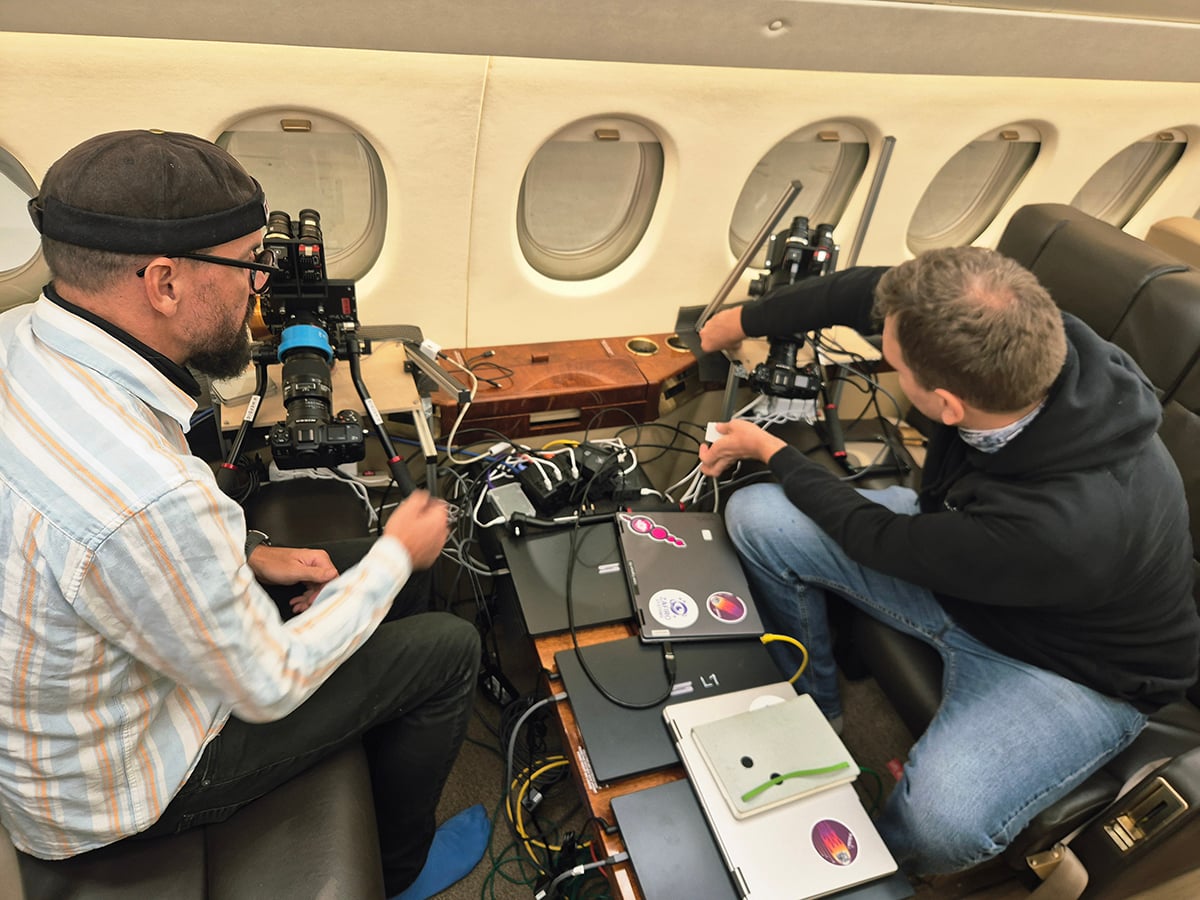
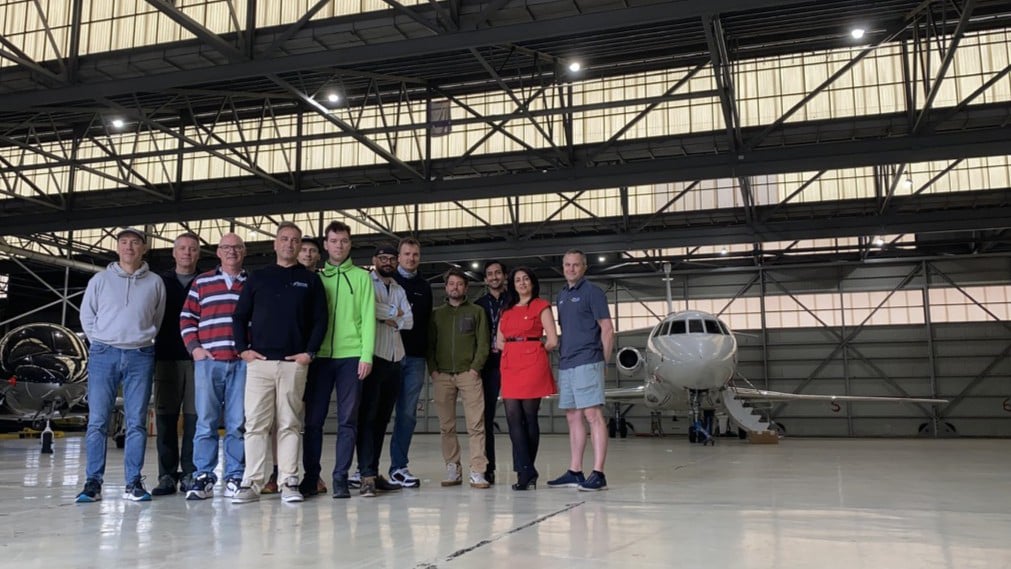
Their return was planned so that the satellites would fall over a remote section of the Pacific, where a specially equipped aircraft could observe them. The Nikon Z8 was part of that aircraft’s observation system. Researchers from the University of Stuttgart used it as a tracking camera, recording the spacecraft as they heated up and began to break apart. It was one of 30 instruments carried by the aircraft during the ROSIE reentry campaign.
Nikon Z8 as a tracking camera
The Z8 had a very different role from the one most photographers would associate with the camera. Researchers used it as a tracking camera to confirm the spacecraft’s position and provide a visual record of its surroundings. That allowed the team to see the spacecraft‘s movement, follow the breakup, and track fragments after they separated from the main body.
This is something that would be difficult to reproduce in a laboratory. A spacecraft breaking apart in the real atmosphere is affected by conditions that are difficult to model perfectly. Atmospheric density changes with altitude, and the spacecraft’s orientation can change during the descent. Different components can fail at different temperatures. The photographs and video provide an actual record against which simulations can be checked.
The ROSIE instruments were developed for this type of airborne reentry observation and tested in plasma wind tunnels before the campaign. The team began preparing the equipment in Sydney on August 22, integrating and calibrating the instruments aboard the Falcon 900 aircraft before moving to Tonga on August 28.
Samba gave the team the first major observation
Samba was the first satellite the team had to capture during the 2026 campaign. The spacecraft, also known as Cluster II FM-7, had been part of ESA’s Cluster mission since its launch in 2000. The mission originally had a much shorter planned lifetime, but the four spacecraft continued collecting scientific data for more than two decades.
The team already had experience from Salsa, another Cluster spacecraft that was observed during its reentry in 2024. That campaign revealed a significant difference between predicted and observed atmospheric conditions. Measurements indicated that atmospheric density differed by as much as 20 percent from the expected value.
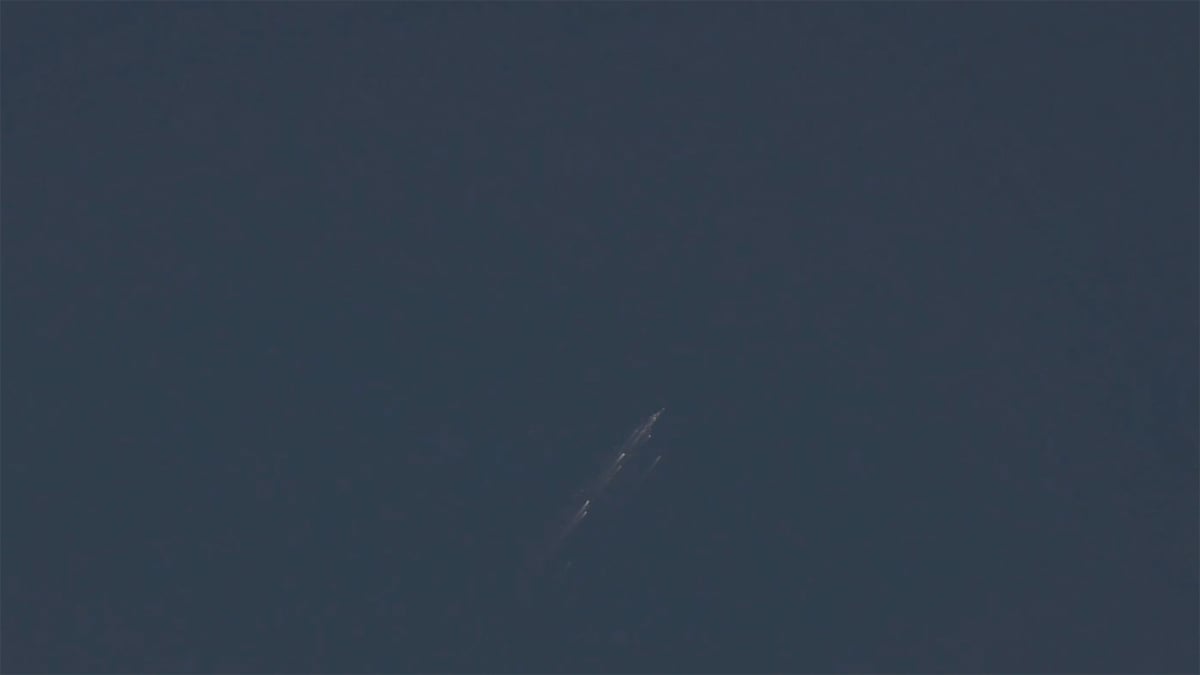
Samba provided another opportunity to compare those predictions with reality. The Nikon Z8 recorded more than 50 seconds of its reentry, and the footage showed numerous fragments surrounding the main spacecraft. ESA says the improved observations provided a much better view than the team had obtained during the earlier Salsa campaign.
Tango gave a second chance
The ROSIE team did not have to wait long before getting another opportunity. Tango reentered less than 24 hours after Samba, entering the atmosphere at 21:30:31 UTC on September 1. The spacecraft was again observed from the aircraft over the South Pacific, with the Nikon Z8 operated by the University of Stuttgart’s HEFDiG team at Station 3.
The aircraft itself played an important part in keeping Tango in view. As the spacecraft moved across the sky, the pilot banked the aircraft at the right moment, extending the period during which the satellite remained inside the camera’s field of view. The researchers were able to observe Tango for roughly 50 seconds, giving them another substantial sequence of images to analyze.
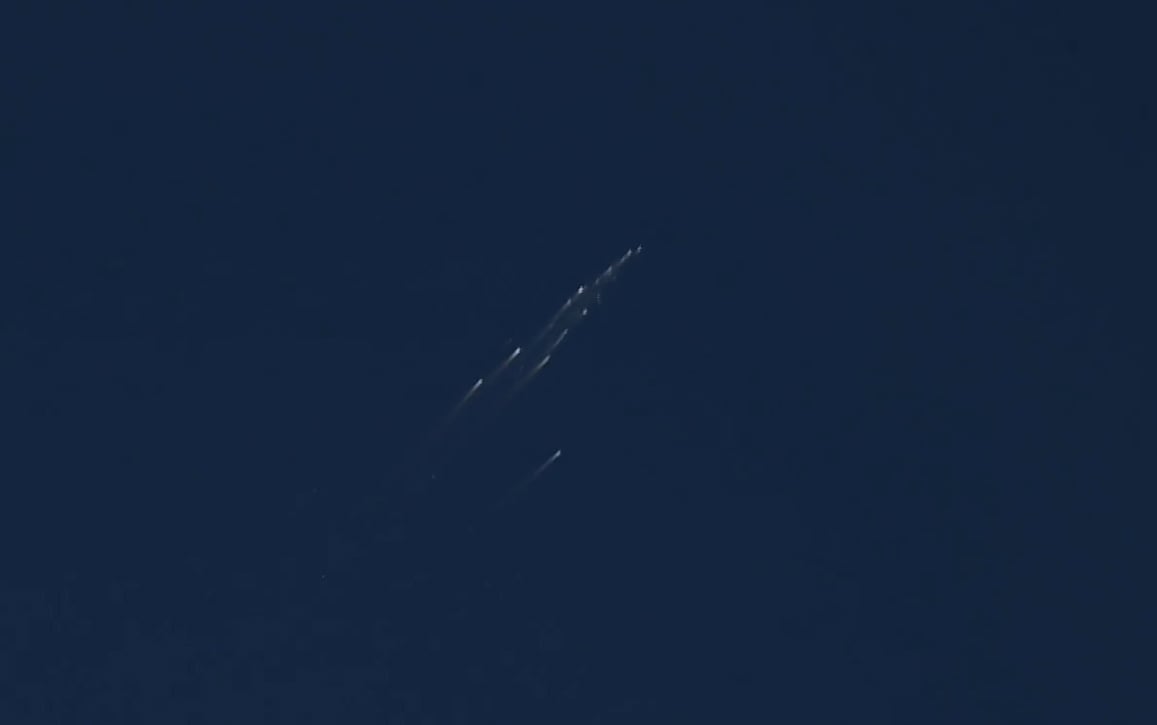
Tango gave the researchers a second example from a spacecraft with the same mission heritage. The four Cluster satellites were built to work together and shared a common design, making comparisons between their reentries particularly useful. If Samba and Tango show similar breakup patterns, the observations could support the assumptions used in current models.
Clear skies!
See more from DIYPhotography.net on Google
Add DIYPhotography.net as a trusted source. This makes
our stories more likely to appear in your Google Search results.
 Add as a preferred source on Google

Soumyadeep Mukherjee
Soumyadeep Mukherjee is an award-winning astrophotographer from India. He has a doctorate degree in Linguistics. His work extends to the sub-genres of nightscape, deep sky, solar, lunar and optical phenomenon photography. He is also a photography educator and has conducted numerous workshops. His works have appeared in over 40 books & magazines including Astronomy, BBC Sky at Night, Sky & Telescope among others, and in various websites including National Geographic, NASA, Forbes. He was the first Indian to win “Astronomy Photographer of the Year” award in a major category.
Related Posts
 Elon Musk plans to dim the Starlink satellites to reduce light pollution in the night sky
 ESA Satellites Capture Wildfires, Drought and Extreme Heat from Space
 The Disposable Camera Astronauts Have Sent On A Suicide Mission To Capture Photos Of Burning Spacecraft
 Photojournalist under fire for staging a photo of a child burning a mask
Join the Discussion
DIYP Comment Policy
Be nice, be on-topic, no personal information or flames.