



















Spacewalks in Photos: Three EVAs and 19 Hours Outside the ISS
Sep 7, 2026
Soumyadeep Mukherjee
Soumyadeep Mukherjee is an award-winning astrophotographer from India. He has a doctorate degree in Linguistics. His work extends to the sub-genres of nightscape, deep sky, solar, lunar and optical phenomenon photography. He is also a photography educator and has conducted numerous workshops. His works have appeared in over 40 books & magazines including Astronomy, BBC Sky at Night, Sky & Telescope among others, and in various websites including National Geographic, NASA, Forbes. He was the first Indian to win “Astronomy Photographer of the Year” award in a major category.
Share:
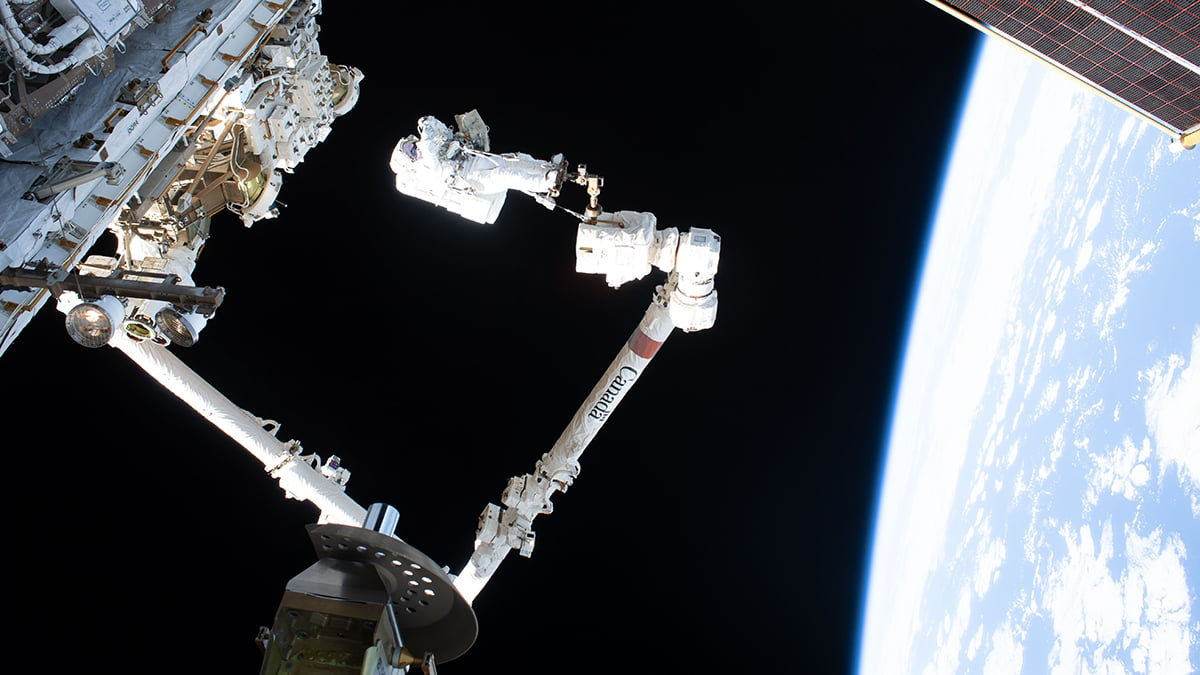
ESA astronaut Sophie Adenot has had a busy few weeks outside the International Space Station. Between 18 August and 1 September 2026, she completed three spacewalks during her first ISS mission. The three outings lasted a combined 19 hours and 42 minutes. Adenot worked with NASA astronauts Anil Menon and Jessica Meir on repairs, station maintenance, and preparations for future work.
The three spacewalks also marked several milestones for Adenot. Her first EVA (extravehicular activity) made her the first French woman to perform a spacewalk. By the end of the third, she had joined a relatively small group of European astronauts who have worked outside the ISS. The photographs from the three outings provide a detailed record of that work.
First spacewalk: Tackling a failed communications antenna
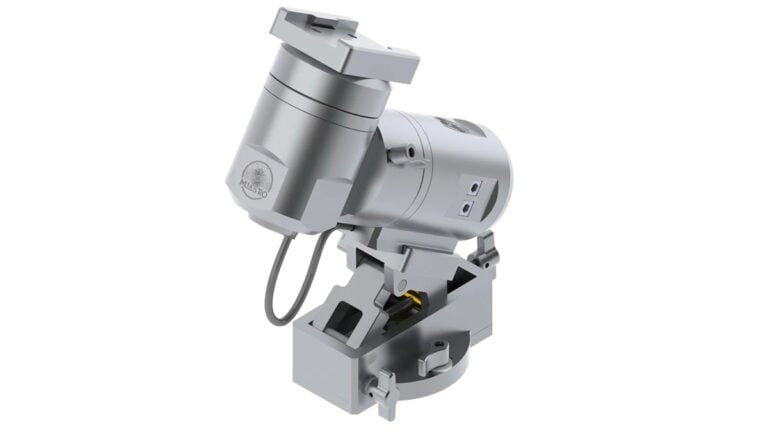
Adenot’s first spacewalk began on 18 August 2026, when she and Anil Menon left the Quest airlock for US EVA-97. The excursion lasted 6 hours and 23 minutes. It was Adenot’s first time working outside a spacecraft in orbit, and the main objective was to remove a failed Space-to-Ground Antenna, known as SGANT-2.
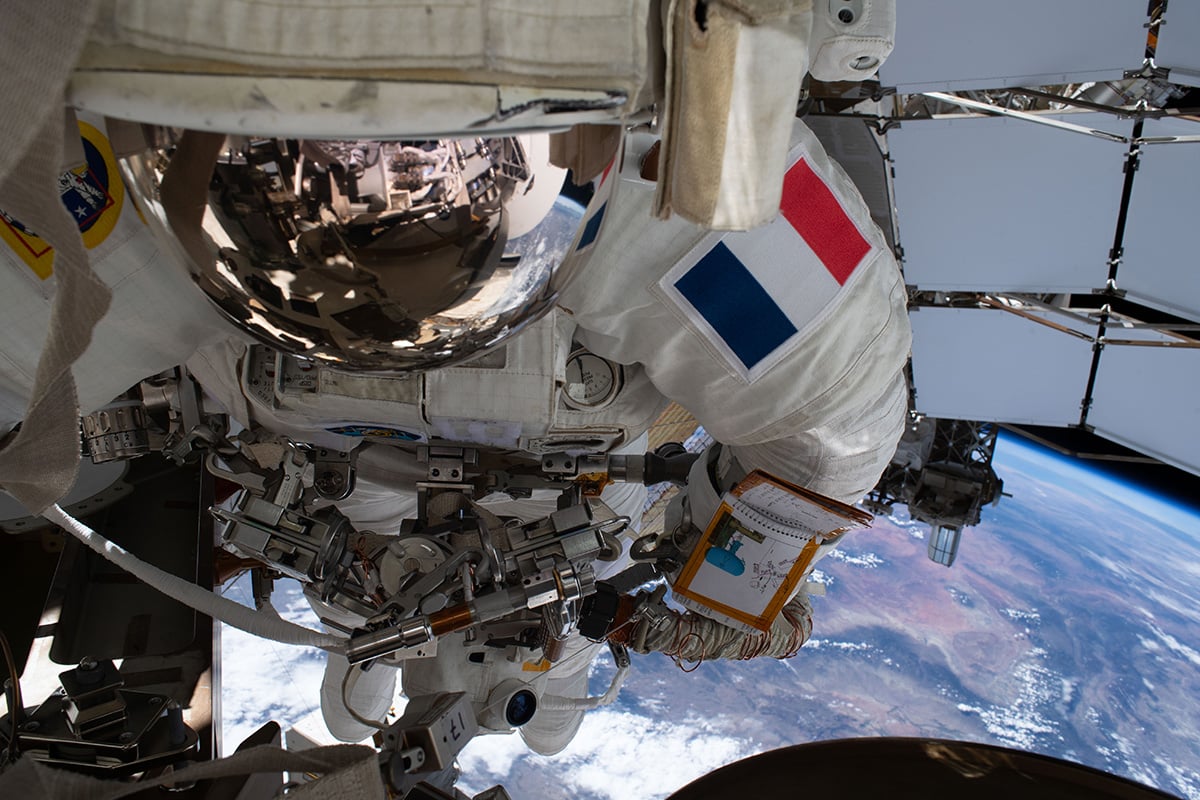
The original plan was that Adenot and Menon would remove the faulty antenna and install a replacement during the same EVA. During the replacement, some of the bolts and electrical connectors proved difficult to release. The astronauts had to spend more time than planned working on the antenna assembly.
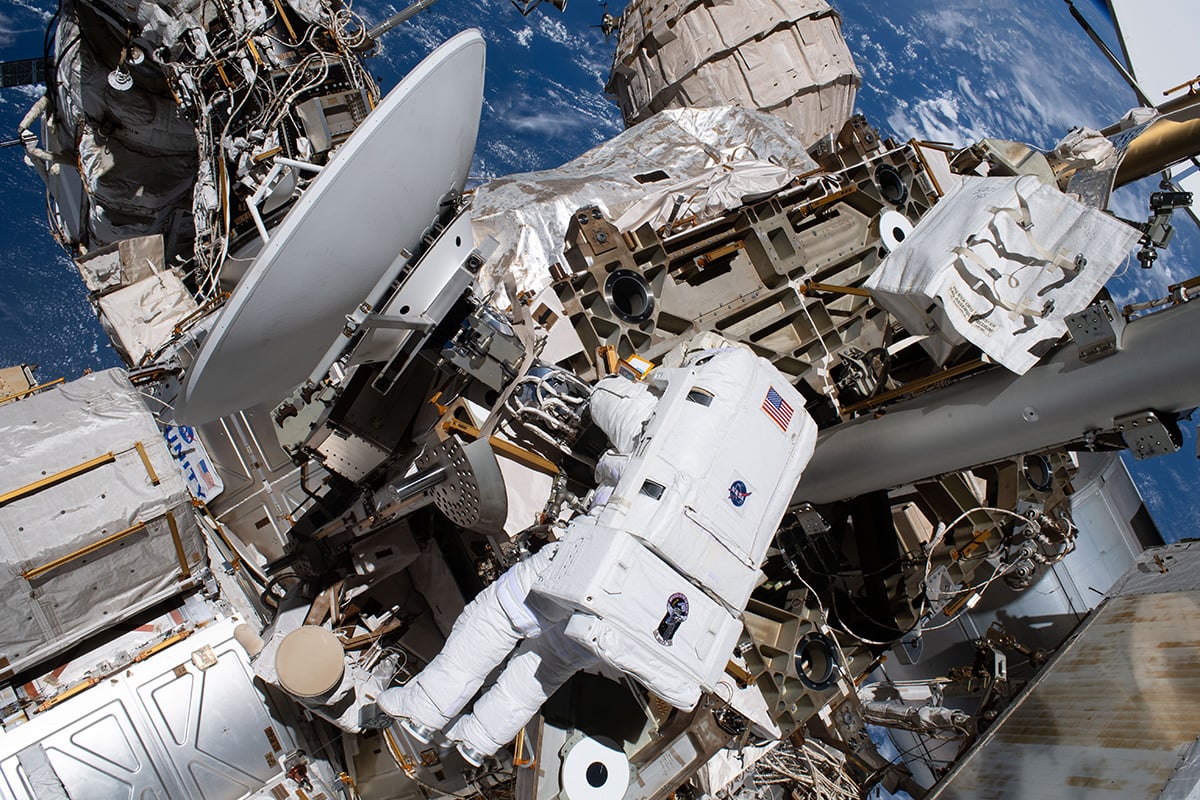
Adenot and Menon installed gimbal locks to prevent the antenna from moving while they worked on it. They then disconnected electrical connections and continued removing the failed hardware. The work eventually allowed them to separate the antenna from its mounting position.
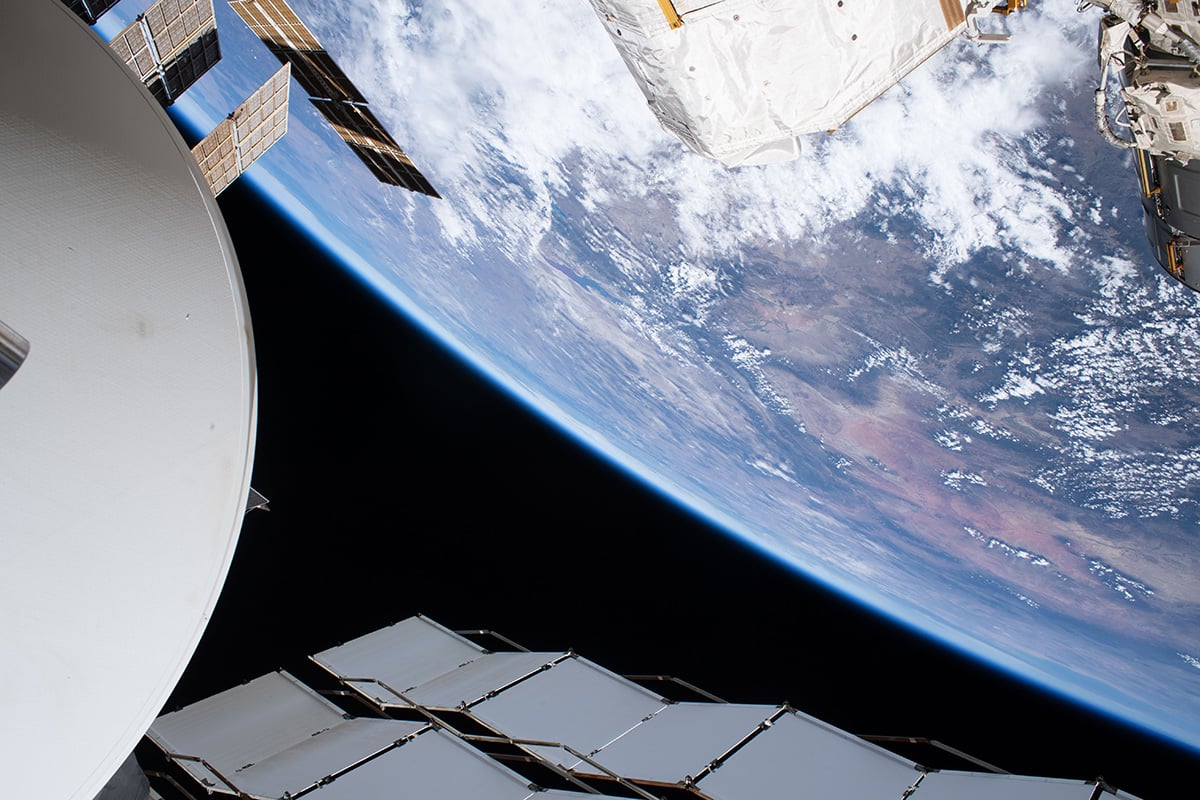
By this point, there was no longer enough time to complete the replacement installation as originally planned.
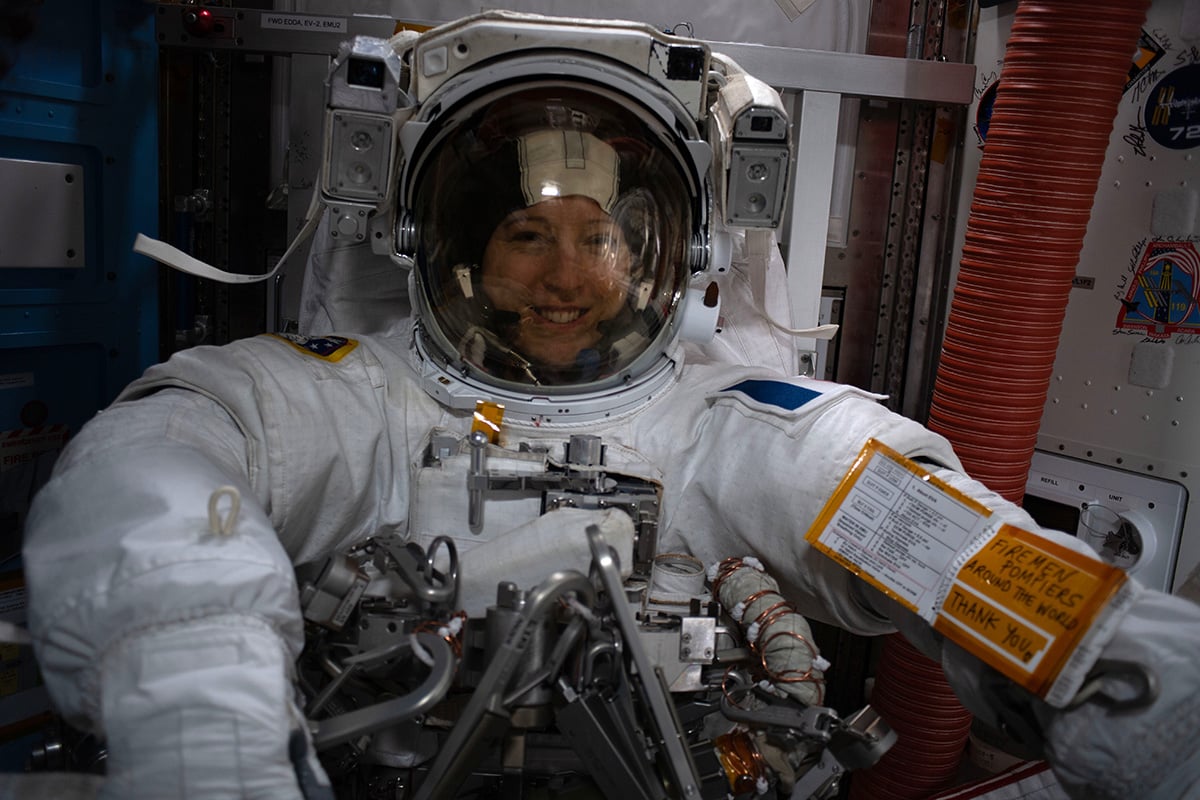
Second spacewalk: Completion of antenna replacement
Just seven days later, Adenot was back outside the station again. On 25 August, she joined Menon for US EVA-98, which lasted 6 hours and 30 minutes. This time, the main task was the replacement of the SGANT antenna left unfinished during the previous EVA.
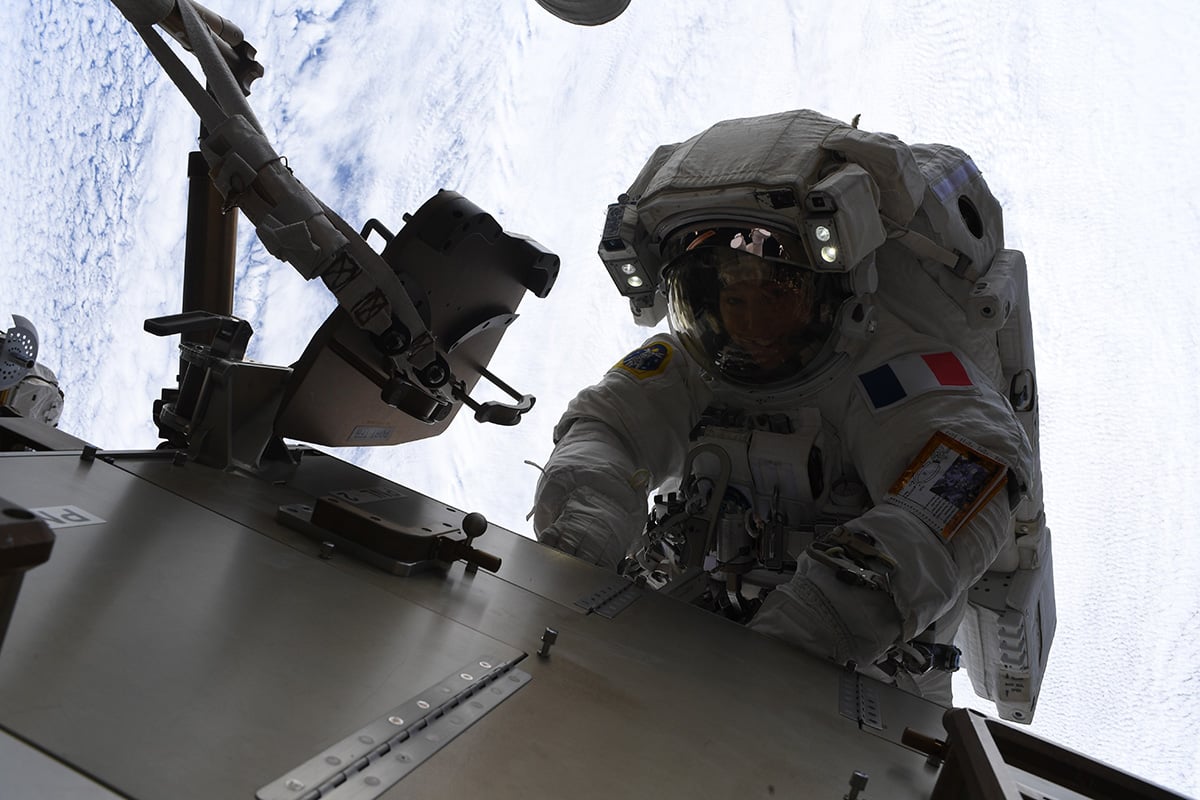
The spare antenna was already aboard the ISS. The challenge was to move it from its storage position and install it on the Z1 truss. The operation involved Canadarm2, the station’s robotic arm, as well as work by both astronauts outside the spacecraft.
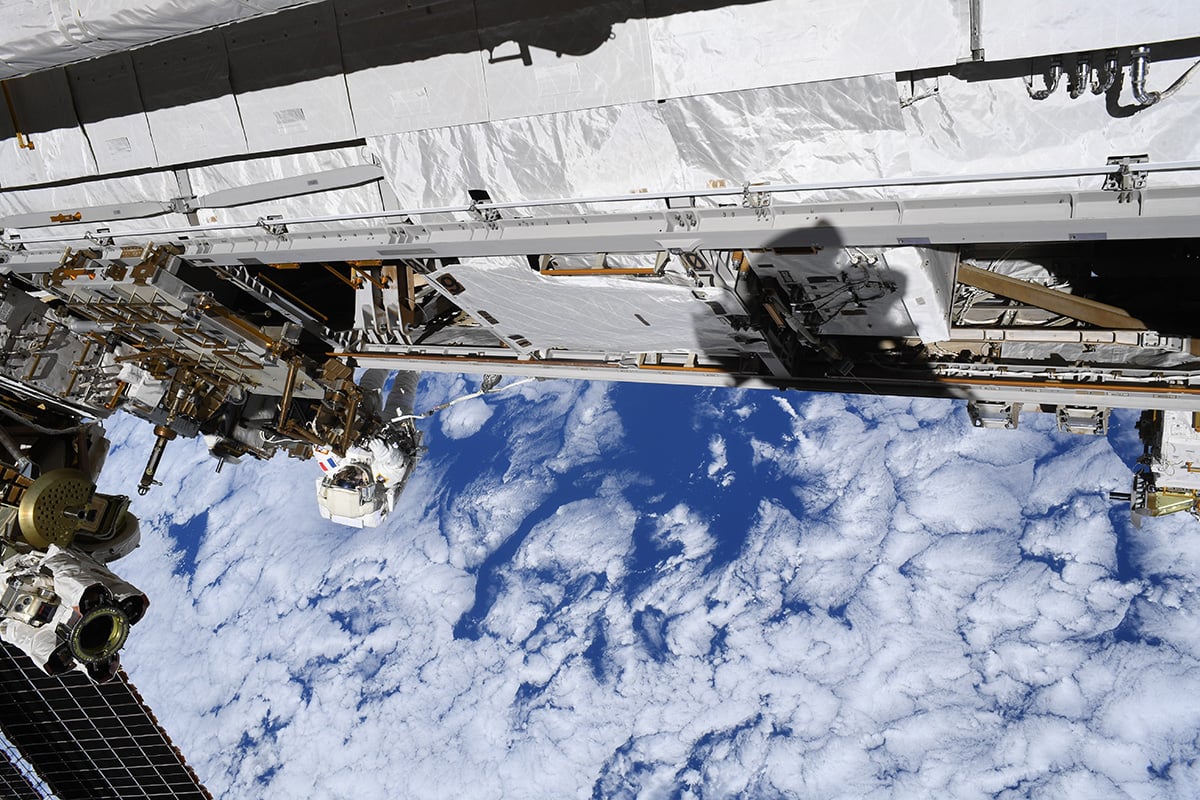
Menon used Canadarm2 to help move the replacement antenna toward its installation site. Adenot worked at the destination area and prepared the mounting points for the new hardware. The astronauts had to align the equipment carefully before securing it to the station.
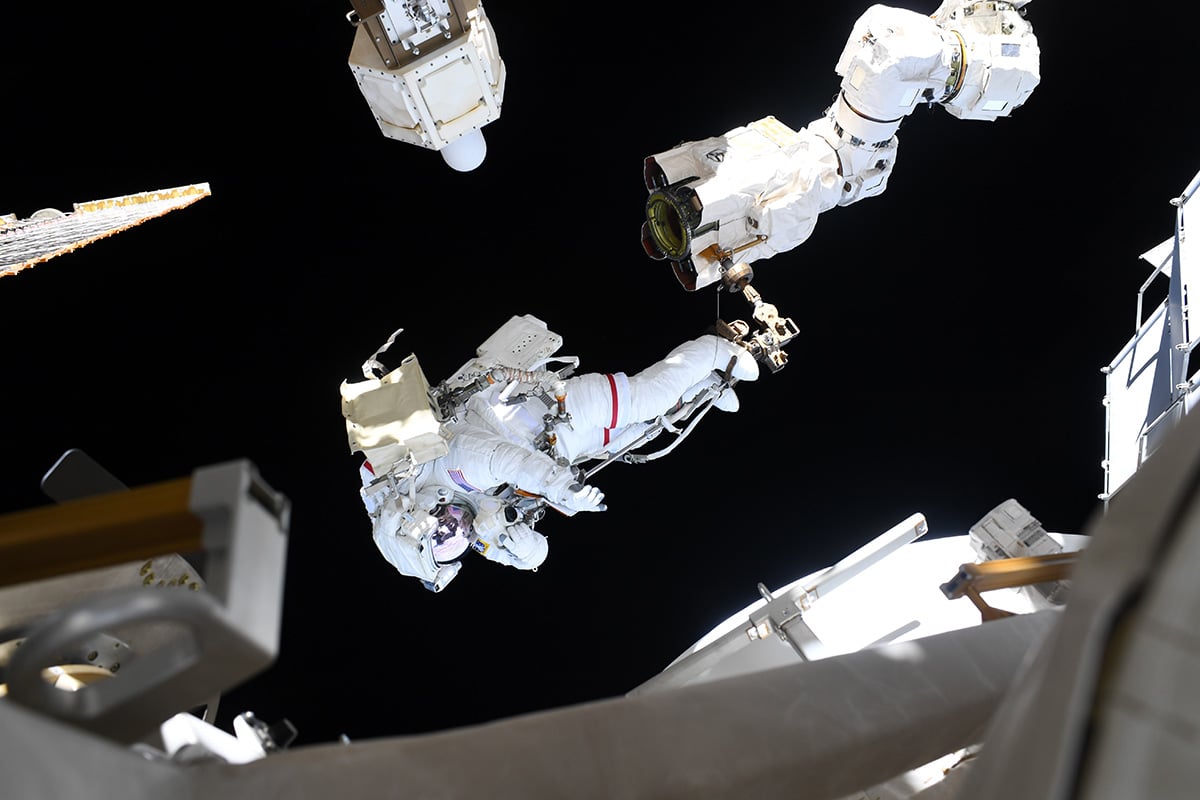
Once the antenna was in position, they attached it to the mounting structure and connected its electrical systems. They also removed the restraints and other hardware used to keep the antenna secure during transport.
Third spacewalk: ISS maintenance jobs
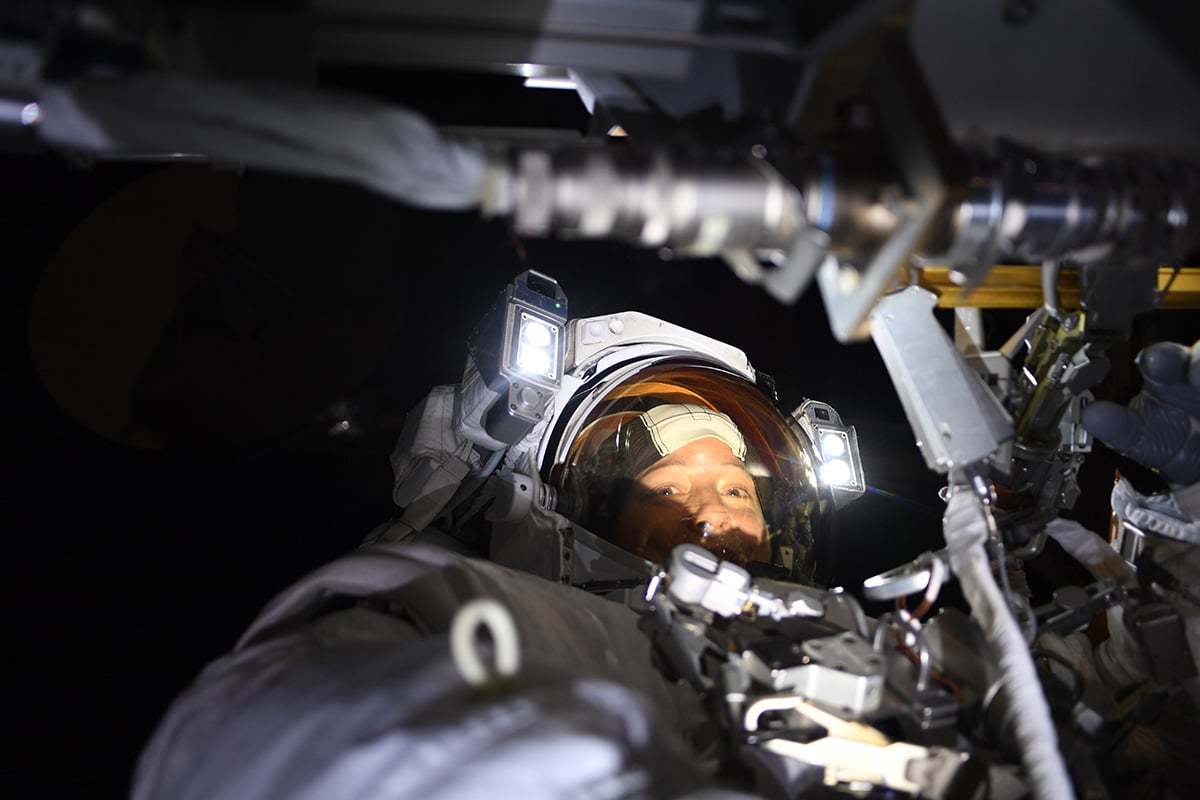
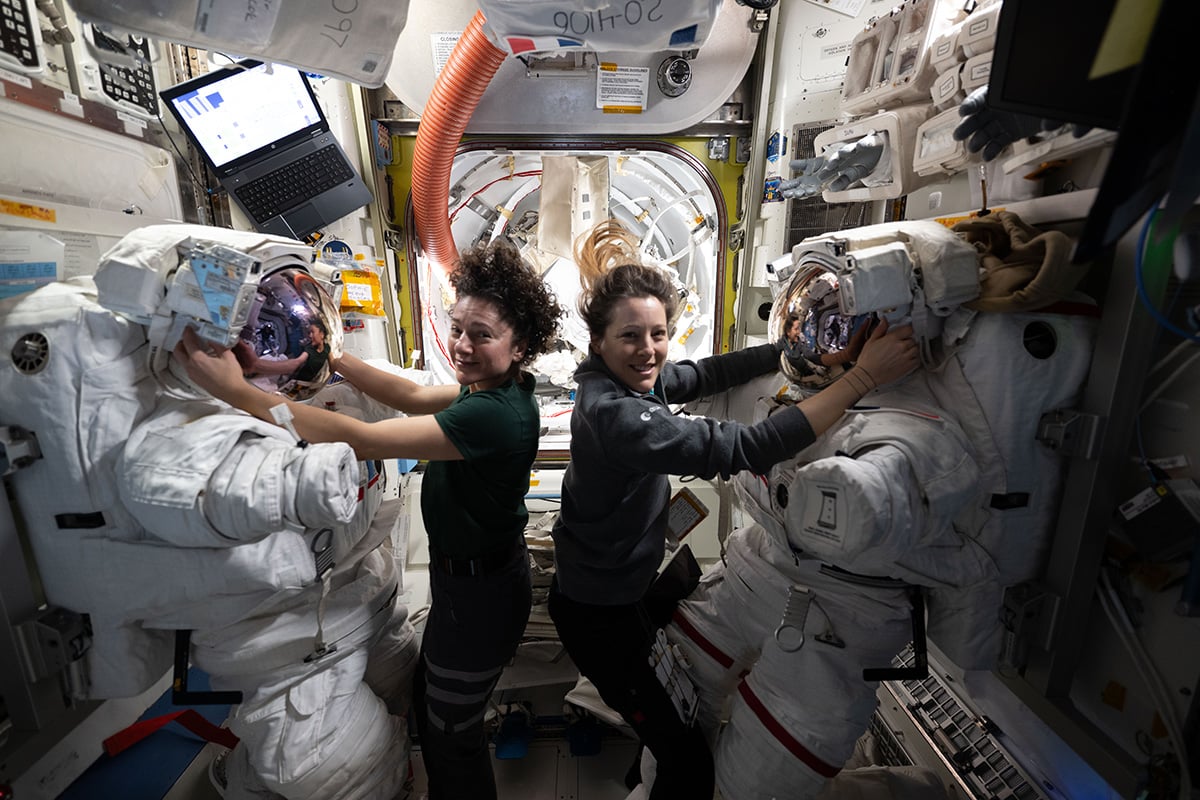
Adenot’s third EVA took place on 1 September, only a week after the antenna replacement. This time, she worked with NASA astronaut Jessica Meir. Their spacewalk, US EVA-99, lasted 6 hours and 49 minutes. This time, Adenot and Meir had several jobs to complete across different parts of the station.
One of Adenot’s tasks involved replacing a failed retroreflector on the forward port side of the Harmony module. Retroreflectors are used as navigation aids for spacecraft approaching the ISS. They help visiting vehicles determine their position relative to the station during rendezvous and docking operations.
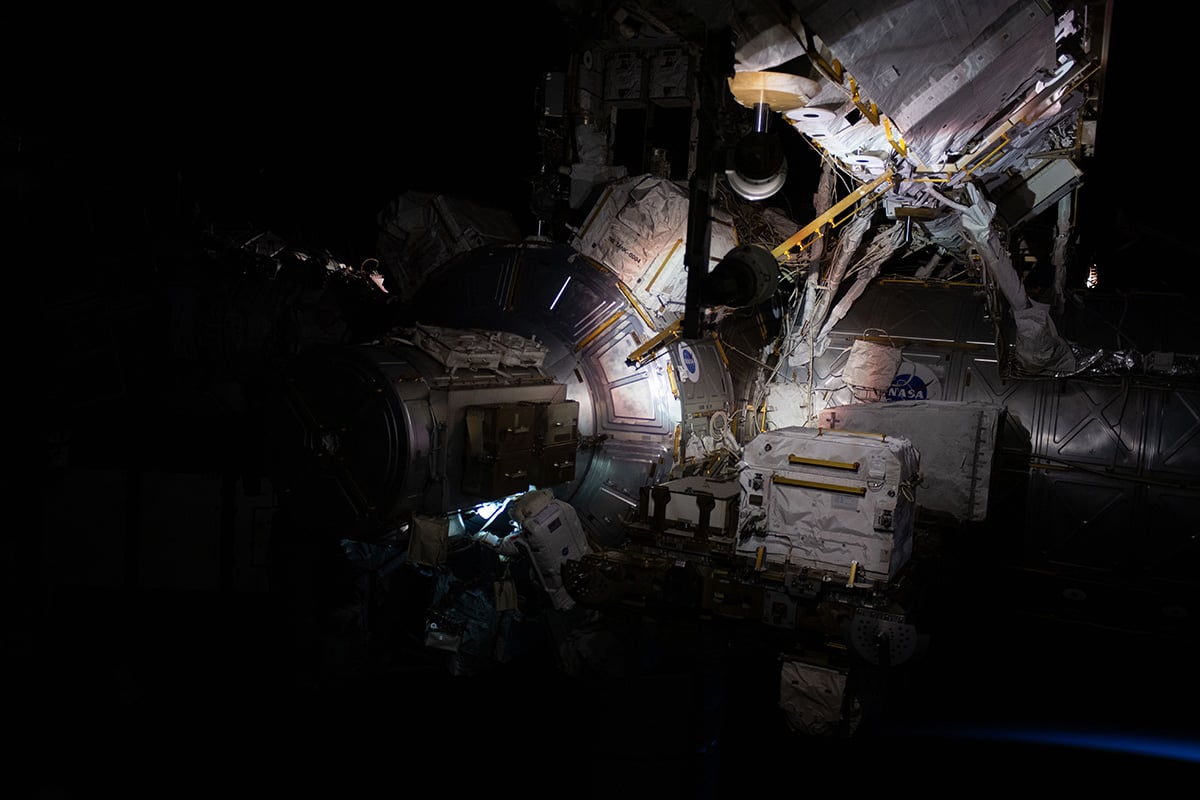
She also worked on jumper cables associated with the station’s power, thermal and data systems. These connections support the station’s infrastructure and form part of preparations for future operations. Work such as this can appear routine compared with a major antenna replacement, but it is essential for maintaining an ageing orbital laboratory.
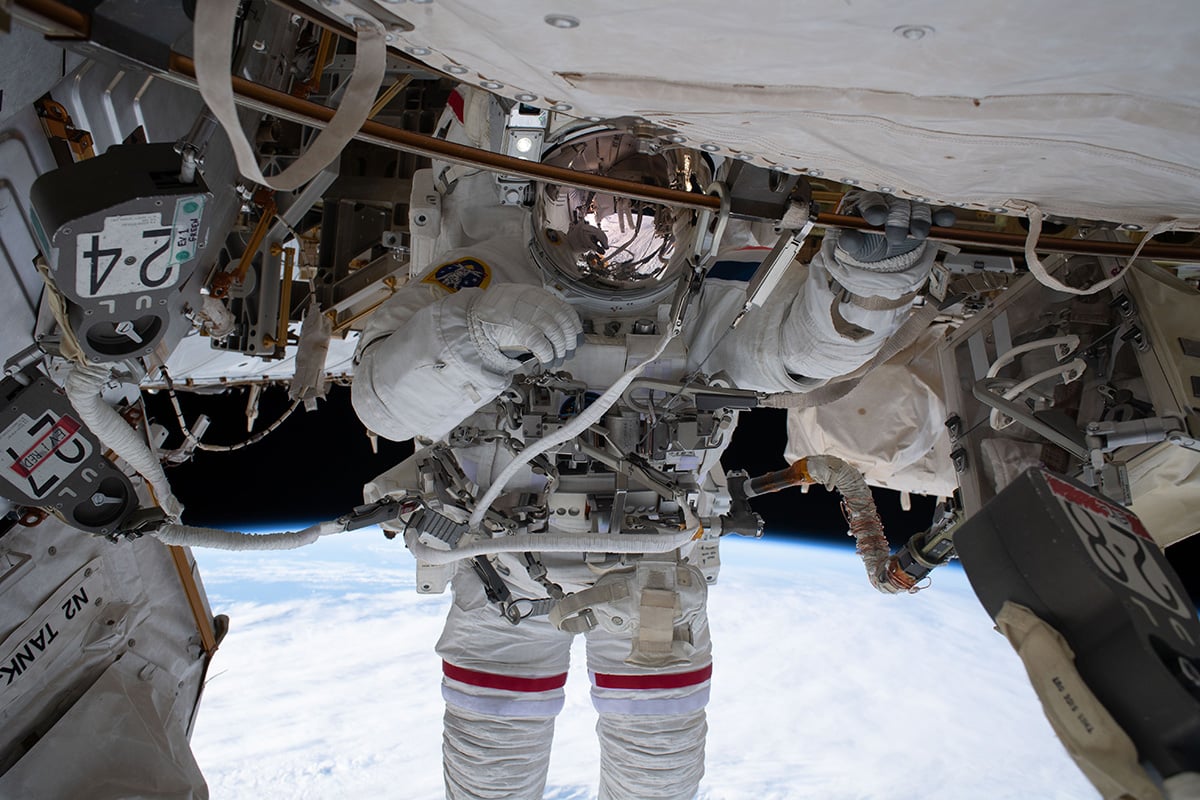
Another task took Adenot to the Quest airlock area for NASA‘s Microorganisms experiment. She collected samples from the area around the airlock and from her gloves. Scientists use this material to study microorganisms in the ISS environment.
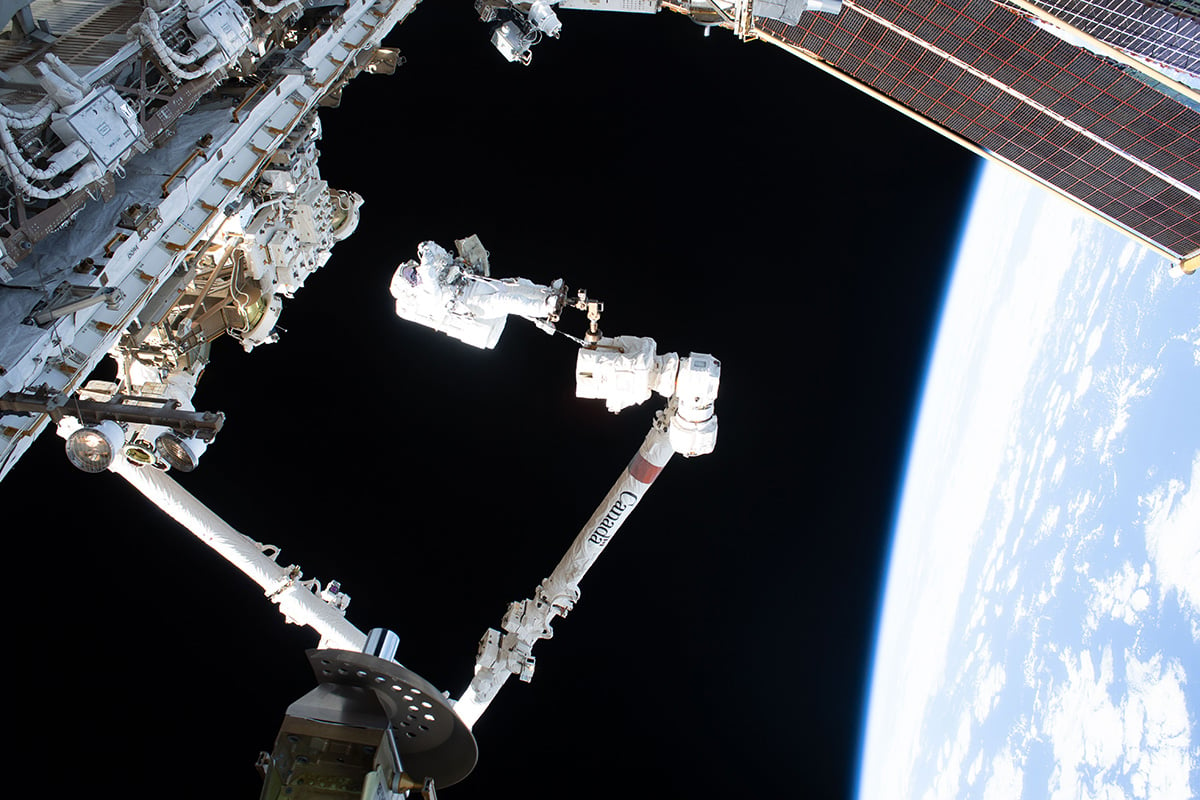
Clear skies!
See more from DIYPhotography.net on Google
Add DIYPhotography.net as a trusted source. This makes
our stories more likely to appear in your Google Search results.
 Add as a preferred source on Google

Soumyadeep Mukherjee
Soumyadeep Mukherjee is an award-winning astrophotographer from India. He has a doctorate degree in Linguistics. His work extends to the sub-genres of nightscape, deep sky, solar, lunar and optical phenomenon photography. He is also a photography educator and has conducted numerous workshops. His works have appeared in over 40 books & magazines including Astronomy, BBC Sky at Night, Sky & Telescope among others, and in various websites including National Geographic, NASA, Forbes. He was the first Indian to win “Astronomy Photographer of the Year” award in a major category.
Related Posts
 James Webb telescope captures distant planet outside our solar system
 Into The Night Will Motivate You To Go Outside And Take Photos During The Next Blue Hour
 Security stops photographer from taking photos of umbrellas outside a UK mall
 ISS astronaut shares photos of “spectacular” aurora australis from space
Join the Discussion
DIYP Comment Policy
Be nice, be on-topic, no personal information or flames.