




















ALMA Reveals a Hidden Galaxy Nicknamed “Shadow Blaster”
Jun 24, 2026
Soumyadeep Mukherjee
Soumyadeep Mukherjee is an award-winning astrophotographer from India. He has a doctorate degree in Linguistics. His work extends to the sub-genres of nightscape, deep sky, solar, lunar and optical phenomenon photography. He is also a photography educator and has conducted numerous workshops. His works have appeared in over 40 books & magazines including Astronomy, BBC Sky at Night, Sky & Telescope among others, and in various websites including National Geographic, NASA, Forbes. He was the first Indian to win “Astronomy Photographer of the Year” award in a major category.
Share:
Over the past decade, the IceCube Neutrino Observatory has detected dozens of high-energy neutrinos that originated beyond the Milky Way. These detections have opened an entirely new window on the Universe. Yet one fundamental question remains unresolved: what astrophysical objects generate these particles?
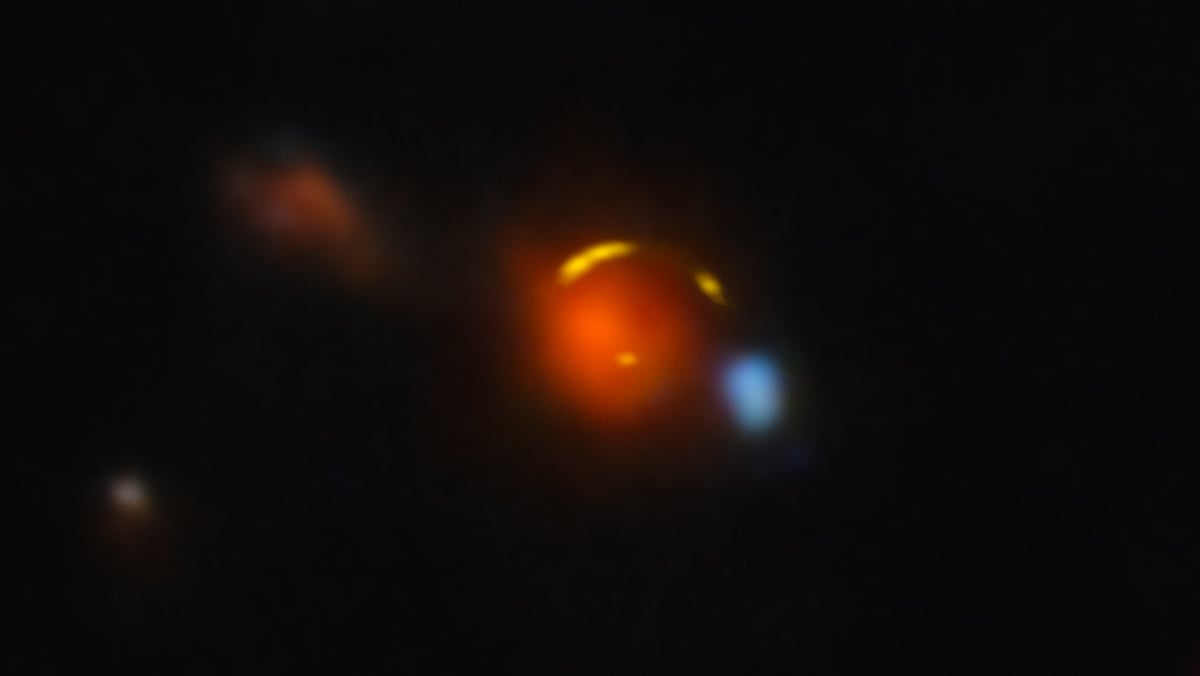
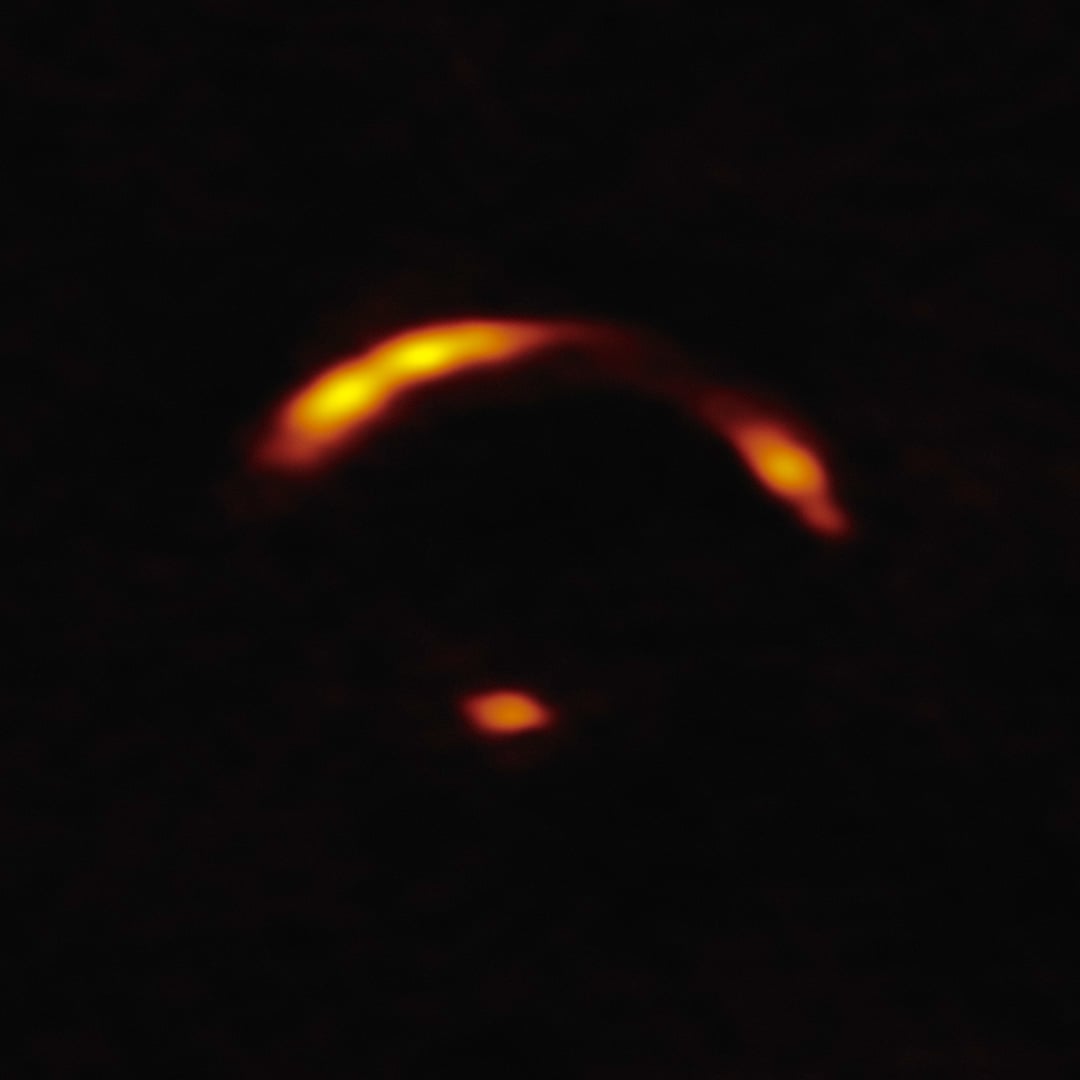
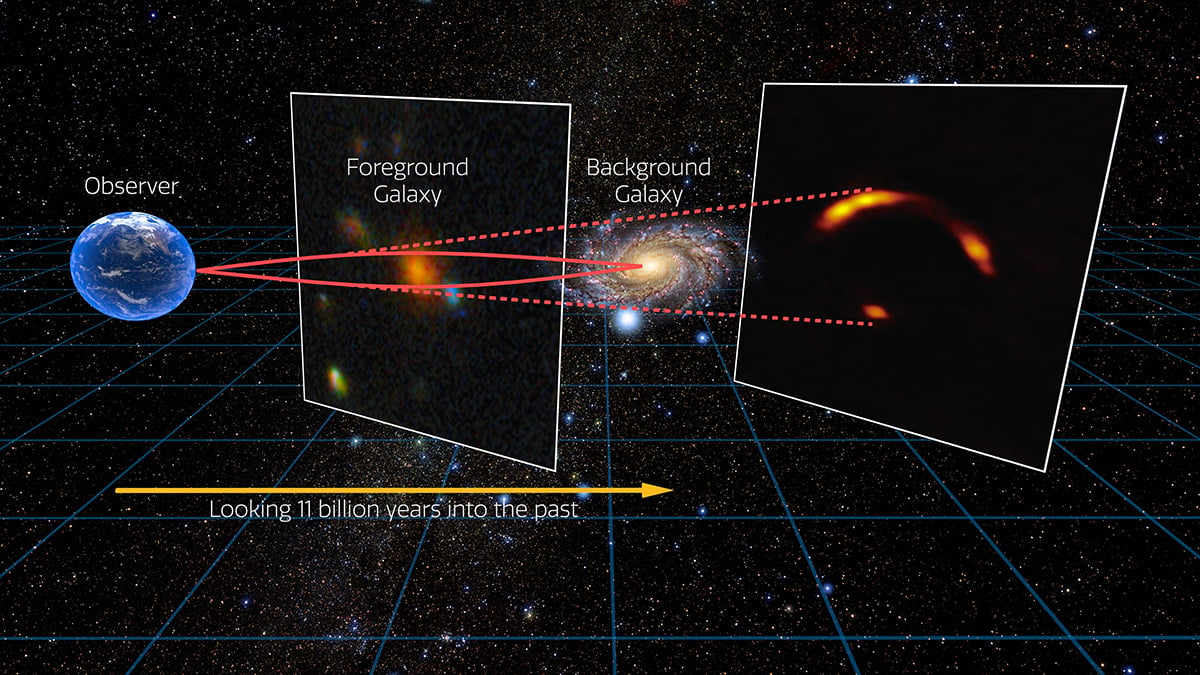
A new study has introduced another possibility. Using observations from the Atacama Large Millimeter/submillimeter Array (ALMA), an international team of astronomers has identified a heavily obscured starburst galaxy that appears to be associated with a high-energy neutrino detected by IceCube. The galaxy, known as JCMT0402-0424 and nicknamed “Shadow Blaster,” lies nearly 11 billion light-years from Earth and dates back to a period when star formation across the Universe was approaching its peak.
A neutrino detection triggers an investigation
The story began on 22 September 2021 when the IceCube Neutrino Observatory detected a highly energetic neutrino event designated IC 210922A. IceCube operates deep within the Antarctic ice sheet, where thousands of optical sensors monitor the ice for faint flashes of light produced when neutrinos interact with atomic nuclei.
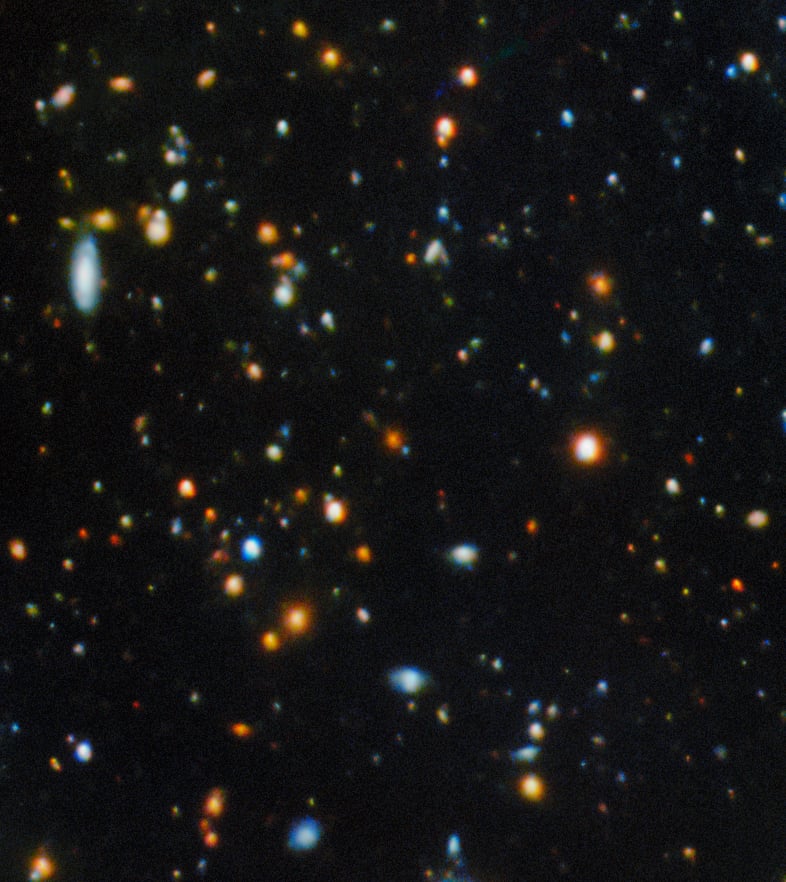
Following the detection of IC 210922A, researchers launched an extensive follow-up campaign. They examined astronomical surveys and observations across multiple wavelengths, hoping to identify an object capable of producing such an energetic particle.
As the investigation continued, attention shifted toward a dusty and distant galaxy that had received relatively little attention in optical observations. The object occupied a location consistent with the neutrino’s arrival direction. More importantly, subsequent observations revealed that it possessed several characteristics expected from an efficient particle accelerator.
Looking beyond dust with ALMA
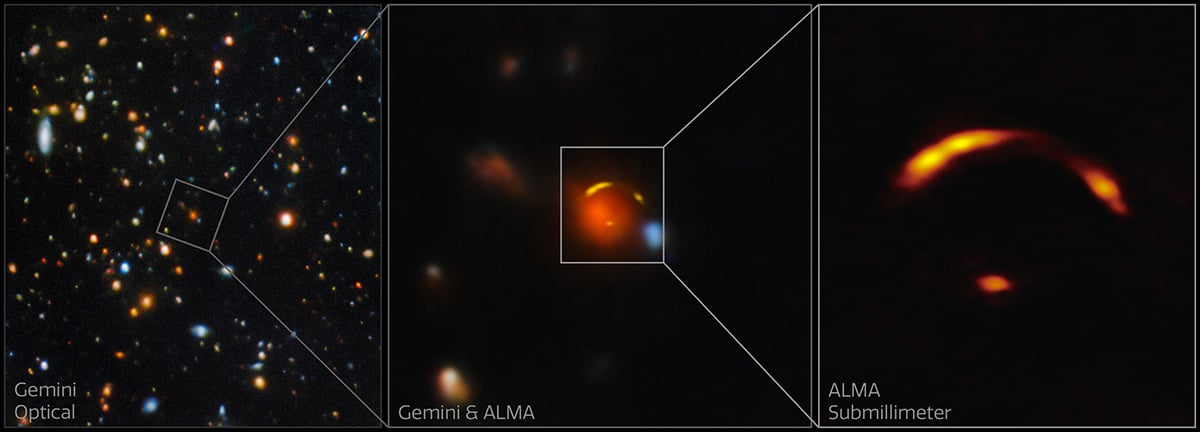
Many of the most active galaxies in the Universe remain hidden from optical telescopes. Dust absorbs visible light and conceals the energetic processes taking place within it. Consequently, astronomers often rely on millimeter and submillimeter observations to investigate these obscured systems.
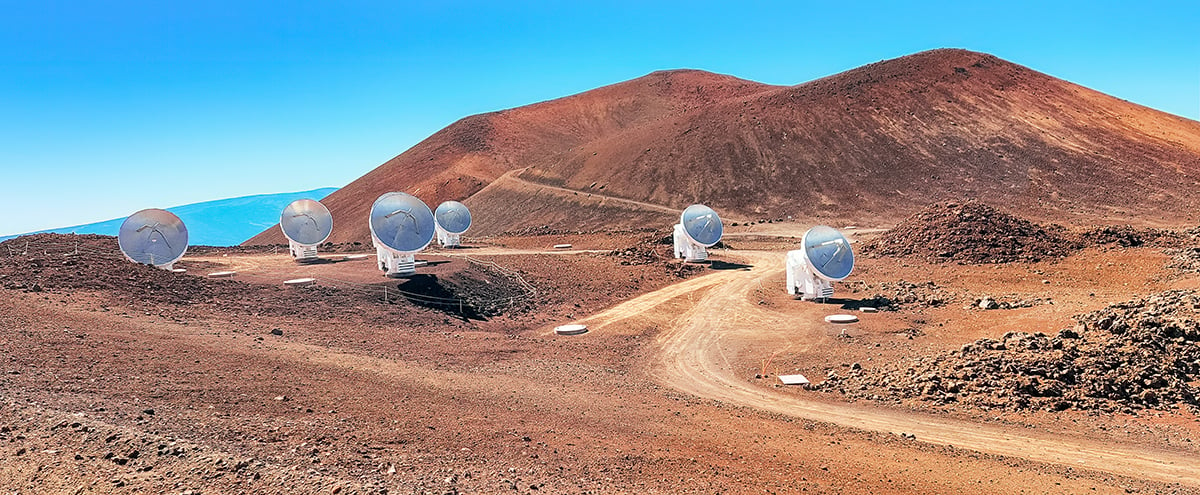
Located at an altitude of more than 5,000 meters in Chile’s Atacama Desert, ALMA consists of 66 antennas that operate together as a powerful interferometer. The observatory can detect the faint emission from cold gas and dust, allowing researchers to study the raw materials that fuel star formation.
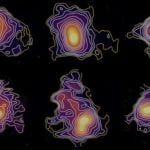
When astronomers observed JCMT0402-0424 with ALMA, they uncovered a remarkably active galaxy. Large reservoirs of gas occupied a compact region, creating ideal conditions for the rapid formation of stars. The observations indicated that the galaxy forms hundreds of solar masses worth of stars each year.
The data also revealed substantial concentrations of dust. These dusty environments absorb starlight and reradiate the energy at longer wavelengths. As a result, the galaxy appears relatively faint in visible light despite its enormous luminosity.
How intense star formation can produce neutrinos
Starburst galaxies represent some of the most energetic stellar environments in the cosmos. Their high star-formation rates lead to the rapid birth of massive stars, many of which live only a few million years before exploding as supernovae.
These explosions inject enormous amounts of energy into the surrounding medium. They also accelerate charged particles to relativistic speeds, creating populations of cosmic rays throughout the galaxy. In many galaxies, cosmic rays eventually escape into intergalactic space. However, conditions within a dense starburst differ significantly. Large quantities of gas confine the particles, increasing the likelihood of collisions.
Every collision transfers energy and creates secondary particles. Among the most important products are pions, which decay into gamma rays and neutrinos. Consequently, galaxies with high gas densities can convert a substantial fraction of cosmic-ray energy into neutrino emission.
ALMA’s observations suggest that Shadow Blaster may operate in precisely this way. Its compact structure, dense gas reservoirs, and extreme star-formation activity create an environment where cosmic rays can remain trapped and interact efficiently.
Gravitational lensing provides an unprecedented view
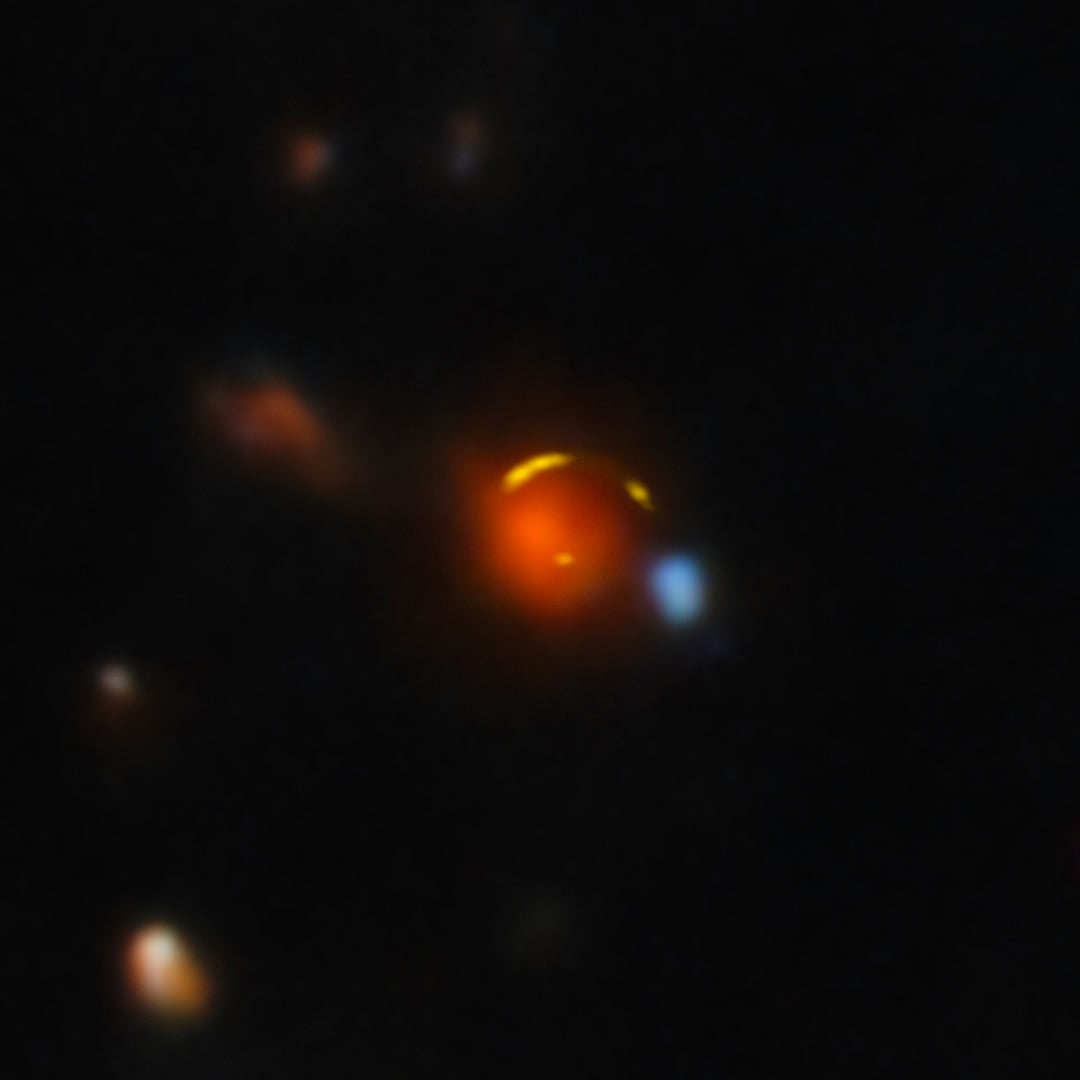
Another factor played a crucial role in this discovery. Without it, astronomers might never have studied the galaxy in such detail. Between Earth and Shadow Blaster lies a massive foreground object whose gravity bends the light from the distant galaxy. This effect, known as gravitational lensing, magnifies the background source and increases its apparent brightness.
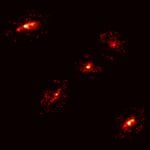
The lensing effect produced multiple images of the galaxy and amplified its signal. Consequently, researchers could examine structures that would otherwise remain beyond the reach of current instruments.
By combining lensing models with ALMA observations, the team reconstructed the galaxy’s internal properties with remarkable precision. They mapped the distribution of gas and dust, estimated the physical size of the star-forming regions, and measured the intensity of ongoing star formation.
The reconstructed picture revealed a compact and highly concentrated system. Large amounts of material occupy a relatively small volume, creating conditions that favor efficient particle interactions.
Clear skies!
See more from DIYPhotography.net on Google
Add DIYPhotography.net as a trusted source. This makes
our stories more likely to appear in your Google Search results.
 Add as a preferred source on Google

Soumyadeep Mukherjee
Soumyadeep Mukherjee is an award-winning astrophotographer from India. He has a doctorate degree in Linguistics. His work extends to the sub-genres of nightscape, deep sky, solar, lunar and optical phenomenon photography. He is also a photography educator and has conducted numerous workshops. His works have appeared in over 40 books & magazines including Astronomy, BBC Sky at Night, Sky & Telescope among others, and in various websites including National Geographic, NASA, Forbes. He was the first Indian to win “Astronomy Photographer of the Year” award in a major category.

Join the Discussion
DIYP Comment Policy
Be nice, be on-topic, no personal information or flames.