


















Can You Successfully Shoot Concerts with a 16-Year-Old DSLR? Yes, and Here’s How
Mar 21, 2026
Dunja Đuđić Kalinin
Dunja Djudjic is a multi-talented artist based in Novi Sad, Serbia. With 15 years of experience as a photographer, she specializes in capturing the beauty of nature, travel, concerts, and fine art. In addition to her photography, Dunja also expresses her creativity through writing, embroidery, and jewelry making.
Share:
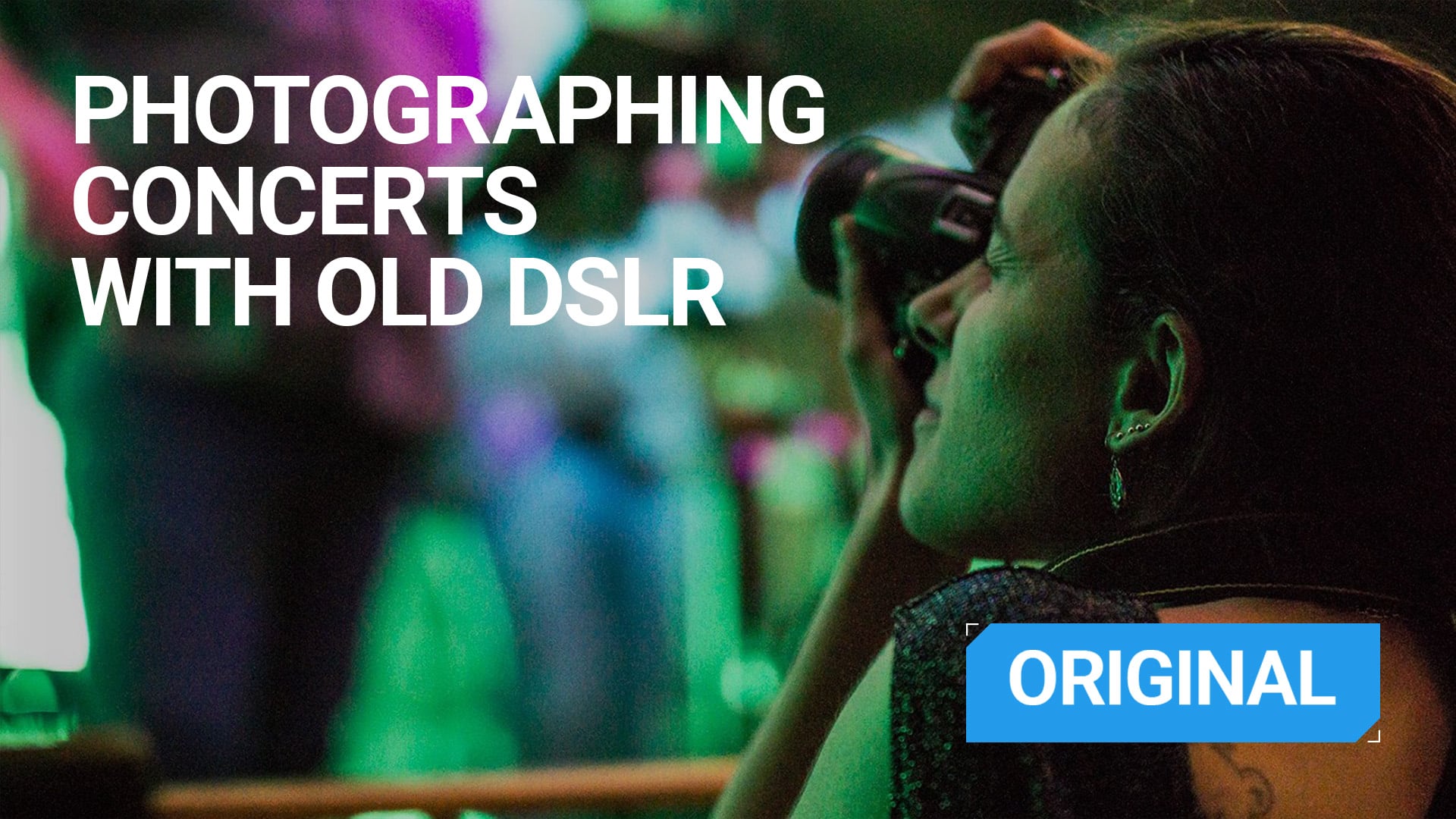
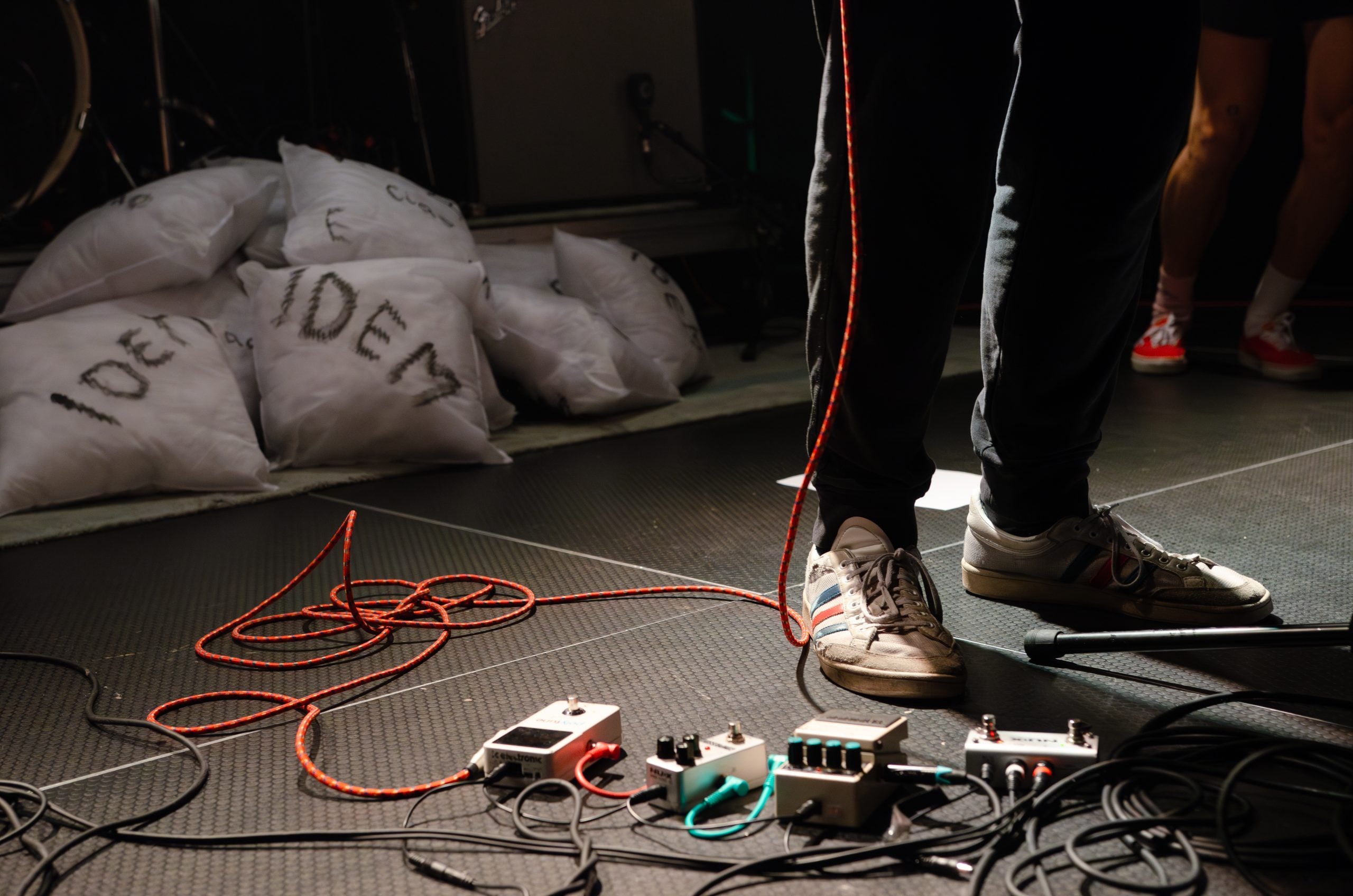
Live music is one of the things I love most, and photographing it doubles the joy. I’m on cloud nine every time I come home with a full memory card, sore feet, and a raspy voice from singing from the top of my lungs. But I’m not a professional concert photographer, at least not yet. I take concert photos with a Nikon D7000, an APS-C camera that was already officially discontinued when I first bought it in 2015. And here I am in 2026, still going strong with my (t)rusty old DSLR.
Why am I writing this article, you may ask? Well, it’s because there are plenty of us with relatively crappy cameras, afraid to go after our photographic passion. I want to share what it’s like to shoot concerts with a camera introduced around 2010 (yes, that was 16 years ago. I know, right?). If you recognize yourself and are afraid to take the leap because your camera can’t take it, you’re at the right place. I’ll share what I’ve learned so far, hoping to educate you and inspire you to show up with your camera at the next show.
[Related Reading: The Ultimate Guide to Concert Photography: Gear, Settings, Techniques & More]
Choose the Right Lens(es) for the Venue
You’ve probably already heard that the lens matters more than the camera. Well, when your camera body struggles in low light, the lens becomes even more important.
Fast lenses make a huge difference when shooting concerts. Wider apertures let in more light, which means you can keep your ISO lower and your shutter speed fast enough to freeze movement without using flash. Also, please do not use flash at concerts if you can avoid it. It distracts performers and the audience alike, and some performers explicitly ask you not to do it (shout out to my favorite, Nikola Vranjković).
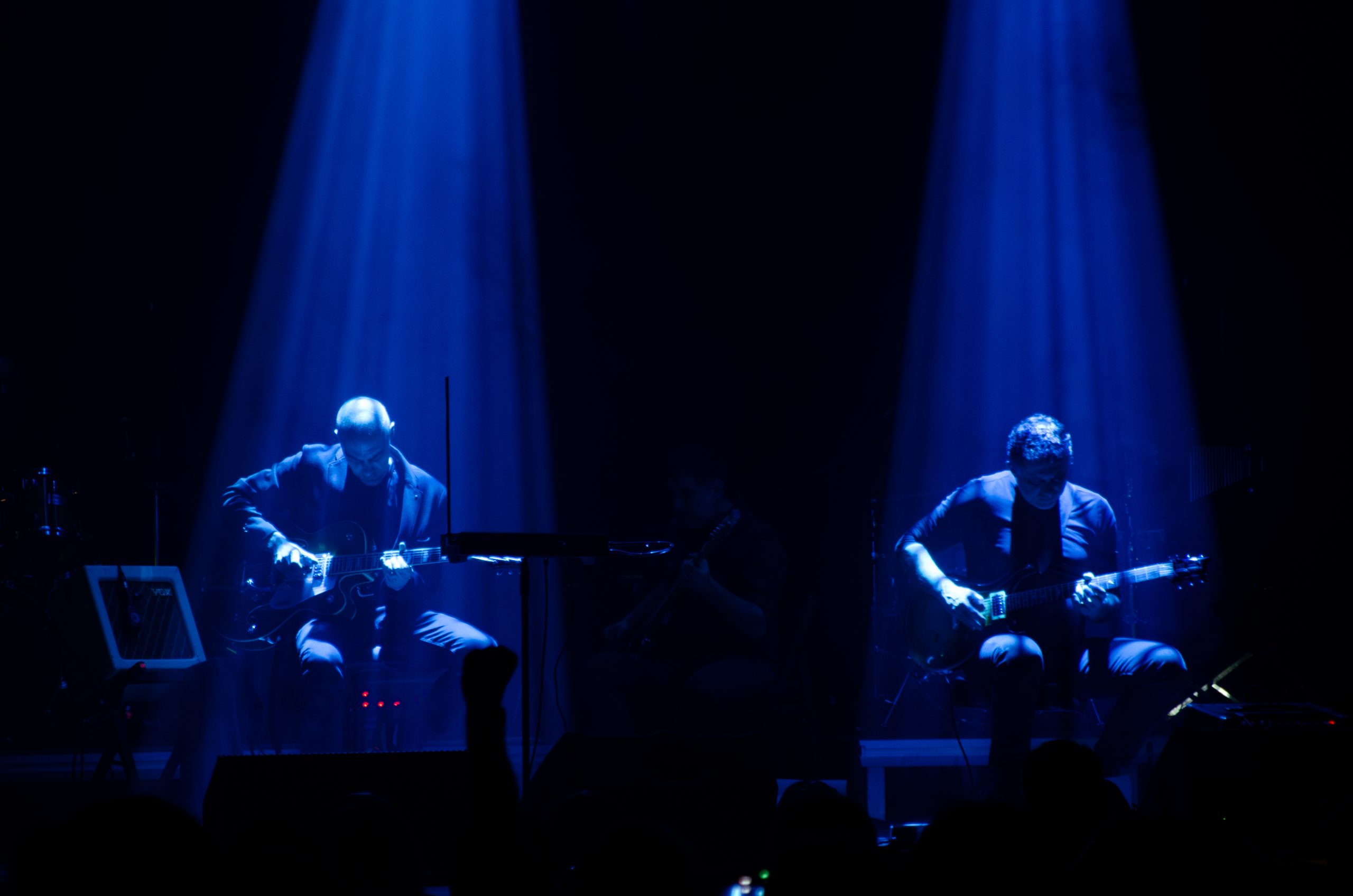
Anyway, back to lenses. In my case, I rely mostly on two lenses: a Nikon 50mm f/1.8 prime and a Sigma 18–35mm f/1.8 zoom. The 50mm is fast and sharp, which makes it ideal for tighter shots of performers or details. The 18–35mm gives me flexibility when I’m close to the stage and want to capture more of the scene.
I also have a Nikon AF Nikkor 28-105mm. That’s a great focal length range, but it’s neither very fast nor particularly sharp, so I rarely use it for concerts.
Account for the Crop Factor
While we’re on the topic of lenses, you need to account for the crop factor. If you’re shooting with an APS-C camera like the D7000, remember that your lenses will behave differently compared to a full-frame sensor.
For example, a 50mm lens on APS-C gives 75mm full-frame equivalent. That’s great for performer portraits and photographing details on stage and in the audience. But if you’re very close to the stage, especially in small venues, it can be challenging to shoot with it as it can be too tight (not impossible, though).
Similarly, an 18–35mm lens won’t capture quite as wide a scene on its widest end as it would on a full-frame camera. Still, it will be useful for wider shots, so I like including it in the kit when I’m at concerts, even though it’s as heavy as a tank.
Dealing with High ISO
ISO is an important parameter when shooting concerts. Cranking it up allows you to use fast shutter speeds so you don’t end up with a blurry mess. However, older cameras can’t handle high ISO settings as well as modern ones. On my D7000, ISO 1000 is the highest I’m comfortable with for reasonably clean images. Unfortunately, that’s often not enough, especially in small, dimly lit venues.
For comparison, newer cameras can easily reach ISO 12,800 and still give you more than decent images. See my problem with ISO 1000 already being too high?
I may not have a modern camera, but modern software saves the day. I’ve said it before, but Lightroom’s Denoise feature can work wonders. It makes photos usable even when the original file looks extremely noisy. Okay, it won’t magically turn a 2010 camera into a modern low-light monster, but it definitely gives those old sensors a second life. I now usually use ISO 1600, sometimes even above that. Still not impressive as ISO 12,800, but hey, for my poor little Nikon, it’s surely an improvement.
[Related Reading: What is ISO in Photography? A Complete Guide to Understanding ISO]
Focusing
Focusing at concerts can be tricky. Lighting changes constantly and performers move unpredictably and fast. While my D7000 does have an AF motor, it’s not always ideal. In that chaotic, fast-changing light, it can betray me sometimes.
Although I prefer autofocus, manual focus can help in some cases. I use it when the lighting is confusing the autofocus system. Sometimes I’ll leave the AF on and just “spray and pray” – shoot a few photos in a row hoping one would end up focused.
Still, don’t let this discourage you. I still find the D7000’s autofocus good enough for most situations. It may not be lightning fast, but with a bit of patience and anticipation, it gets the job done.

Manual Settings
Shutter priority can work well for concerts because it ensures your shutter speed stays fast enough to freeze movement. However, older DSLRs cameras (at least mine) tend to overexpose images, and it’s not only the case in concert photography. On the other hand, if the camera calculates the photo will be underexposed with the shutter speed I set, it could open the aperture all the way, and I don’t recommend that for concert photography.
Because of all that, I usually rely on full manual settings. This gives me complete control over shutter speed, aperture, and ISO, which helps me adapt quickly to constantly changing stage lights.
That’s pretty much what I’ve learned from dragging my trusty old D7000 to shows and figuring things out as I go. I’m still learning, honestly, as every concert throws something new at me. And like many of us, I still come home with some blurry, noisy, and unusable shots. But I also come home with some I’m really proud of, and that’s enough to keep me going back.
The point isn’t to have the perfect camera. The point is to show up, shoot, and get better every time. I hope this inspires you to grab your old, cheap, or “imperfect” camera, get some photos, and above all – enjoy the show. After all, if 10-year-old cameras are good enough for NASA, why wouldn’t we use them, too?
See you in the pit!
See more from DIYPhotography.net on Google
Add DIYPhotography.net as a trusted source. This makes
our stories more likely to appear in your Google Search results.
 Add as a preferred source on Google

Dunja Đuđić Kalinin
Dunja Djudjic is a multi-talented artist based in Novi Sad, Serbia. With 15 years of experience as a photographer, she specializes in capturing the beauty of nature, travel, concerts, and fine art. In addition to her photography, Dunja also expresses her creativity through writing, embroidery, and jewelry making.

Join the Discussion
DIYP Comment Policy
Be nice, be on-topic, no personal information or flames.