



















A Year After His Death, AI Val Kilmer Will Star in a Movie. I’m Terrified
Mar 20, 2026
Dunja Đuđić Kalinin
Dunja Djudjic is a multi-talented artist based in Novi Sad, Serbia. With 15 years of experience as a photographer, she specializes in capturing the beauty of nature, travel, concerts, and fine art. In addition to her photography, Dunja also expresses her creativity through writing, embroidery, and jewelry making.
Share:
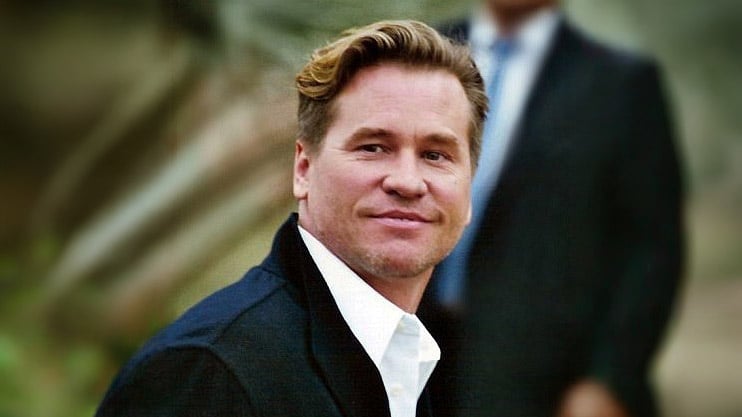
A year after Val Kilmer’s passing, a generative AI version of the actor will co-star in an independent film titled As Deep as the Grave. Although it’s technically allowed and the actor himself seems to have been on board, I’m still shocked, and this makes me feel really uneasy. This is a complex topic, and I’d like to dive in and try to justify both the studio’s decision and my own thoughts.
[Related Reading: Back to Human Connection: Is It Time to Say Goodbye to Generative AI?]
First Line Films announced that Kilmer had originally signed on to the project but was unable to perform due to his health. His estate gave permission for the digital replication and is being compensated for it. So, in the eyes of the law, possibly even ethics, this move isn’t breaking anything.
Speaking with the AP, Val Kilmer’s daughter Mercedes put it this way:
“He always looked at emerging technologies with optimism as a tool to expand the possibilities of storytelling. This spirit is something that we are all honoring within this specific film, of which he was an integral part.”
On paper, this is about as ethical as this kind of thing can get. The filmmakers say they followed SAG guidelines. The family is on board. And above all, Kilmer himself had already embraced AI. After throat cancer cost him his natural voice, he worked with an AI company to digitally recreate it. His voice was digitally altered in his final screen performance, 2022’s Top Gun: Maverick. “We believe we are serving as a demonstrator for how to do it ethically and correctly,” said writer-director Coerte Voorhees, “especially in the case of working with a deceased actor’s estate and family.”
And yet, I still find it unsettling.
It’s worth noting that this isn’t the first time a deceased actor has been brought back on screen. Peter Cushing was digitally recreated in Rogue One. Perhaps you remember this, especially if you’re a Star Wars fan. The reaction from audiences, myself included, was visceral discomfort. He never consented to that specific performance. Then, the Terminator franchise used CGI to de-age living actors in the movies released from 2015 onward. I remember watching Terminator: Dark Fate in the movies and even admiring young John and Sarah Connor and the Terminator in one of the scenes. Note that all of the actors are still alive and have agreed to this.
And Star Wars: The Rise of Skywalker handled Carrie Fisher’s absence in arguably the most respectful way possible. They used unreleased footage she had actually filmed for The Force Awakens, rather than generating something new.
[Related Reading: Report: Sora AI video generator goes to Hollywood]
There’s almost a sliding scale here, at least that’s how I feel about all this. Using existing footage feels most acceptable. De-aging living actors sits in a grey area, but I still find it acceptable if it’s necessary for the story. Digitally recreating someone who never consented to a specific performance, like Cushing, crosses a line for many. And generative AI, even with estate approval, is new and largely uncharted territory.
The Kilmer case sits at the complicated, unexplored end of this scale. In the eyes of the law, and arguably ethics, his prior relationship with AI voice technology matters. Consent given in that context carries weight. But for me personally, it still feels… Wrong. It’s not only because he’s one of my favorite actors. I’d feel equally uneasy seeing any dead person moving on screen. This reminded me of how deeply unsettling it was to see an image of my late grandma turned into a short video when I wrote this article about DeepNostalgia.
When it comes to the deceased Val Kilmer in As Deep as the Grave, the audience may find the result more distracting than moving. Regardless of good intentions, there’s a risk doing a disservice to his legacy rather than honoring it.
To conclude, I don’t think the filmmakers here are villains and I’m not judging. I’m trying to understand despite my own deep unsettlement. The family’s involvement, Kilmer’s own openness to the technology, and the care apparently taken with SAG guidelines, all of this matters. But I worry about what gets normalized next. Each case like this lowers the bar a little further. Perhaps the one after this will have a little less justification, and the one after that even less.
The technology isn’t going away now that Pandora’s box is opened. But the question is where it will take us and how we’ll tackle the potential legal, ethical, or simply human issues that will inevitably occur with its use.
[via PetaPixel, The Associated Press; Lead image credits: Georges Biard, CC BY-SA 3.0, via Wikimedia Commons (cropped, expanded)]
See more from DIYPhotography.net on Google
Add DIYPhotography.net as a trusted source. This makes
our stories more likely to appear in your Google Search results.
 Add as a preferred source on Google

Dunja Đuđić Kalinin
Dunja Djudjic is a multi-talented artist based in Novi Sad, Serbia. With 15 years of experience as a photographer, she specializes in capturing the beauty of nature, travel, concerts, and fine art. In addition to her photography, Dunja also expresses her creativity through writing, embroidery, and jewelry making.
Related Posts
 Filmmakers build huge drone to recreate Star Wars Death Star attack scene
 Billboard shoots photos of terrified jaywalkers after scaring them with tire screeching sounds
 Photographer’s lawsuit makes former model “terrified” of posting on Instagram
 Photographer creates Star Wars planet Jakku for his daughter to star in
Join the Discussion
DIYP Comment Policy
Be nice, be on-topic, no personal information or flames.