

















The Long-Distance Fix: How NASA Saved JunoCam from 370 Million Miles Away
Aug 6, 2025
Soumyadeep Mukherjee
Soumyadeep Mukherjee is an award-winning astrophotographer from India. He has a doctorate degree in Linguistics. His work extends to the sub-genres of nightscape, deep sky, solar, lunar and optical phenomenon photography. He is also a photography educator and has conducted numerous workshops. His works have appeared in over 40 books & magazines including Astronomy, BBC Sky at Night, Sky & Telescope among others, and in various websites including National Geographic, NASA, Forbes. He was the first Indian to win “Astronomy Photographer of the Year” award in a major category.
Share:
In deep space, where machines must endure years of punishing conditions, failure is often fatal. But NASA recently broke that rule. It saved a failing camera orbiting Jupiter, 370 million miles from Earth, using nothing more than clever thinking, remote commands, and a bit of heat. This bold maneuver didn’t just rescue an aging instrument. It gave scientists new insights into one of the most volcanically active worlds in the solar system. And it may shape how we protect spacecraft from radiation damage for decades to come.
The camera in trouble
JunoCam, the visible-light camera aboard NASA’s Juno spacecraft, had been faithfully snapping images of Jupiter and its moons since 2016. It was never meant to be a high-end science instrument. In fact, its primary purpose was public outreach, letting people see Jupiter the way no one ever had. But it soon became more than that. Its wide-angle views helped identify atmospheric features and volcanic activity. Its data supported scientific investigations. And it gave us striking images of swirling cloud bands, polar cyclones, and distant moons.
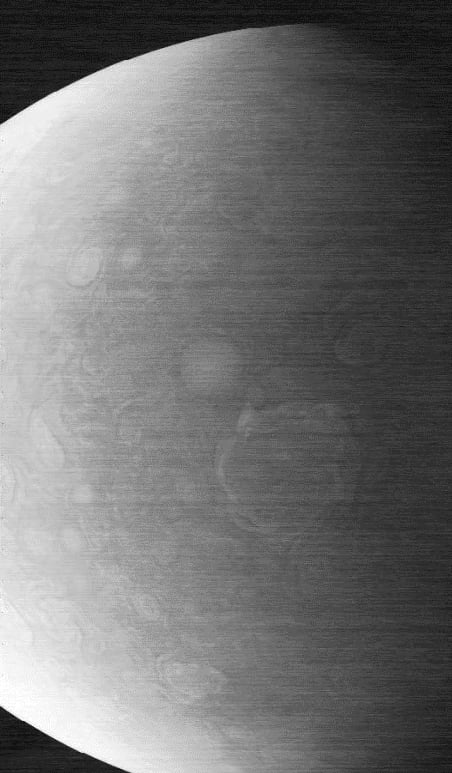
By late 2023, however, something had gone wrong. As Juno passed through orbit 56 of its extended mission, engineers noticed that the images from JunoCam were badly degraded. Instead of clear views, they got streaks, flickers, and heavy noise. One image after another showed signs of serious radiation damage. They knew the culprit. Jupiter’s intense radiation belts, among the most dangerous in the solar system, had likely struck again. Juno was designed to survive those radiation belts. Most of its electronics sit inside a protective titanium vault. But JunoCam had to sit outside that vault to capture views of Jupiter and its moons. It had always been exposed.
The camera had lasted much longer than expected. NASA originally predicted JunoCam would remain useful through the spacecraft’s first eight orbits. But it continued working well through more than 50. That was an impressive run. Still, time caught up with it. The radiation damage appeared to affect the camera’s low-voltage power supply, causing electrical interference and image corruption.
A bold idea: Annealing
With no tools and no backup, the Juno team proposed something radical. They would try a process called annealing. It’s a method used in electronics manufacturing on Earth, where materials are heated to a specific temperature to repair microscopic damage in their structure. In theory, the same idea might work in space. The team hoped that heating the affected electronics in JunoCam could undo some of the radiation damage. The hardware was never designed to handle such treatment. If they overheated it, the camera could be lost permanently. Still, they decided to go for it. They activated a built-in heater and gradually raised the temperature inside the camera to around 25 degrees Celsius, about 77 degrees Fahrenheit. That’s far warmer than it had ever operated.
Signs of recovery
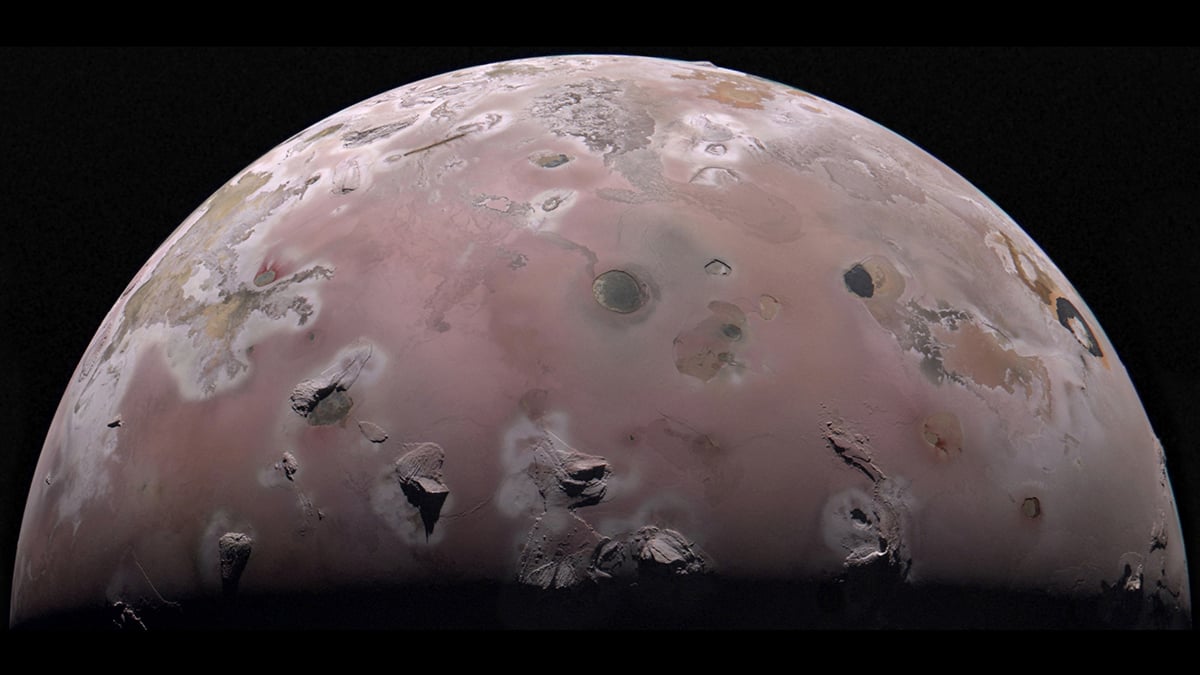
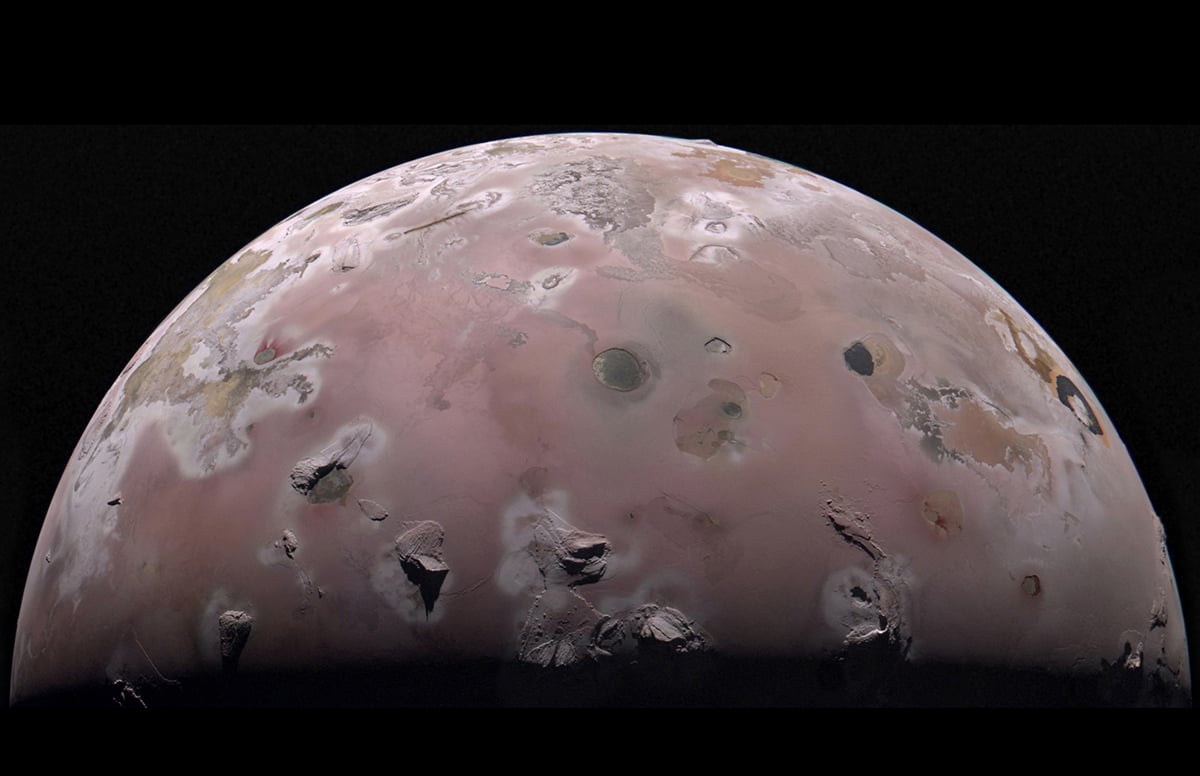
The results didn’t appear immediately. The first few images still showed noise and degradation. For several days, it wasn’t clear whether the annealing had helped at all. On December 30, 2023, Juno made a close flyby of Io, Jupiter’s volcanic moon. At its closest point, the spacecraft came within just 930 miles (1,500 kilometers) of Io’s surface. That’s closer than any spacecraft had been in over 20 years. The images that came back were stunning. JunoCam had captured Io’s rugged, frost-covered surface with remarkable clarity. Scientists could see tall mountains coated in sulfur dioxide frost. They saw new lava flows, volcanic pits, and dark blotches that may mark recent eruptions. The noise was gone. The streaks had vanished. The camera was back.
Beyond the camera
The implications go beyond just fixing JunoCam. The fix gave Juno a new life as it continued to explore Jupiter’s moon system. It also opened up new scientific possibilities. The Io flybys, supported by JunoCam, provided critical data on volcanic activity and thermal features. Scientists used the images to study how Io’s surface changes over time, and how tidal forces from Jupiter and its other moons drive those changes. At the same time, JunoCam’s story became a case study in spacecraft longevity. It showed that even outreach-focused instruments can deliver serious science. And it proved that creative engineering, even from afar, can overcome seemingly impossible odds.
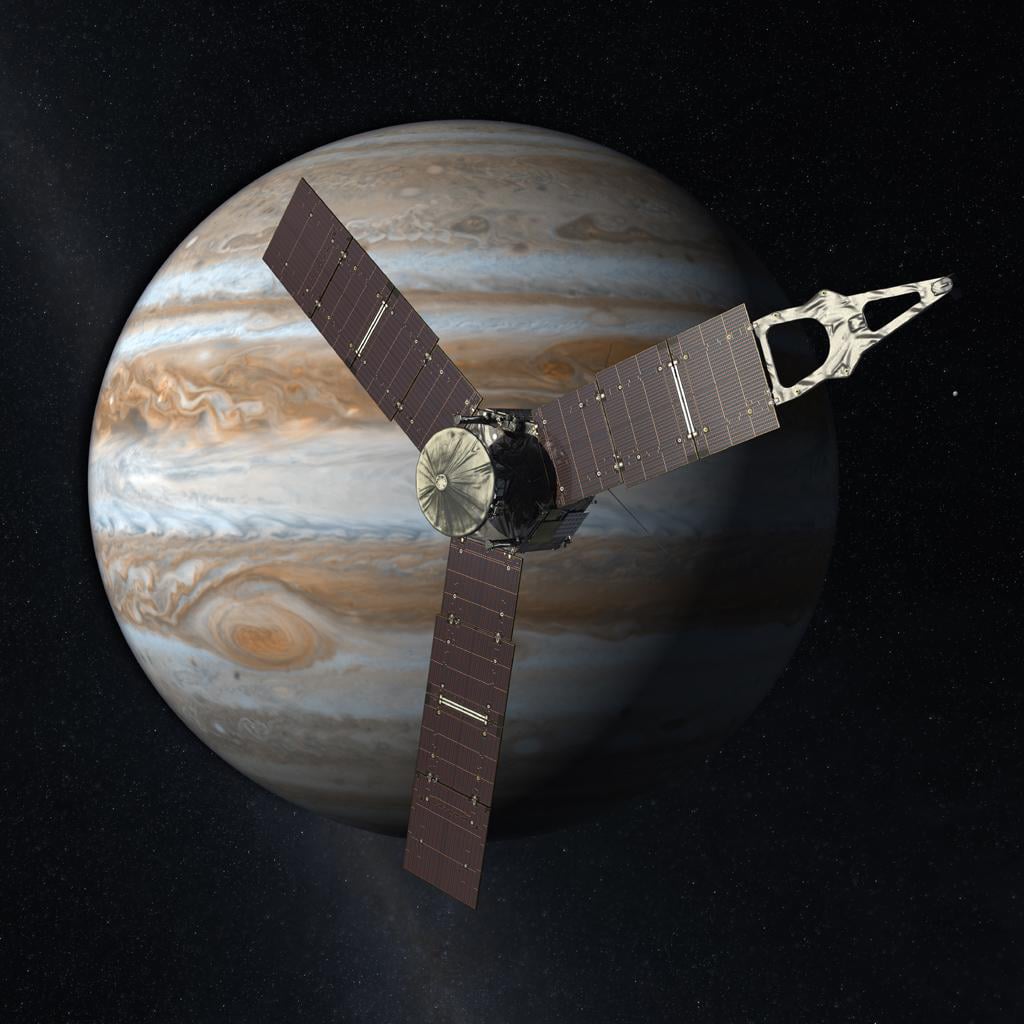
Saving a camera from 370 million miles away might sound like science fiction. But for the Juno team, it was just another challenge to solve. They didn’t have spare parts or on-site tools. They only had software commands and physics. And they used them brilliantly.
Clear skies!
See more from DIYPhotography.net on Google
Add DIYPhotography.net as a trusted source. This makes
our stories more likely to appear in your Google Search results.
 Add as a preferred source on Google

Soumyadeep Mukherjee
Soumyadeep Mukherjee is an award-winning astrophotographer from India. He has a doctorate degree in Linguistics. His work extends to the sub-genres of nightscape, deep sky, solar, lunar and optical phenomenon photography. He is also a photography educator and has conducted numerous workshops. His works have appeared in over 40 books & magazines including Astronomy, BBC Sky at Night, Sky & Telescope among others, and in various websites including National Geographic, NASA, Forbes. He was the first Indian to win “Astronomy Photographer of the Year” award in a major category.



Join the Discussion
DIYP Comment Policy
Be nice, be on-topic, no personal information or flames.