





















JWST Reveals Hidden Complexity in Dying Star’s Final Moments
Jul 30, 2025
Soumyadeep Mukherjee
Soumyadeep Mukherjee is an award-winning astrophotographer from India. He has a doctorate degree in Linguistics. His work extends to the sub-genres of nightscape, deep sky, solar, lunar and optical phenomenon photography. He is also a photography educator and has conducted numerous workshops. His works have appeared in over 40 books & magazines including Astronomy, BBC Sky at Night, Sky & Telescope among others, and in various websites including National Geographic, NASA, Forbes. He was the first Indian to win “Astronomy Photographer of the Year” award in a major category.
Share:
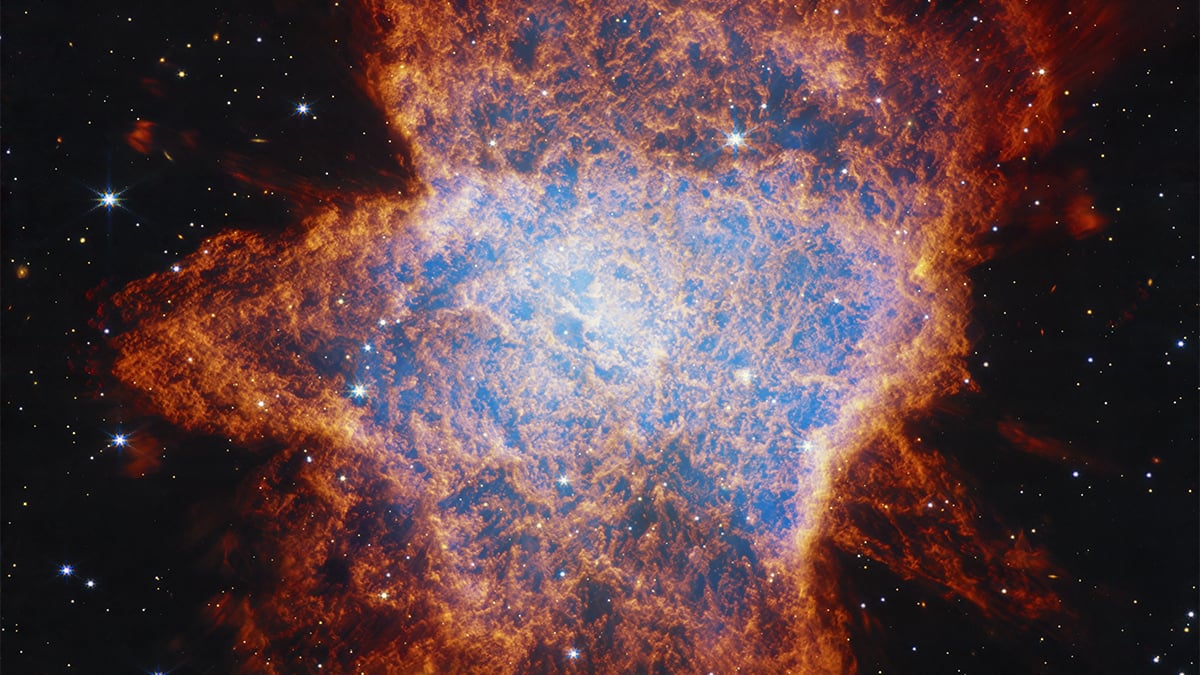
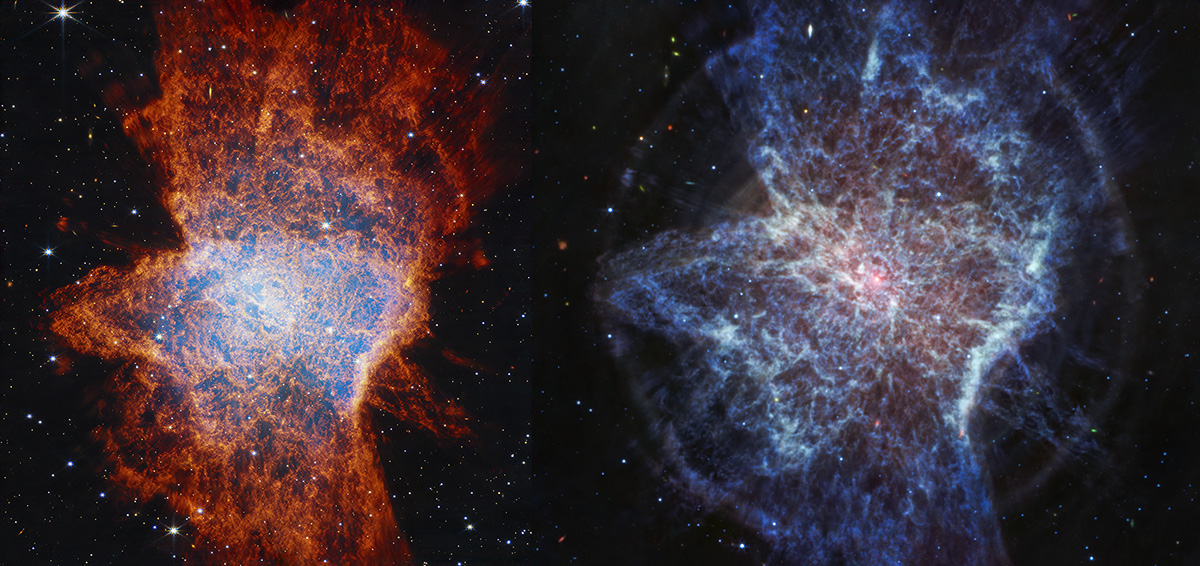
The James Webb Space Telescope (JWST) has captured an incredibly detailed image of a dying star. The image reveals the planetary nebula NGC 6072. Located around 3,200 light-years away, this cosmic object lies in the constellation Scorpius. The new data show a tangled and beautiful structure, far more complex than astronomers expected.
What is a planetary nebula?
A planetary nebula is not related to planets. The term is a historical mistake. Early astronomers thought these objects looked like planets in their small telescopes. In reality, a planetary nebula forms when a star like our Sun nears the end of its life. The star runs out of fuel. It expands into a red giant. Then it sheds its outer layers into space. These layers become colorful shells of gas and dust. The hot core left behind becomes a white dwarf. Its ultraviolet light causes the gas to glow, forming a nebula. NGC 6072 is one such nebula. But it is not simple or spherical. It is chaotic. It shows signs of multiple outflows, rings, and clumpy dust. JWST’s latest images show it in greater detail than ever before.
JWST’s observation of NGC 6072
JWST observed NGC 6072 using two of its main instruments: NIRCam (Near-Infrared Camera) and MIRI (Mid-Infrared Instrument). These tools can see what optical telescopes cannot. They detect heat from gas and dust. This allows astronomers to see both the warm and cool regions in space.
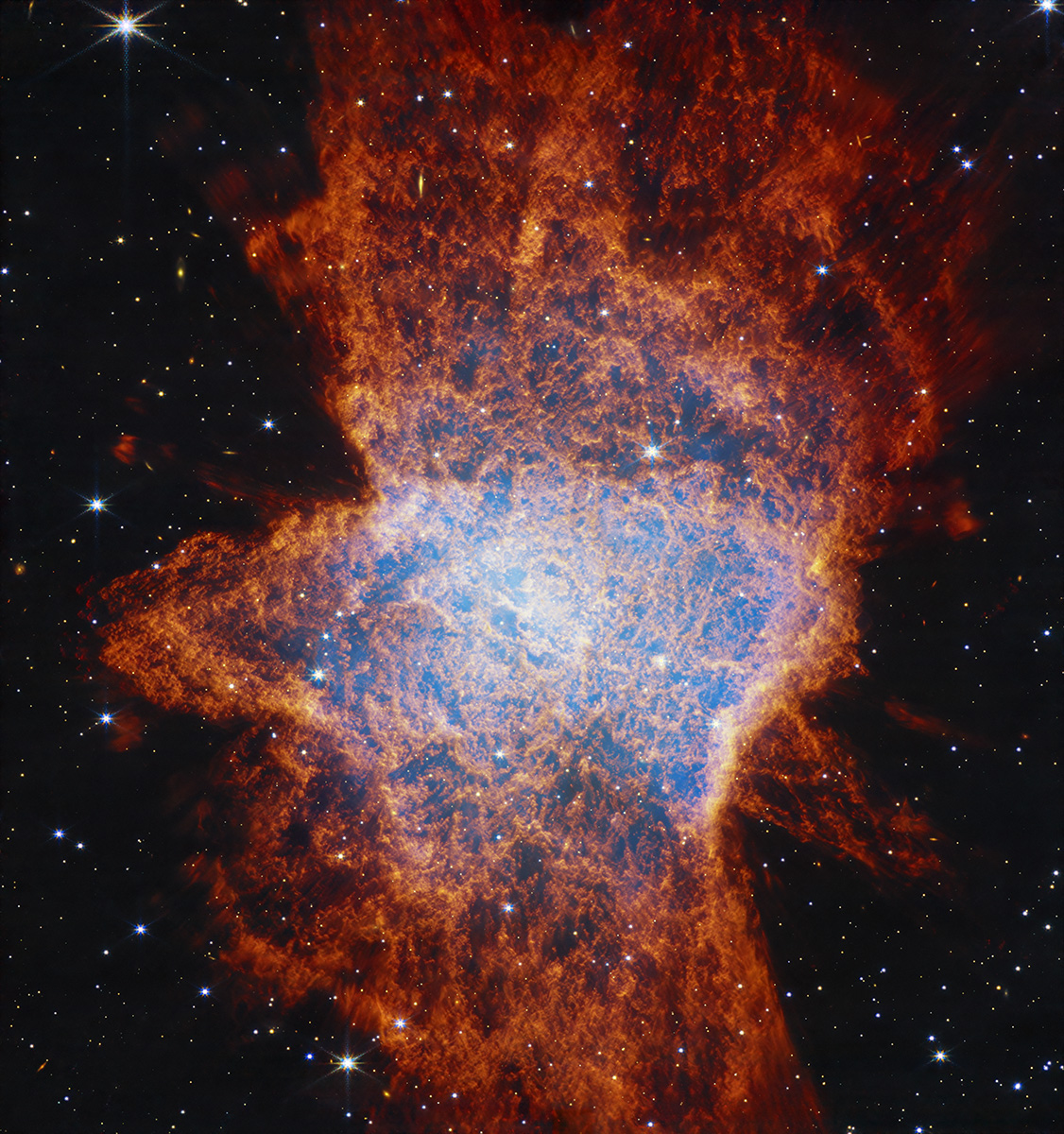
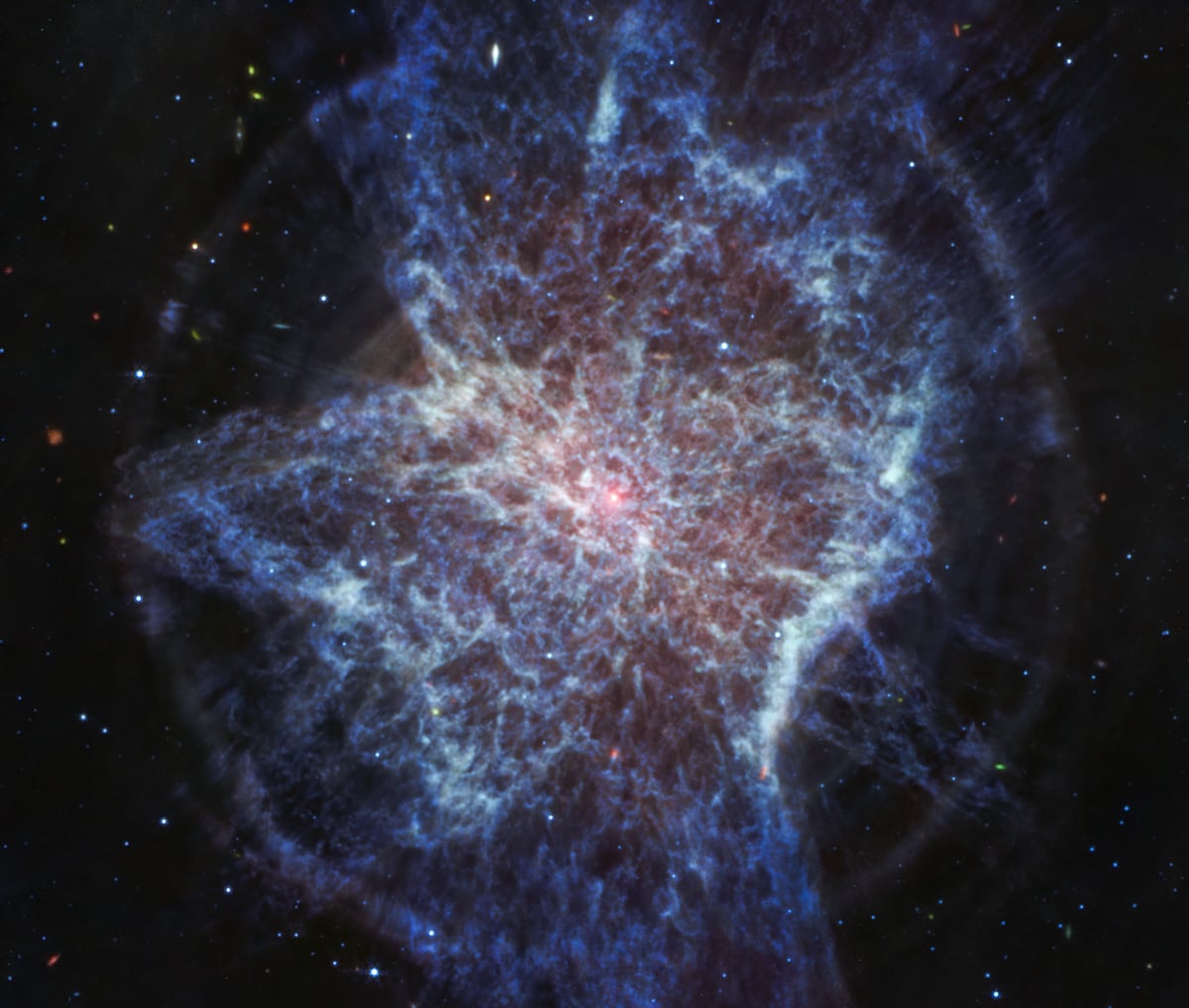
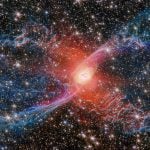
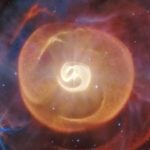
The NIRCam image shows long, finger-like lobes of gas. These lobes stretch in multiple directions. Some extend from 11 to 5 o’clock direction. Others go from 1 to 7 o’clock. There may be even more outflows. This suggests that the dying star released material several times. Each time, the ejection moved in a new direction. This is highly unusual. Most planetary nebulae show just one or two outflows. In the NIRCam image, red areas highlight molecular hydrogen. This is a cool gas that forms in the outer layers of the star. Its presence shows that some of the material was ejected slowly and gently. The MIRI image shows different features. It reveals concentric rings and dusty clumps. These appear as arcs or shells around the star. These rings likely formed over time. Each ring marks a separate period of mass loss. The blueish tones in MIRI reveal regions rich in dust.
Together, the two images give a full picture of the nebula. They show both the gas and the dust. They also reveal different temperatures. This helps astronomers understand how the nebula formed and evolved.
The role of binary stars
One big question is: why does NGC 6072 look so complex? The answer may lie in the presence of a binary companion. Many stars exist in pairs. If a dying star has a close companion, it can disturb the mass loss. This creates unusual shapes and multiple outflows. The companion may also form an accretion disk or jets. These forces shape the nebula in complex ways. The irregular lobes and multiple rings in NGC 6072 support this idea. Scientists suspect a binary system caused the chaotic structure. However, more studies are needed to confirm this.
What makes this nebula special?
NGC 6072 is not a typical planetary nebula. Its shape is not spherical. Instead, it looks like a splash of cosmic paint. The nebula appears broken, tilted, and scattered. This makes it a unique case for studying stellar death. JWST’s image also provides a new level of clarity. In previous observations, much of this structure remained hidden. Earlier telescopes lacked the resolution and infrared power. Now, astronomers can study the fine details of each outflow and ring. This will help them model the mass loss. It will also help them understand how nebulae change over time.
Molecular hydrogen: A key clue
The presence of molecular hydrogen (H₂) is another exciting detail. H₂ forms in cool, dense regions. In NGC 6072, JWST detected it. This gas plays a key role in the star’s evolution. It shows where the star released material slowly. By mapping this gas, scientists can trace the timeline of ejections. They can learn how fast the gas moved. They can also estimate how long each phase lasted.
JWST’s image of NGC 6072 is a window into the final breath of a star. It shows the beauty and chaos of stellar death. It also shows how advanced our tools have become. Its twisted outflows, dusty rings, and glowing gas tell a dramatic story. It is the story of a dying star, shaped by complex forces. And it reminds us of the cycle of life in the cosmos.
Clear skies!
See more from DIYPhotography.net on Google
Add DIYPhotography.net as a trusted source. This makes
our stories more likely to appear in your Google Search results.
 Add as a preferred source on Google

Soumyadeep Mukherjee
Soumyadeep Mukherjee is an award-winning astrophotographer from India. He has a doctorate degree in Linguistics. His work extends to the sub-genres of nightscape, deep sky, solar, lunar and optical phenomenon photography. He is also a photography educator and has conducted numerous workshops. His works have appeared in over 40 books & magazines including Astronomy, BBC Sky at Night, Sky & Telescope among others, and in various websites including National Geographic, NASA, Forbes. He was the first Indian to win “Astronomy Photographer of the Year” award in a major category.

Join the Discussion
DIYP Comment Policy
Be nice, be on-topic, no personal information or flames.