






















Hollyland Pyro S transmits HDMI or SDI video up to 400 metres
May 22, 2024
John Aldred
John Aldred is a photographer with over 25 years of experience in the portrait and commercial worlds. He is based in Scotland and has been an early adopter – and occasional beta tester – of almost every digital imaging technology in that time. As well as his creative visual work, John uses 3D printing, electronics and programming to create his own photography and filmmaking tools and consults for a number of brands across the industry.
Share:

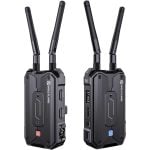
Hollyland has announced the new Hollyland Pyro S (buy here) video transmission system. The system is, in essence, an SDI version of the recently released Hollyland Pyro H (buy here) with virtually identical features.
It supports 4K footage at up to 30fps and 1080p up to 60fps. It offers 400 metres of range with dual-band 2.4GHz/5GHz frequency hopping for maximum reliability. And despite offering SDI, it also still offers HDMI.
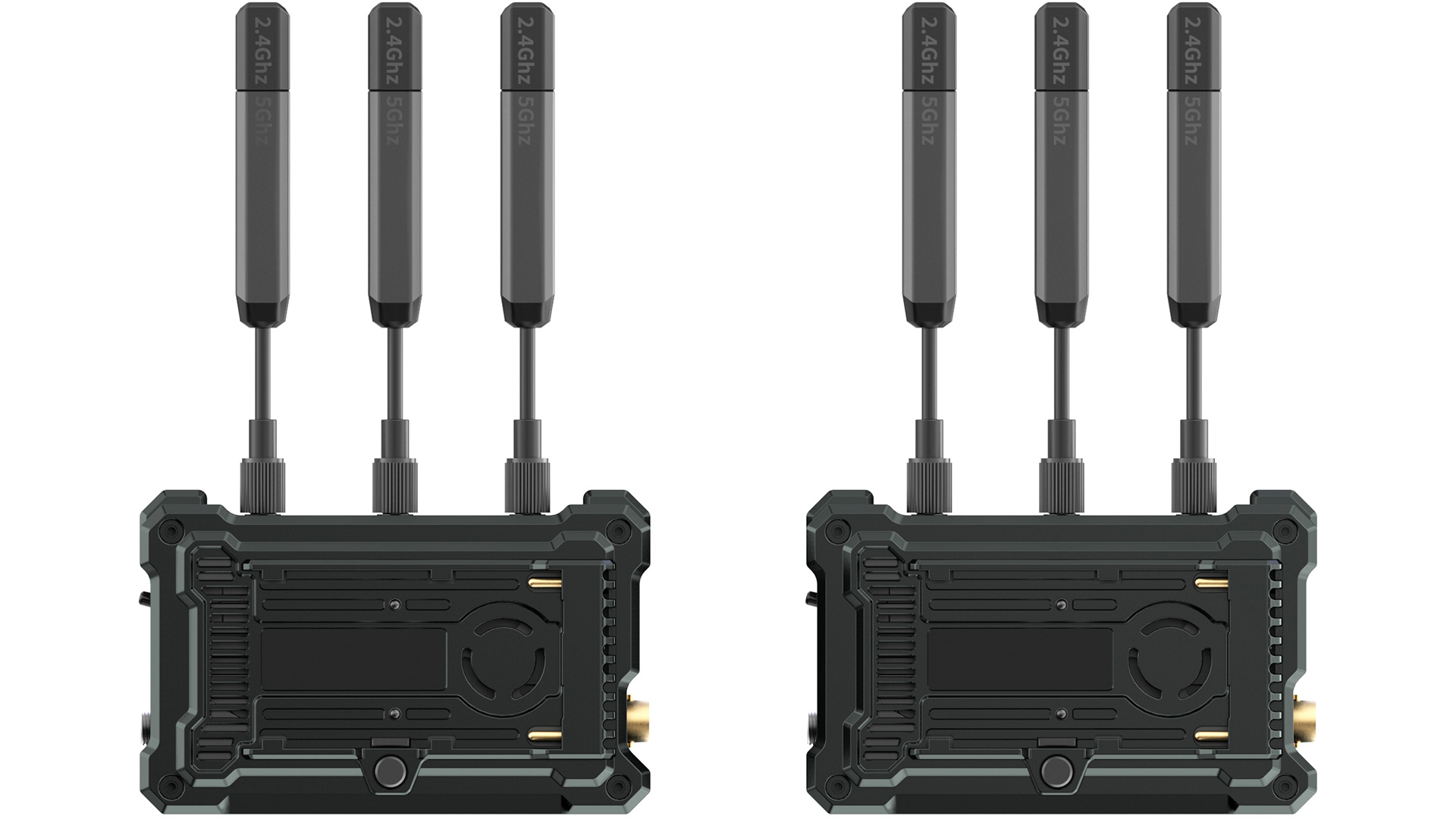
Hollyland Pyro S – More antennas, more inputs and outputs
The Hollyland Pyro S takes a more horizontal approach to its orientation than the Pyro H. The Pyro H sits vertically and has two antennas, while the extra width of lying on its side provides the Pyro S with room for an extra antenna for maximum signal strength.
It can transmit up to 400 metres in range to up to four devices. These devices can be other Hollyland receivers, the Hollyland Mars M1 (buy here) or even a smartphone or tablet running the Hollyland app.
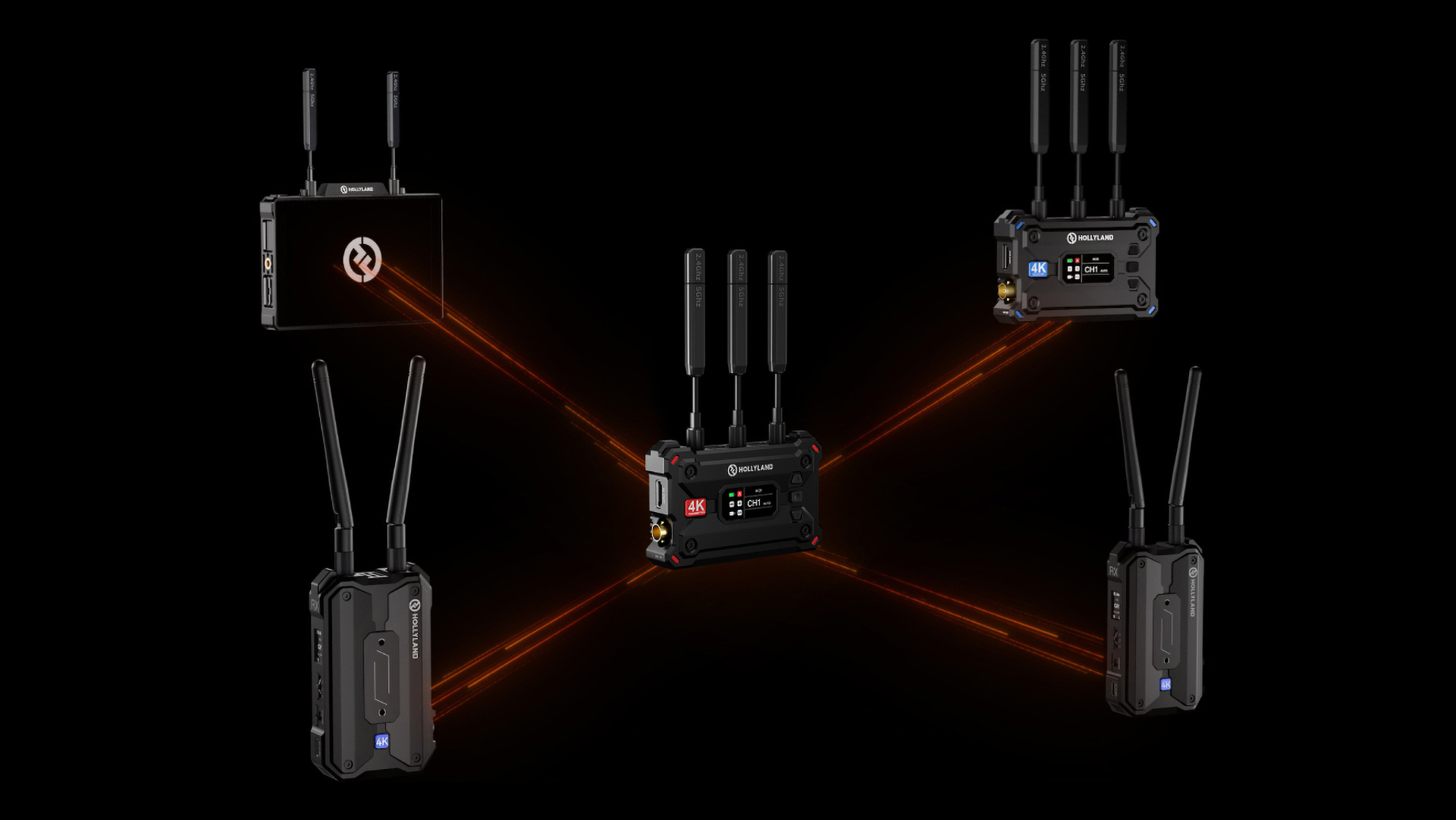
The Pyro S features SDI sockets in addition to the HDMI sockets of the Pyro H. This opens up a wider array of cameras and it’s also able to translate between the two formats. So, you can use an HDMI monitor with an SDI camera or vice versa. It also supports USB-C monitors.
Hollyland says the Pyro S has 50ms (0.05s) of latency. That means at 30fps, you should never be more than a couple of frames behind real time. Like Hollyland’s other video transmission systems, it’s built from machined aluminium alloy to provide a rugged and durable enclosure on location.
Price and Availability
The Hollyland Pyro S is available to pre-order now for $699 in a transmitter (Tx)/receiver (Rx) pair. The Pyro S Tx is available on its own for $349 for those wishing to transmit to mobile devices. The Pyro S Rx is also available to buy on its own for $349.
See more from DIYPhotography.net on Google
Add DIYPhotography.net as a trusted source. This makes
our stories more likely to appear in your Google Search results.
 Add as a preferred source on Google

John Aldred
John Aldred is a photographer with over 25 years of experience in the portrait and commercial worlds. He is based in Scotland and has been an early adopter – and occasional beta tester – of almost every digital imaging technology in that time. As well as his creative visual work, John uses 3D printing, electronics and programming to create his own photography and filmmaking tools and consults for a number of brands across the industry.
Related Posts
 Hollyland’s new Cosmo C1 offers wireless HDMI and SDI video up to 1,000ft with only 40ms latency
 Hollyland Pyro H video transmitter boasts 0.06s latency up to 400m range
 The Vaxis Atom 500 lets you transmit video up to 500ft from either HDMI or SDI
 Hollyland’s Mars 300 Pro wireless HDMI video system brings lower latency & weight with more connectivity
Join the Discussion
DIYP Comment Policy
Be nice, be on-topic, no personal information or flames.